How to Choose Commercial Recessed Can Lights for Your Business

To pick the best commercial recessed can lights for your business, you should do these main things:
Figure out what you need the lights for, like general lighting or accent lighting.
Choose the right size and trim style for your ceiling and room.
Pick if you want retrofit kits or stand-alone fixtures.
Think about lighting controls to make things more flexible.
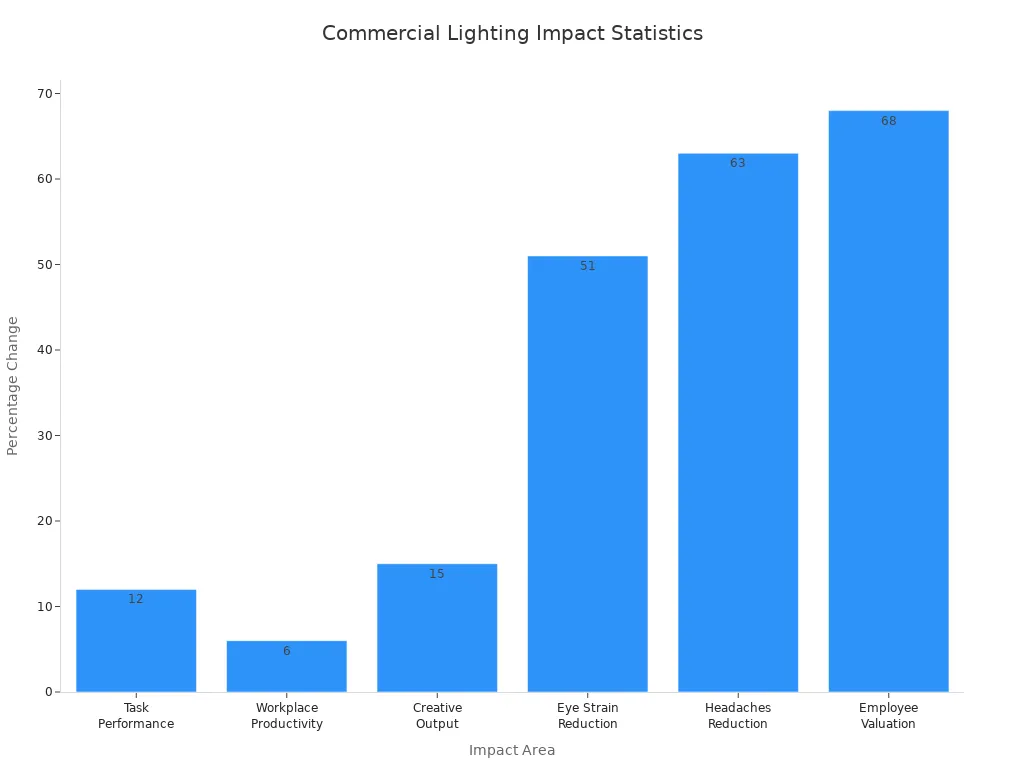
Lighting does more than just help you see. Good lighting can help people work better by 12%. It can make workers more productive by 6%. It can also lower headaches by 63%. Here is how lighting helps your workplace:
Before you pick any product, look at your space. Think about how you will use it. Make sure you follow all rules. If you are updating an About Us page or fixing up your home, good lighting matters.
Key Takeaways
Figure out why you need lighting. Pick if you want general, task, or accent lighting. This helps make your business space better.
Pick the right size and trim style for your ceiling. Big rooms might need bigger fixtures. This gives more light everywhere.
Think about saving energy. Choose LED lights to use less power. This also means you do not need to fix them often.
Make sure your lights follow safety rules. Find certifications like ENERGY STAR and IC ratings. These help keep your business safe.
Plan where to put your lights. Space them out so there are no dark spots. This makes the light spread evenly.
Commercial Recessed Can Lights Overview
What Are Commercial Recessed Can Lights
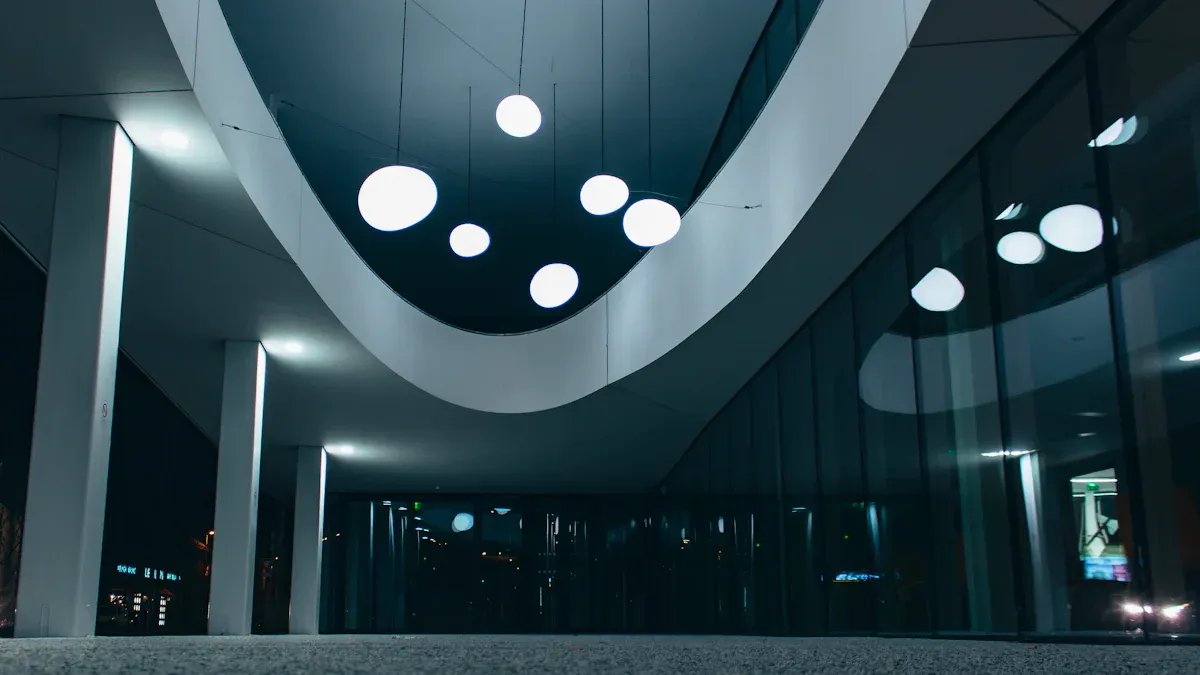
You see commercial recessed can lights in many business spaces. These lights sit inside the ceiling, so only the trim and light show. You get a clean and modern look. Many businesses choose commercial recessed lighting because it saves space and gives even light. You can use these lights in retail stores, offices, and restaurants. They work well for general lighting, accent lighting, or task lighting.
Today, you find new trends in commercial recessed lighting. Many businesses use smart lighting solutions. LED technology helps you save energy and money. Designers focus on minimalist and customizable styles. The commercial lighting industry keeps growing. Experts say it could reach over 27 billion dollars by 2030. You want lighting that makes your space efficient and comfortable.
Tip: Choose commercial recessed can lights if you want a modern look and flexible lighting for your business.
Key Features and Components
You need to know the main parts of commercial recessed can lights before you buy them. Each part plays a role in how the light works and looks.
Component | Description |
|---|---|
Housing | The metal can that sits in the ceiling. It holds the bulb and other parts. You can pick new construction, remodel, or IC-rated housings. |
Trim | The part you see on the ceiling. It affects how the light spreads and how your ceiling looks. You can choose baffle, reflector, or adjustable trims. |
Bulb | The light source. You can use incandescent, LED, or CFL bulbs. The bulb type changes the light quality and energy use. |
Reflector | This part directs and boosts the light. It affects how bright and even the light feels. You can pick specular, semi-specular, or matte reflectors. |
Housing gives safety and helps the light work well.
Trim controls glare and spreads light evenly.
Bulb lets you pick the right brightness and energy use.
Reflector makes the light comfortable and bright.
When you understand these features, you can choose the best commercial recessed lighting for your business.
Assessing Business Lighting Needs
Space and Layout Considerations
Look at your business space before picking lights. The size and shape of each room matter a lot. Big rooms need more lights to spread light everywhere. Small rooms need fewer lights, but you must place them right. This helps stop dark spots from showing up.
Size and shape of the space
Ceiling height and type (flat, sloped, or vaulted)
Desired ambiance for each area
Furniture placement and traffic flow
Your existing electrical set-up
Ceiling height changes how light fills the room. High ceilings may need stronger lights or more downlights. Low ceilings work well with regular commercial recessed can lights. Think about how people walk through the space. Good lighting helps people see and move safely.
Note: A lighting consultant or electrical contractor can help you pick the best places for your lights.
Application and Location Matching
Match your lighting to what each area needs. Different spaces need different commercial recessed lighting. Use ambient lighting for general areas. It gives soft and even light. Task lighting is best for work areas or counters. It should be bright and direct. Accent lighting is for special features or displays.
Ambient lighting: softer and spreads out more
Task lighting: brighter and shines on one spot
Accent lighting: highlights features and needs careful placement
Trimless models give a smooth ceiling look. Adjustable fixtures let you point light where you want. Modular systems are good for long halls or big rooms. Put your lights about 3–4 feet apart in open spaces. Line them up over work areas or displays. This stops glare and keeps the room balanced.
Picking the right commercial recessed lighting makes your business look nice and work well.
Specifications for Commercial Recessed Lighting
Size and Aperture
You need to choose the right size and aperture. The size changes how much light you get. It also changes how the fixture looks in your room. Most businesses use 4-inch, 5-inch, or 6-inch recessed downlights. The aperture is the hole where the light comes out. Bigger apertures give more light. They work best in large rooms or rooms with high ceilings.
Here is a table to help you compare the sizes:
Size | Standard Ceiling Cut-Out Size | Inside Diameter of Housing | Typical Uses |
|---|---|---|---|
4 inch | 4-3/8 inches | About 4 inches | Accent, task, and general lighting |
5 inch | 5-5/8 inches | About 5 inches | Least common of the three sizes |
6 inch | 6-3/8 inches | About 6 inches | Most common recessed light size |
You often see 6-8 inch apertures in rooms with tall ceilings.
Lumen packages from 2,000 to 4,000 lumens work well for offices and classrooms.
Put fixtures 8-10 feet apart for even light.
Tip: Pick the size based on your ceiling height and how much light you want.
Wattage and Light Output
Wattage tells you how much energy the light uses. Light output, measured in lumens, shows how bright the light is. You should match the wattage and lumens to your business needs. Warehouses and stores need more light than offices.
Here is a table to show you the usual wattage and light output for different fixtures:
Fixture Type | Wattage Range | Light Output (Lumens) | Recommended Environment |
|---|---|---|---|
LED High Bay | 100-400 watts | 10,000-50,000 lumens | Warehouses, Manufacturing |
LED Low Bay | 100-400 watts | 10,000-50,000 lumens | Retail Environments |
LED Troffer Panels | 25-45 watts | 3,000-5,000 lumens | Offices, Healthcare, Education |
You should pick commercial recessed lighting that gives enough light for safety and comfort. Offices and classrooms do well with 2,000 to 4,000 lumens for each fixture.
Color Temperature and CRI
Color temperature changes how the light looks and feels. It is measured in Kelvin (K). Lower numbers look warm and cozy. Higher numbers look cool and bright. The Color Rendering Index (CRI) shows how well the light shows colors. A higher CRI means colors look more real.
Here is a table with the best ranges for business spaces:
Metric | Optimal Range |
|---|---|
CRI | 85 to 100 |
Color Temperature | 5,000K - 6,500K |
2,200K – 2,700K: Warm and cozy
3,000K – 3,500K: Neutral white
4,000K – 4,500K: Cool white
5,000K – 6,500K: Daylight or outdoor
Note: For most commercial recessed can lights, you want a CRI of at least 85 and a color temperature of 5,000K or higher. This helps people see clearly and makes your space look bright and professional.
Trim and Finish Options
Trim and finish change how your commercial recessed can lights look and work. You can pick from different trim types and finishes to match your style and needs.
Finish Type | Aesthetic Impact |
|---|---|
Black | Adds a sleek, modern touch |
Chrome | Gives a shiny, reflective look |
White | Blends in with most rooms |
Reflector trims: Make the light brighter, good for places that need lots of light.
Adjustable trims: Let you point the light where you want it.
Baffles: Cut down on glare and make the room more comfortable.
Gimbal trims: Move to shine light in different directions.
Tip: Use white trims for a clean look, or black for a bold, modern style.
Safety and Certification
You must use safe and certified fixtures in your business. IC rated fixtures are very important. These fixtures can touch insulation without causing a fire. This is key in energy-efficient buildings with lots of insulation.
Here are the main safety standards and certifications:
Standard/Certification | Description |
|---|---|
National Electrical Code (NEC) | Safe installation, wiring, and clearance rules for ic rated fixtures |
Title 24 and ASHRAE 90.1 for energy-saving lighting in commercial buildings | |
IC Rated Lighting | Safe for contact with insulation |
ASTM E119 and CAN ULC S101 | Fire resistance testing |
UL 263 | Fire-rated recessed lights for safety |
National Electrical Code (NEC): Sets rules for safe installation.
Energy Efficiency Standards: Title 24 and ASHRAE 90.1 require energy-saving lights.
IC rated fixtures: Safe to use with insulation.
Fire Rated Standards: ASTM E119 and CAN ULC S101 test fire resistance.
UL 263: Checks fire safety for recessed downlights.
Always check for these certifications before you buy commercial recessed can lights. This keeps your business safe and up to code.
Energy Efficiency Standards and Compliance
Key Energy Standards
You need to follow energy efficiency rules when picking commercial recessed can lights. These rules help you save money and protect nature. Many groups and laws make these rules for businesses.
The Energy Star Program helps you choose energy-saving products. It gives advice and support for building projects. Look for the Energy Star label when buying lights.
ANSI/ASHRAE/IES Standard 90.1 sets rules for energy use in most commercial buildings. It tells you how much energy your lights can use.
The Energy Policy Act of 2005 (EPACT) encourages businesses to save energy. It supports using efficient lighting.
Executive Order 13693 focuses on saving energy in federal buildings. It asks you to use products that meet Energy Star rules.
If you work in California, check Title 20 and Title 24 rules. These codes set strict energy-saving standards for lighting. Local rules may add more things you need to do. Always check your city or state rules before starting your project.
Tip: Find the Energy Star label on commercial recessed can lights. This label means the product meets tough energy-saving rules.
LED Technology and Savings
LED lighting systems have changed how businesses use lights. These systems use less energy and last longer than old bulbs. You can save a lot of money by switching to LED recessed can lights.
LED lighting can cut your energy use by up to 75%. This means you pay less for power.
If everyone used LEDs, the country could lower lighting energy use by almost 40% by 2035.
Many businesses see their energy bills drop by 50% after switching to LED lights.
Utility companies often give rebates and rewards for using LED lighting. This helps you pay less at first.
LEDs turn more electricity into light, not heat. This makes them safer and better for saving energy. You also help the earth by lowering greenhouse gas pollution. LED bulbs use 75% less energy than old incandescent bulbs. They can last up to 25 times longer. This means you spend less on new bulbs and fixing lights.
Note: You can get your money back in just a few months after switching to LED lighting, because you save energy and pay less for repairs.
Building Codes and Regulations
You need to follow building codes and rules when you put in commercial recessed can lights. These rules keep your business safe and make sure your lights work well.
The National Electrical Code (NEC) tells you how to install wires and fixtures. It helps stop electrical problems.
Energy codes set limits on how much energy your lights can use. They help you meet energy-saving rules.
Local building codes may have extra rules. These can say where you put lights or what kind you use.
The Americans with Disabilities Act (ADA) makes sure your lights are easy for everyone to use. It affects lights in hallways and emergency exits.
Local inspectors will check your lights to make sure they follow NEC rules. ADA rules help you make safe and easy spaces for everyone. You should also learn about other rules that might affect your business.
Compliance Consideration | Description |
|---|---|
ADA Regulations | Makes sure people with disabilities are treated fairly, affecting lighting in public spaces. |
NFPA Standards | Sets fire safety rules, including emergency lighting needs. |
IBC Guidelines | Gives building codes that include lighting rules for businesses. |
OSHA Regulations | Keeps workplaces safe, affecting lighting in business areas. |
Local Codes | May have special rules for lights near homes or property lines. |
Emergency Lighting | Must light up exit paths and emergency areas, with certain brightness levels. |
Always check your local rules and talk to an expert before putting in new lights. This helps you avoid trouble and keeps your business following the rules.
Installation and Maintenance for Commercial Recessed Lighting
Installation Ease and Compatibility
You want your commercial recessed can lights to fit your ceiling and work well with your building. Start by checking your ceiling type. Drywall ceilings usually let you install standard fixtures with less trouble. Acoustical ceilings need special fixtures to keep sound absorption. Ceiling height also matters. High ceilings may need different lights than low ceilings.
Before you begin, gather the right tools. You will need a drill, wire stripper, and the correct recessed can lights. Always follow local electrical codes. This keeps your installation safe and legal. If you are not sure, ask a licensed electrician for help.
Tip: Make sure your fixtures match the insulation rating of your junction box. This helps prevent fire hazards and keeps your business safe.
Longevity and Reliability
You want your lights to last a long time and work every day. Modern LED drivers help by spreading power evenly. This reduces stress on the LED panel. Integrated LED recessed lights with cast aluminum heat sinks keep the lights cool. Good heat management stops the lights from failing early.
LED recessed lights can last from 15,000 to 50,000 hours. Old bulbs last about 1,000 hours.
Durable housings and reliable drivers make your fixtures last longer.
Proper installation is key. A qualified electrician can help you avoid problems.
Good heat sinks and high-quality parts keep your lights working for years.
Note: If you plan to replace LED lights in the future, check that new models will fit your current setup.
Maintenance Tips
Regular care keeps your commercial recessed can lights bright and safe. Clean your fixtures at least every three months. Use a soft, dry cloth or feather duster to remove dust. For tough dirt, use a damp cloth, then dry the area. Always turn off and cool the lights before cleaning.
Check and replace burnt-out bulbs often. This stops strain on your electrical system.
Schedule maintenance at least twice a year. In busy areas, inspect lights every quarter.
Fix small problems right away. This prevents bigger issues later.
Keeping up with maintenance helps your lights last longer and keeps your business looking its best.
Tips and Common Mistakes
Selection Tips
When you choose commercial recessed can lights for your business, you want to make smart decisions. The right lighting can improve how your space looks and feels. Here are some helpful tips to guide you:
Pick the right size: Choose a diameter that fits your ceiling height and room size. Larger rooms often need bigger fixtures.
Select the best trim: Look for a trim style that matches your décor. Baffle trims reduce glare, reflector trims boost brightness, and gimbal trims let you aim the light.
Match the finish: Pick a finish that blends with your interior. White finishes disappear into most ceilings, while black or brushed nickel can add a modern touch.
Choose LED bulbs: LEDs save energy and last longer than traditional bulbs. You will spend less on replacements and maintenance.
Add dimming options: Dimmable lights give you control over brightness. You can set the mood for meetings or highlight displays.
Tip: Always think about how the lighting will work in your space, not just how it looks in the store.
Mistakes to Avoid
Many people make simple mistakes when picking commercial recessed can lights. Avoiding these errors will help you get the best results for your business.
Focusing only on price: Cheap fixtures may cost more in the long run because they use more energy and burn out faster.
Overlighting or underlighting: Too much or too little light can make people uncomfortable. Plan your lighting to match the tasks in each area.
Placing fixtures incorrectly: If you put lights too close or too far apart, you get shadows or uneven light. Try to space fixtures 4 to 6 feet apart for even coverage.
Choosing the wrong trim style: The trim affects glare and how the light spreads. Make sure you pick the right one for your needs.
Ignoring color temperature: Warm lights work well in cozy spaces. Cooler lights help people focus in work areas. Mixing them can look odd.
Forgetting about color quality: Low-quality light can make colors look dull. Pick lights with a high color rendering index (CRI) for the best results.
Note: Take time to plan your lighting. Good choices now will save you money and make your business look great.
To pick the best commercial recessed can lights, do these things: First, think about what kind of light each space needs. Next, choose a size and type that fits your ceiling. Then, look at the material and design to make sure they last.
It helps to talk to a lighting consultant. They know how to set up lights in your space. They can help you put fixtures in the right spots.
If you pick energy-saving and strong lights, you get many good things:
Benefit | Explanation |
|---|---|
Lower costs | You spend less on power and fixing lights. |
Better sustainability | LED lights are good for the planet. |
Improved lighting | Good lights keep your business bright and help people work. |
Always choose lights that save energy and last a long time.
FAQ
What size recessed can light works best for my business?
You should choose a size based on your ceiling height and room size. Most offices use 6-inch fixtures. Small rooms look better with 4-inch lights. Large spaces need bigger apertures for more brightness.
How do I know if my lights meet energy standards?
Look for the ENERGY STAR label or check the product specs for ASHRAE 90.1 and Title 24 compliance. These marks show your lights save energy and follow important rules.
Can I install commercial recessed can lights myself?
You can install lights if you know basic wiring and safety steps. For most businesses, hiring a licensed electrician keeps your installation safe and up to code.
What color temperature should I pick for work areas?
Pick a color temperature between 5,000K and 6,500K for work areas. This range gives you bright, clear light that helps people focus and see details.
How often should I clean and check my recessed lights?
You should clean your fixtures every three months. Check bulbs and wiring twice a year. Regular care keeps your lights working well and your business looking bright.
See Also
Selecting Ideal Outdoor Lighting Fixtures for Your Business Needs
Key Lighting Fixtures Every Business Must Take Into Account
Guidelines for Selecting the Perfect LED Replacement Lights
Effective Lighting Solutions for Retail Spaces and Stores
Understanding Recessed Lighting: Options, Setup, and Design Tips