How to Choose and Install LED Tubes for Your Space


You want to make the right choice for your lighting. When you pick led tubes for your Home or business, you need to know if your fixture fits the tubes and which type works best. Choosing the correct led light tubes matters for safety and performance. You get many benefits when you switch to led tube lights, like:
Enjoy energy savings of 60-90% over old fluorescent tubes.
See lower energy bills and spend less on maintenance.
Type of Light | Average Lifespan |
|---|---|
LED Tube Lights | 25,000 to 50,000 hours |
Traditional Fluorescent Tubes | 7,000 to 15,000 hours |
Led tubes last longer and support energy efficiency. You help the environment and improve your lighting with every upgrade. About Us and Product pages can give you more details, but this guide will help you get started.
Key Takeaways
Using LED tubes can help you save a lot of money on energy. You can save 60-90% compared to fluorescent tubes. - Pick the right size and type of LED tube. This makes sure it fits your current fixtures. - LED tubes last much longer than old tubes. This means you spend less on fixing and replacing them. - Think about the color temperature and brightness of LED tubes. This helps you get the look you want in your space. - Always look for safety certifications. This makes sure your LED tubes are safe and work well.
Quick Guide to Choosing LED Tubes
Main Steps Overview
When you start looking for new lighting, you want to make sure you pick the right led tubes for your space. Here are the main steps you should follow:
Check the Size and Shape: Look at your current tubes and fixtures. T8 tubes work well in most traditional spaces, while T5 tubes fit modern designs. Make sure the new led tubes match the length and diameter of your old ones.
Decide on Light Output and Color Temperature: Think about how bright you want your space. Lumens measure brightness, and Kelvin tells you the color of the light. For work areas, choose a higher lumen count and a cooler color. For relaxing spaces, pick a warmer light.
Review Energy Efficiency and Cost: Led tube lights use less energy than old fluorescent tubes. Even if the price is higher at first, you save money over time. Many places offer rebates or incentives for energy-efficient lighting.
Consider Installation and Maintenance: Some led light tubes fit right into your old fixtures. Others need you to change the wiring or remove the ballast. Led tubes last longer, so you will not need to replace them as often.
Tip: Always check the packaging or product details for compatibility with your fixture before buying.
Why Compatibility Is Key
You need to make sure your new led tubes work with your existing fixtures. Fixture compatibility affects how well your led tubes perform and how long they last. If you use the wrong type, you might face electrical problems or even damage your lighting system.
Some led tubes are plug-and-play. You can install them just like regular fluorescent tubes. Others need you to remove the ballast or change the wiring. Knowing the types of led tubes helps you choose the safest and easiest option for your upgrade.
When you select led tube lights, always check if your fixture uses a ballast. If it does, see if your new tubes are compatible. This step keeps your lighting safe and ensures you get all the benefits of led technology, like energy savings and better light quality.
Benefits of LED Tube Lights
Energy and Cost Savings
Switching to led tubes saves a lot of energy. These lights use about 75% less energy than old bulbs. You get the same brightness but pay less for electricity. Many businesses save thousands of dollars each year. People at home also save hundreds of dollars every year. Led tubes work better, so you waste less energy and get good lighting.
Led tube lights use much less energy than old tubes.
You spend less on electricity and fixing lights.
Led tubes make less heat, so rooms stay cooler.
Note: Less heat means you use less air conditioning in summer.
Longer Lifespan and Safety
Led tubes last a long time. They can work for 25,000 to 50,000 hours. Fluorescent tubes only last up to 20,000 hours. You do not need to change led tubes as often. This means less work and fewer problems.
Led tubes do not have dangerous stuff like mercury.
They make less heat, so fires are less likely.
Longer life means you change them less and save money.
Led tubes make your home or business safer. Led tubes are safer and last longer than fluorescent tubes.
Environmental Advantages
Led tubes help the environment. They use less power, so there are fewer carbon emissions. Led tubes do not have mercury or other harmful stuff. This makes them safer to use and easier to throw away. Led tubes last longer, so there is less trash.
Led tubes lower greenhouse gases.
No dangerous materials means safer disposal.
Using led tubes helps the planet.
Choosing led tubes is smart for your money and the earth.
Identifying Your Fixture and Tube Type
Common Tube Sizes (T8, T5, T12)
You need to know the size of your tubes before you buy new led tubes. Tube size affects how well your lighting works. The most common sizes are T5, T8, and T12. Each size fits different fixtures and spaces. You can check the diameter and use the table below to match your tubes:
Tube Size | Diameter (inches) | Typical Applications |
|---|---|---|
T5 | 5/8 | Warehouse fixtures, over the counter lighting, shelf lighting, cubby lighting in retail spaces |
T8 | 1 | Hospitals, commercial office spaces, schools, retail spaces, warehouses, troffers, strip lights, high-bay fixtures, cove lighting |
T12 | 1.5 | Older warehouses, older hallways in apartment complexes, signage |
T8 tubes are the most popular for offices and schools. T5 tubes work well in modern spaces. T12 tubes are common in older buildings. Always check the label on your old tubes to find the right size.
Checking Fixture and Ballast
You must check your fixture before you install led light tubes. The type of fixture tells you if you need a ballast. A ballast controls the flow of electricity to the tubes. Use this table to see if your fixture uses a ballast:
Technology | Ballast dependent? |
|---|---|
Incandescent | No incandescent bulbs require a ballast. |
Halogen | No halogen bulbs require a ballast. |
Fluorescent | All fluorescent bulbs require a ballast. |
Compact fluorescent | All compact fluorescent (CFL) bulbs require a ballast. |
HID | All HID bulbs require a ballast. |
LED | No LED bulbs require a ballast, but some are compatible with existing ballasts. |
If you see a ballast, you need to know if your new led tube lights work with it. Some led tubes are made to fit fixtures with ballasts. Others need you to remove the ballast for better led tube efficiency.
Understanding Ballast Role
The ballast plays a big part in how your tubes work. You need to know its role to make the right choice. Here is what you should remember:
The ballast decides if your led tubes will work in your fixture.
Some led tube lights need you to bypass the ballast. These are called direct-wire tubes.
If you bypass the ballast, you cannot use old fluorescent tubes in that fixture. This keeps your lighting safe.
You should always check the types of tubes your fixture supports. This step helps you get the best efficiency and energy savings from your led lighting.
Types of LED Tube Lights
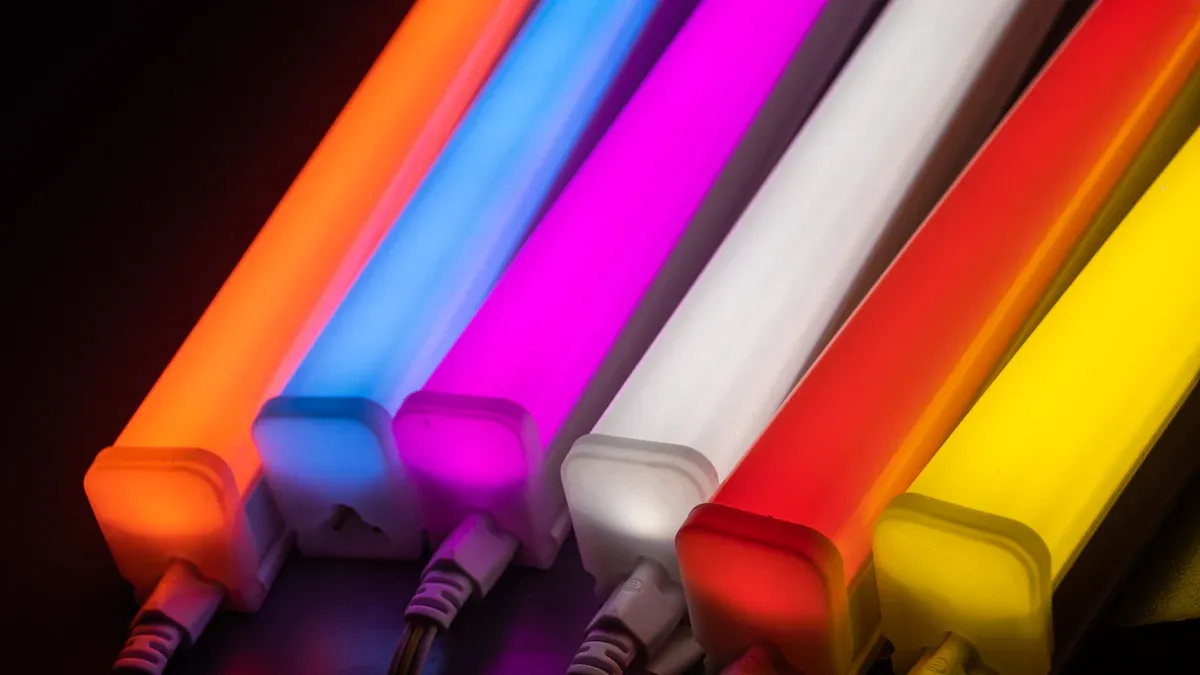
Picking the right tubes helps your lights work better and safer. There are four main types of led tube lights. Each type installs in a different way. Each one fits certain fixtures. The table below shows how they are different:
Type | Installation Method | Compatibility | Key Features |
|---|---|---|---|
Type A | Direct replacement, no rewiring | Works with existing ballasts | Plug-and-play, easy installation |
Type B | Wired directly to mains, rewiring | Bypasses ballast | More energy-efficient, reliable |
Type AB | Use ballast or direct wire | Dual compatibility | Flexible installation options |
Type C | Requires external driver | Not reliant on ballast | High performance, advanced features |
Type A (Ballast Compatible)
Type A led tubes work with your current ballast. You just take out the old tube. Put in the new led tube. This is fast and simple. You do not need to change any wires. Always check if your ballast matches the led tube. Some ballasts do not fit all led tubes.
Tip: Type A tubes are good for quick upgrades and less effort.
Type B (Direct Wire)
Type B led tubes connect right to your power. You must remove the ballast first. Then you rewire the fixture. This type saves more energy. It gives you steady lighting. You should mark the fixture after you finish. This helps stop electrical shock.
Safety Alert: Type B tubes need careful work. Turn off power before you begin.
Type AB (Hybrid)
Type AB tubes are very flexible. You can use them with a ballast or direct wire. This lets you pick what works best for you. If your ballast breaks, you can switch to direct wire. You do not need to buy new tubes. Hybrid tubes make upgrades easier.
Type C (External Driver)
Type C led tubes need an external driver. You put the driver in the fixture. Then you connect the tubes. This type does not use a ballast. You get strong performance and cool features. Type C tubes cost more. They give you better control and save energy.
LED Tube Type | Installation Requirements | Safety Considerations |
|---|---|---|
Type A | Compatible with existing ballast; replace tubes | Check ballast compatibility |
Type B | Direct wire to power; remove ballast | Mark fixture; risk of electrical shock |
Type C | Install external driver; connect tubes | Consider price and features |
Compatibility Tips
You must match your tubes to your fixture. Always check the type before you buy. Type AB tubes give you more choices. Type B tubes save the most energy. Type A tubes are easy to upgrade. Type C tubes are best for advanced lighting. Pick the right tubes for your space. This helps you get safe and efficient lighting.
How to Choose LED Light Tubes
Measuring Size and Fit
You should measure your old tubes before buying new led tubes. The right size helps your led tube lights fit and work well. First, check the length and width of your old tubes. Most fixtures use T5, T8, or T12 tubes. Each type has a different width and base. Use this table to compare the main types:
Tube Type | Diameter (inches) | Common Base Types |
|---|---|---|
T5 | 5/8 | G5 |
T8 | 1 | G13 |
T12 | 1.5 | FA8, R17D |
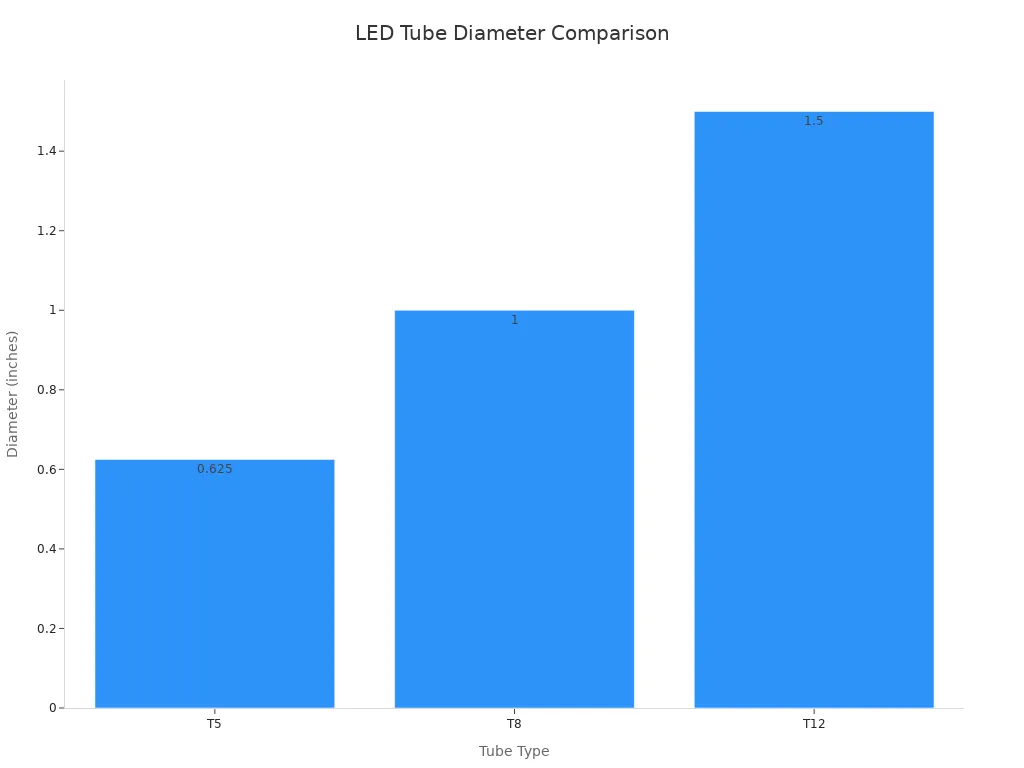
Look at the base type on your fixture. G5, G13, FA8, and R17D are common base types. Matching the base and width helps you avoid problems when installing. You get better led tube efficiency with the correct size.
Tip: Always measure your old tubes and check the label on your fixture before buying new led light tubes.
Selecting Color Temperature
You can change the mood and use of your space by picking the right color temperature. Color temperature uses Kelvin (K) to measure light. Warm light feels cozy. Cool light makes rooms bright and clear. Neutral light is in the middle. Here are the choices:
Warm Light (2700K-3500K): Good for bedrooms and living rooms. It makes the room relaxing.
Neutral Light (3500K-4500K): Works well in kitchens and work areas. It gives comfort and clarity.
Cool Light (4500K-5000K): Best for offices and places where you need strong light.
The color temperature you choose changes how your space looks and feels. Cooler light helps you see better in offices and warehouses. Warmer light makes homes and restaurants feel welcoming.
Note: Pick color temperature based on what you do in the room and how you want it to feel.
Brightness and CRI
Brightness shows how much light your tubes give. You measure brightness in lumens. More lumens means more light. CRI means Color Rendering Index. CRI tells you how well a light shows colors. You want a high CRI for true and clear colors.
For homes: Use tubes with a CRI of at least 90 in bedrooms, living rooms, bathrooms, and kitchens.
For businesses: Pick tubes with a CRI of 90 for offices. For design studios and places where color matters, use tubes with a CRI of 97.
For stores: Choose tubes with a CRI of 90 or higher. For interior design stores, use tubes with a CRI of 98.
High CRI tubes give you better lighting and colors look natural. Your space looks brighter and colors are easy to see.
Tip: For most rooms, pick tubes with high lumens and a CRI above 90.
Dimmable Options
Dimmable led tube lights let you change the brightness. You can make the light brighter or dimmer to fit your needs. Dimmable tubes work well in homes, offices, and stores. They help you save energy and set the right mood. See the table below for good and bad points:
Advantages | Limitations |
|---|---|
Energy efficiency | Initial cost |
Longevity (up to 50,000 hours) | Installation challenges |
Versatility in applications | Light quality concerns |
Environmental benefits | Potential health issues |
Energy efficiency helps lower bills and carbon emissions.
Longevity means you change tubes less often.
Versatility lets you use dimmable tubes in many places.
Environmental benefits include less chemicals and easy recycling.
You may pay more at first for dimmable tubes. Installing them can be harder in older buildings. Sometimes, light quality and color can change when you dim the lights.
Tip: Use dimmable tubes where you want flexible lighting and to save energy.
Safety Certifications
You should check safety certifications before buying led tubes. Certifications show your tubes are safe and work well. Look for these marks:
Certification/Standard | Description |
|---|---|
UL Standards | Ensures compliance with safety and performance requirements for LED lighting. |
ENEC 15 Mark | Indicates compliance with European safety standards. |
IECEE CB Certificates | Provides international recognition of product safety standards. |
Look for UL certification for safety and good performance.
Check for ENEC 15 Mark if you need European standards.
Consider IECEE CB Certificates for international safety.
Certified tubes protect your home or business. Certified tubes follow local rules and work safely in your fixtures.
Safety Alert: Always buy tubes with the right certifications to stay safe from electrical dangers.
LED Tube Installation Steps

Upgrading your lighting with led tubes can improve efficiency and safety. You need to follow the right steps for a smooth installation. Each type of led tube light has its own process. This guide will help you install your new tubes safely and get the best results from your led retrofits.
Safety and Tools
Safety comes first when you work with electricity. You should always turn off the power before you start. Wear gloves and safety glasses to protect yourself. Make sure you follow local codes and rules for electrical work. Use the right tools for the job to avoid mistakes and injuries.
Here is a table of important safety precautions:
Safety Precautions | Description |
|---|---|
Proper insulation and grounding | Prevents electrical shocks and keeps your system safe. |
Voltage compatibility and circuit load balancing | Keeps your system within safe limits and avoids overloads. |
Compliance with local codes and regulations | Follows standards like the NEC for safety and legality. |
Equipment rating checks | Makes sure your equipment can handle the expected load. |
Use of Personal Protective Equipment (PPE) | Protects you from hazards during installation. |
You will need some basic tools for the installation of led tubes:
Heat shrink tubing seals and insulates wire connections.
A solder iron creates strong, permanent wire joins.
A lift helps you reach high fixtures safely.
Conduit bending and cutting tools let you adjust wiring paths.
Tip: If you feel unsure about any step, ask a licensed electrician for help.
Plug-and-Play (Type A)
Type A led tubes are the easiest to install. You do not need to change the wiring or remove the ballast. You just replace the old fluorescent tubes with new led tubes. Here are the steps:
Turn off the power at the breaker or switch.
Remove the old fluorescent tube from the fixture.
Check the ballast type in your fixture. Make sure it matches your new led tube.
Insert the new led tube into the fixture.
Turn the power back on.
Test the light to make sure it works.
If the light does not turn on, check the ballast. Some old ballasts do not work with new led tubes. You may need to replace the ballast or choose a different type of led tube light.
Note: Always double-check that your tubes are compatible with your fixture before you start.
Ballast Bypass (Type B)
Type B led tubes connect directly to the main power. You must bypass or remove the ballast. This method increases energy efficiency and reduces future maintenance. Follow these steps for a safe installation:
Turn off the main power before you begin.
Open the fixture and find the ballast.
Cut the wires going to the ballast. You can remove the ballast or leave it in place.
Connect the neutral (N) and live (L) wires from the power source to the lamp holder input wires.
Secure all connections with heat shrink tubing or wire nuts.
Install the new led tube into the fixture.
Restore power and test the light.
Safety Alert: If you have never worked with electrical wiring, ask a partner or a professional for help. Working with electricity can be dangerous.
Hybrid and Type C Installs
Hybrid (Type AB) and Type C led tubes offer flexible led retrofitting options. Hybrid tubes can work with or without a ballast. Type C tubes use an external driver instead of a ballast. Here is a quick comparison:
Type | Uses Ballast | Installation Method | Key Features |
|---|---|---|---|
Type A | Yes | Standard fluorescent installation | Simple, uses existing fixtures |
Type B | No | Direct wiring to line voltage | No ballast, lower costs |
Type AB | Optional | Ballast or direct wiring | Flexible, easy upgrades |
Type C | No | External LED driver installation | Dimming, long life, higher cost |
For hybrid tubes, you can start with the ballast in place. If the ballast fails, you can bypass it and wire the tubes directly. For Type C tubes, you must install an external driver. Connect the driver to the power source, then connect the tubes to the driver. This setup gives you more control and longer tube life.
Tip: Always read the instructions that come with your led tube light retrofitting kit. Each brand may have small differences.
Troubleshooting Tips
Sometimes, you may face problems during or after installation. Here are some steps to fix common issues:
Turn on the power and check if the led tubes light up. If not, check all connections.
Look at the tube sockets for damage or corrosion. Clean them if needed.
Make sure you did not cross-wire or reverse the connections. This can stop the tubes from working.
Try a different power supply if the tubes still do not work.
Check for short circuits. No resistance means a possible short.
Note: If you cannot solve the problem, contact a professional. This keeps your lighting safe and working well.
You can enjoy better energy savings and light quality with led tube lights. The right installation steps help you get the most from your led vs fluorescent upgrade. Led retrofits make your space brighter, safer, and more efficient.
Tips for Upgrading to LED Tubes
When to Replace Ballasts
It is important to know when to change ballasts during your led tube upgrade. Ballasts help manage electricity in your light fixture. If your lights flicker or make loud buzzing sounds, the ballast might be going bad. Other signs are dim lights, less brightness, or damage like swollen parts and burn marks. You should also look for leaks. These problems mean you need a new ballast. Sometimes, old ballasts do not work with new led tubes. In that case, removing the ballast can save energy and stop future problems.
Condition for Replacement | Description |
|---|---|
Age and Heat | Ballasts can stop working from age or heat, causing flickers or blackouts. |
Compatibility Issues | Some ballasts do not work with new led tubes. |
Bypass Option | Taking out the ballast can save energy and prevent more problems. |
Tip: If you see these problems, think about changing to led tube lights or using direct-wire led tubes.
Mixing LED and Fluorescent Tubes
You may ask if you can use led and fluorescent tubes together in one fixture. Mixing them can cause trouble. Each ballast only works with one kind of tube. If you use both, you could break your fixture or get bad lighting. Led bulbs use less power and last longer than fluorescent tubes. They also give brighter and more natural light. For the best results, use just one kind of tube in each fixture. This keeps your lights safe and working well.
Risks and Benefits | Description |
|---|---|
Compatibility Issues | Only one kind of lamp per ballast is allowed—either led or fluorescent. |
Note: Pick led tubes for a full switch from fluorescent tubes to get better light and save energy.
Maintenance Advice
You can help your led tubes last longer and work better with easy care. Clean your tubes often to get rid of dust and dirt. Clean tubes shine brighter and last longer. Make sure your fixtures have good airflow. This stops them from getting too hot and keeps your led tubes working right. Try not to turn your lights on and off too much. Doing this a lot can make your tubes wear out faster. Install and mount your tubes the right way to avoid damage. Using dimming controls can also help your tubes last longer.
Clean tubes often to help them work better.
Make sure air can move around your tubes.
Do not switch lights on and off too much.
Use dimming controls for flexible lighting.
Tip: Taking care of your led tubes can help them last up to 50,000 hours and keep your space bright.
You can make your lights better by doing these easy steps:
Step | Description |
|---|---|
1 | Look at your lights now. Write down what fixtures you have and what tubes you need. |
2 | Pick LED tubes that fit. Think about how bright you want them, what color light you like, and any extra features. |
3 | Put in the LED tubes safely. Always follow the directions from the company and turn off the power first. |
When you switch to LED tube lights, you get lots of good things:
You use less energy and pay lower bills.
The light looks better and the tubes last longer.
You help the earth because there is less trash and less pollution.
If you need help with LED tubes, companies like Logos Lighting and PacLights can give you advice. Use a checklist to make your upgrade easy. If you are not sure how to put in LED tubes, ask a pro for help.
FAQ
How do you know if your fixture is compatible with LED tubes?
You should check the label on your fixture or tube. Look for the tube size and ballast type. If you see "T8" or "T5" and a compatible ballast, you can use most LED tubes.
Can you install LED tubes yourself?
Yes, you can install LED tubes if you follow safety steps. Always turn off the power first. If you need to rewire or bypass a ballast, ask an electrician for help.
Do LED tubes work with dimmer switches?
Some LED tubes work with dimmer switches. You need to check the packaging for "dimmable" or ask the seller. Use a compatible dimmer for best results.
How long do LED tubes last compared to fluorescent tubes?
LED tubes last much longer. Most LED tubes work for 25,000 to 50,000 hours. Fluorescent tubes usually last 7,000 to 15,000 hours.
What should you do if your LED tube flickers?
First, check if the tube fits your fixture. Make sure the ballast works with your LED tube. If the problem continues, try a new tube or ask a professional for help.
See Also
Measuring LED Tubes: Choosing the Best Replacement Options
Accurately Measuring LED Tubes for Effective Replacement
Selecting Ideal LED Light Replacements for Home and Office