Luminaire Lights: How to Choose the Right Fixtures for Your Outdoor Space


You want your outdoor space to look inviting and feel safe, but picking the right luminaire lights can feel overwhelming. Most homeowners agree—87% think outdoor lighting is a must-have for both style and function. If you want to avoid common mistakes, like using too few fixtures or picking the wrong LED temperature, you need a plan. Choose the Right Fixtures that match your home and make every Product shine. About Us pages often show beautiful lighting, but you can create that look too.
Key Takeaways
Think about why you need outdoor lighting. Decide if you want more safety, a nice mood, or to show off parts of your yard.
Pick fixtures that look good with your house. Look at your home's design and choose finishes that go well with it.
Notice the color temperature of the lights. Warm lights make things feel cozy. Cooler lights help you see better and stay safe.
Measure your outdoor spaces before you buy lights. Knowing the size stops dark spots and gives you enough light.
Choose strong materials for your fixtures. Pick weatherproof ones like bronze or stainless steel so they last longer.
Choose the Right Fixtures for Your Space
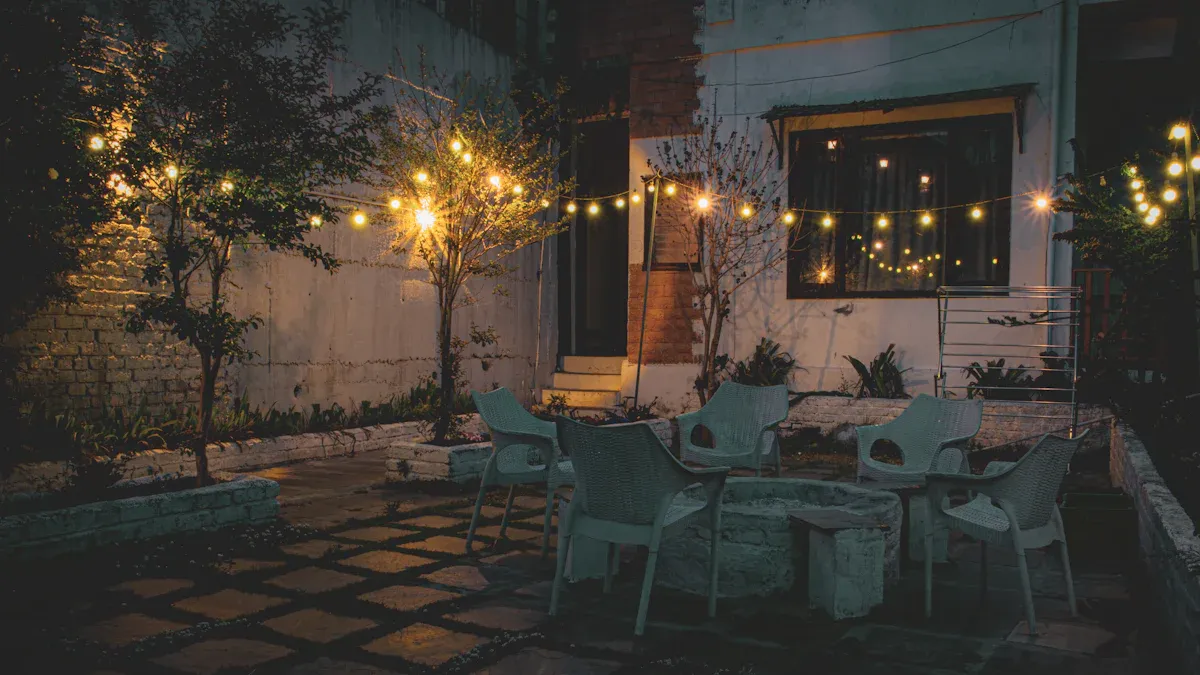
Define Purpose & Installation Type
Before you buy lights, think about what you want them to do. Do you need to light up a path, make your yard safer, or create a nice spot to relax? Picking the right fixtures helps your outdoor space feel safe and friendly.
Here are some common outdoor luminaire fixtures you can use:
Spotlights are good for driveways and patios. They shine light on one area.
Downlights show off gardens or special things in your yard.
Garden lights make your lawn look nice and help your house stand out.
Floodlights light up big spaces and make things safer.
Step lights keep doorways safe and stop people from tripping.
How you put in these fixtures is important. Path lights help people walk safely on walkways. Post lights give soft light to bigger places. Wall-mounted lanterns light up doors and add style to patios. Each way you install lights changes how your yard looks at night.
Tip: Walk around your yard when it gets dark. See where you need more light for safety and where you want a cozy feeling.
Match Style & Finish
Your outdoor lights should look good with your house. When you pick the right fixtures, your home’s style stands out and everything matches. Think about what your house looks like and choose finishes that go well with it.
Here’s a simple guide to help you match styles and finishes:
Architectural Style | Recommended Luminaire Finishes |
|---|---|
Craftsman and Bungalow | Mission-inspired sconces with seeded glass, bronze finishes |
Farmhouse Exteriors | Galvanized and matte black finishes, gooseneck barn lights |
Mid-Century Modern Homes | Glass and metal fixtures, globe sconces, cone-shaped pendants |
Contemporary and Modern Builds | Tall linear sconces, slim LED columns, sculptural pendants |
Many people like simple designs with straight lines. Using different kinds of lights together makes your yard look nice. Smart lighting and solar lights are popular too. They help you save energy and control your lights easily.
Note: If you want your yard to look great, pick fixtures that match your home’s finish and style.
Consider Nighttime Effect
Think about how your lights will look at night. The color temperature of your luminaires changes how your yard feels. Warm lights (about 3000K) make spaces feel cozy and good for relaxing. Cooler lights (4000K and higher) help you see better and are good for safety.
Here’s a simple table to help you pick the right color temperature:
Color Temperature | Effect on Ambiance | Use Case |
|---|---|---|
3000K | Cozy and inviting | Relaxation zones |
4000K | Energetic and alert | Task areas |
5000K | Bright and clear | Security lighting |
Warm lights make gatherings feel friendly.
Cool lights help you see movement and stay alert.
The right color temperature helps your lights fit in with nature.
When you pick the right fixtures, you stop problems like bright glare or dark spots. Use the right bulbs and put your lights where they work best. If you skip these steps, you might get flickering lights or uneven brightness.
Pro Tip: Try out different bulbs before you put them in. This helps you see how each one changes your yard at night.
Size, Proportion & Placement
Measure Outdoor Areas
You want your outdoor lighting to look great and work well. Start by measuring each area you plan to light. Grab a tape measure and jot down the length and width of patios, walkways, and entryways. Understanding how much light you need helps you avoid dark corners and bright spots. Lighting experts use lux, which means lumens per square meter, to figure out brightness. For example, pathways need about 10-20 lux, while garages might need 75-150 lux. You can use online calculators or a simple light meter to check your current lighting levels. Knowing these numbers helps you plan for the right amount of light.
Tip: Think about how you use each space at night. Do you want a cozy spot for relaxing or a bright area for safety?
Select Proper Fixture Size
Picking the right size for your fixtures makes a big difference. If you choose lights that are too small, your space might look odd or feel dim. Too large, and the fixtures can overwhelm your entryway or patio. For front doors, wall lights should be about one-third to one-fourth the height of the door and trim. Place them at least six inches from the door frame and about 66 inches from the ground to the center. Garage lights follow the same rule—one-third to one-fourth the height of the door, centered, and six inches above the trim. For patio chandeliers, use a fixture that is two-thirds the width of your table and hang it 30 to 34 inches above the table. Pathway lights work best at 14 inches tall and look nice in a staggered pattern.
Fixture Type | Sizing Rule | Placement Guide |
|---|---|---|
Wall/Carriage Lights | 1/3–1/4 door height | 6" from frame, 66" from ground |
1/3–1/4 door height | Centered, 6" above trim | |
Patio Chandeliers | 2/3 table width | 30–34" above table |
Pathway Lights | 14" tall | Staggered pattern |
Plan Placement for Safety & Ambiance
Where you put your lights matters just as much as size. Place path lights 10 to 15 feet apart so you don’t get a runway effect. Stagger them on both sides for even coverage. Use low-level lighting, around 100-200 lumens, to softly light walkways without glare. Wall-mounted fixtures add style and help you see at night. Post lights define paths and make your yard safer. Overlapping light zones can stop dark spots and boost security. Studies show that well-lit areas can lower crime rates by up to 36%. Warm lights make gatherings feel friendly, while cooler tones help you focus on tasks. Always match your lighting design to your home’s look and landscape.
Pro Tip: Regular cleaning and bulb checks keep your lights working their best. If you’re unsure about installation, ask a professional for help.
Choose the Right Fixtures for your space by measuring, sizing, and placing them with care. You’ll create a yard that feels safe, looks beautiful, and works for every occasion.
Materials, Durability & Weather Ratings
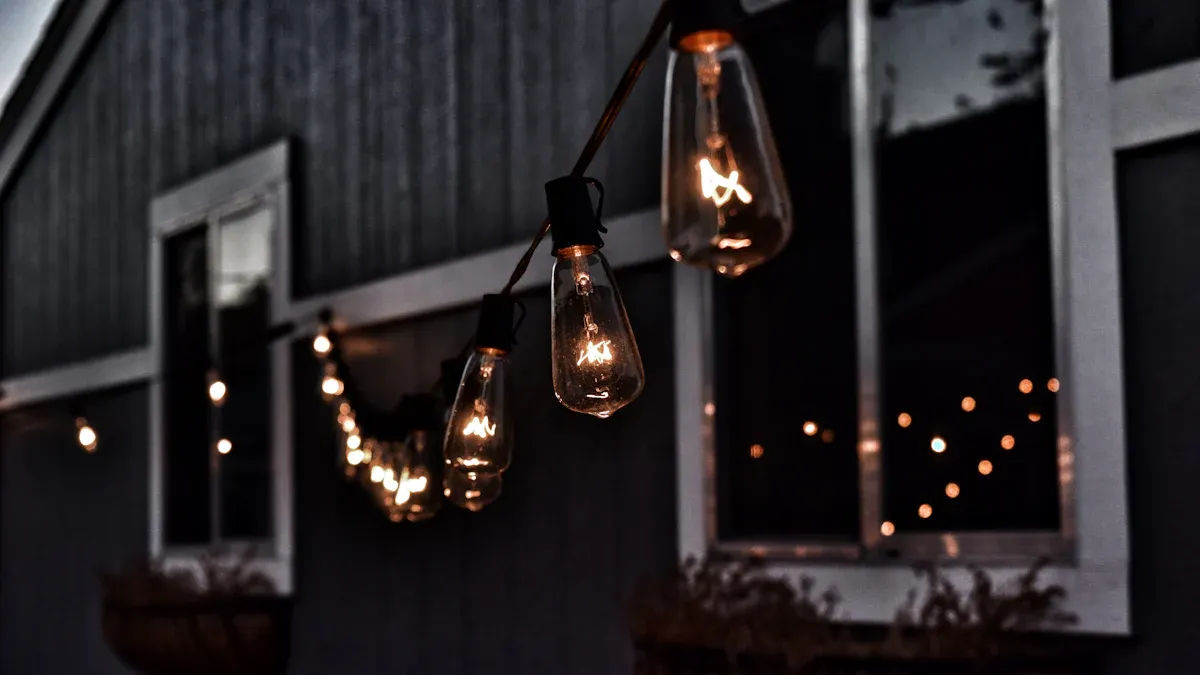
Choose Weatherproof Materials
Picking the right material for your outdoor lights makes a big difference. You want fixtures that can handle rain, sun, and wind without falling apart or looking worn out. Some materials last longer and keep their good looks, even after years outside.
Bronze or Brass: These metals stand up to tough weather and keep their shine. They look great and last for years.
Stainless Steel: This metal fights rust because of its chromium. It’s strong, but sometimes you might see small pits after a while.
Cast Aluminum: Lightweight and easy to shape. It works well, but can wear out faster if it touches other metals.
Polycarbonate: Tough and hard to break. It’s great for places where things might get bumped, but sunlight can make it yellow over time.
Plastic: Cheap and easy to shape, but it can crack and fade. It doesn’t look nice for long.
Acrylic: Strong against hits, but sunlight can wear it down. You might need to replace it more often.
Plate Glass: Lets lots of light through, but breaks easily. Not the best choice for outside.
Tip: If you want your lights to last, choose bronze, brass, or stainless steel. These materials handle weather best and keep your fixtures looking sharp.
Understand Ratings (e.g., Wet, Damp)
Outdoor lights come with ratings that tell you where you can use them. You’ll see “wet-rated” and “damp-rated” on the box. These ratings help you pick the right fixture for each spot.
Rating Type | Description | Applications |
|---|---|---|
Damp-rated | Handles some moisture, but not heavy rain. | Covered porches, balconies, patios, basements, bathrooms (not directly exposed to water). |
Wet-rated | Built for direct rain, snow, or water. | Open outdoor spots, places where water hits the fixture directly. |
Damp-rated fixtures work well in places with light moisture. Wet-rated fixtures have seals that keep water out, so you can use them anywhere outside.
Note: Always check the rating before you buy. Using the wrong type can lead to damage or safety problems.
Maintenance Tips
Keeping your outdoor lights clean and working helps them last longer and shine brighter. You don’t need fancy tools—just a little time and care.
Turn off the power before you start cleaning. Safety comes first.
Remove covers and bulbs using the instructions from the maker.
Dust and wash with a soft cloth and mild soap. Rinse and dry everything well.
Check for damage like rust or broken wires. Fix problems early.
Replace burnt-out bulbs right away. This keeps your yard bright and safe.
Trim plants around your lights so nothing blocks the glow.
Adjust fixture positions if you notice shadows or dark spots.
Pro Tip: Clean your fixtures every spring and fall. Regular care means better light and longer life for your outdoor luminaires.
Illumination, Efficiency & Controls
Pick the Right Brightness
You want your outdoor space to feel just right at night. The brightness of your lights makes a big difference. If you use too much light, your yard can look harsh. Too little, and you might miss steps or trip. Check out this table to see how many lumens work best for different outdoor spots:
Outdoor Lighting Application | Recommended Brightness (in lumens) |
|---|---|
Path lighting | 100-200 |
Step lights | 12-100 |
Flood lights | 700-1300 |
Motion sensor lights | 300-700 |
Pond/pool lights | 200-400 |
Hardscape lights (on walls) | 50-185 |
Landscape | 50-300 |
You can also see the differences in this chart:
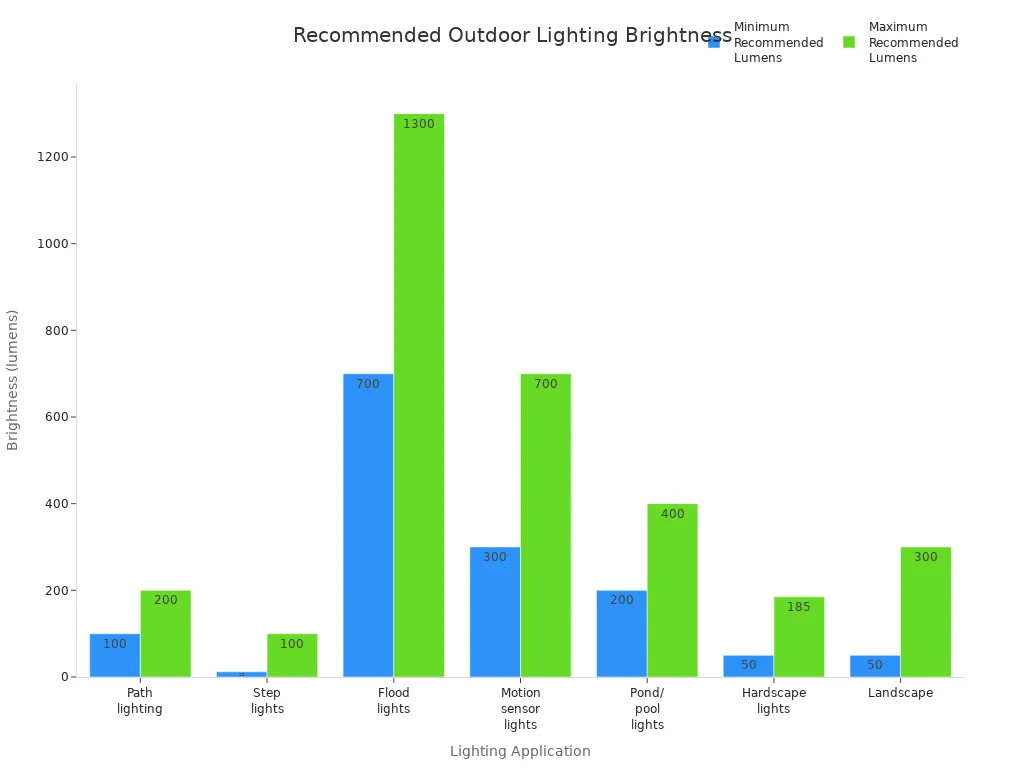
If you want to Choose the Right Fixtures, always match the brightness to the area’s use.
Use Energy-Efficient Options
Switching to LED outdoor luminaires saves you money and energy. LEDs use up to 75% less energy than old incandescent bulbs. Many cities and schools have cut their lighting costs by 40-75% just by using LEDs. If you have a lot of fixtures, you could save thousands of dollars every year. LEDs also last much longer than other bulbs:
Bulb Type | Average Lifespan (hours) |
|---|---|
Incandescent | 1,000 |
Halogen | 2,000 |
CFL | 10,000 |
LED | 25,000 - 50,000 |
Tip: LEDs give you bright light, save energy, and you won’t need to change bulbs as often.
Explore Smart Controls
Smart outdoor lighting gives you more control and saves energy. You can use your phone or voice to turn lights on or off, set schedules, or change colors. Many smart lights have motion sensors for safety and can connect to your home’s Wi-Fi. Here are some features you might like:
Wireless control from anywhere
Custom schedules for different times or events
Dimming and color-changing options
Grouping lights into zones
Motion sensors for extra security
Smart controls help you Choose the Right Fixtures for both convenience and safety. You get a yard that looks great and works just how you want.
Budget & Warranty
Set a Realistic Budget
You want your outdoor lights to look nice and not cost too much. Making a budget helps you choose wisely and avoid extra costs. Most people spend about $3,000 on outdoor luminaire lighting. Some spend as little as $300, but fancy projects can cost up to $5,500. Look at this table to see what people usually pay:
Cost Type | Amount |
|---|---|
Average Cost | $3,000 |
Cost Range | $2,000 - $4,000 |
High-End Cost | $5,500 |
Low-End Cost | $300 |
Many things can change how much you spend. You might pick cheaper fixtures or choose expensive ones. Harder jobs need more work and cost more money. Using LED or solar lights saves money over time. Better materials cost more at first but last longer. Where you live also changes the price.
Here are some main things that change your budget:
What kind of fixtures you choose
How hard it is to install them
How much energy they use
How good the materials are
Local prices and worker costs
Tip: Make a list of what you really need and what would be nice. This helps you spend your money on the most important things.
Check Warranty & Support
You want your new lights to last a long time. Warranties help if something breaks or stops working. Most good brands give warranties from 1 to 10 years. For example, Stylighting gives 5 years for LED products. Ligman Lighting USA gives up to 10 years for luminaires, poles, and mounting hardware. Kichler gives 1 year for outdoor fixtures and 5 years for LED light engines.
Manufacturer | Warranty Period |
|---|---|
Kichler | 1 year (fixtures), 5 years (LED engines) |
Ligman Lighting USA | 10 years (hardware), 5 years (other) |
Stylighting | 5 years (LED products) |
When you buy outdoor luminaires, you also get help from the company. Most brands help with warranty claims, product questions, and fixing problems. You can ask for help with orders or if something does not work. Some brands even have forms for repairs.
Note: Always look at the warranty and support before you buy. Good coverage means you worry less and feel better about your lights.
You can make your outdoor space shine by following a few simple steps. Think about style, size, and where you want your lights. Pick strong materials and energy-saving LEDs. Check out this quick guide:
Key Consideration | Why It Matters |
|---|---|
Style | Matches your home’s look |
Size | Fits your space just right |
Durability | Stands up to weather |
Energy Efficiency | Saves money and lasts longer |
Placement | Keeps you safe and highlights your yard |
A well-lit home stands out and feels safe. Buyers love homes that look warm and welcoming, which can boost your home’s value.
You’ve got this—choose lights that make your home both beautiful and secure!
FAQ
How do I know if a fixture is safe for outdoor use?
Check the label for "wet-rated" or "damp-rated." Wet-rated fixtures work in rain and snow. Damp-rated ones fit covered areas. Look for these ratings before you buy.
Can I install outdoor lights myself?
You can install simple fixtures like solar or plug-in lights. For hardwired lights, call a licensed electrician. Safety comes first when working with electricity.
What is the best bulb type for outdoor lighting?
LED bulbs work best. They last longer, use less energy, and shine bright. You save money and avoid changing bulbs often.
How often should I clean my outdoor lights?
Clean your fixtures twice a year. Wipe off dirt and check for damage. Clean lights shine brighter and last longer.
Do smart outdoor lights need Wi-Fi?
Most smart lights use Wi-Fi for remote control. Some use Bluetooth. Check the product details to see what you need for setup.
See Also
Selecting Ideal Outdoor Lighting Fixtures for Your Business Needs
Finding Suitable LED Outdoor Lighting for Your Residence
Tips for Selecting the Best Outdoor Garage Lighting
Evaluating Outdoor Lighting Options: Models, Features, and Setup