Types of Commercial Light Bulbs: Comparing LED, Fluorescent, and Incandescent Options

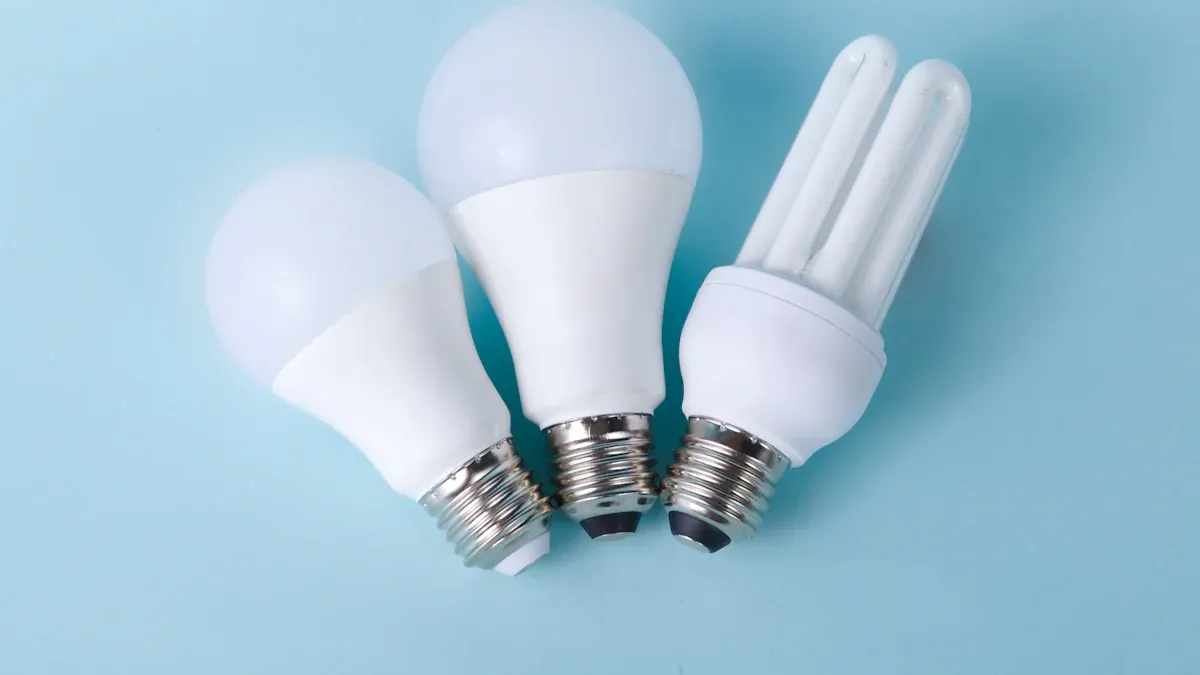
LED bulbs are the best choice for most businesses. You can save more than 80% energy compared to incandescent bulbs. LED lighting lasts up to 50,000 hours. Incandescent bulbs only last about 750 hours. The table below shows how commercial light bulbs compare. It lists lifespan, energy use, and cost. Picking the right lighting changes your costs and comfort at work. This matters for Home, About Us, or Product displays.
Bulb Type | Average Lifespan | Energy Consumption (kWh per 1,000 hours) | Cost to Operate (1,000 hours) | Energy Savings Compared to Incandescent |
|---|---|---|---|---|
LED | 25,000 to 50,000 hours | 12 | $1.44 | Over 80% savings |
Incandescent | 750 hours | 60 | $7.20 | N/A |
Fluorescent (CFL) | 7,500 to 15,000 hours | N/A | N/A | More efficient than incandescent but less than LED |
Key Takeaways
LED bulbs use much less energy than incandescent bulbs. They save more than 80% energy. This makes them the best choice for saving money in businesses.
LED bulbs last much longer than other bulbs. They can work for up to 50,000 hours. This means you do not need to change them often. You also spend less time on maintenance.
Fluorescent bulbs work well in big rooms. They have mercury inside. You must throw them away carefully to keep the environment safe.
Incandescent bulbs give off a warm light. They use the most energy. This makes them cost more over time.
Picking the right bulb can make work areas nicer. It can help people work better. It is also good for the environment.
Quick Comparison of Commercial Light Bulbs
Best Choice for Businesses
When picking light bulbs for your business, you want to save money and get good results. Most experts say led bulbs are best for most businesses. Led bulbs give you many good things:
Led bulbs use less power, so you save energy.
Led bulbs last a long time, so you change them less.
Led bulbs make light that is clear and nice for people.
Led bulbs come in many shapes and sizes for different needs.
Tip: Led bulbs help you spend less on energy and fixing lights. They are the best pick for most business places.
Key Differences Summarized
Led, fluorescent, and incandescent bulbs are very different. Each kind works in its own way and gives different results. The table below shows how they are not the same in life span, energy use, heat, and how they affect the planet:
Bulb Type | Lifespan (hours) | Energy Efficiency | Heat Emission | Environmental Impact |
|---|---|---|---|---|
LED | 25,000 - 50,000 | High | Minimal | Eco-friendly |
Fluorescent | 7,000 - 15,000 | Moderate | Moderate | Less eco-friendly |
Incandescent | 1,000 - 1,500 | Low | High | Not eco-friendly |
Led bulbs last the longest and use the least energy. Fluorescent bulbs work okay but do not last as long as led. Incandescent bulbs do not last long and use lots of energy. They also make rooms warmer because they give off more heat.
Led bulbs help you save money and are better for the earth. Fluorescent bulbs can be used in some places, but they do not last as long. Incandescent bulbs cost more to use and need to be changed often. Picking the right bulb helps your business do well.
Overview of Light Bulb Types
LED Lighting
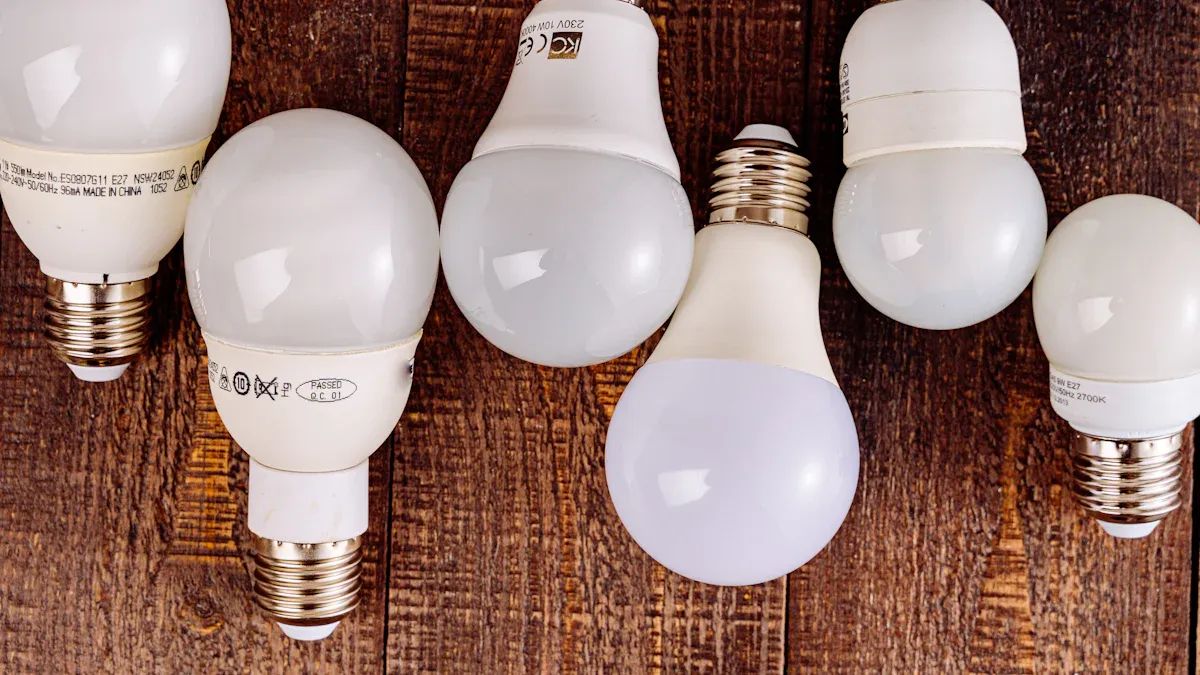
Many businesses use led lighting today. Led bulbs make light in a special way. Electricity goes through a semiconductor and makes light. Led bulbs do not need heat to work. This means they use less energy. You can see led bulbs in offices and stores. Factories also use led bulbs. Led bulbs can last up to 60,000 hours. They use about 6 watts of power. Led bulbs give bright and clear light. They are good for lighting in one direction. Led bulbs help you save money on your energy bills.
Note: Led bulbs come in many shapes and sizes. You can pick the right one for your space.
Bulb Type | Technology Description | Lifespan | Energy Efficiency |
|---|---|---|---|
LED | Changes electrical energy into light using electroluminescence. | Up to 25,000 hours | More efficient than cfl and incandescent. |
Fluorescent Bulbs
Fluorescent bulbs make light in a different way. The bulb is a glass tube with mercury vapor and gases inside. Electricity goes through the tube and excites the vapor. This makes ultraviolet light. The phosphor coating inside the tube changes it to visible light. Fluorescent bulbs last about 10,000 hours. They use about 14 watts of power. You see compact fluorescent lamps in offices and schools. Kitchens also use fluorescent bulbs. These bulbs are good for lighting big rooms.
Fluorescent bulbs are used in:
Office spaces
Warehouses
Schools
Kitchens
Bulb Type | Technology Description | Lifespan | Energy Efficiency |
|---|---|---|---|
Fluorescent | Has a tube with gas that makes ultraviolet light. The phosphor glows to make visible light. | 10,000 hours | More efficient than incandescent but less than led. |
Incandescent Bulbs
Incandescent bulbs use heat to make light. Electricity goes through a thin tungsten filament. The filament gets very hot and glows. This makes light. The glass bulb keeps the filament safe from air. An incandescent bulb lasts about 1,000 hours. It uses more energy than led or fluorescent bulbs. You find these bulbs in homes and some businesses. Incandescent bulbs give off more heat. They cost more to use.
Bulb Type | Technology Description | Lifespan | Energy Efficiency |
|---|---|---|---|
Incandescent | Makes light by heating filaments. This wastes energy as heat. | 1,000 hours | Least efficient of the three. |
Tip: Led, fluorescent, and incandescent bulbs use different ways to make light. You should learn how each one works before you choose for your business.
How Each Light Bulb Works
LED Technology
You see led lighting in many places today. Led bulbs use a special process called electroluminescence. When you turn on a led, electricity moves through a tiny chip inside the bulb. This chip is a semiconductor. The chip gives off energy as light. You do not need heat to make this happen. That is why led bulbs stay cool and use less power. You get bright light right away when you flip the switch. Led bulbs last a long time because they do not have parts that burn out quickly. You can use led lighting for offices, stores, and even outdoor spaces.
Tip: Led bulbs work well in cold or hot places. You can trust them for many types of lighting.
Fluorescent Mechanism
Fluorescent bulbs work in a different way. You find a glass tube filled with a small amount of mercury gas. When you turn on a fluorescent bulb, electricity flows through the gas. This makes the gas give off ultraviolet light. The inside of the tube has a white powder called phosphor. The phosphor changes the ultraviolet light into visible light. You see this as the glow from the bulb. Fluorescent bulbs use less energy than incandescent bulbs. You often see fluorescent lighting in schools, offices, and large rooms.
Fluorescent bulbs need a special part called a ballast. The ballast controls the flow of electricity and helps the bulb start.
Incandescent Function
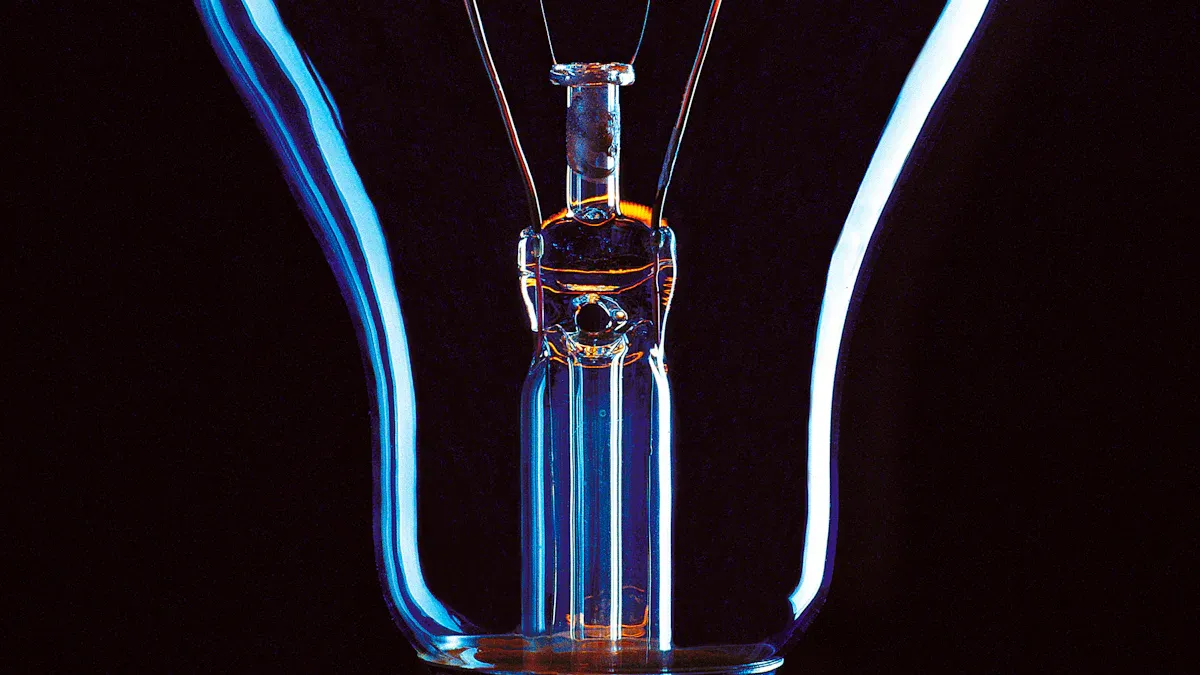
Incandescent bulbs use a simple method to make light. You send electricity through a thin wire inside the bulb. This wire is called a filament. The filament gets very hot and starts to glow. The glow is the light you see. The glass around the filament keeps air away so the wire does not burn up fast. Incandescent bulbs give off a warm, soft light. You may notice they get hot to the touch. These bulbs use more energy and do not last as long as led or fluorescent bulbs. You might still see incandescent bulbs in older homes or some small businesses.
Note: Incandescent bulbs waste a lot of energy as heat. You will need to replace them more often than other types of light bulbs.
Energy Efficiency & Lifespan
LED Efficiency & Longevity
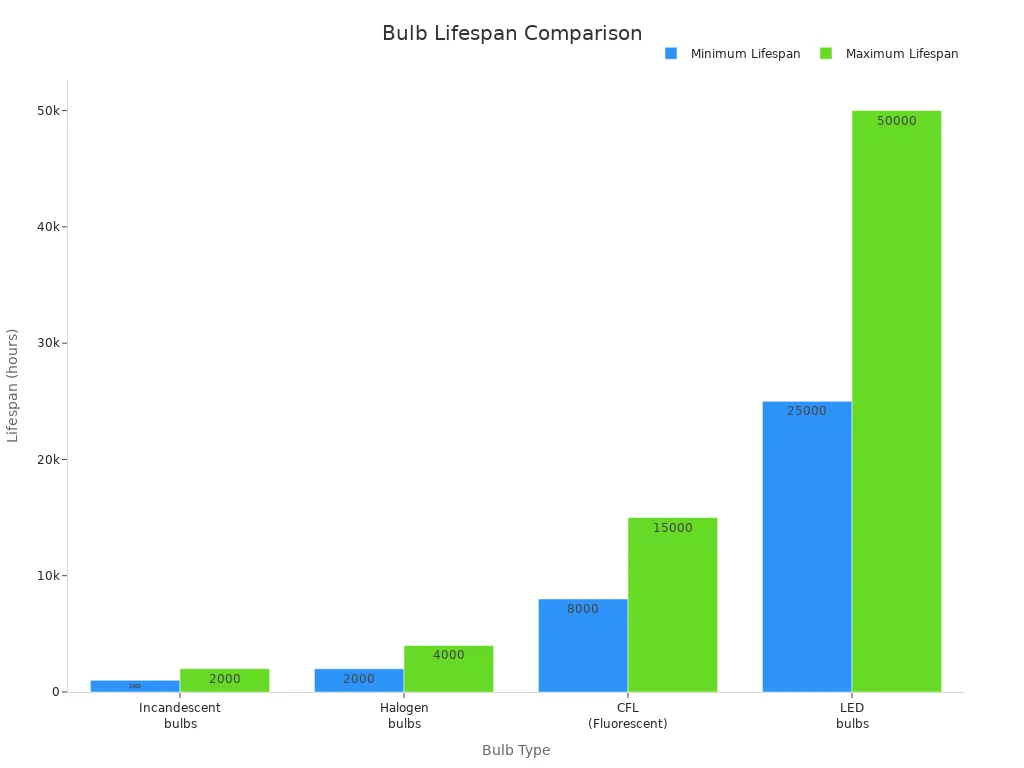
Led lighting helps you save the most energy. Led bulbs use little power and shine brightly. They last a long time, from 25,000 to 50,000 hours. Some led bulbs last even longer if you take care of them. If you use your lights for 8 to 12 hours each day, led bulbs can last up to 20 years. You do not have to change them often. Led bulbs are very efficient, so you get more light for less energy. Offices, stores, and warehouses use led bulbs because they save the most energy.
Bulb Type | Average Lifespan (hours) | Energy Efficiency (lumens per watt) |
|---|---|---|
LED | 25,000 - 50,000 | >100 |
Fluorescent | 6,000 - 15,000 | 50 - 100 |
Incandescent | 1,000 - 1,500 | 16 |
Tip: Led bulbs last much longer than cfl and incandescent bulbs. You save money and energy with led bulbs.
Fluorescent Performance
Fluorescent bulbs work well and last a fair amount of time. You can use fluorescent bulbs for 6,000 to 15,000 hours before changing them. These bulbs use less energy than incandescent bulbs but more than led bulbs. Fluorescent bulbs are good for big rooms and offices. Many businesses use cfl bulbs because they help save energy. Fluorescent bulbs make 50 to 100 lumens per watt, so they are better than incandescent bulbs. You get steady light with fluorescent bulbs, but you need to replace them more often than led bulbs.
Bulb Type | Energy Efficiency (lumens/watt) | Lifespan (hours) |
|---|---|---|
Fluorescent | 50-100 | 6,000 - 15,000 |
Incandescent | 16 | 1,000 - 2,000 |
LED | >100 | Up to 25,000 |
Incandescent Limitations
Incandescent bulbs do not last long and use lots of energy. You have to replace incandescent bulbs often, usually after about 1,000 hours. These bulbs use much more power than led or fluorescent bulbs. Most of the energy from incandescent bulbs turns into heat, not light. This means you pay more for electricity and fixing lights. Incandescent bulbs do not help you save energy. You may see that incandescent bulbs cost more to keep working. Many homes and businesses spend hundreds of dollars each year on energy for incandescent bulbs.
"Incandescent bulbs turn only about 10% of energy into light. The rest becomes heat. Their average life is about 1,000 hours, so you replace them often."
Incandescent bulbs cost more to keep than other bulbs.
You get less efficiency and use more energy with incandescent bulbs.
Cost & Brightness Comparison
Upfront vs. Long-Term Cost
When you choose light bulbs for your business, you need to think about both the upfront price and the total cost over time. Incandescent bulbs cost less at first, about $0.94 each. LED bulbs cost more, around $4.99 each. However, the real difference shows up when you look at long-term savings. Over ten years, an incandescent bulb can cost you about $236, while an LED bulb costs less than $31.43. This happens because LED bulbs last much longer and use less energy.
Light Type | Lifespan (Hours) | Upfront Cost | Lifetime Cost |
|---|---|---|---|
Incandescent | 1,000 | Low | High |
CFL | 10,000 | Medium | Low |
LED | 50,000 | High | Low |
You also need to think about maintenance costs. You will replace incandescent bulbs about 25 times before you need to change one LED bulb. Each replacement can cost you $25 in labor, adding up to $625 over the life of an LED bulb. LED bulbs help you lower your costs for both energy and maintenance.
Brightness (Lumens) Explained
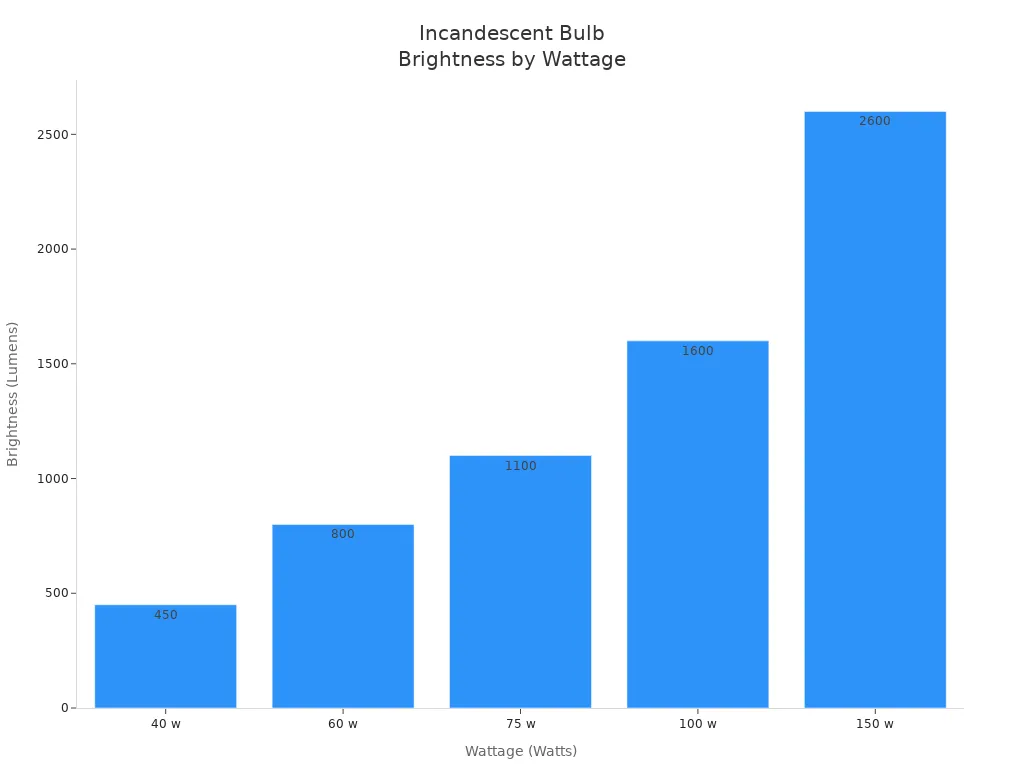
Brightness tells you how much light a bulb gives off. You measure brightness in lumens. Higher lumens mean brighter light. For example, a 40-watt incandescent bulb makes about 450 lumens. A 100-watt bulb gives you 1,600 lumens. LED and fluorescent bulbs can produce the same brightness with less energy.
Bulb Type | Watts Used | Lumens Produced |
|---|---|---|
Incandescent | 40 w | 450 lm |
Incandescent | 60 w | 800 lm |
Incandescent | 75 w | 1,100 lm |
Incandescent | 100 w | 1,600 lm |
Incandescent | 150 w | 2,600 lm |
You need different brightness levels for each space. Workspaces and kitchens need 3,000 to 4,000 lumens. Living rooms and bedrooms need 1,000 to 2,000 lumens. LED lighting lets you reach these levels with less energy and fewer bulb changes.
Maintenance & Environmental Impact
Maintenance Needs
You want your lights to work every day. Each bulb type needs different care. Incandescent bulbs burn out fast. You check for burnt bulbs often. You clean fixtures to keep them bright. You replace incandescent bulbs more than others. Fluorescent bulbs need tube and ballast changes. You clean them so dust does not block light. You must follow rules when you throw away fluorescent bulbs. They have hazardous materials inside. LED bulbs need less work than others. You clean them to remove dust and dirt. You check for flickering or dimming. Sometimes, you replace drivers or power supplies if needed.
Here is a quick look at what each bulb needs:
Bulb Type | Maintenance Requirements |
|---|---|
Incandescent | Check for burnt bulbs, clean fixtures, replace bulbs often. |
Fluorescent | Change tubes and ballasts, clean fixtures, follow disposal rules for hazardous materials. |
LED | Clean regularly, check for problems, replace drivers or power supplies if needed. |
Tip: Cleaning and checking your lights often keeps them safe and bright.
Environmental Considerations
You help the earth when you pick the right bulbs. LED bulbs use much less energy than incandescent bulbs. They last longer and make less carbon dioxide. LED bulbs do not have hazardous stuff inside. You can recycle LED bulbs easily. Fluorescent bulbs use less energy than incandescent bulbs. But they have mercury inside. You must recycle fluorescent bulbs to keep mercury out of nature. Recycling lets you reuse glass and metal parts. Some places make you recycle fluorescent bulbs by law. Incandescent bulbs do not last long. They make the most carbon emissions. They waste energy and are not good for the planet.
Bulb Type | Energy Efficiency | Lifespan | Environmental Impact |
|---|---|---|---|
LED | Uses up to 90% less energy | Lasts 25 times longer | Lowest CO2 emissions, easy to recycle |
Fluorescent | Moderate | Lasts 3-5 times longer | Has mercury, needs special disposal |
Incandescent | Only 10% energy makes light | Shortest life | Highest CO2 emissions, hard to recycle |
LED bulbs do not have hazardous stuff.
Fluorescent bulbs need special recycling for mercury.
Recycling fluorescent bulbs lets you reuse glass and metal.
Some places make recycling fluorescent bulbs a law.
Note: Picking green lighting helps you save energy and protect the earth.
Commercial Applications
Offices & Retail
Offices and stores use different kinds of lights. You want your workspace to look bright and friendly. Stores use track lights, overhead fluorescent lights, and recessed lights. These lights help show off products and light up the room. Offices need bright bulbs that save energy. LED lights make products look better and help save money. The right lighting can change how people feel. Warm lights help customers feel calm. Bright lights help workers stay awake and focused.
Offices use bright lights for better work.
Stores use track, fluorescent, and recessed lights for displays.
LED lights make products look good and cost less.
Warm lights make people feel relaxed. Bright lights help workers focus.
Tip: The lighting you pick can change how customers act and how well employees work.
Warehouses & Industry
Warehouses and factories need strong lights that last long. Good lighting keeps workers safe and helps them do their jobs. LED lights are best for these places. You can save up to 80% on electricity by switching from old bulbs. LED lights last about 25,000 hours, so you do not change them often. One warehouse got better lighting and saw workers do 10% more work and make 20% fewer mistakes. Good lights help workers pay attention and make fewer errors. Experts say LED high bay lights are great for big spaces. Spec Grade LEDs give bright light for jobs that need care.
LED lights save money and need less fixing.
Bright warehouses are safer and work better.
High bay LEDs are good for large areas.
Good lights help workers focus and avoid accidents.
Hospitality & Restaurants
You want your restaurant or hotel to feel nice. The bulbs you pick change the mood and your costs. Incandescent bulbs make a warm, soft light but use more power. Fluorescent bulbs save energy but can feel too bright and need ballasts. LED bulbs cost more to put in but save money later. They use up to 80% less energy and last much longer. You can use LEDs to set the mood for eating or events.
Type | Energy Efficiency | Installation Costs | Atmosphere Created |
|---|---|---|---|
Incandescent | Low | Low | Warm and relaxing |
Fluorescent | Moderate | High | Bright but harsh |
LED | High | High | Customizable ambiance |
Note: LED bulbs help you spend less on electricity and make the right mood for guests.
Comparison Chart
Feature Table
It helps to look at the main features together. This makes it easier to pick the right bulb for your business. The chart below shows how each bulb is different. You can see energy use, how long bulbs last, cost, brightness, care, and how they affect the earth. Use this chart to choose the best bulb for your space.
Feature | LED Bulbs | Fluorescent Bulbs | Incandescent Bulbs |
|---|---|---|---|
Energy Efficiency | ⭐⭐⭐⭐⭐ Very high | ⭐⭐⭐ Moderate | ⭐ Low |
Lifespan | 25,000–50,000 hours | 7,000–15,000 hours | 1,000–1,500 hours |
Cost (Upfront) | Higher | Medium | Low |
Cost (Lifetime) | Lowest | Moderate | Highest |
Brightness (Lumens/Watt) | 100+ | 50–100 | 10–17 |
Maintenance | Minimal | Moderate | Frequent |
Environmental Impact | Eco-friendly, recyclable | Contains mercury, recycle | Not eco-friendly |
Light Quality | Customizable, clear | Cool, steady | Warm, soft |
Common Uses | Offices, retail, industry | Schools, warehouses | Decorative, small spaces |
LED bulbs are better in almost every way. They save the most energy and last the longest. You pay less over time and get bright light. You do not need to fix or change them often. Fluorescent bulbs work well in big rooms. You must be careful when throwing them away because of mercury. Incandescent bulbs make warm light but use more power. You have to change them a lot.
Pick LED bulbs to save money and help the planet.
Use fluorescent bulbs for large rooms with steady light.
Choose incandescent bulbs for decorations or soft light.
This chart lets you compare bulbs fast. You can find the best type for your business needs.
Recommendations for Choosing Commercial Light Bulbs
Best Overall Option
You want your business to look good and work well. Most experts say LED lighting is the best choice. You get bright light and save energy. LED bulbs last a long time. They help you spend less money and need less fixing. You also make a smart choice for saving energy at work.
When you pick commercial light bulbs, you should check a few things. These help you find the right bulbs for your space:
Criteria | Description |
|---|---|
Lumen Output | Tells how bright the bulb is. |
Color Temperature | Shows if the light looks warm or cool. |
Color Rendering Index (CRI) | Tells how true colors look under the light. |
Energy Consumption | Shows how much power the bulb uses. |
Lifespan | Tells how long the bulb lasts before you need to replace it. |
Compatibility | Checks if the bulb fits your fixtures or control systems. |
You should think about these things when you choose bulbs:
Brightness and lumens
Color temperature (Kelvin)
Color rendering index (CRI)
Energy efficiency and wattage
Lifespan
LED bulbs are great in every way. You get lots of light for big rooms. You can pick the color temperature you want. LED bulbs have high CRI, so colors look real. You save energy and money over time. You also help the earth by using less power.
Tip: LED bulbs give you bright light, save energy, and last long. You spend less on new bulbs and bills. You also make a smart money choice with energy efficient lighting.
When to Consider Fluorescent or Incandescent
Sometimes, you may need fluorescent or incandescent bulbs. You should know when these are better.
Fluorescent bulbs work well in big rooms like warehouses or schools. You get steady light and save some energy. CFL bulbs help you use less power than old bulbs. You may need fluorescent bulbs if your lights do not work with LED bulbs. You must be careful when you throw away fluorescent bulbs because they have mercury.
Incandescent bulbs are good for places where you want soft, warm light. You may use them for decorations or small spaces. Incandescent bulbs cost less at first, but you pay more later. You change them often because they do not last long. They use more energy and cost more to run. Incandescent bulbs do not save much energy.
You should compare your needs before you pick bulbs:
Brightness and lumens: Offices and stores need lots of light. Warehouses need strong, steady light. Restaurants may want softer light.
Color temperature: Cool light is good for work. Warm light is nice for eating or relaxing.
Color rendering index: Stores and offices need high CRI for true colors.
Energy efficiency and wattage: LED bulbs use the least energy. Fluorescent bulbs use more than LED but less than incandescent.
Lifespan: LED bulbs last the longest. Fluorescent bulbs last longer than incandescent. Incandescent bulbs need to be changed a lot.
Note: You should pick LED bulbs for most businesses. Use fluorescent bulbs for big rooms or if your lights need them. Pick incandescent bulbs only for decorations or special lights.
You make the best choice when you match your bulbs to your needs. You save money and make your space comfortable. You help the earth and spend less on fixing lights. You get the most from your bulbs when you use LED lighting for most places. You may use fluorescent or incandescent bulbs for special cases, but always check your fixtures and needs first.
You now know LED bulbs work best for most commercial spaces. They save energy, last long, and give bright light. When you choose bulbs, think about these steps:
Check how much brightness your space needs.
Pick a color temperature that fits your mood.
Look for high energy ratings.
Ask lighting experts for help.
Try smart lighting for better control.
Always match your lighting to your business needs for the best results.
FAQ
What makes LED bulbs better for businesses?
You get more light and save energy with LED bulbs. They last longer than other types. You spend less money on replacements and electricity. LED bulbs also help you protect the environment.
Can you use LED bulbs in old fixtures?
Most LED bulbs fit standard fixtures. You should check the bulb size and base before buying. Some older fixtures may need an adapter or a new driver for LED bulbs.
Do fluorescent bulbs need special disposal?
Yes, you must recycle fluorescent bulbs. They contain mercury, which harms the environment. Many stores and recycling centers accept used fluorescent bulbs.
How do you choose the right brightness for your space?
Look at the lumens rating on the bulb package. Higher lumens mean brighter light. Offices need more lumens than break rooms. You should match the brightness to your room’s purpose.
Are incandescent bulbs good for any commercial use?
You can use incandescent bulbs for decoration or soft lighting. They work well in small spaces or for creating a warm mood. You should avoid them for main lighting because they use more energy and burn out quickly.
See Also
Comparing LED Lighting Solutions With Conventional Options
Exploring GE LED Bulbs: Advantages And Choosing Guide
Understanding LED Bulbs: Their Technology And Benefits