Commercial Outdoor Lighting LED Systems: Installation Best Practices and Maintenance Tips

You should put in commercial outdoor lighting systems carefully. This helps them work well and stay safe. Many businesses have problems when setting up led lighting. They also face issues with outdoor lighting maintenance. Problems include putting lights in the wrong place. This can cause light pollution. You need to do regular checks to stop safety problems. You must also follow local rules about fixture types. Always read the manufacturer’s instructions before you begin. > Tip: Be proactive and plan regular checks. This keeps your led fixtures working well. You can get more help in the About Us, Home, and Product sections.
Key Takeaways
Make a good plan for your LED lighting setup. This helps you avoid errors and keeps everyone safe. Check and clean your outdoor lights often. This makes them last longer and work better. Pick strong and weather-resistant fixtures. These protect your lights from bad weather. Use smart controls and automation to save energy. This also helps keep your property safe. Always follow local codes and the manufacturer's instructions. This makes sure your installation is safe and works well.
Commercial Outdoor Lighting Benefits
Energy Efficiency With LED Lighting
Commercial outdoor lighting with led flood lights saves energy. These lights use less power than old types. The table below shows how much energy you can save:
Lighting Type | Energy Consumption | Cost Reduction |
|---|---|---|
Traditional Floodlights | 150W each | Over 70% savings |
LED Floodlights | 50W each | Significant savings |
Led flood lights use up to 75% less energy than incandescent bulbs. This helps you pay lower energy bills. It also helps the environment. Many led flood lights have motion sensors and timers. These features save even more energy by turning on lights only when needed.
Tip: Led flood lights with smart controls help you save energy. They also help your business reach sustainability goals.
Safety And Security Advantages
Led flood lights make your business safer. Bright light helps people see better at night. Walkways, parking lots, and entrances are safer for everyone. Good lighting stops accidents and keeps away unwanted activity. Led flood lights can work with motion sensors. These sensors turn on lights when someone comes close. This makes your property feel safer and more friendly.
Led flood lights give clear light for paths and parking lots.
Motion-activated led flood lights turn on when there is movement.
Smart lighting systems change brightness to keep your property safe.
Durability And Cost Savings
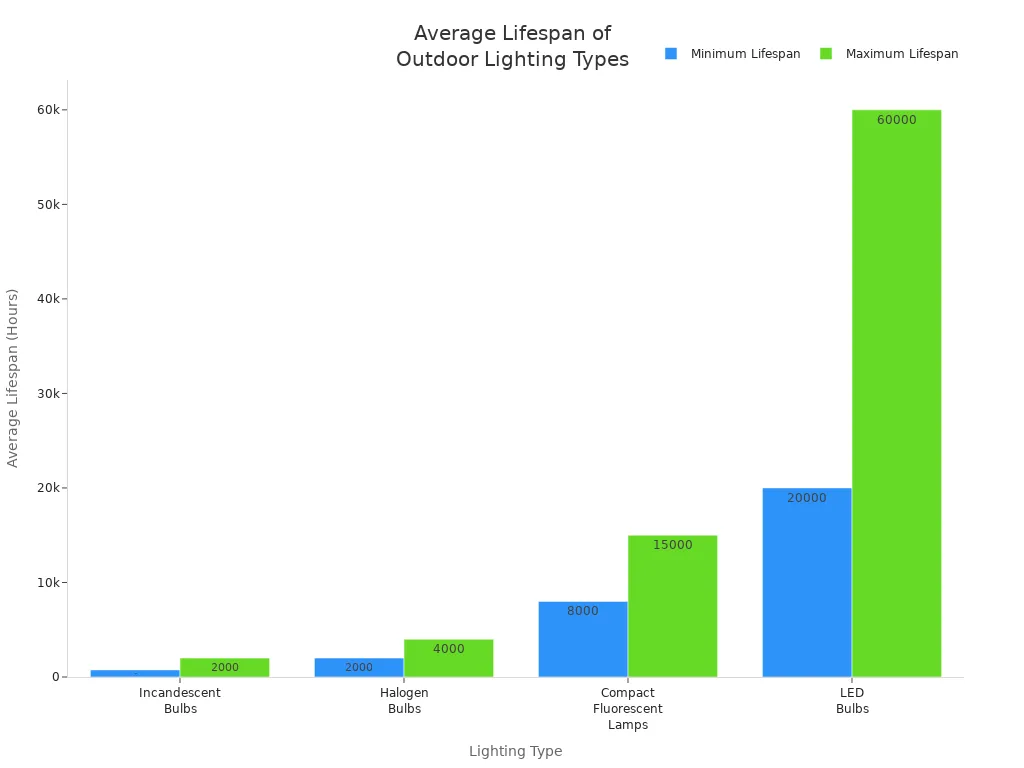
Led flood lights last longer than other bulbs. You do not need to change them often. This saves you time and money. The chart below shows how long each bulb type lasts:
Lighting Type | Average Lifespan (Hours) |
|---|---|
Incandescent Bulbs | 750 - 2,000 |
Halogen Bulbs | 2,000 - 4,000 |
Compact Fluorescent Lamps | 8,000 - 15,000 |
LED Bulbs | 20,000 - 60,000 |
Led flood lights last a long time. You do not need to replace them often. This means less waste and lower costs. Commercial outdoor lighting with led flood lights is a smart choice for your business.
Proper LED Lighting Installation Steps
Planning And Assessing Needs
Start with a good plan before you install led lighting. Planning helps you avoid mistakes. It makes sure your outdoor lighting works well. Look at the area you want to light. Think about how bright you want it. Make sure the light looks even everywhere. Pick the right fixtures for your space. Decide where to put each fixture. Use energy-saving options and smart controls. These help you save power and money. Follow the best ways to install your system. Set up a schedule to check and clean your lights. This keeps your system working for a long time.
Here is a table that shows the main steps to follow when planning and checking your needs:
Key Step | Description |
|---|---|
Light Levels and Uniformity | Get the right brightness and spread light evenly for safety. |
Fixture Selection and Placement | Choose fixtures by brightness, beam angle, and color temperature. |
Energy Efficiency and Sustainability | Use led technology and smart controls to save energy and help the environment. |
Installation Best Practices | Install your system the right way for safety and good performance. |
Maintenance of Outdoor LED Systems | Clean and check your lights often to help them last longer and work better. |
Tip: Always check local rules and manufacturer instructions before you start. This helps you avoid problems and keeps your project safe.
Choosing LED Flood Lights And Fixtures
Picking the right led flood lights and fixtures is important. You need to think about how strong the lights are. Check if they can handle bad weather. Decide how bright you want them to be. The color of the light matters too. Put the fixtures in the best spot for your needs.
Here is a table to help you choose the best led flood lights and fixtures:
Factor | Description |
|---|---|
Durability | Pick materials that do not rust and have strong glass for outdoors. |
Weather Resistance | Choose fixtures with an IP65 rating or higher to protect against dust and water. |
Brightness | Decide how much light you need and pick energy-saving options. |
Color Temperature | Pick the right color for your space, like cool white for safety or warm white for comfort. |
Installation | Put and set up fixtures the right way for the best results. |
Note: Led flood lights that are strong and can handle weather will last longer and need less fixing.
Wiring And Electrical Safety
You must follow safety rules when you install led flood lights. Safe wiring keeps your system working. It protects people from getting hurt. Always check the National Electrical Code, OSHA standards, and ADA rules. These rules help you make sure your installation is safe and legal.
Safety Measure | Description |
|---|---|
National Electrical Code | All states use this code for the minimum safety standards for electrical installations. |
OSHA Standards | These rules keep workers safe during installation. |
ADA Requirements | These rules make sure your lighting is easy for everyone to use, including people with disabilities. |
Tip: Hire a licensed electrician if you are not sure about wiring or safety codes. This can stop accidents and costly mistakes.
Fixture Placement And Sunlight Protection
Where you put your led flood lights is very important. Try to keep fixtures away from direct sunlight. Sunlight can cause UV damage. This makes plastic covers turn yellow and break easily. Heat from the sun can bend covers and make them fail. Cold weather can make some plastics break. Humidity and moisture can fog or crack the covers. This makes the lights work worse.
UV rays can make fixtures yellow and break.
Heat can bend plastic covers and make them fail.
Cold can make plastics break.
Humidity and moisture can cause fog and cracks.
Always follow the manufacturer's rules for installation and mounting. This stops damage and helps your led flood lights last longer.
Surge Protection And Circuit Safety
Surge protection is very important for led lighting installation. Power surges can break your led flood lights and cost you money. Put surge protectors close to your fixtures or drivers. Make sure the surge protector matches your system’s voltage and current. Always connect the surge protector to a good ground. This helps send extra voltage away from your system safely.
Put surge protectors near your led flood lights.
Make sure the surge protector fits your system’s voltage and current.
Ground the surge protector well.
Follow the manufacturer's instructions for installation.
Test your system after you install the surge protector.
Check surge protectors often. Look for cracks or burn marks. Watch the lights to see if the protector still works. Clean all connections and replace old parts. Never skip grounding or use the wrong surge protector. Do not put the surge protector too far from your fixtures. Always follow the manufacturer's instructions for installation.
Alert: If you skip surge protection or use the wrong equipment, your system can break and repairs can cost a lot.
If you follow these steps, you can install led lighting the right way for your commercial outdoor lighting. Careful planning, good led flood lights, safe wiring, smart placement, and surge protection help your system last longer and work better.
Outdoor Lighting Maintenance Essentials
Routine Inspections And Cleaning
Check your outdoor lighting system often. Regular inspections help you find small problems early. Experts say you should look at your lights every month. Clean your LED fixtures every 3 to 6 months. If your business is near a busy road or the coast, clean and check more often. Busy places need checks every three months. Have a skilled technician look at your system once a year.
Monthly checks help you find problems fast.
Clean LED fixtures every few months.
Do maintenance twice a year for most places.
In busy or dirty areas, check and clean more often.
Get a professional to check your system every year.
Clean LED lights work better. Regular care helps you spot trouble early and makes your lights last longer. Taking care of your lights saves money over time.
Tip: Set reminders to check and clean your lights. Keeping up with maintenance stops expensive repairs.
Checking Connections And Corrosion
Check all electrical connections every time you inspect. Look for cracks, rust, or loose wires. These signs mean water or wear is hurting your system. Use weatherproof connectors to keep water out. Make sure all connections are tight once a year. This stops flickering and early failure. If you see rust, use cleaner to remove it. Replace broken connectors right away.
Look for cracks, rust, and loose wires in connectors.
Use weatherproof connectors to keep water out.
Tighten connections every year for steady lights.
Clean or change lenses and reflectors for better light.
Remove rust with special cleaner.
Taking care of connections helps your lights last longer. Good maintenance keeps your system working and stops outages.
Note: Always check for rust when you do maintenance. This easy step keeps your system safe.
Replacing Bulbs And Faulty Components
Bulbs and parts wear out after a while. Incandescent bulbs last about 1,000 hours. LED bulbs can last up to 25,000 hours or more. Most LED bulbs need changing every 3 to 4 years. If you use LED bulbs for 8 hours a day, they could last up to 17 years. Always pick good bulbs and parts for your system.
Cause | Explanation |
|---|---|
Environmental Factors | Changes in temperature can hurt LED drivers and make them not last as long. |
Improper Installation | Bad installation can make drivers and other parts fail early. |
Temperature Fluctuation | Cheap LEDs may crack or get too hot in bad weather. |
Structural Problems | Design mistakes can mess up electrical flow and how the system works. |
LED Driver Failure | Overheating from poor materials can break the driver. |
Change broken parts as soon as you see a problem. This keeps your lights safe and working well. Regular care helps you avoid sudden outages and costly fixes.
Lighting maintenance tips: Keep extra bulbs and parts ready. Quick changes keep your property bright and safe.
Scheduling Professional Maintenance
Getting professional help has many benefits. You get fast repairs, so your lights work again quickly. Service calls may be free, which saves money. You might get discounts when you add new lights or upgrade your system. Skilled technicians make sure your lights always look good and work well.
Professional care keeps your system ready.
You get quick repairs and less waiting.
Free service calls save you money.
Discounts help you upgrade for less.
Technicians find problems you might not see.
New lighting systems can pay for themselves in 2 to 3 years. LED lights use much less energy and last longer than old bulbs. Monthly energy bills can drop by 30 to 50 percent. Regular care lowers costs and helps your equipment last about 11 years if used daily.
Tip: Plan for long-term care of your lights. Pick strong, easy-to-care-for parts to save money over time.
Good maintenance and regular professional help keep your outdoor lighting system working great. These tips help you find small problems early and stop expensive repairs. Taking care of your lights protects your investment and keeps your property safe and looking nice.
Troubleshooting Commercial Outdoor Lighting Issues
Flickering Or Dim LED Lights
You may notice your brightest outdoor led flood light flicker or look dim. This is one of the most common outdoor lighting issues. Several things can cause this problem:
LED lights need a steady direct current. If the driver power supply is unstable, the lights may flicker.
Poor or damaged power supplies often cause voltage changes. This makes the lights flicker.
Voltage changes from unstable power sources can also lead to flickering.
Incompatible dimmers that do not match the LED drivers may cause problems.
Loose connections in fixtures or wiring can make lights dim or flicker.
To fix these issues, follow these steps:
Check if you have high-quality LED products that match your setup.
Inspect all electrical connections. Look for loose wires.
Make sure your LED lights work with the dimmer switches you use.
Review the driver components. Confirm they work well.
Check for improper surge wattage ratings or power supply problems.
Use a multimeter to monitor voltage levels in the circuit while the lights are on.
Tip: If you see flickering or dimming, act quickly. Early action helps you avoid bigger problems with your brightest outdoor led flood light.
Power Supply And Connectivity Problems
Power supply and connectivity problems can stop your brightest outdoor led flood light from working. You need to check a few things to find the cause:
Find the specifications for your LED lights. Make sure they match your system.
Check the power supply specs. Confirm they meet your needs.
Set the power supply to the correct input voltage. This prevents damage.
Look for electrical shorts. These can cause power to cut in and out.
Use a multimeter to measure the output DC voltage. Make sure it works right.
You can solve many power supply issues by following these steps:
Do a visual inspection. Look for wear, damage, or corrosion.
Test voltage and continuity with a multimeter. This checks power delivery and circuit health.
Clean your fixtures often to keep the brightest outdoor led flood light shining.
Inspect your system regularly to catch problems early.
Ask a licensed electrician for help with complex wiring or ongoing issues.
Make sure fixtures are in the right place.
Protect wiring from rain and sun to avoid future trouble.
Note: The best led flood lights last longer when you keep the power supply and connections in good shape. Good care helps your led lighting system work well and keeps your property safe.
Optimizing LED Lighting Performance
Upgrading Controls And Automation
Smart controls and automation can make your outdoor lighting better. You can use smart lighting to control lights from anywhere. A mobile app lets you turn lights on or off. Motion sensors help save energy by turning lights on only when needed. This keeps your property safe and saves money. Automation helps your lights react to changes outside. You do not have to remember to turn off the lights.
Smart controls let you change lights from far away.
Motion sensors turn on lights when someone is close.
Mobile apps make it easy to keep your property safe.
Tip: Smart controls help you save energy and make your lighting system simple to use.
Adjusting Light Levels And Timers
You can set your lights to fit what you need. Timers and dimmers let you pick when and how bright lights are. This saves energy and keeps your property safe. Timers turn lights on only when needed. You can set them for dusk to dawn. Astronomical clocks change the schedule for sunrise and sunset. This keeps your lights on at the right times all year. PWM dimming lets you change brightness without hurting led bulbs.
Control Method | Description |
|---|---|
Delay Scheduling | Turns lights off after a set time if no motion is detected. |
Astronomical Clock Adjustments | Changes lighting based on sunrise and sunset, adjusting for seasons and time zones. |
PWM Dimming | Adjusts brightness by quickly turning lights on and off, keeping led lifespan long. |
Timers and dimmers help you use less energy. They also keep your property safe by having lights on when needed and off when not.
Monitoring Energy Usage
You can see how much energy your lights use. Centralized control systems show reports and let you make changes in one place. Advanced lighting controls tell you where and when you use the most power. Energy management software gives you charts and reports. You can use this information to make your system work better and safer.
Tool/Technique | Description |
|---|---|
Centralized Control Systems | Monitor and report energy usage from one platform. |
Advanced Lighting Controls | Track energy use by location and time, adjust output as needed. |
Energy Management Software | Visualize, report, and adjust energy use for better efficiency and security. |
Watching your energy use helps you find problems early. You can make changes to save energy and keep your property safe. Smart controls and sensors can cut energy use by up to 30%. This saves money and keeps your business safe.
Note: Using advanced monitoring tools helps you save energy and keep your property safe.
You can keep your commercial outdoor lighting system working well by following best practices for installation and maintenance. When you take care of your LED lights, you get many long-term benefits:
You save money on energy bills.
You spend less on repairs and replacements.
Your lights last longer and stay strong in tough weather.
You help the environment by lowering carbon emissions.
You make your property safer and more welcoming.
Stay proactive with your lighting care for the best results.
FAQ
How often should you inspect your commercial outdoor LED lights?
You should inspect your lights every 1 to 3 months. Regular checks help you find problems early. Clean your fixtures every few months. In busy or harsh environments, inspect and clean more often for best results.
What should you do if your LED lights start flickering?
First, check all connections for loose wires. Make sure your power supply works well. Replace any faulty drivers or bulbs. If the problem continues, ask a licensed electrician for help.
Can you install LED flood lights yourself?
You can install simple fixtures if you follow the manufacturer’s instructions. For complex wiring or large systems, hire a licensed electrician. This keeps your system safe and up to code.
How do you protect outdoor LED lights from weather damage?
Use fixtures with a high IP rating, like IP65 or higher. Place lights away from direct sunlight and moisture. Check seals and covers often. Replace damaged parts quickly to keep your system safe.
What are the main benefits of using LED flood lights outdoors?
LED flood lights save energy, last longer, and lower your maintenance costs. They give bright, clear light for safety. You help the environment by using less power and creating less waste.
See Also
Exploring LED Outdoor Lighting: Advantages, Varieties, and Setup Tips
Advantages of LED Parking Lot Lights: Setup and Care
Ultimate Resource for LED Area Lighting: Varieties and Setup Tips
Floodlight Systems: Expert Setup and Design Approaches for Properties
Guide to Installing Street Light Poles: Safety and Longevity Tips