Commercial vs. Industrial Lighting: Key Differences and Selection Criteria for Your Business

Choosing the right lighting for your business, whether it's commercial vs. industrial lighting, helps people work better and stay safe. You notice the difference every day, whether you have a store, factory, or office.
Well-lit workspaces help employees see and avoid dangers, which lowers the chance of accidents. Good lighting can prevent incidents like tripping, falling, or using machines incorrectly. Industrial lighting is crucial for safety as it helps people see clearly and understand their surroundings. It also impacts how workers feel, their alertness, and their overall productivity. Poor lighting increases the likelihood of accidents, and the National Safety Council reports that inadequate lighting contributes to about one in four accident insurance claims.
Utilizing both artificial and natural light enhances visibility for workers. It can reduce seasonal depression and other mood-related issues, making workers happier and more productive.
You want your lighting to ensure safety, improve work efficiency, and enhance the aesthetic of your space. This guide assists you in choosing between commercial vs. industrial lighting for your business, rather than for home use. For more information, feel free to visit our About Us and Product pages to discover additional solutions.
Key Takeaways
Pick commercial lighting for stores and offices. It helps make people feel welcome. It also makes customers enjoy their visit more. - Use industrial lighting in factories and warehouses. This keeps workers safe. It gives bright light so people can see well for careful work. - Think about using energy-saving lights like LED lights. These lights help you spend less on bills. They also lower the cost to fix or replace lights later. - Always look at local safety rules, like OSHA and NFPA. This makes sure your lights follow the right rules. - Talk to lighting experts to check your space. They can help you find the best lights for your business.
Commercial vs. Industrial Lighting Overview
What Is Commercial Lighting?
You find commercial lighting in places like stores and offices. It helps people shop, work, and relax. This lighting makes spaces look bright and friendly. It shows products clearly and makes customers feel good. Employees also like working in well-lit areas. Fixtures match the style of the space. Many use smart controls for easy changes.
Here is a table showing where commercial lighting is used and what makes each place special:
Environment Type | Characteristics |
|---|---|
Department Stores | Sell many products in many colors. Lighting matches the mall’s style. |
Shopping Malls | Made for a nice shopping trip. Stores sell everyday items. |
Specialty Stores | Focus on certain things, like clothes or gadgets. Lighting makes displays stand out. |
Vegetable Market Type | Shops sell fresh food and basics. Lighting is bright and useful. |
Self-Service Stores | Customers pick items themselves. Lighting helps show all the goods. |
Jointly Operated Stores | Many shops together. Lighting must work for all. |
Pedestrian Commercial Streets | Made for shopping and eating. Lighting makes the street feel nice for walkers. |
Commercial lighting cares about how things look and work. It uses different types of lights for balance. These include ambient, accent, and task lights. You want lights that are easy to fix and save energy. New rules ask for greener lighting. Many places use LED lights and smart systems to save power and make people comfortable.
What Is Industrial Lighting?
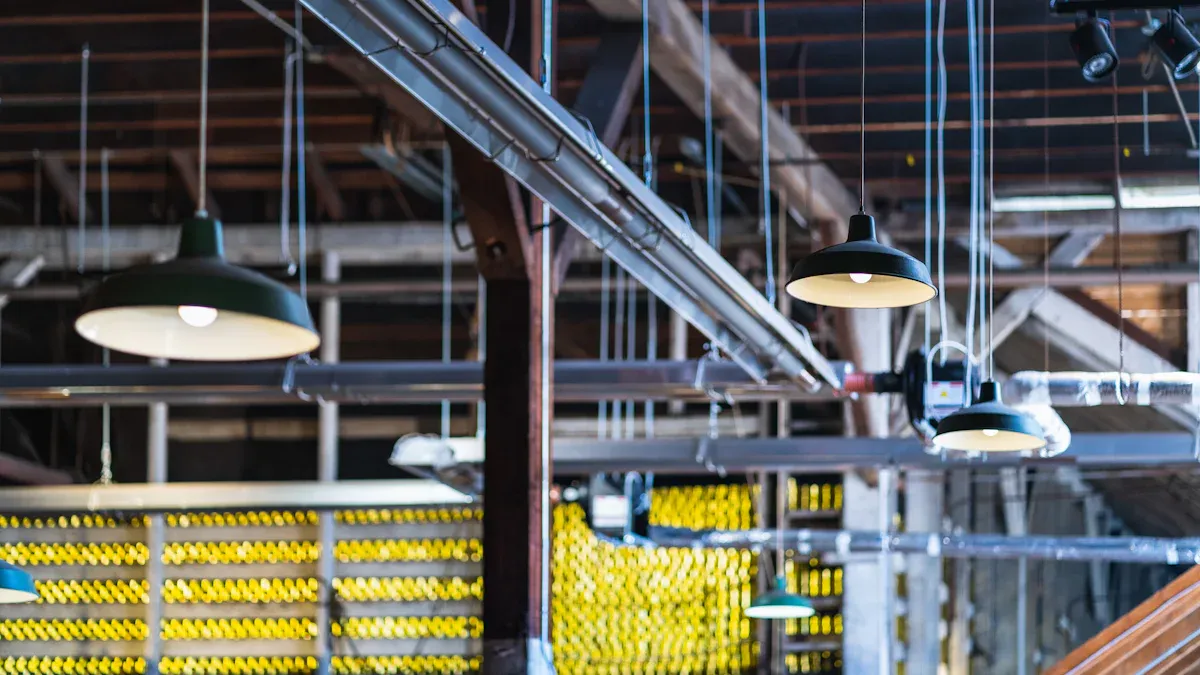
Industrial lighting is used in factories and warehouses. It helps workers see well and stay safe. This lighting is important for detailed work. It must handle dust, chemicals, and shaking. Fixtures need to last long and survive hard hits or hot and cold weather.
Industrial lighting is very bright and has few shadows. It is also very strong. You often see high bay fixtures and floodlights here. Task lamps help with careful work. These lights keep workers safe. Industrial lighting must follow strict safety rules, like OSHA and NFPA codes.
Here is a table that compares industrial and commercial lighting:
Aspect | Industrial Lighting | Commercial Lighting |
|---|---|---|
Purpose | Helps with careful and detailed work | Makes customers happy and helps with tasks |
Design Objectives | Very bright, few shadows for safety | Uses layers of light for looks and tasks |
Durability | Handles tough stuff like dust and chemicals | Made for style and easy fixing |
Lighting Technologies | High bay lights, floodlights, task lamps | Dimming, color-changing LEDs, smart controls |
Compliance | Follows OSHA, NFPA, IES rules | Meets IECC, LEED, and building rules |
Industrial lighting must be tough and dependable. It needs more care because it faces hard conditions. You should clean, change lamps, and check systems often to keep them working.
Key Differences in Application
When you look at commercial and industrial lighting, you see big differences. Commercial lighting makes spaces look nice and comfy. Industrial lighting keeps workers safe and helps them do hard jobs.
Commercial lighting cares about looks and how customers feel. You want lights that fit your style and make people feel welcome.
Industrial lighting cares about safety and doing the job right. You need lights that follow safety rules and help with careful work.
Commercial places use lights that are easy to fix and save energy. You often see smart controls and LED lights.
Industrial places need lights that can handle dust and chemicals. You must check and fix them often to stay safe.
Tip: Always check local rules before picking lights for your business. Industrial lighting must follow OSHA and NFPA codes. Commercial lighting must meet building and energy rules like IECC and LEED.
Here are the main differences between commercial and industrial lighting:
Commercial lighting makes spaces friendly and shows off products.
Industrial lighting is very bright for careful work and safety.
Commercial places use different lights for looks and jobs.
Industrial places need strong lights and must follow safety rules.
Maintenance is different. Industrial lighting needs more checks. Commercial lighting is easier to keep up.
You should also think about saving energy and being green. Many businesses pick LED lights and smart systems to use less power and follow new rules. You want lights that save money and help your business be better for the planet.
Commercial and industrial lighting do different jobs. You must pick lights based on your space, safety needs, and business goals. Good lighting keeps people safe, helps them work better, and makes your space nicer.
Design & Function
Commercial Lighting Design Goals
When you plan commercial lighting, you think about more than brightness. You want lights that help people see well and feel relaxed. Good commercial lighting makes your brand stand out. It also makes your space look nice and welcoming. You want to save energy and follow important rules too. The table below lists the main goals to keep in mind:
Design Goal | Description |
|---|---|
Functionality | Give enough light for tasks and let people change it for comfort. |
Use lighting that shows your brand, sets the mood, and adds value. | |
Use things like sensors and daylight to save money and meet energy rules. | |
Compliance with Regulations | Know energy standards like ASHRAE 90.1 and IECC to save money and work better. |
You want your commercial lighting to fit your business. You also want lights that help people do their jobs and feel good.
Industrial Lighting Design Priorities
Industrial lighting cares most about safety and how well it works. You need lights that work in hard places like factories and warehouses. These places need strong fixtures that last a long time. You want bright light with few shadows. This helps workers see details and stay safe. Industrial lighting must follow strict safety rules. You also want lights that work even in dust, heat, or cold.
Balancing Efficiency and Ambiance
You can balance saving energy and making your space look nice. In commercial lighting, you use LED lights and smart controls. These help you spend less money and use less power. You also want your lights to match your building’s style. This makes your space feel friendly and supports your brand. Good lighting helps workers feel happy. You can use best practices for office lighting to get the right mix. Good lighting makes your business work better and look better.
Durability & Safety Requirements
Industrial Lighting Safety Standards
Industrial lighting must follow strict safety rules. These rules keep workers safe and help stop accidents. OSHA says how bright lights should be in different places. Warehouses need at least 5 foot-candles. Factories need 10 foot-candles for tasks. Fixtures must be at least 7 feet above work areas or have shields that do not break. Secure mounting stops dangers and keeps people safe. The table below lists safety standards and who checks them:
Safety Standard | Description | Enforcement Body |
|---|---|---|
OSHA | Sets brightness and safety rules | Occupational Safety and Health Administration |
NFPA | Gives emergency lighting rules | National Fire Protection Association |
CCOHS | Shares lighting advice | Canadian Centre for Occupational Health and Safety |
EU-OSHA | Has workplace lighting rules | European Agency for Safety and Health at Work |
Tip: Always look at your local rules before you put in industrial lighting. Following these rules helps you see better and stay safe.
Commercial Lighting Compliance
Commercial lighting has rules to keep people safe. ADA rules make sure everyone can use your space. IBC tells you about emergency lights and safe exits. NEC gives rules for safe electrical setups. OSHA also says how bright lights should be and where exits are. These rules help you make a safe place for customers and workers.
ADA rules help everyone get around.
IBC covers emergency lights and safe exits.
NEC stops electrical problems in lighting.
OSHA wants good lighting for safety.
Environmental Resistance
Lighting in businesses faces tough conditions. You need lights that can handle water, dust, and heat or cold. Factories and workshops use lights with IP66 or higher to block dust and water jets. Food places need IP67–IP69 for wet and clean areas. Outdoor lights need strong parts and sealed connectors to last. The table below shows what ratings and features you need:
Environment Type | Recommended IP Rating | Features Needed |
|---|---|---|
Factories and Workshops | IP66 or higher | Blocks dust and water jets |
Food Processing or Car Wash Facilities | IP67–IP69 | Handles wet and clean places |
General Outdoor Use | Varies | Strong parts and sealed connectors |
Pick metals that do not rust or plastics that do not fade in the sun. Waterproof parts keep lights safe from water. Fixtures must handle sunlight and hot or cold weather. LED lights can stop working well or change color in bad conditions. Choose lights that fit your space so your system works right.
Lighting Technologies
Commercial Lighting Solutions
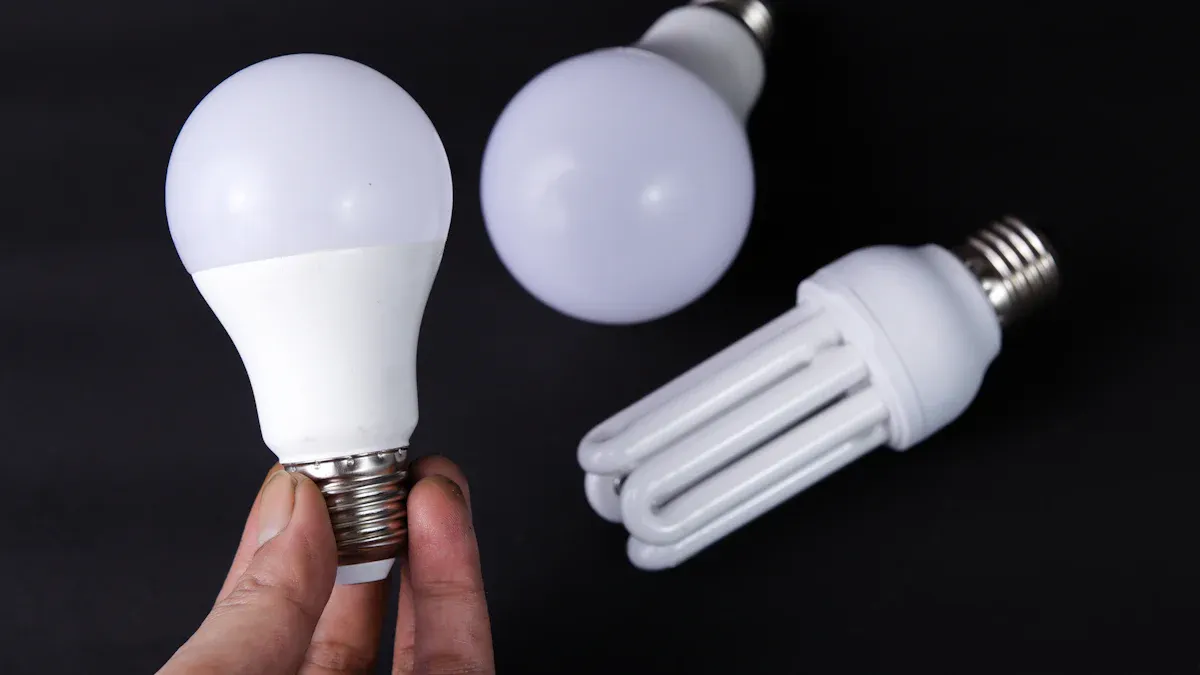
There are many choices for commercial lighting. Most businesses pick LED technology because it saves money and lasts long. You can use panel lights, downlights, or track lighting. These lights make spaces bright and friendly. Many places use smart controls. You can dim or change the color of the lights. This helps your store or office look modern and saves energy. Commercial lighting often uses layers. You mix ambient, accent, and task lighting. This makes your space useful and nice to look at. LED technology gives better color and less heat. This keeps customers and workers comfortable. Many buildings use energy-saving lights to cut costs and meet green rules.
Industrial Lighting Solutions
Industrial lighting works in hard places. You need strong fixtures that last many years. Most factories and warehouses use LED high bay lights and floodlights. These lights give bright and even light. You want lighting that handles dust, heat, and chemicals. LED technology is good for these places. It gives clear light and uses less power. You also do not need to change bulbs often. The table below shows why LED technology is a top pick for industrial lighting:
Feature | Description |
|---|---|
Energy Efficiency | LEDs can save up to 75% less energy compared to incandescent and fluorescent options. |
Reduced Maintenance | LEDs have lifetimes of 50,000 to over 100,000 hours, significantly reducing the need for replacements. |
Quality and Performance | LEDs provide higher quality light with better color rendering and targeted illumination capabilities. |
You get better results and lower costs with LED technology. Industrial lighting helps keep your workplace safe and bright.
Application-Specific Technologies
Some places need special lighting. You may work in a dangerous or wet area. You need fixtures that keep you safe. Here are some types you might use:
Fixtures with a 6P rating for short-term submersion
IP67 watertight rated fixtures
Low voltage lighting (12-volt AC) for small spaces
GFCI protection for extra safety
In some factories, you need even more protection:
Explosion-proof LED fixtures with Class, Division, and Group ratings
Sealed designs that stop sparks inside the fixture
Chemical-resistant materials and coatings
For the most dangerous areas, you need:
Class I rated lighting for places with flammable vapors or gases
Strong, explosion-proof construction for tough places
You should always match your lighting to your space. The right lighting keeps your business safe and helps you follow all rules.
Energy Efficiency & Sustainability
Energy Conservation Features
You can save energy in your business by picking the right lights. Many commercial and industrial lighting systems have special features to use less power. LEDs use a lot less energy than old bulbs and last much longer. You can add smart technology to control your lights and check them anytime. Occupancy sensors turn off lights when no one is there, so you do not waste power. Dimming lets you make lights brighter or dimmer when you need to. Daylight harvesting uses sunlight to cut down on using electric lights. Programmable schedules let you pick when lights turn on or off. These features help your lighting use less energy and save you money.
Feature | Description |
|---|---|
High Efficacy | New fixtures give more light but use less energy. |
Long Lifespan | Fixtures last longer, so you do not replace them often. |
Smart Technology | IoT systems help you watch and change your lighting easily. |
Environmental Design | Using recyclable materials makes lighting better for the planet. |
Dimming Capabilities | You can lower or raise light levels to save energy. |
Occupancy Sensors | Lights only turn on when people are in the room. |
Tip: Try motion sensors and smart controls to make your lighting system use less energy.
Sustainability in Lighting
You help the Earth when you pick sustainable lighting. Many stores and offices use LED fixtures to use less electricity and pay lower bills. Factories and warehouses also use LED technology to make less pollution. Both commercial and industrial places want lights that use less energy. You can choose fixtures made from things that can be recycled to make less trash. Long-lasting lights mean you do not have to change them as much, so there is less waste. When you care about sustainability, you help your business and the planet.
Aspect | Industrial Lighting | Commercial Lighting |
|---|---|---|
Energy Efficiency | Very bright but uses little energy | Focuses on saving energy in stores and offices |
Fixture Design | Made to last long and cost less over time | LED fixtures help cut down on bills |
Sustainability Goals | Using LEDs helps lower pollution | More people want energy-saving lighting |
Factories use LED lighting because it lasts long and uses little energy.
Stores and offices use energy-saving lights to spend less money.
Cost Over Time
You save money in the long run when you use energy-saving lights. LEDs can last up to 100,000 hours, so you do not buy new ones often. Using less energy means your bills are lower each month. Smart controls and sensors stop you from wasting power, so you save even more. You do not have to fix or change your lights as much, so you spend less on repairs. Picking sustainable lighting helps your budget and helps your business grow. In factories, energy-saving lights also mean fewer repairs and less time when lights are not working.
Note: Energy-saving lighting gives you better results and costs less for many years.
Selection Criteria for Your Business
Assessing Lighting Needs
First, you need to know what your business needs from lighting. The best lighting depends on the work people do in your space. If you have a store, you want lights that make products look nice and help customers feel good. In factories, you need lights that keep workers safe and help them see small details.
Think about these things when you pick your lighting:
What kind of work happens in each area
How hard it is to see the work
How old the workers are
If speed and accuracy are important for the job
How much light bounces off the work surface
You should decide how bright each area should be. Some jobs need strong light, but others need softer light. Stores often use different types of lights to make the space feel nice. Factories use bright, even light to keep people safe and working well. You want your lighting to fit the jobs and people in your business.
Tip: Walk around your building and write down every job. This helps you know where you need more light and where you can use less.
Matching Lighting to Environment
You need to pick lighting that fits your space for the best results. Commercial and industrial lighting work in different ways. Offices and stores need lights that can change for different uses. Factories need tough lights that work in hard places.
Here is a table that shows how track lighting works in different places:
Business Environment | Benefits of Track Lighting |
|---|---|
Art Galleries | You can move the lights to show art better, cut down glare, and use cool display ideas. |
Office Environments | You can change the lights to help people work, show off building features, and use smart controls. |
Retail Stores | You can point lights at special products or change them for events and sales. |
You want commercial lighting that makes your space look good and matches your brand. In factories, you need lights that can handle dust, water, and chemicals. Always check your space before you pick your lights. Good lighting keeps people safe, saves energy, and helps everyone do their job.
Budget and ROI
You should think about how much money you have and how much you will save. Using energy-saving lights like LEDs can help you spend less over time. Upgrading your lights in stores or factories can pay for itself in a few years.
Here are some things to know about saving money with new lights:
LED lights can pay for themselves in 18 months to 5 years.
Places that use lots of power can get their money back in 18–30 months.
Buildings that use less power may need 3–4 years.
Small businesses that spend $20,000 on new lights might save $5,000 each year, so they get their money back in 4 years.
If you count fixing and changing lights less, spending $150,000 can pay back in 3.5 years and save $400,000–$600,000, which is more than 300–400% return.
You save money on bills and fixing lights when you pick the right ones. New lights in stores make shopping or working better. New lights in factories keep people safe and help them work well. You should look at both what you pay now and what you will save later.
Note: Energy-saving lights help your business grow and are good for the planet.
Consulting Lighting Professionals
You might want to talk to lighting experts before you choose. These people can help you pick between commercial and industrial lighting. They know how to match lights to your business and space. Experts can show you new lights and help you follow safety rules.
A lighting expert can:
Look at your space and what people do there
Tell you the best lights for each area
Help you save energy and plan for fixing lights
Make sure your lights follow all safety and building rules
You get better results when you work with someone who knows about lighting. Good advice helps you avoid mistakes and get the most for your money.
Tip: Ask for a lighting check-up to see where you can save energy and make your space safer.
You can pick the best lighting for your business by following expert advice. First, get a professional to help plan your lighting. Put lights in spots where they work best. Check your lights often and use tools to see how they are working. Good lighting helps stop accidents and helps people work better. If you buy good fixtures, you save money in the long run. Do not just think about the first price. Talk to experts to make sure your lights fit your needs and help your business. The right lighting makes your workplace safer and helps everyone do their job well.
FAQ
What is the main difference between commercial and industrial lighting?
Commercial lighting focuses on looks and comfort. You use it in stores and offices. Industrial lighting gives strong, bright light for safety. You use it in factories and warehouses.
How do I know which lighting type my business needs?
Check your space and work tasks. If you need safe, bright light for hard jobs, pick industrial lighting. If you want to create a welcoming space for customers, choose commercial lighting.
Are LED lights good for both commercial and industrial use?
Yes, LED lights work well in both settings. You save energy and money. LEDs last longer and need less fixing. You also get better light quality.
Do I need to follow special rules for industrial lighting?
Yes. You must follow safety codes like OSHA and NFPA. These rules help keep workers safe. Always check local laws before you install new lights.
Can I upgrade my old lighting system to save money?
Yes, you can upgrade to LEDs or smart controls.
You lower your energy bills.
You spend less on repairs.
You make your space safer and brighter.
See Also
Selecting Ideal Outdoor Lighting Fixtures for Your Business Needs
Effective Commercial Lighting Strategies for Various Business Settings
Key Lighting Fixtures Every Business Must Think About
Lighting Solutions Tailored for Retail Environments
Outdoor Commercial Lighting Options for Safety and Aesthetics