Emergency Lighting Exit Signs: Code Requirements and Top Models for Commercial Buildings

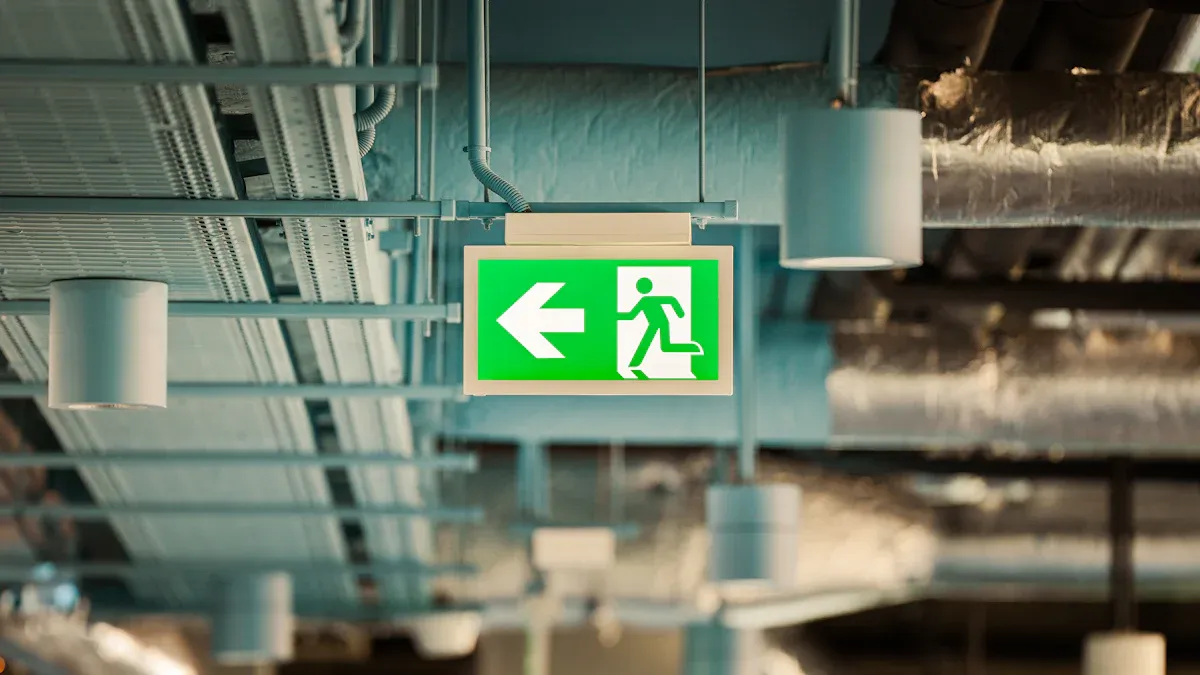
You help keep buildings safe when you put up emergency lighting exit signs. These signs show people where to go in an emergency. Rules say you must keep exit signs lit and clear. If you skip yearly tests or let signs break, people could get hurt. You could also get in trouble with the law. The table below lists common problems in commercial buildings:
Violation Type | Description |
|---|---|
Faulty Emergency Exit Lighting | All commercial buildings need bright, clear exit signs that get checked every year. These signs need backup batteries to stay on for at least 90 minutes if the power goes out. A broken sign can be very dangerous in an emergency. |
Emergency lighting and good exit signs help you follow safety rules. They also keep everyone in your building safe. Home, About Us, Product, Led Light—every area must follow these rules to meet the law.
Key Takeaways
Test emergency exit signs every month for 30 seconds. Do a full 90-minute test once a year to make sure they work in emergencies.
Pick emergency exit signs that meet safety standards like UL 924. This helps make sure they work when the power goes out.
Put exit signs where everyone can see them easily. Make sure they are bright and not blocked so people can find the way out fast in an emergency.
Keep a written record of all checks and tests. This shows you follow safety rules and helps find problems early.
Choose energy-saving models like LED exit signs. These save money on power and work well in emergencies.
Emergency Lighting Exit Signs Code Basics
Key Emergency Lighting Regulations
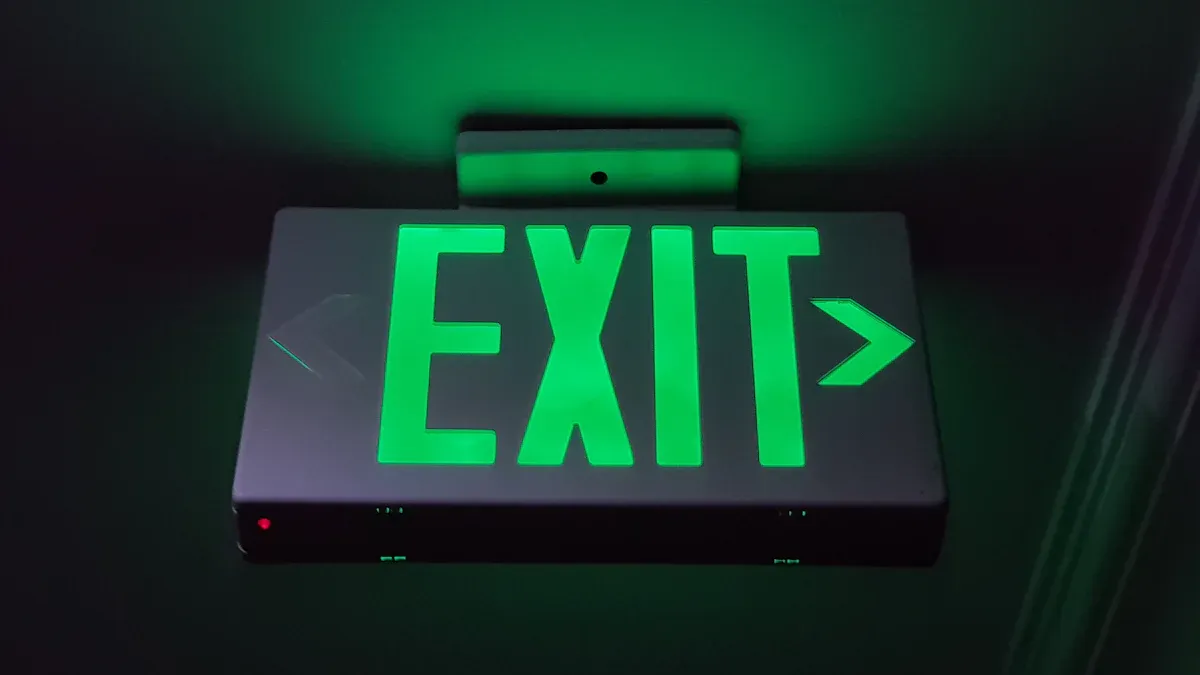
You have to follow rules for emergency exit signs in commercial buildings. These rules keep people safe in emergencies and help you follow the law. The International Building Code, National Fire Protection Association 101 life safety code, and OSHA make the main rules for emergency lighting in buildings. Each rule has a list of things you must do for emergency lighting exit signs.
Code/Standard | Description |
|---|---|
International Building Code (IBC) | Says all commercial and multi-family buildings need exit and emergency lighting. |
National Fire Protection Association (NFPA) 101 | Gives details about exit and emergency lighting, like how bright it should be and how to take care of it. |
Occupational Safety and Health Administration (OSHA) | Says workplaces must have good exit routes and emergency lighting. |
You need to test emergency exit signs every month for 30 seconds to check the battery. You also have to do a full 90-minute test every year. These tests make sure your emergency lighting exit signs work if there is a fire or the power goes out. NFPA 101 life safety code says many buildings, like tall or underground ones, need emergency lighting. The IBC says all buildings must have emergency lighting to keep exit paths clear.
Tip: Always look at your local rules. Some places, like California, have additional rules known as Title 24.
Placement and Visibility Standards
Putting emergency exit signs in the right place helps people find the way out fast. You must put signs where everyone can see them from anywhere on the exit path. The rules say how high to put the signs and how easy they should be to see.
Requirement | Details |
|---|---|
Mounting Height Above Exit Doors | The bottom of the sign should be less than 6' 8'' above the top of the door. |
Low-Level Exit Signs | The bottom should be 10'' to 12'' from the floor. |
General Sign Height | The bottom of the signs should be 6-18'' above the floor. |
Emergency exit signs must turn on within 10 seconds if the power goes out. You need to keep the light at one foot-candle (10.8 lux) along the whole exit path. Emergency lighting must cover hallways, stairs, and all ways out. The life safety code says emergency lighting must give at least one foot-candle of light and last for 1.5 hours if the main lights stop working.
You need at least 1 foot-candle (10.8 lux) of light on the floor along exit paths.
Emergency lighting must last at least 90 minutes if the power goes out.
Exit and emergency lights should have a good backup power source.
Putting exit signs and emergency lights in the right place is important so people can see them on the way out.
You must use pictogram standards for exit signs. These help everyone, even people who do not speak English, find the way out in an emergency.
Backup Power and Illumination Time
Backup power keeps emergency exit signs on during a fire or blackout. The rules say emergency lighting must last at least 90 minutes on battery power. You need to check the batteries often and change them when needed.
Requirement | Duration |
|---|---|
Backup Power for Emergency Lighting Exit Signs | At least 90 minutes |
You have to meet the lowest lighting rules. The rules say emergency exit signs must give at least 5 foot-candles (54 lux) of light on the sign. The contrast ratio should not go below 0.5. The light can get dimmer, down to 60%, after the full time.
Standard | Minimum Average Illumination | Minimum Point Illumination |
|---|---|---|
7.9.2.1.1 | 1 ft-candle (10.8 lux) | 0.1 ft-candle (1.1 lux) |
7.9.2.1.2 | 0.6 ft-candle (6.5 lux) | 0.06 ft-candle (0.65 lux) |
You must keep emergency exit signs working for the whole time people are leaving the building. Emergency lighting exit signs help people get out safely and follow the rules. You need to check the height of exit signs and make sure everyone can see them. Doing these things helps you follow emergency lighting rules and keeps your building safe.
Understanding Emergency Exit Signs
Components and Functions
Emergency exit signs help people find the way out fast. These signs do more than just show the exit. They must follow strict rules to work in all emergencies. Here are the main parts you need in a good emergency exit sign system:
Visibility: Signs must be easy to see from far away. Nothing should block them.
Illumination: Pick signs that stay bright if the power goes out. Some use built-in lights or glow in the dark.
Color and Symbolism: Use green and white with clear symbols. This helps everyone spot the exit quickly.
Durability: Choose signs made from strong materials. They should not get damaged by water, heat, or sunlight.
Compliance: Make sure your signs meet all safety rules.
These things help emergency exit signs work in any emergency. You keep people safe when every exit sign works right.
Types of Emergency Exit Signs
There are different kinds of emergency exit signs for buildings. Some use LED lighting to save energy. Others glow in the dark with special materials. Some signs have a thin light strip for a modern look. Each kind has its own good points. All must show the way to the exit in an emergency.
Type | Lighting Source | Best Use Case |
|---|---|---|
LED Exit Signs | LED lighting | Most commercial buildings |
Photoluminescent Signs | Glow-in-the-dark | Areas with low power needs |
Edge-Lit Exit Signs | Thin LED strip | Modern or upscale interiors |
Pick the type that fits your building and follows the rules.
Integration with Safety Systems
You make buildings safer when exit signs work with other safety systems. Emergency lighting works with fire alarms and other safety tools to help people leave. These signs turn on by themselves if the power stops. Backup batteries keep the lights on during blackouts. You may see alarms with horns and flashing lights near exit signs. This tells people when to leave and where to go. Make sure all safety parts work together in an emergency.
Tip: Put emergency exit signs along every escape path. This helps people find the way out, even if it is hard to see.
Compliance and Safety Importance
Legal and Insurance Implications
You have to follow emergency exit sign rules in every commercial building. If you do not, you can get in trouble with the law and your insurance. OSHA can give you a fine of up to $7,000 if you break the rules the first time. If you keep breaking the rules, the fine can go up to $70,000. Insurance companies look at your emergency lighting exit signs and check if you take care of them. If you do not keep them working, your risk goes up. If someone gets hurt in a fire because a sign is missing or broken, you could get sued. Your insurance might not pay or could cost more if you do not follow the rules.
If you do not take care of emergency exit signs, people can sue you if they get hurt.
Broken signs can make people confused and slow them down in an emergency.
Insurance companies check if you keep up with safety rules, including emergency lighting.
Safety and Liability Risks
Emergency exit signs help keep everyone safe in your building. When you follow the rules, people can find the way out in a fire. Good emergency lighting systems help people leave safely. If you do not follow the rules, you put people in danger. Bad or missing signs can cause injuries and get you in trouble with the law. You need to make sure all exit signs are easy to see and work right. Putting signs in the right place helps people get out fast.
Deficiency | Severity | Repair Due |
|---|---|---|
Exit sign is damaged (impacts functionality) | Life Threatening | 24 Hours |
Exit sign is missing | Life Threatening | 24 Hours |
Exit sign is obstructed (word “EXIT” not visible) | Life Threatening | 24 Hours |
Exit sign is not illuminated | Life Threatening | 24 Hours |
Consequences of Non-Compliance
If you do not follow the emergency exit sign rules, you can get in big trouble. OSHA can fine you and your insurance might not help you. People may think your building is not safe. Tenants and visitors may not trust you. If there is a fire and people cannot find the way out, you could be blamed. You might get sued and lose money. Following emergency lighting rules keeps you and everyone in your building safe.
Following safety rules helps you stay out of legal trouble.
Not following the rules can mean fines and lawsuits.
Good emergency exit signs keep people and building owners safe.
Working emergency lighting exit signs help stop accidents and legal problems.
You need to keep all signs easy to see and working to follow the rules.
Note: Always check your building to make sure emergency exit signs work. Fixing problems fast keeps people safe and helps you follow the rules.
Testing and Maintenance for Compliance
Inspection Schedules
You have to check emergency exit signs often. This helps you follow the rules and keeps people safe. The life safety code says you must look at every exit sign and emergency lighting system every month. Press the test button for 30 seconds to see if the lights work on battery power. Once a year, do a full 90-minute test. This checks if the emergency lighting stays on long enough for everyone to leave. These checks help you find problems before a fire or blackout.
Every month, test each emergency exit sign for 30 seconds.
Every year, do a 90-minute test to check battery backup and how long the lights stay on.
Regular checks keep your exits clear. They also help you follow all the rules.
Battery Backup Checks
You need to check the battery backup in every emergency exit sign. Press the test button every month and write down what happens. Once a year, do a 90-minute test and record the results. Change battery packs every three to five years or sooner if a sign does not pass the test. Some emergency lighting systems can check themselves and show problems early. Keep extra batteries and a written log in your maintenance room. These steps make sure your exit signs work during a fire and keep your exits safe.
Press the test button every month for 30 seconds.
Do a 90-minute test every year and write down the results.
Change batteries every 3 to 5 years.
Use units that check themselves for faster tests.
Keep extra batteries and logs for quick fixes.
Recordkeeping Requirements
You need to keep records to show you follow the rules for emergency exit signs and emergency lighting. Written logs prove you meet the life safety code and help during checks. Your records should have the date, place, test results, and any repairs. Keep inspection records for the last 12 months and update them after each test.
Requirement | How Often |
|---|---|
Visual inspection | Every 30 days |
30-second light test | Every 30 days |
90-minute light test | Every year |
Written records | For inspection |
Good records show you care about safety and following the rules. You help everyone find the way out during a fire and keep your building safe.
Common Challenges in Emergency Lighting Compliance
Navigating Code Updates
It can be hard to keep up with emergency lighting rules. The life safety code and other codes change often. Each new rule can change how you put in or test exit signs. You need to look for new rules every year. Some states have extra codes for emergency lighting. If you miss a rule change, your building might not follow the life safety code. This could mean fines or unsafe ways out. You should join local safety groups or get code alerts. These steps help you know the latest rules and keep your exit signs legal.
Installation Issues
You may have trouble putting in emergency exit signs. Many buildings have old wires or small spaces. These things make it tough to add new lights. Here are some common problems:
Common Installation Issues | Description |
|---|---|
Dead or low batteries | Many systems use battery backup, and batteries can degrade over time. |
Burned-out bulbs or LEDs | These may seem minor but make the signs unreadable. |
Wiring problems | Loose connections or faulty circuits can cause intermittent failures. |
Broken casings or mounting brackets | These affect visibility and safety. |
Blocked signs | Renovations or storage can accidentally cover exit signage. |
Lights may flicker or look dim if wires are loose or bulbs are old.
A blown fuse or bad power supply can make all lights go out.
Very hot or cold weather can make emergency lights work worse.
Check every exit sign after you change something in the building. Make sure nothing blocks the signs and all lights work. This keeps your ways out safe and easy to see.
Budget Management
You need to plan your money to keep exit signs working. Good planning helps you avoid surprise costs. Building managers use these ideas:
Strategy | Description |
|---|---|
Comprehensive Budget Development | Include installation costs, ongoing maintenance, and potential energy savings in the budget. |
Cost Analysis | Evaluate which types of exit signage provide the best return on investment over time. |
Compliance Consideration | Factor in potential costs associated with non-compliance to avoid fines and liability. |
Explore Grants | Look for available grants or incentives for upgrading to energy-efficient signage. |
Set money aside for tests, new parts, and work.
Use a regular schedule to stop big repairs.
Make sure your budget covers all code rules for emergency lighting.
You can also look for grants to help pay for new lights. This helps you keep exit signs up to code and your building safe.
Top Emergency Exit Sign Models
Selection Criteria
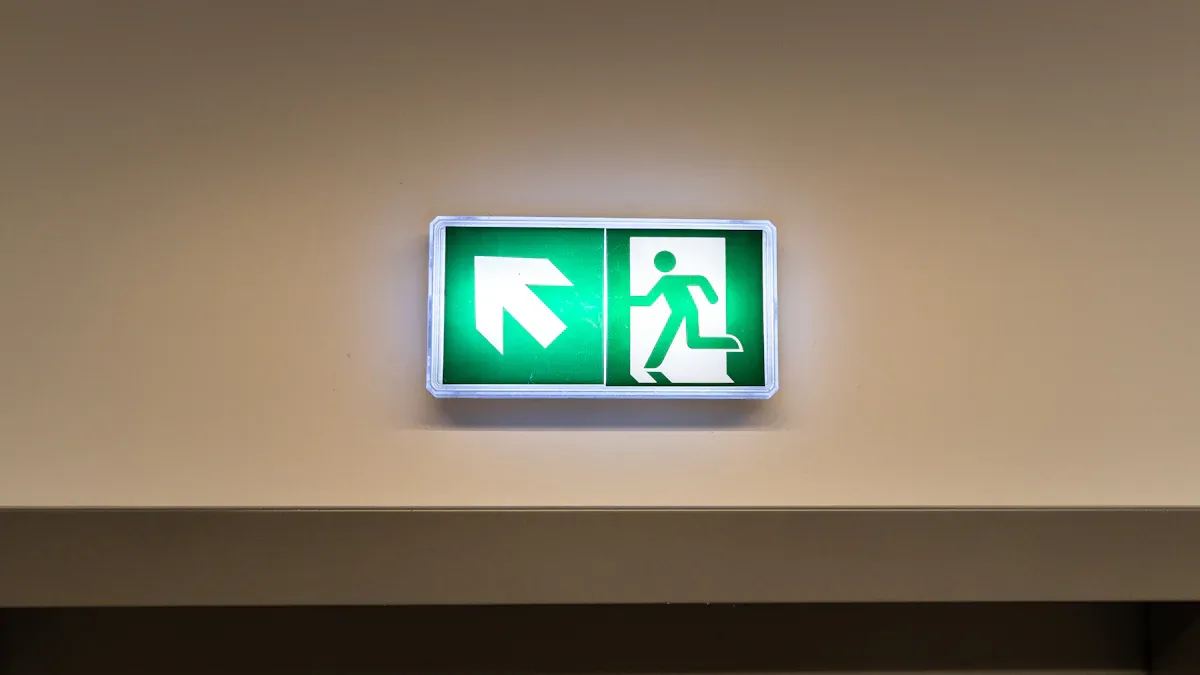
You have to pick emergency lighting exit signs that follow the rules. The right signs help keep your building safe and legal. Look for signs that meet ANSI/UL 924 standards. These rules make sure signs work in emergencies. Signs must stay on for at least 1.5 hours if the power fails. Choose signs that are easy to fix and last a long time. LED signs are a good choice because they last longer. The letters should be at least 6 inches tall so everyone can read them. Signs are easier to see if the letters and background are very different colors. Arrows on signs help people find the exit in big or tricky buildings.
Criteria | Details |
|---|---|
Compliance with Regulations | Signs must meet ANSI/UL 924 standards and be listed accordingly. |
Illumination Standards | Emergency illumination must last for at least 1.5 hours and meet specific brightness levels. |
Types of Signs | Options include standard electric, photoluminescent, and battery backup systems. |
Maintenance Requirements | Signs should be easy to maintain and have a long lifespan, especially LED options. |
Letters need to be at least 6 inches tall so people can read them.
Signs should have strong color contrast to stand out.
Use arrows on signs to help people find the way out.
Tip: Always check if your emergency lighting exit signs follow the newest rules in your area.
Recommended Products
There are many emergency lighting exit signs for commercial buildings. Some models are better because they are safe and follow the rules. The Sentinel Series LED Exit is UL 924 and cULus listed. This sign uses less power, is strong, and looks nice. Maverick LED signs also meet all safety and green goals. These signs pass the tests needed by NFPA and OSHA. Battery backup keeps signs on during emergencies. You must pick signs that follow the rules to keep everyone safe.
Model | Compliance | Reliability Features |
|---|---|---|
Sentinel Series LED Exit | UL 924 and cULus listed | Energy-efficient, robust construction, modern design |
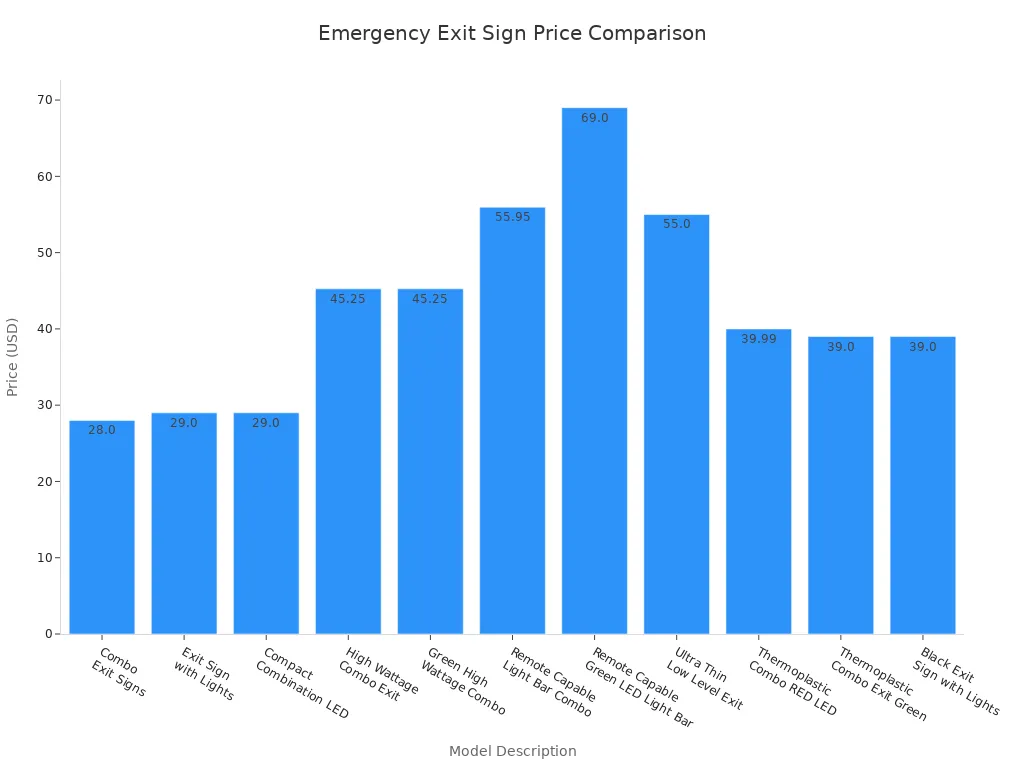
You can pick from many models with different prices and warranties. Most of the best signs have a five-year warranty. Combo exit signs, exit signs with lights, and small LED exit signs all work well for commercial buildings.
Model Description | Price | Warranty |
|---|---|---|
Combo Exit Signs | $28.00 | 5 Years |
Exit Sign with Lights | $29.00 | 5 Years |
Compact Combination LED Exit Sign | $29.00 | 5 Years |
High Wattage Combo Exit Sign | $45.25 | 5 Years |
Green High Wattage Combo Exit Sign | $45.25 | 5 Years |
Remote Capable Light Bar Combo Exit Sign | $55.95 | 5 Years |
Remote Capable Green LED Light Bar Combo Exit Sign | $69.00 | 5 Years |
Ultra Thin Low Level Exit Sign | $55.00 | 5 Years |
Thermoplastic Combo RED LED Exit | $39.99 | 5 Years |
Thermoplastic Combo Exit with Green LED | $39.00 | 5 Years |
Black Exit Sign with Lights | $39.00 | 5 Years |
Black LED Exit Sign with Red Letters | N/A | 3 Years |
Note: Battery backup is very important for emergency lighting exit signs. It keeps the signs on when the power goes out.
Features to Consider
Look for features that help emergency lighting exit signs last longer and use less power. LED signs use less energy and last longer than old bulbs. Signs with good batteries stay on during emergencies. Some signs can check their own batteries and warn you if there is a problem. Signs made from strong plastic or metal do not break easily. Signs with good ratings work well in wet or hot places. Signs that match your building look nice and help people find the exit.
Feature | Description |
|---|---|
Power Consumption | LED signs use less power and stay cooler, so you save money. |
Cost Savings | Switching to LED signs can save over $300 each year. |
Material Quality | Strong plastic or metal signs last longer and do not break easily. |
Environmental Ratings | Signs should work in places with water or big temperature changes. |
Aesthetic Integration | Signs that fit your building look good and are easy to see. |
LED Technology | LED bulbs use less power and last longer than old bulbs. |
Battery Configuration | Good batteries help signs work during blackouts. |
Self-Diagnostic Features | Some signs check their batteries and tell you if something is wrong. |
Callout: LED emergency lighting exit signs help you save money and keep your building safe. You pay less for power and do not need to fix them as much.
You need to pick emergency lighting exit signs that follow all the rules, work in emergencies, and fit your building. Good signs help people find the exit fast and keep everyone safe.
You keep your building safe when you follow the right steps for emergency lighting exit signs. Check all emergency exit signs every month and test them for 30 seconds. Once a year, run a full emergency test for 90 minutes. Make sure all signs stay bright and clear during an emergency. Choose trusted models like Sentinel Series LED Exit or Combo Exit Signs. Train your staff and keep exit paths clear. When you focus on safety and follow the rules, you help everyone exit quickly during an emergency.
FAQ
How often should you test emergency exit signs?
You need to test emergency exit signs every month for 30 seconds. You also must run a full 90-minute test once a year. These checks help you find problems early and keep your building safe.
What does UL 924 mean for exit signs?
UL 924 means the exit sign meets safety standards for emergency lighting. You should choose signs with this label. These signs work well during power outages and follow important safety rules.
Can you use photoluminescent exit signs everywhere?
Photoluminescent exit signs work best in areas with enough light to charge them. You should not use them in dark hallways or places without regular lighting. Always check local codes before installing these signs.
What is the minimum brightness for emergency exit signs?
Emergency exit signs must provide at least 5 foot-candles (54 lux) of light on the sign. This brightness helps people see the exit clearly during emergencies.
Tip: Always keep exit paths clear so everyone can see the signs.
See Also
Safe, Efficient, And Stylish Outdoor Lighting Solutions For Businesses
Expert Flood Lighting Design And Installation For All Properties
Effective Commercial Lighting Strategies For Optimal Business Environments
Key Lighting Fixtures That Every Business Needs To Consider
Outdoor Signage Lighting: Best Practices And Effective Applications