Simple Steps to Lower Your Electricity Bill with LED Tubes

Switching to led lighting helps you lower your electricity bill with little effort. Many people do not realize that lighting makes up about 15% of your Home’s electricity use. You can use an Energy Savings Calculator to see how much you will save by changing to a Led Light. On average, you could save around $225 each year. Even though 29% of households have tried LED bulbs, less than 20% of sockets have them. About Us and Product pages often highlight these benefits, but you can take action today.
Key Takeaways
Changing to LED tubes can help you save about $225 every year on your electricity bill. LED bulbs last a lot longer than regular bulbs. This means you spend less money and time replacing them. You can use an energy savings calculator to guess how much you will save. It helps you make smart choices about changing your lights. LED lighting is safer for you and the planet. It makes less heat and fewer harmful rays. You should look for utility rebates to help pay less at first when you switch to energy-saving LED tubes.
Why Switch to LED Light Bulbs
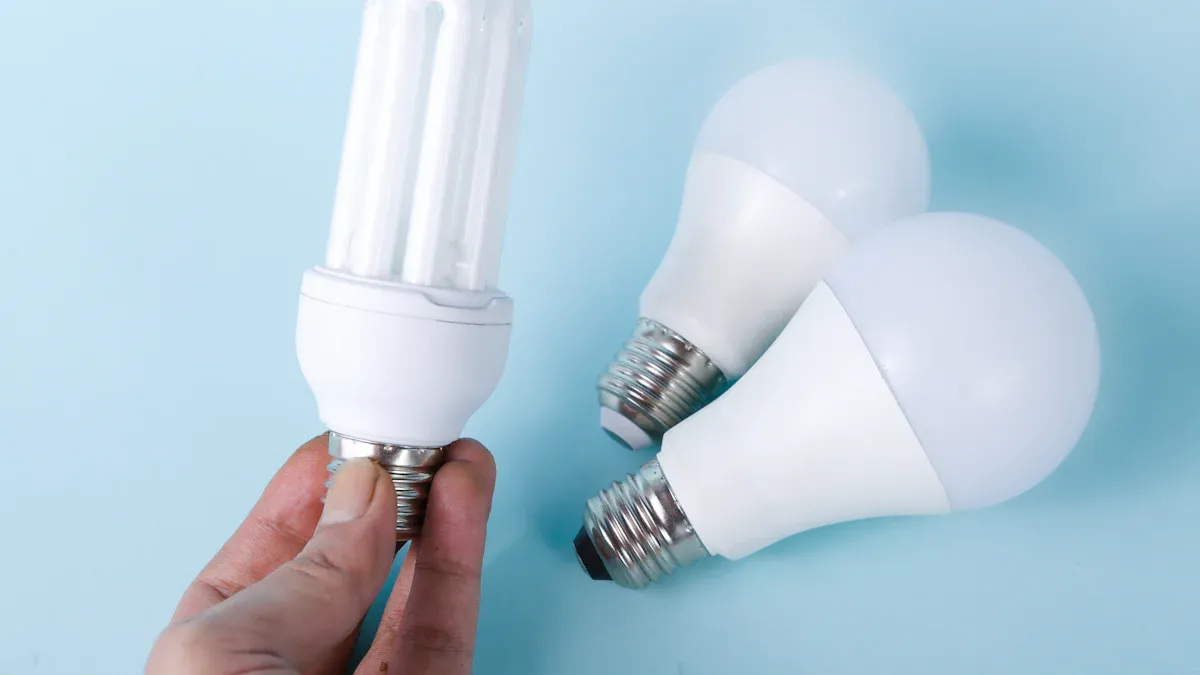
LED vs. Traditional Lighting
You may wonder how led light bulbs compare to older options. When you look at the numbers, the difference stands out. The table below shows how much energy each type of bulb uses and how much light it produces:
Light Type | Watts Used | Lumens Produced | Efficiency (lumens/watt) |
|---|---|---|---|
Incandescent | 60W | 800 lm | 13 lm/W |
Halogen | 55W | 800 lm | 14.5 lm/W |
CFL | 15W | 800 lm | 53.3 lm/W |
LED | 16W | 800 lm | 50 lm/W |
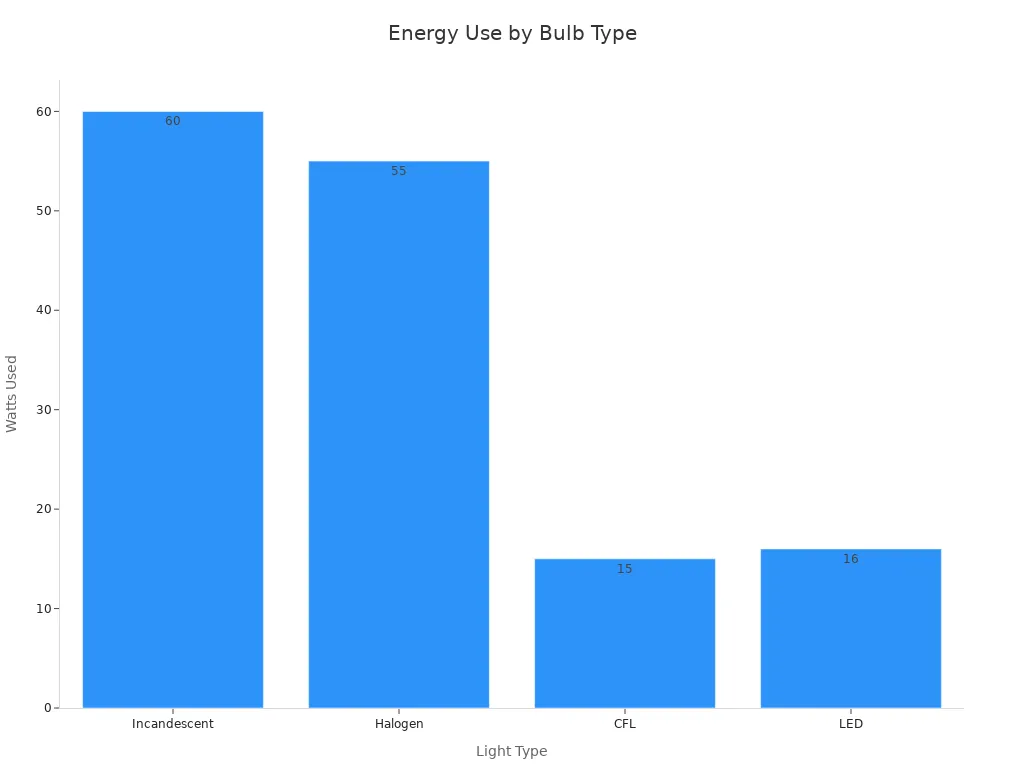
You can see that led bulbs use much less energy than incandescent or halogen bulbs. They also match the brightness you expect from your lighting. This means you get the same amount of light while using less electricity.
Benefits of LED Lighting
Switching to led brings many advantages. You save money because led bulbs use about 75% less energy than older bulbs. You also replace bulbs less often. Led bulbs can last between 20,000 to 60,000 hours, while incandescent bulbs only last around 1,000 hours. This long lifespan means you spend less time and money on maintenance.
Tip: Using energy-efficient bulbs helps lower your electricity bill and reduces waste in landfills.
Led bulbs produce less heat, which makes your home safer and keeps rooms cooler. They do not emit harmful UV or infrared rays, so they protect your health and your furniture. By using led lighting, you help the environment. Lower energy use means fewer greenhouse gases and less pollution.
You may notice that the upfront cost for led bulbs is higher than for traditional bulbs. However, you quickly recover this cost through savings on your energy bill and fewer replacements. Many utility companies offer rebates for switching to energy-efficient bulbs, making it easier for you to upgrade your lighting.
Choosing led light bulbs gives you better control over your lighting, saves you money, and helps protect the planet.
Using an Energy Savings Calculator
Switching to LED tubes can help you save money. You might wonder how much you will save. An energy savings calculator can show you the answer. This tool lets you compare your current lighting with LED tubes. You can see what you spend now and what you could save each year.
How the Calculator Works
An energy savings calculator looks at your current lighting. It compares it to LED tubes. You type in details about your bulbs, how long you use them, and your electricity cost. The calculator shows you how much energy and money you can save. You can see your yearly savings and how fast you get your money back.
Energy savings calculators work best with good information. The results depend on what you put in and how the calculator works. You can trust the numbers if you check your answers and use a good tool.
Most calculators also add extra costs. You can include labor, new fixtures, and fees for getting rid of old bulbs. Some calculators let you subtract costs from your old lighting. This helps you see the full cost and savings.
Tip: Many calculators show rebates and incentives. These can help you save even more when you switch to LED tubes.
Here are some things to look for in an energy savings calculator:
Feature | Description |
|---|---|
Cost Considerations | Includes LED fixture costs, installation labor, disposal fees, and temporary lighting expenses. |
Energy Savings Calculations | Calculates direct energy cost reductions, demand charge reductions, and maintenance savings. |
Understanding Rebates | Shows utility rebates and government incentives to boost your return on investment. |
Types of Rebates | Lists prescriptive, custom, and new construction programs with unique benefits. |
Application Success Checklist | Offers a checklist to help you complete rebate applications. |
What You Need to Get Started
Before you use an energy savings calculator, gather some basic facts. You need to know about your current lighting and electricity costs. This helps the calculator give you the best results.
Here is a table of the most common things you will need:
Input Type | Description |
|---|---|
Wattage | Power of your current fixture, usually found on the label. |
Daily Operating Hours | Average hours per day your lights are on. |
Electricity Rate | Cost per kilowatt-hour (kWh) from your utility bill. |
Number of lamps per fixture | Total fixtures and power input per fixture. |
Annual Operating Hours | Includes peak and off-peak times for better accuracy. |
Electricity Cost | Cost per kilowatt-hour (kWh) for your LED system. |
Current Fixture Wattage | Wattage of your current fixtures. |
Total Number of Fixtures | Number of new LED fixtures you plan to install. |
Number of Bulbs | Number of bulbs you want to replace. |
LED Replacement Wattage | Wattage of the LED tubes you will use. |
When you use the calculator, follow these steps:
Find the wattage of your current bulbs and the wattage of the LED tubes you want to use.
Count the number of bulbs you plan to replace.
Estimate how many hours per day you use your lights.
Check your electricity rate on your utility bill.
Enter these numbers into the energy savings calculator.
Review the results for yearly savings, payback time, and total cost effectiveness.
You can also use an energy cost calculator to compare different LED tubes. This helps you pick the best ones for your needs.
Note: According to energy.gov, switching to LED lighting can save the average household $225 per year.
Switching to LED tubes lowers your energy use and your bill.
You spend less on replacements because LED tubes last longer.
You may get rebates that lower your starting costs.
Energy savings calculators also include labor and replacement costs. You can add the price of new tubes, installation, and removing old fixtures. The calculator takes away any costs from your old lighting. This gives you a full view of your savings.
When you use an energy savings calculator, try not to make these mistakes:
Limited or weak analysis. You might miss important facts if you only look at big issues.
Waiting for problems. If you wait for things to break, you might not see trends or improve quickly.
Doing math by hand. Manual work takes longer and can have mistakes. Automated calculators are faster and more accurate.
You can use an energy savings calculator to make smart choices about your lighting. You see your energy use, electricity cost, and total savings. This helps you plan your upgrade and get the most from your money.
Steps to Maximize Energy Savings
Assess Your Current Lighting
Start by checking your lights at home. A lighting audit helps you see where you use too much power. Some rooms may have more lights than you need. The audit compares how much energy you use now. It shows where you can save more energy. You also find out which bulbs should be changed. You can see where to use bulbs that last longer. If you get a professional audit, they check if your lights follow energy rules. They help you plan ways to save more money in the future.
A lighting audit:
Looks at your lights and how much energy you use.
Finds places with too many lights.
Gives ideas for using LED tubes.
Shows how fixing things can save money.
Makes sure you follow energy-saving rules.
Choose the Right LED Tubes
Pick LED tubes that work with your light fixtures. Think about what you need before you buy. Here are some things to help you choose:
Make sure the LED tube fits your fixture.
Pick a color that looks good in your room. Warm white is nice for bedrooms. Cool white is better for work spaces.
If you want colors to look real, pick a high CRI.
Choose tubes that save a lot of energy.
Pick tubes that last a long time and are strong.
Decide if you want to put them in yourself or need help.
Brightness and color are important. More lumens mean more light. Cool colors help you work better. Warm colors make your home feel nice.
Estimate Your Savings
You can figure out your savings by doing these steps:
Multiply your bulb’s wattage by the hours you use it each day.
Add up how much electricity you use each month and year.
Multiply your yearly kilowatt hours by your electricity price.
Do the same steps for your new LED tubes.
Compare the numbers to see how much energy you save.
A simple table helps you keep track:
Step | What to Do |
|---|---|
Find wattage | Look at the bulb label for wattage |
Track usage | Write down hours used each day |
Calculate cost | Use your electricity price from your bill |
Compare | Check the difference between old and new lights |
Extra Tips for Lower Bills
Try these tips to save even more money:
Turn off lights when you leave a room.
Clean bulbs so they shine brighter and save energy.
Use dimmers to change how bright your lights are.
Put in motion sensors so lights only turn on when needed.
Take care of your lights to stop problems and keep saving energy.
Upgrade your lights when you do repairs to save more.
Tip: Taking care of your lights helps them last longer and keeps your bills low.
Switching to LED lighting is easy and gives good results. You can use an energy savings calculator to check your savings. Many people say their bills are lower and their lights are better at home or work. The table below shows how LED lighting helps over time:
Aspect | Details |
|---|---|
Energy Savings | Big drops in energy use with LED lighting. |
Maintenance Costs | Less money spent on repairs because LEDs last longer. |
Return on Investment (ROI) | Quick look at savings and payback time with the calculator. |
"After the upgrade, the brighter lights help workers. A well-lit place makes work nicer and lets employees do more. This is great for new ideas." – Luxfer Process Engineer Manalo Williams
You can start now and save money for years. Tell your friends and family these tips so they can save too.
FAQ
How do LED tubes help you save money?
LED tubes use less electricity than old bulbs. You pay less on your energy bill each month. You also buy fewer replacements because LED tubes last longer.
Can you install LED tubes by yourself?
You can install most LED tubes without help. Always turn off the power first. Some fixtures need rewiring. If you feel unsure, ask an electrician for help.
Do LED tubes work in all light fixtures?
LED tubes fit many fixtures. Check the size and type before you buy. Some fixtures need special LED tubes. Read the product label to make sure you choose the right one.
What color LED tube should you choose for your room?
Pick warm white for bedrooms and living rooms. Choose cool white for kitchens and work areas. The color changes how your room feels and looks.
See Also
Your Complete Guide to Swapping Fluorescent Tubes for LEDs
Measuring LED Tubes: A Guide for Perfect Fit
The Ultimate Guide to Transitioning from Fluorescent to LED
Benefits of LED Street Bulbs: Efficiency, Longevity, and Setup
Selecting the Right LED Tubes: Measurement and Replacement Guide