Hotel Lighting Solutions: Creating Ambiance and Functionality for Hospitality Retail Spaces

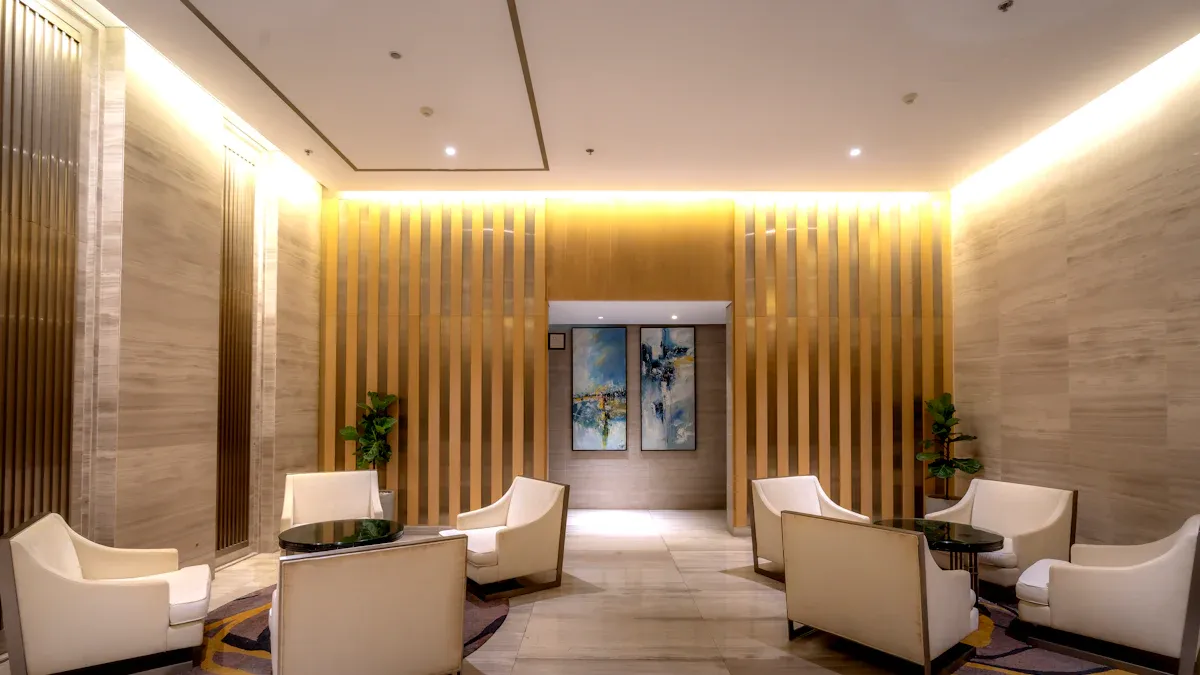
Picture yourself walking into a hotel lobby. The lights glow softly above you. You feel welcome and relaxed. Hotel lighting solutions do more than brighten a room—they shape your mood and guide your steps. You notice how each area feels unique. That comes from layered lighting. This approach uses different types of light to create balance and comfort. You see how:
Layered lighting makes spaces feel warm and inviting.
It combines ambient, task, and accent lights for every need.
Good lighting can boost your mood, while poor lighting can make you uneasy.
You want spaces that feel right. You want control. With the right solutions, you can adjust the lights for any time or event. If you want to learn more, check the About Us, Home, or Product pages for Led Light options.
Key Takeaways
Layered lighting uses ambient, task, accent, and decorative lights. This makes hotel spaces feel warm and welcoming.
Good lighting helps guests feel comfortable and happy. Warm light helps people relax. Cool light helps people focus.
Guests can change the lights to fit their needs. This makes them more comfortable and enjoy their stay more.
Energy-efficient lighting like LEDs saves money. It also helps the environment. Smart systems can help use less energy.
Professional lighting design makes guests have a better time. Experts help make the right mood and good lighting solutions.
The Role of Lighting in Hospitality
Impact on Guest Experience
When you walk into a hotel, you notice the lights. Lighting changes how you feel and move in each space. Good lighting helps you feel safe and comfortable. It can even make you want to look around. Bad lighting can make you feel uneasy or confused.
The lobby uses general and accent lighting. This makes the space feel welcoming and safe.
Restaurants and bars use low lighting. You feel cozy, but you can still see your food and drinks.
Spa and wellness areas use soft lighting. This helps you relax.
Guest rooms have flexible lighting. You can set the mood how you like.
Lighting does more than help you see. It affects your mood and comfort. Studies show that custom lighting can make you happier. Warm light helps you relax and sleep better. Cool light keeps you awake and focused. Using sustainable lighting can help you sleep well and feel less stressed.
Here’s a quick look at how lighting affects comfort:
Aspect of Lighting Design | Effect on Guest Perception and Comfort |
|---|---|
Personalization of Lighting | Makes you feel happier and more comfortable |
Warm Light Temperatures | Helps you relax and fall asleep |
Cooler Light Temperatures | Makes you feel awake and helps you think |
Sustainable Lighting Practices | Helps you sleep better and feel less stressed |
Guest Preferences | Natural light and warm tones help you feel good |
You might not always see the lighting, but you always feel it. Lighting in hotels can make you feel at home or out of place. It can turn a regular stay into a special memory.
Creating Ambiance in Hotel Spaces
Setting the right mood is important. Each space should feel special and fit its use. Hotel lighting solutions help you do this with different lights and fixtures.
Ambient lighting and fixtures in hotel rooms make the space calm and peaceful. Good lighting helps you relax or work. Bad lighting can make you feel uncomfortable or distracted.
Let’s look at some lighting techniques and what they do:
Lighting Technique | Purpose |
|---|---|
Bedside Lights | Make the room feel warm and relaxing |
Adjustable Floor Lamps | Let you change the light for the mood you want |
Wardrobe Lights | Give you light for your clothes and add to the room’s feel |
Pendant lights, chandeliers, and ceiling fixtures add style and interest. Lampshades that are opaque or frosted give soft, gentle light. This makes the room feel welcoming.
Here’s an easy way to set the right mood:
Use warm lighting (2700K - 3000K) to relax.
Use cool lighting (4000K - 5000K) when you need to focus.
Add dimmers to change the light for any event.
Lighting in hotels does more than just brighten a room. It sets the mood for your visit. It makes each space feel different and helps you enjoy your stay. When you choose good lighting, guests remember their visit and want to come back.
Layered Hotel Lighting Solutions
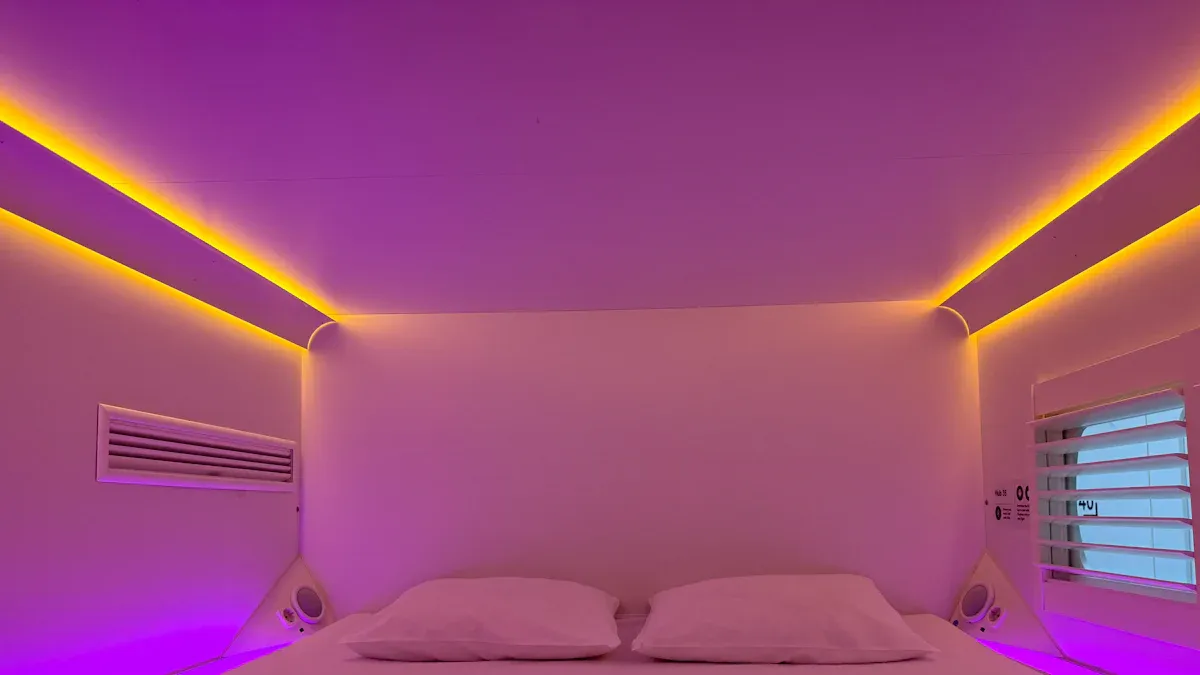
You want your hotel to feel both beautiful and useful. That’s where layered lighting comes in. When you use different types of light together, you create spaces that look great and work well for everyone. Let’s break down the four main layers you’ll find in hotel lighting solutions:
Layer | Function |
|---|---|
Ambient | Provides general illumination for navigation and visual perception of the space. |
Task | Concentrates light on specific areas to facilitate activities and reduce eye strain. |
Accent | Draws attention to specific features or objects, enhancing the visual interest of the space. |
Decorative | Adds aesthetic appeal and contributes to the overall design of the environment. |
When you layer these types of lighting, you get more than just a bright room. You get a space that feels right for any moment. You can relax, work, or celebrate—all with the right light.
Ambient and Task Lighting
Ambient lighting sets the stage. It fills the room with a soft glow so you can see and move around safely. This type of lighting makes the whole space feel comfortable. You notice it most when you walk into a lobby or a guest room. It’s the base layer that helps you feel at ease.
Task lighting helps you do things. You need it when you read a book in bed, work at a desk, or get ready in the bathroom. This lighting shines right where you need it, so you don’t strain your eyes. In hotel guest rooms, you’ll often find bedside reading lights, overhead lights, and bright lamps near desks or mirrors. Dimmers let you change the brightness for relaxing or working.
Here’s a quick look at how these two types work together:
Lighting Type | Function | Impact on Guest Experience |
|---|---|---|
Ambient Lighting | Provides overall illumination and sets the mood. | Creates a comfortable atmosphere for you. |
Task Lighting | Focuses on specific areas to help with activities. | Makes it easy to read, work, or get ready. |
Tip: Use dimmers for both ambient and task lighting. You can set the perfect mood for any time of day.
When you combine ambient and task lighting, you make sure every guest feels comfortable and cared for. You give them the right light for every activity.
Accent and Decorative Lighting
Accent lighting adds excitement. You use it to highlight special things, like artwork, plants, or cool architecture. Spotlights and track lights work well for this. In a lobby, accent lighting can make a grand entrance feel even more impressive. In retail spaces, it draws your eye to displays and makes shopping more fun.
Decorative lighting brings style and personality. Think of chandeliers, pendant lights, or fancy wall sconces. These lights do more than just shine—they make a statement. You can use them to create drama, elegance, or a cozy vibe. Decorative fixtures help set the atmosphere and make your hotel stand out.
Here’s how accent and decorative lighting help your space:
Accent lighting highlights artwork, plants, or displays.
It creates eye-catching focal points and adds drama.
Decorative lighting adds beauty and personality.
Chandeliers and pendant lights make entrances and lounges feel special.
When you layer all four types—ambient, task, accent, and decorative—you get a space that feels just right. You can change the look and feel for any event or season. You make your guests feel welcome and inspired.
Note: Professional designers use layered lighting to blend art and technology. They help you create a space that’s both inviting and efficient.
Layered lighting is the secret to a great hotel atmosphere. It helps you balance beauty and function, so every guest has a memorable stay.
Flexible Lighting for Guest Comfort
Controllable Lighting Options
You want your hotel to feel just right for every guest. That’s why controllable lighting options matter so much. When you give guests and staff the power to adjust lights, you boost comfort and make every stay special. Many hotels use wireless systems like Casambi. These systems are easy to install and work well in all kinds of buildings. Staff can use an app to change lighting settings for a single room or a whole floor. This makes it simple to match the lights to any mood or activity.
Here are some popular lighting options you might see:
Guests can use keypads or apps to set the lights just how they like.
A ‘master off’ button lets guests turn off all lights at once and turn on nightlights for safe walking at night.
Smart lighting can wake guests up gently by simulating a sunrise.
Circadian lighting can follow natural rhythms, helping guests feel better and sleep well.
Tip: Great lighting options help guests relax, work, or sleep. You create a welcoming atmosphere that feels like home.
Check out this table to see how controllable lighting systems improve guest satisfaction:
Feature | Description |
|---|---|
Customizable Lighting Zones | You can light different areas for events like weddings or meetings. |
Staff Efficiency | Staff spend less time on lights and more time helping guests. |
Health Benefits | Adjusting light supports natural sleep and helps guests feel their best. |
Customization for Events and Seasons
Every day in a hotel brings something new. You might host a wedding, a business meeting, or a holiday party. Flexible hotel lighting solutions let you change the atmosphere for any event or season. You can use a mix of ambient, task, and accent lighting to match the mood. For example, lobbies can shine bright during check-in, then switch to softer tones at night. Restaurants often dim the lights for dinner, making the space feel cozy and special.
Smart lighting systems can even adjust based on the time of day or how many people are in the room. This saves energy and keeps everyone comfortable. When you customize lighting for each event, you make every guest feel important. You show that you care about their experience and comfort.
Lighting Strategies for Key Hospitality Areas
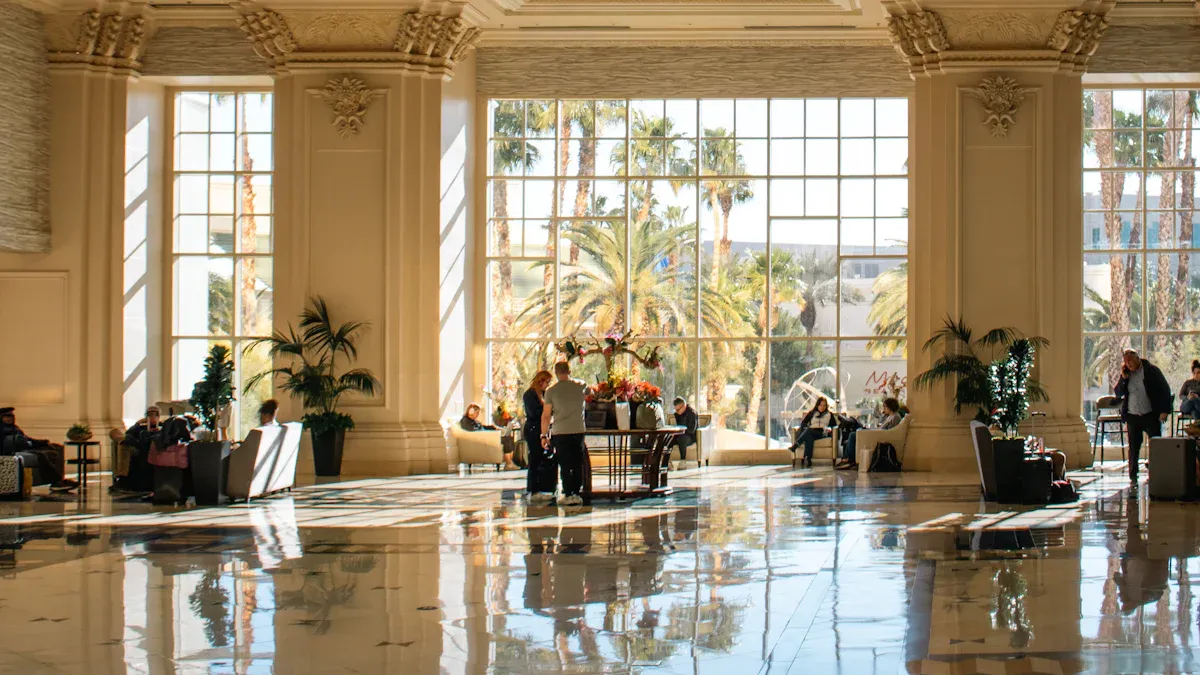
Lobby and Reception
You want guests to feel welcome right away. The lobby and reception area are very important. Try these lighting ideas:
Use ambient, task, and accent lighting together for balance.
Pick big fixtures like chandeliers or pendant lights for style.
Dimmable lights let you change the mood easily.
Shine light on the reception desk and artwork with special fixtures.
Warm light (2700-3000 Kelvin) makes the space cozy.
Mix chandeliers, sconces, and floor lamps to show your style.
Lighting does more than make things bright. It helps guests feel good and gives a great first impression.
Dining and Bar
Lighting in dining and bar areas changes how guests feel. Bright lights in a café make it lively. Dim, soft lights in fancy dining rooms help guests relax. Warm lights make food look tasty.
Bright lights make the space feel open.
Dim lights help guests stay longer and enjoy eating.
Good lighting makes food look better.
You can use lighting to match the mood and make guests happy.
Retail and Boutique
You want your retail spaces to stand out. Good lighting helps guests see products clearly.
Spotlights and accent lights show off displays.
Task lighting at checkout helps staff and guests see better.
Lights with high Color Rendering Index (CRI) show true colors.
Change brightness to highlight special items and stop glare.
Set goals for your lighting. Make focal points that guide shoppers and make shopping fun.
Ballrooms and Events
Ballrooms and event spaces need lighting that can change. Layered lighting like uplighting and accent lights adds depth.
Focusing light on important spots in your event space makes the atmosphere better and helps guests remember their visit.
Warm colors make the room feel cozy.
Cool colors help guests feel calm.
Color changes and effects add excitement.
Change brightness and color for each event. Guide guests and show off special features.
Exterior and Landscape
Don’t forget about outside lighting. Exterior and landscape lighting keeps people safe and makes the hotel look nice.
Light up walkways, parking lots, and doors to stop accidents.
Use uplighting, path lighting, and accent lights for plants and buildings.
Warm-toned LEDs give a pleasant glow.
Mix different fixtures for beauty and usefulness.
Work with experts to get the best hotel lighting. You will make the hotel look welcoming and keep everyone safe.
Health, Safety, and Wellbeing with Hospitality Lighting
Cleanliness and Germ Reduction
You want your hotel to feel clean and safe. New lighting technology can help you reach that goal. Antimicrobial lighting has shown amazing results. In one office, it cut surface germs by over 92%. This type of lighting is also 99% effective against viruses and over 90% effective against many other germs. NASA and Harvard Medical School both support these findings. You can trust that this technology works.
UV-C light is another great tool. It kills airborne germs and keeps the air cleaner for everyone. Hotels now use UV-C LED lights to sanitize things you touch often, like TV remotes and light switches. This helps stop the spread of germs in guest rooms. When you use these lighting solutions, you show guests that you care about their health.
Security and Wayfinding
You want guests to feel safe from the moment they arrive. Good exterior lighting makes your hotel look welcoming and secure. Bright lights in parking lots and at entrances help guests feel at ease. Inside, you need proper lighting in hallways, stairwells, and outdoor paths. This helps guests find their way and lowers the risk of accidents.
Tip: Use clear, bright lighting in all public areas. Guests will feel safer and move around with confidence.
A well-lit hotel not only keeps people safe but also improves their experience. When guests can see clearly, they feel more comfortable and relaxed.
Supporting Wellness
Lighting does more than help you see. It can help you feel better, too. Research shows that good lighting design in hotels can improve sleep quality. When you match lighting to natural rhythms, you help guests rest and recover. Bright, warm light in the morning wakes people up. Softer, warmer light in the evening helps them relax and get ready for bed.
You can use hospitality lighting to support wellness in every part of your hotel. Guests will notice the difference and remember how good they felt during their stay.
Implementing Effective Hotel Lighting Solutions
Assessing Lighting Needs
You want your hotel to shine in every area. Start by looking at what each space needs. Here’s a simple way to check your lighting needs:
Figure out how bright each area should be. Use lux to measure brightness for different activities.
Pick the right type of light—ambient, task, accent, or decorative—based on the room’s shape and use.
Check the color of the light. Make sure it shows true colors on walls, floors, and furniture.
Look at how the light spreads in the room. You want even brightness so guests feel comfortable.
Stop glare by choosing the right lighting fixtures and placing them carefully.
This step helps you create a smart lighting design that fits every space.
Choosing Fixtures and Technologies
You have many options when picking lighting fixtures and technology. Here’s a quick table to help you choose:
Criteria | What to Look For |
|---|---|
Color Temperature | Warm white (around 3000K) for most spaces; cooler for bathrooms. |
Color Rendering Index | High CRI (over 85) for lobbies and dining; shows colors clearly. |
Illuminance | 500 Lux for lobbies, 300-500 Lux for relaxing areas. |
Beam Angle | Narrow beams for high ceilings; linear lights for lower ceilings. |
You can use adjustable lights in guest rooms, a mix of ambient and accent lights in the lobby, and soft, warm lights in spa areas. This makes every space feel just right.
Energy Efficiency and Sustainability
You want to save energy and money. Energy-efficient lighting can help you do both. LED systems use less power than old bulbs and last much longer. You can add motion sensors and daylight controls to turn off lights when no one is around. This keeps your hotel green and your bills low.
Hotel L switched to LED and layered lighting. Guests felt more comfortable, and the hotel saved money. The Prague Marriott Hotel cut lighting costs by 58% just by using efficient bulbs.
LEDs also give a warm glow that guests love. You get style, savings, and a smaller carbon footprint.
Partnering with Experts
You don’t have to do this alone. Lighting experts can help you pick the best solutions for your hotel. They make sure everything works well and looks great. Experts help you follow energy rules, train your staff, and keep your system running smoothly. You save money on repairs and get the most out of your investment.
Tip: Work with professionals to get the best results and happy guests.
You can change your hotel with smart lighting. First, pick a theme for your space. Use simple lights to keep things neat. Add bright colors to make rooms stand out. Try smart systems that change lights for comfort and save energy. Want to know how this helps over time? Look at this table:
Benefit | Description |
|---|---|
Enhancing Guest Experience | LED lighting makes spaces special and keeps guests coming back. |
Operational Efficiency | Energy-saving lights lower costs and save staff time. |
Strengthening Brand Identity | Cool designs help your hotel get noticed by guests. |
Sustainability | LED systems help the planet and meet what guests want. |
Want your hotel to look great? Ask lighting experts for help.
FAQ
What is layered lighting in hotels?
Layered lighting means you use different types of lights together. You mix ambient, task, accent, and decorative lights. This makes each space feel comfortable and look great.
How can I make hotel lighting energy efficient?
You can switch to LED bulbs. Add motion sensors in hallways. Use smart controls to turn off lights when rooms are empty. These steps save energy and lower your bills.
Why does color temperature matter in hotel lighting?
Color temperature changes how a room feels. Warm light (2700K–3000K) feels cozy. Cool light (4000K–5000K) helps you focus. Pick the right color for each space to set the mood.
Can lighting help guests sleep better?
Yes! Use warm, dim lights in guest rooms at night. This helps guests relax and fall asleep. Bright, cool lights in the morning help them wake up.
Do I need a lighting expert for my hotel?
You get the best results with a lighting expert. They help you choose the right fixtures, save energy, and create the perfect mood for every space.
See Also
Creative Lighting Strategies for Businesses: Merging Style and Function
Effective Commercial Lighting Techniques for Optimal Business Performance
Essential Lighting Strategies for Retail Spaces and Stores