Indoor LED Spotlights: Types, Applications, and Installation Tips

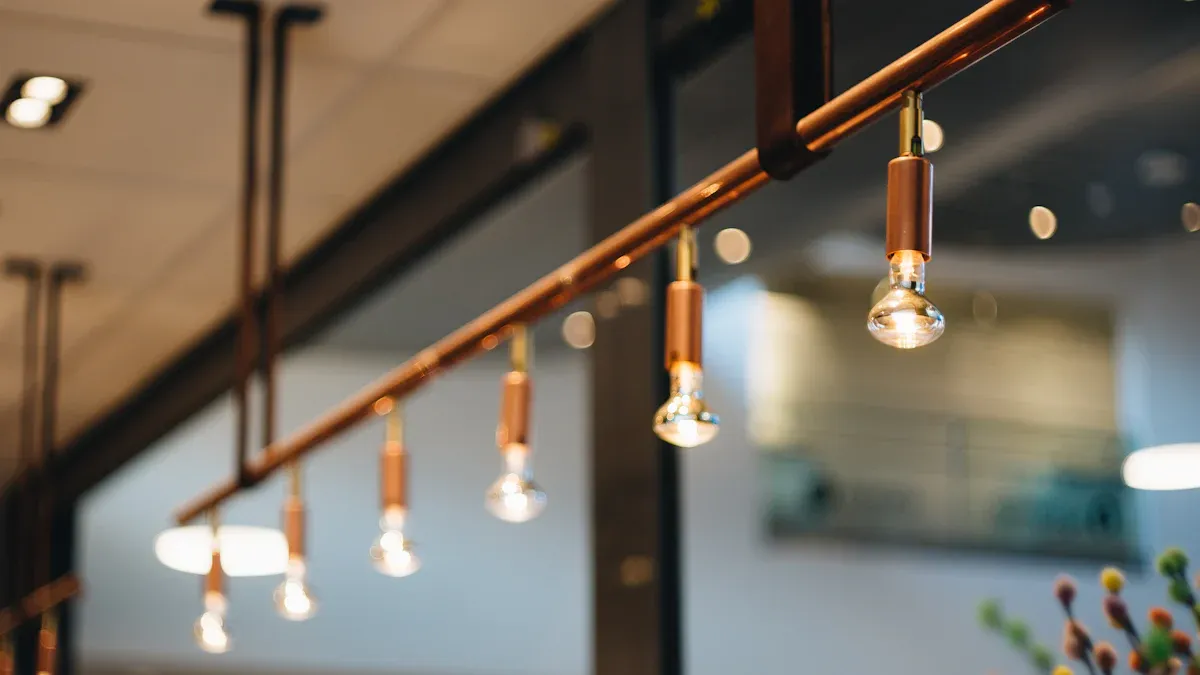
Indoor led spotlights are a smart way to light up rooms. These lights use less power than old bulbs. They also last much longer than incandescent bulbs. Led bulbs can work for up to 30,000 hours. Incandescent bulbs may only last about 450 hours. You can save up to $75 each year with energy-saving lights. There are many spotlight types for different needs. Offices and hotels use commercial indoor lighting. Smart homes use residential indoor lighting. You can find more details on the About Us or Home pages of a Product site. With so many choices, you can find the best spotlight for any room.
Key Takeaways
Indoor LED spotlights use less energy. They last longer than regular bulbs. This helps you save money on your electric bill.
Pick the right spotlight for your needs. BR spotlights give wide light. PAR spotlights make focused beams. MR spotlights are good for accent lighting.
Think about beam angle and color temperature when you choose spotlights. These help you set the mood and show colors well.
Plan where to put your spotlights. Make sure you place them safely. Good planning gives you the best lighting.
Use adjustable and track spotlights for more choices. You can change where the light goes when you need to.
Indoor LED Spotlights Overview
What Are Indoor LED Spotlights?
Indoor LED spotlights help light up certain spots in your home or office. These lights shine on one area, so they are good for showing off art, furniture, or cool building parts. Spotlights are different from regular bulbs because you can point the light where you want. You can move the light to shine on a special place. Many people like indoor LED spotlights because they save energy and make rooms feel nice.
Here are some main things that make these lights special:
Characteristic | Description |
|---|---|
Beam angle | LED spotlights shine a narrow light, great for lighting up one thing. |
Adjustable | You can change the direction of the light easily. |
CCT and CRI | The right color makes things look better, and high CRI shows true colors. |
Application Scenarios | People use them for art, stores, and home decorating. |
Key Features and Benefits
When you choose a spotlight, you get lots of good things. Here are some big reasons to use LED spotlights:
LED spotlights use much less energy than old bulbs, so you save money.
Good LEDs can last for a very long time, so you do not need to change them often.
LEDs do not have mercury, so they are safer for the earth.
These lights help you use less energy for heating and cooling.
Using less energy means your bills are lower.
LEDs are getting cheaper, so you can find good deals.
LEDs do not make much heat, so your room stays cooler.
That is why many people pick LED spotlights. They save energy, last longer, and are better for the planet.
Types of Spotlights for Indoor Use
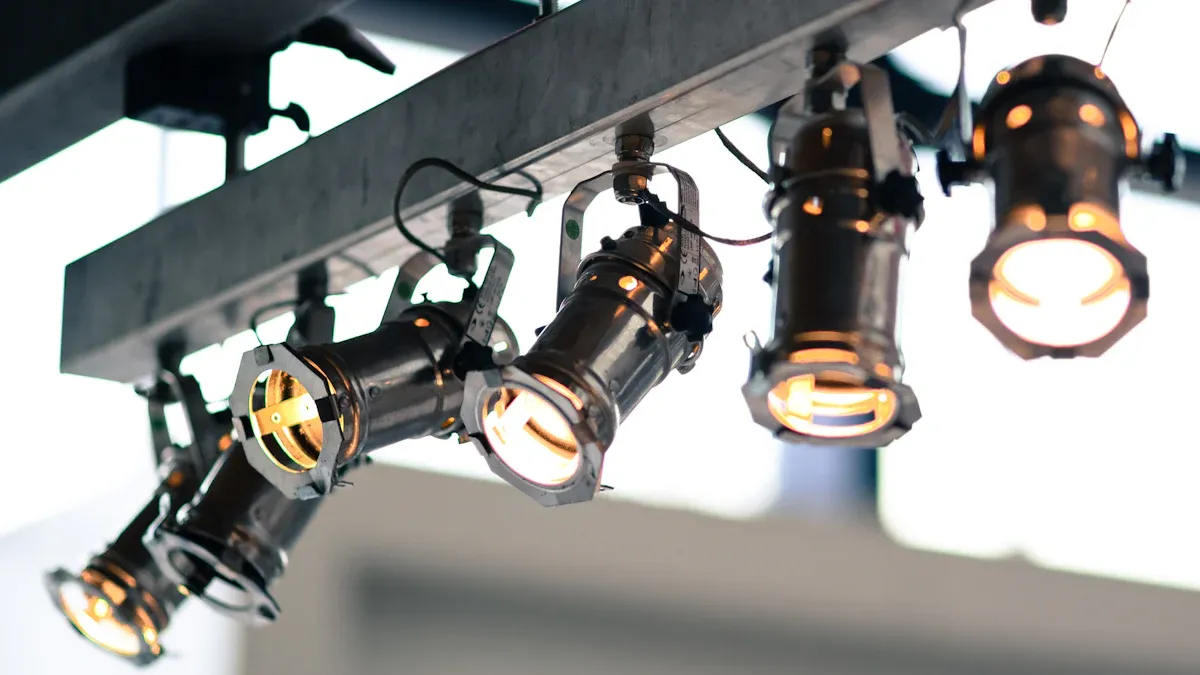
Indoor led spotlights come in many shapes and sizes. You can choose from several main types of spotlights, each with its own features. Knowing the spotlight types helps you pick the best one for your room.
BR, MR, and PAR Spotlights
You will see three main types of spotlights in stores: BR, MR, and PAR. Each type has a special design and works best in certain places. The numbers after the letters show the size of the bulb in eighths of an inch. For example, a PAR30 bulb is 30/8 inches wide.
Here is a table to help you understand the main types of spotlights:
Type | Full Name | Beam Angle | Characteristics | Applications |
|---|---|---|---|---|
BR | Bulged Reflector | 90 degrees and above | Less narrow light flow, ideal for floodlights and ambient lighting | High ceilings, staircases |
PAR | Parabolic Aluminized Reflector | 45 degrees and over | Focused, narrow beam of light | Spotlights, accent lighting |
MR | Multi-faceted Reflector | 15 to 45 degrees | Narrow light beam, more focused than PAR | Similar to PAR, used for accent lighting |
BR spot lights give you wide light. You can use them in big spaces like staircases. PAR spotlights shine a tighter beam. You can use them to highlight art or special objects. MR spotlights have the most focused beam. You can use them for small areas or to show off details.
Tip: If you want to light up a large area, choose BR spot lights. If you want to highlight something special, pick PAR or MR spotlights.
Fixed and Adjustable Spot Lights
Spot lights can be fixed or adjustable. Fixed spotlights point in one direction. You cannot move them once you install them. These work well for lighting up hallways or walls.
Adjustable spot lights let you change the direction of the light. You can point the beam where you need it most. This type is great for rooms where you want to move the light to different spots. Adjustable spotlights help you highlight art, furniture, or even a reading nook.
Anti-glare designs are important for both fixed and adjustable spot lights. These designs help reduce harsh light and protect your eyes.
Recessed and Surface-Mounted Spotlights
You can choose between recessed spotlights and surface-mounted spotlights. Recessed spotlights sit inside the ceiling. You only see the light, not the fixture. This gives your room a clean look. Surface-mounted spotlights attach to the ceiling or wall. You see the whole fixture, which can add style to your space.
Here is a table to compare recessed spotlights and surface-mounted spotlights:
Feature | Recessed Lights | Surface-Mounted Lights |
|---|---|---|
Installation Complexity | More complex; requires cutting and wiring | Easier; no cutting required |
Lighting Effect | Sleek, minimalist; focused beams for accent lighting | Wider illumination; can be decorative |
Recessed spotlights need more work to install. You must cut holes and run wires. These spot lights give you a modern look and focus light on special areas. You can use recessed spotlights for accent lighting or to highlight art.
Surface-mounted spotlights are easier to put up. You do not need to cut into the ceiling. These spot lights can light up bigger areas and add decoration to your room.
Anti-glare recessed spotlights work well in bedrooms and living rooms. They keep the light soft and comfortable.
Track and Specialty Spotlights
Track spot lights give you lots of flexibility. You can move each spotlight along the track. You can point the light at art, furniture, or any part of the room. Track lighting helps you create dramatic effects and highlight special features.
Track spotlights often use smart technology. You can control brightness and color with your phone or voice. This makes it easy to change the mood in your room. Track spot lights work well in living rooms, kitchens, and galleries.
Specialty spotlights include downlights and spotlights made for unique needs. Some specialty spotlights have anti-glare features. These spotlights help you avoid harsh light and keep your eyes comfortable. Specialty spotlights can also include mini spot lights for shelves or cabinets.
Note: Track spotlights and specialty spotlights help you show off artwork, statement furniture, or architectural details. You can adjust the light to fit your style.
You can find many types of spotlights for every room. When you know the main types of spotlights, you can choose the best led spotlights for your home. Each type gives you different lighting effects and styles.
Applications of LED Spotlights Indoors
Indoor led spotlights can be used in many ways at home. You can use spot lights for accent lighting, task lighting, or to show off special things. Knowing how to use spotlights helps you pick the right one for each room.
Accent and Task Lighting
Spot lighting is great for accent and task lighting. You can use spot lights to light up a reading spot or a kitchen counter. Task lighting in kitchens and offices gives bright light for working. Accent lighting helps you show off art or decorations. Many people use spot lights for mirrors in bathrooms and for vanity lighting. These uses make your space look nice and work well.
Tip: Do not point spotlights right at your eyes. Try using reflected light for a softer look.
Here is a table that shows where to put spotlights in different rooms:
Room | Ambient Lighting | Task Lighting | Accent Lighting |
|---|---|---|---|
Living Room | Modern chandelier for overhead lighting | Floor lamps or reading sconces | Directional lighting or elegant wall sconces |
Kitchen | Flush-mount ceiling lights | Kitchen island light fixtures or under-cabinet lighting | Toe-kick lighting or small uplights in open shelving |
Dining Room | Bold dining room chandelier | Buffet or console lighting | Wall-mounted lights or candle-style sconces |
Bedroom | Central ceiling light fixture | Elegant wall sconces for bedside | Cove lighting or strip lighting behind headboards |
Bathroom | Recessed ceiling light fixtures | Wall lamps or sconces beside the mirror | Niche lighting in showers or toe-kick lights below vanities |
Living Areas and Bedrooms
Spot lights help make living rooms and bedrooms feel cozy. You can use spotlights with a beam angle of 31-60 degrees for general light. Adjustable spotlights let you shine light on art or cool building parts. Dimmers help you set the mood. Warm white led spotlights (2700K to 3000K) make rooms feel comfy. Spot lighting in these rooms uses about 70% less energy than old bulbs, so it saves power.
Note: Do not put spotlights right above beds. Use cove lighting or strip lighting behind the bed for a soft glow.
Kitchens, Dining, and Workspaces
Spot lights are important in kitchens, dining rooms, and workspaces. You need ambient lighting to make the whole room bright. Task lighting shines on places where you work, like counters. Accent lighting makes special things in the kitchen stand out. Plan your lights to balance all three types. Use dimmer switches to change how bright the lights are. Many people ask experts to install downlights and spotlights safely.
Lighting Type | Purpose |
|---|---|
Ambient Lighting | Gives overall brightness for daily tasks. |
Task Lighting | Lights up work areas, so you can cook safely. |
Accent Lighting | Shows off decorations and adds style to the kitchen. |
Highlighting Art and Decor
Spot lights are great for showing off art and decorations. Track lighting and monopoint lights work best when you aim them at a 30-degree angle from the middle of the art. Directional lighting like track lighting and adjustable recessed lighting lets you move the light where you want. You can shine light on special art or decorations. These uses make your home look cool and different.
Tip: Use spotlights with narrow beams for art. This helps you see details and colors without glare.
Spot lighting gives you many energy-saving choices for every room. You can pick different spotlights for each use. People often use spotlights for stairs, closets, and to light up walls. With led spotlights, you get style and save money.
Choosing the Right Spotlight
Beam Angle and Light Spread
When you choose spot lights for your home, you need to think about beam angle. Beam angle tells you how wide the light spreads from the spotlight. A narrow beam angle, like 10° to 60°, gives you focused spot lighting. You can use this type to highlight art or a reading area. A wide beam angle, like 120° to 180°, covers a bigger space. This works well for ambient lighting or wall washing.
Beam Angle Type | Description | Ideal Use |
|---|---|---|
Narrow (10°–60°) | Produces concentrated light with greater reach. | Excellent for spotlighting or focused task areas. |
Wide (120°–180°) | Casts light over a broad area. | Best for ambient lighting and wall washing. |
Tip: Use narrow spot lights for detail work and wide spot lights for general room lighting.
Color Temperature and CRI
Color temperature and CRI help you set the mood and show true colors. Color temperature, measured in Kelvin, changes how warm or cool the light feels. CRI, or Color Rendering Index, shows how well the spotlight displays colors. High CRI means better color quality, which is important for art, clothes, or food.
Aspect | Significance |
|---|---|
Color Temperature | Affects the perceived warmth or coolness of the light, influencing the ambiance of a space. |
Color Rendering Index (CRI) | Measures how accurately colors are rendered, crucial for environments where color fidelity is important, such as retail and healthcare. |
Note: Pick spot lights with a color temperature that matches your room’s purpose. Use high CRI spotlights for spaces where color matters.
Brightness and Size
You need to match the brightness and size of your spotlight to the room and activity. Brightness is measured in lumens. A 10-watt led spotlight can give you 800 to 1,000 lumens. A 100-watt led can reach up to 16,000 lumens. If you use a narrow beam, the spot lights will look brighter in one area. For a big room, you need more lumens and a wider beam. Always check the intended use and room size before buying the best led spotlight.
Choose the right intensity for your needs. Too much brightness can make a room uncomfortable, while too little can leave areas dark.
Design and Controls
Design and controls make spot lights easy to use and fit your style. You can find high-quality lighting fixtures with smart controls. Some spotlights let you change brightness or color with your phone or voice. Human-centric lighting supports your health by matching natural rhythms. Sustainable designs use eco-friendly materials. Good fixture design also means safe and efficient spot lighting.
Smart lighting integration lets you control spot lights with apps or voice assistants.
Human-centric lighting adjusts to your daily needs.
Sustainable spot lights help protect the environment.
Understanding light dynamics helps you create the best atmosphere. Use spot lights with good controls for comfort and flexibility.
You can find many types of spotlights for every room. When you look at beam angle, color temperature, brightness, and design, you get the best quality and performance from your indoor led spotlights.
Installation Tips for Spot Lights
Planning and Preparation
You should make a plan before you start. First, look at the size and shape of the room. Think about how spot lights will change the space. Check the electrical system to see if it needs upgrades. Look at where the furniture is so nothing blocks the light. For wall art, put spot lights 25-30cm from the wall. For 3D items, keep them 15cm away. If you have a big wall, place spot lights about 50cm from it. Always follow local electrical rules and safety laws. After you finish, move the lights if you need to make the lighting better.
Tools and Safety
Get all the tools you need before you start. You will need screwdrivers, wrenches, pliers, wire strippers, a multimeter, a drill, and step bits. Use a soldering kit and heat gun for wiring jobs. Zip ties and wire loom help keep wires neat. Always wear insulated gloves and safety glasses. Turn off the power at the circuit breaker before you begin. Follow the instructions from the maker and local rules to stay safe. Use wiring diagrams and a label maker so you do not mix up wires.
Safety tip: Do not put spotlights right above beds in bedrooms. Use anti-glare designs and recessed spotlights for a soft, cozy glow.
Step-by-Step Installation
Here is an easy guide for putting in spotlights:
Plan where each light will go and mark the spots.
Turn off the power at the breaker and check with a tester.
Cut holes in the ceiling with a drill and hole saw.
Run wires to each spot where a light will go.
Connect the spot lights and match the wires tightly.
Put in and secure the spot lights as the instructions say.
Turn the power back on and test each light to see if it works well.
Tip: Use anti-glare recessed spotlights in living rooms to make the light softer and more comfortable.
DIY vs. Professional Help
You can put in spotlights yourself if the job is simple. If you need new circuits, work in wet places, or put in recessed spotlights, call a pro. Hard wiring, old systems, or local rules that need permits mean you should get help. Experts make sure the job is safe and follows the rules.
Scenario | Reason for Hiring a Professional |
|---|---|
Adding new circuits or tapping existing | Hard electrical work needs a skilled person |
Damp areas | Water and electricity can be dangerous |
Installing recessed spotlights | You need special skills for this job |
Outdated wiring systems | Old wires can be risky |
Local codes require permits | You must follow the law and avoid fines |
You can pick and put in spotlights if you follow these tips. Always choose anti-glare designs and buy the best led spotlight for your space.
You have many choices when it comes to indoor LED spotlights. You can use them in living rooms, kitchens, bedrooms, or even offices and stores. These lights help you highlight features and create the right mood. Before you buy, think about:
The purpose of your space and how much light you need.
The color temperature and CRI for true colors.
The right size, beam angle, and if you want dimmable options.
Always follow safety steps like turning off the power and checking your wiring. When you plan well and use these tips, you can enjoy bright, efficient lighting that fits your needs.
Resource | What It Helps With |
|---|---|
CRI Ratings | Shows true colors in your space |
Lighting Levels | Helps you get the right brightness |
Style Options | Lets you match your room’s look |
FAQ
How do you choose the right beam angle for your room?
You should pick a narrow beam angle for highlighting art or objects. Use a wide beam angle for general lighting. Check the room size and what you want to light up before you decide.
Can you install LED spotlights by yourself?
You can install simple spotlights if you follow safety steps. Turn off the power and use the right tools. For complex jobs or new wiring, you should call a professional.
What does CRI mean for LED spotlights?
CRI stands for Color Rendering Index. It shows how well a light displays colors. You should choose a high CRI for spaces where true colors matter, like kitchens or art rooms.
Do LED spotlights save money on energy bills?
LED spotlights use less power than old bulbs. You save money because they last longer and use less electricity. Many people see lower energy bills after switching to LED spotlights.
Where should you avoid placing spotlights in bedrooms?
You should not put spotlights directly above beds or at eye level. Use recessed or anti-glare spotlights for a softer glow. This helps you create a comfortable and relaxing space.
See Also
Exploring LED Area Lights: Varieties, Uses, And Installation Tips
Understanding LED Area Lights: Uses, Advantages, And Setup Guidelines
A Comprehensive Look At Indoor LED Lamps: Types And Uses
Guide To Outdoor LED Lighting: Varieties, Advantages, And Setup
Indoor LED Signage: Varieties, Uses, And Advantages For Businesses