When and Why to Consider LED Bulb Replacements: Signs It's Time to Upgrade

You may see your Led Light get dim, flicker, or buzz. Sometimes, bulbs turn yellow, get hot, or look old. If your energy bills go up, bulbs break often, or cost a lot to fix, it may be time for led bulb replacements. Upgrading helps your Home use less energy, stay safe, and makes your Product last longer. About Us.
Key Takeaways
Watch for signs like dimming, flickering, or yellowing. These signs show it is time to change your LED bulbs. These problems can make you less comfortable and less safe.
Switching to energy-saving LED bulbs can cut your energy bills a lot. You will also spend less on fixing lights. Your rooms will look brighter and you will save money.
Think about changing old fixtures to use new LED technology. New bulbs last longer, use less energy, and give better light.
When to Consider LED Bulb Replacements
Spotting Dimming
You might notice your room looks darker than before, even when you turn on all the lights. This is a sign of noticeable dimming. Dimming happens when your LED bulbs start to lose their brightness over time. Sometimes, you may not see it right away, but you might feel like you need to squint or move closer to your work. Dimming can make it hard to read, cook, or do homework.
Let’s look at how dimming affects your lighting and energy use:
Aspect | Explanation |
|---|---|
Dimming Method | Most LED bulbs use pulse-width modulation (PWM) to dim. This keeps energy use low at lower brightness. |
Driver Compatibility | You need the right driver and control system to save energy when you dim your lights. |
Power Consumption Relation | Good LED bulbs lower power use as they dim, but old or faulty ones may not. |
Energy Efficiency Ratio (EER) | Checking EER at different dimming levels shows if your lighting stays efficient when dimmed. |
If you see uneven light output or dim spots in your fixture, it’s time to think about a led lighting upgrade. New bulbs will give you bright, even light and help you save on your energy bill.
Tip: If you notice dimming in just one fixture, try swapping bulbs to see if the problem follows the bulb or stays with the fixture.
Flickering and Buzzing
Flickering can be annoying. You might see your lights blink, flash, or change brightness quickly. Sometimes, you hear a buzzing sound from the fixture. Frequent flickering can hurt your eyes and make it hard to focus. It can even cause headaches for some people.
Here are some common reasons for flickering and buzzing:
Loose or failing neutral connection in your wiring
Loose bulb or fixture connection
Incompatible dimmer switches, especially ones made for old bulbs
Faulty drivers inside the bulb
Poor wiring or loose wires in the fixture
Circuit overloading when you use many appliances at once
Unstable power supply in your home
Dirt or dust on the bulb socket
Poor-quality LED bulbs with cheap drivers
Cause | Explanation |
|---|---|
Faulty drivers | Heat from a bad driver can make LED bulbs flicker. |
Poor wiring | Loose wires in the fixture can cause flickering. |
Circuit overloading | Too many appliances can make your bulbs flicker. |
Unstable power supply | Flickering may mean your power supply is not steady. |
Incompatible dimmers | Using the wrong dimmer can cause flickering and buzzing. |
Dirt on sockets | Dust can block power and cause flickering. |
If you see flickering in more than one fixture, you may have a bigger problem with your wiring. If you only see it in one fixture, try cleaning the socket or tightening the bulb. If the buzzing or flickering keeps happening, it’s time for led bulb replacements.
Note: Flickering and buzzing are not just annoying. They can mean your wiring or fixture is unsafe. Don’t ignore these signs.
Discoloration and Yellowing
Discoloration and yellowing are easy to spot. Your LED bulbs may look yellow, brown, or even have dark spots. This can make your room look strange or gloomy. Discoloration happens when the bulb ages or gets too hot.
Here’s why discoloration matters:
Reduced color rendering: You may find it hard to tell colors apart. This is important for safety and for tasks like cooking or art.
Aesthetic inconsistency: Some fixtures may look different from others. This makes your room look messy or unprofessional.
Visibility challenges: Yellowed bulbs make it hard to see, especially in low-light areas.
If you see discoloration in one fixture, check if the bulb feels hot. Too much heat can damage the bulb and the fixture. If you see yellowing in many fixtures, it’s time for a led lighting upgrade.
Alert: Discoloration and yellowing can mean your bulbs are overheating. This can be a safety risk. Replace them soon to keep your home safe and bright.
When you spot dimming, flickering, buzzing, or discoloration, don’t wait. These signs show your lighting is not working well. Upgrading your bulbs will make your home safer, more comfortable, and more energy efficient.
High Energy Bills and Upkeep Costs
Inefficient Lighting
Have you seen your energy bills go up lately? Old fixtures and bulbs use more power than needed. Lighting can take up 20-30% of your energy use at home or work. If you still use old bulbs, you miss out on saving energy. Using energy-efficient lighting helps you spend less and keeps your rooms bright. When you upgrade your fixtures, you use less power and save money. New fixtures with energy-efficient lighting lower your bills and make your space nicer.
Frequent Failures
Do you have to change bulbs a lot? Changing bulbs often costs more money and takes time. If you need new bulbs every few months, you pay more for work and supplies. Look at this table to see how often bulbs fail and what it costs:
Failure Rate | Implication on Maintenance Costs |
|---|---|
3% | This is okay and does not cost much. |
>20% | This costs a lot because you change bulbs often. |
Many things can make bulbs fail often. Hot or cold weather, power spikes, bad parts, and poor setup all matter. If your fixtures keep breaking, you waste time and money. Upgrading to energy-efficient lighting means bulbs last longer and you have less trouble.
Maintenance Expenses
Maintenance costs can get high, especially if you have many fixtures. One company switched to LED high bay fixtures and saved over $60,000 each year. Old lamps need to be changed about 2.92 times per fixture every year, costing $38.93 for work. LEDs only need to be changed 0.09 times per fixture, so labor drops to $1.20. That’s a 97% drop! If you swap 90W lamps for 14W LED lamps, you change bulbs less and pay less for work. Good LED panels last over 50,000 hours, so your lights stay bright longer. At home or work, switching to energy-efficient lighting pays off fast and means fewer repairs. You spend less time fixing lights and more time enjoying your space.
Tip: Upgrading to energy-efficient lighting helps you save energy and stops you from changing bulbs all the time. You save money and your fixtures work better for longer.
Outdated LED Technology
Expired Warranty
Did you look at your led fixture’s warranty lately? Most LED bulbs and fixtures have a warranty for 1 to 3 years. Some better products give you up to 5 years. When the warranty ends, you do not get help from the company. If your fixture breaks or gets dim, you must pay to fix it. This can make you wonder if you should keep old fixtures. If you upgrade before the warranty ends, you avoid surprise costs. Your lighting will also stay dependable.
Old Fixtures and Design
Are you still using an old led fixture? Old fixtures may not work well with new bulbs. Sometimes, old fixtures do not let air move, so they get too hot. Overheating can make your led fixture shut off or break early. You might see uneven light or feel the fixture getting hot. If your fixture and bulb do not match, lights can be too dim or too bright. This changes how well your led fixture works and how nice your room feels.
See how old fixtures compare to new ones:
Comparison | Incandescent | CFL | LED |
|---|---|---|---|
Bulb retail cost | ~$1.00 | ~$2.00 | ~$5.00 or less |
Wattage | 60 Watt | 14 Watt | 7 Watt |
Average lifespan | 1,250 hours | 8,000 hours | 25,000 hours |
Electricity cost per year (13.2¢/kWh) | ~$8.67 | ~$2.02 | ~$1.01 |
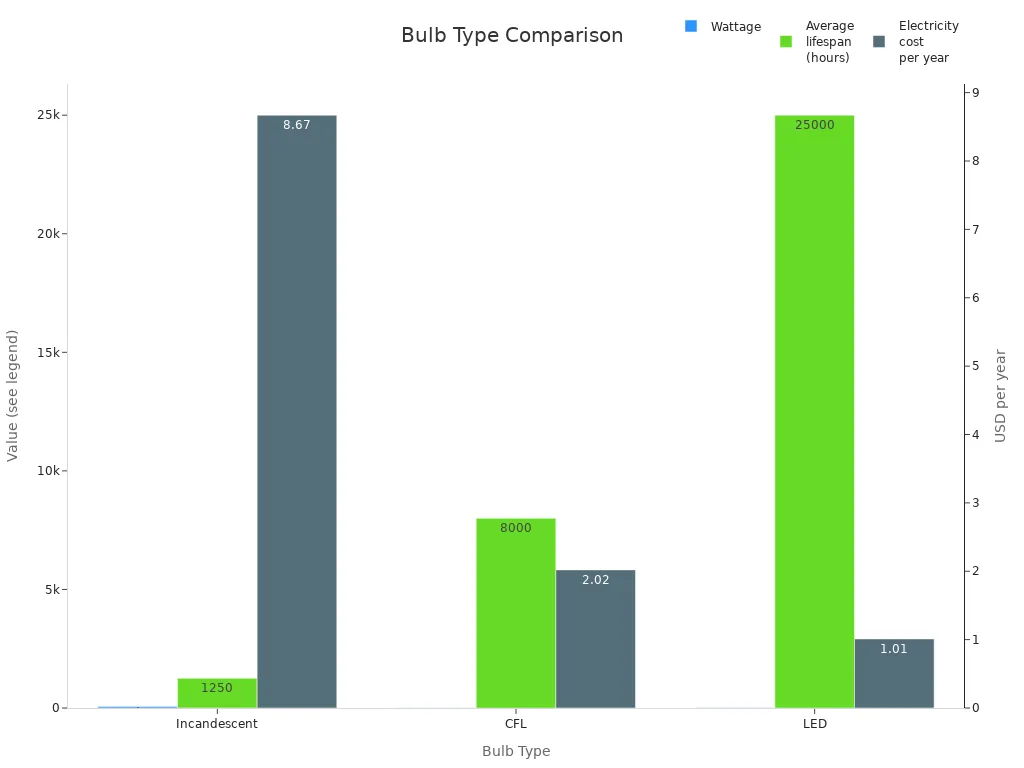
New led fixture technology uses much less energy than old bulbs. New fixtures last longer and help you save money. If you keep using old technology, you miss these good things.
Missing Smart Features
Do you want to control your led fixture with your phone? Old fixtures do not have smart features. You cannot change colors, set times, or control each led fixture by itself. Smart fixtures let you make scenes for parties or bedtime. You can set your led fixture to turn off when you leave, so you save energy.
Feature | Older LED Bulbs | Smart Bulbs |
|---|---|---|
Color Control | No | Yes |
Individual Bulb Control | No | Yes |
Automation Capabilities | No | Yes |
Smart fixtures let you change brightness and color.
You can set your led fixture to turn off when not needed.
Automation helps your led fixture use less energy and lower bills.
Smart led fixture systems use sensors and apps for easy control. You can check power use and set times from anywhere. This makes your led fixture easier to use and helps you save energy.
Tip: Upgrading your led fixture to a smart system gives you more control and helps you save money.
Safety and Performance Concerns
Excessive Heat
You might notice your LED bulbs feel hot to the touch. This is not normal. Aging bulbs can overheat, especially if they come from poor manufacturing. When bulbs get too hot, they can cause electrical issues or even start a fire. Here are some risks you should know:
Overheating can happen as bulbs age.
Poor quality bulbs may have electrical problems.
Too much heat can increase the risk of fire.
If you see any signs of melting or smell something burning, turn off the light right away. Upgrading to new LED bulbs helps you avoid these dangers. New designs use thermal management systems to keep bulbs cool and safe.
Alert: Hot bulbs can damage your fixtures and even your ceiling. Always check for heat when you change a bulb.
Physical Damage
LED bulbs are tough, but they are not unbreakable. You might drop a bulb or bump it with a broom. Physical damage can crack the bulb or break the inner parts. If you see cracks or chips, replace the bulb. Broken bulbs can cause injury or stop working without warning.
New LED bulbs use shatter-free materials.
Less breakage means fewer injuries from broken glass.
You change bulbs less often, so you avoid accidents during replacement.
If you spot any physical damage, do not use the bulb. Always check for damage before you install a new bulb.
Inconsistent Light Output
Sometimes, your lights flicker or change color. This can happen if your power supply is unstable or your dimmer switch does not match the bulb. Flickering makes it hard to watch TV or read. Uneven color can make your kitchen or living room look strange.
Flickering can distract you during activities.
Uneven lighting creates dark spots, which can be unsafe.
Good LED bulbs give you steady, bright light every time.
If you notice these problems, it is time to upgrade. New LED bulbs improve visibility and help prevent accidents at home.
Benefits of LED Bulb Replacements
Improved Efficiency
You can save a lot of energy with led bulb replacements. When you swap out old bulbs for efficient led lights, you use less power and lower your bills. For example, if you replace one 60-watt bulb with a 10-watt LED, you save about $9 to $10 each year. If you upgrade 15 bulbs in your home, you could save around $140 every year. This lighting upgrade also cuts down on electricity use by 821 kWh and reduces carbon emissions. You help the planet and your wallet at the same time.
Lower energy bills
Less electricity wasted
Smaller carbon footprint
Better Light Quality
You will notice a big difference in how your rooms look and feel. New led bulb replacements give you a consistent light source that is brighter and more comfortable. Many users say their new bulbs are brighter than old CFLs. You can pick from many colors and light temperatures. This means you can set the mood for any room. You can also adjust the brightness and color to match your needs. No more poor lighting quality that strains your eyes or makes it hard to focus.
Brighter rooms
More color choices
Adjustable light for every task
Enhanced Durability
Modern led bulb replacements last much longer than old bulbs. You get a rated lifespan of up to 25,000 hours. That is about 25 times longer than incandescent bulbs. You will not need to change bulbs as often, which saves you time and money. The long lifetime means fewer trips to the store and less hassle. Check out this table:
Bulb Type | Projected Lifespan |
|---|---|
LED | 25,000 hours |
CFL | 10,000 hours |
Incandescent | 1,200 hours |
When you choose quality products, you get reliable lighting for years. Upgrading now helps you avoid problems from poor lighting quality and keeps your home bright and safe.
Don’t wait for your lights to fail. Make the switch to led bulb replacements before issues get worse. Enjoy better light, lower costs, and a longer lifetime for your bulbs.
You now know when to swap your old bulbs for LEDs. Upgrading boosts safety, saves money, and makes your space brighter. Check out these safety perks:
Safety Feature | Description |
|---|---|
Lower Heat Emission | LEDs stay cool and cut fire risks. |
Non-Toxic Materials | LEDs use safe, non-toxic parts. |
Durability | LEDs last longer and resist breaking. |
Ready to start?
Walk through your rooms and spot dim or flickering lights.
Pick LEDs with high CRI and good energy ratings.
Ask an electrician for help if needed.
Brighten your home and enjoy the benefits!
FAQ
How often should you replace LED bulbs?
You usually don’t need to replace LED bulbs often. Most last 10 to 20 years with normal use. Replace them when you see dimming or flickering.
Can you mix old and new LED bulbs in the same fixture?
You can mix them, but you might see uneven light or color. For best results, use the same type and brand in one fixture.
What should you do with old LED bulbs?
Don’t throw them in the trash.
Take them to a recycling center.
Some stores collect used bulbs for safe disposal.
See Also
Exploring GE LED Bulbs: Advantages And Choosing Tips
Understanding LED Replacement Lights: Varieties And Advantages
Selecting The Perfect LED Replacement For Your Space