Why LED Bulbs Are Worth the Investment: Analyzing Cost Savings and Performance Benefits

You want to save money and enjoy better lighting in your Home. Choosing energy efficient light bulbs like Led Light is a smart investment. Many people wonder if led bulbs investment is worth the higher price. Look at this table to see how much energy you save:
Bulb Type | Energy Savings Percentage |
|---|---|
LED vs Incandescent | 90% less energy |
LED vs CFL | 30% less energy |
Even though LED bulbs cost more at first, you spend less over time. The Product lasts longer, uses less power, and helps the environment. About Us, we believe energy efficiency makes life easier and your investment smarter.
Key Takeaways
LED bulbs use much less energy than incandescent bulbs. They can save up to 90% energy. They last a lot longer. This means you do not need to replace them often. You also spend less money on fixing them. LEDs give better light quality. You can find them in many colors. Using LEDs makes your electricity bills lower. LEDs are safer to use. They are better for the environment than old bulbs.
LED Bulbs Investment vs. Traditional Lighting
LED Technology and Efficiency
You want lights that work well and save energy. LED technology uses electroluminescence. This means it changes most energy into light, not heat. That is why LED lighting is much more efficient than old bulbs. Here is a simple comparison:
Aspect | LED Bulbs | Traditional Bulbs |
|---|---|---|
Energy Consumption | Up to 75% less energy | Higher energy use |
Lifespan | 25,000 hours or more | Shorter lifespan |
Light Production | More lumens per watt | Less efficient |
Environmental Impact | Lower carbon footprint | Higher carbon footprint |
LED bulbs can save up to 75% energy. This means you pay less for electricity and help the planet. You get more light for each watt, so your rooms look brighter. Using less power saves money and makes LED bulbs a smart pick for your home.
Durability and Lifespan
You want your lights to last a long time. LED lighting is special because it lasts much longer than other bulbs. Look at this chart:
Bulb Type | Average Lifespan |
|---|---|
LED | 25,000 hours |
CFL | 10,000 hours |
Incandescent | 1,200 hours |
LED bulbs are strong. They can handle bumps, shakes, and being turned on and off a lot. They do not lose brightness or burn out fast. You can use them outside or in cold places, and they still work well. This means you change bulbs less often, save time, and keep more money.
Light Quality and Versatility
You need lights that fit every room and mood. LED lighting comes in many color temperatures. You can pick warm and soft or bright and cool. The color rendering index (CRI) for LED bulbs is often 90 or higher. This means colors look real and bright.
Type of Lighting | Color Temperature (CCT) | CRI Value |
|---|---|---|
LED Bulbs | 2700K to 6500K | 90+ |
Traditional Bulbs | 2700K to 5000K | 80 |
LED bulbs turn on right away. You can dim them easily. You can also connect them to smart home systems for more control. With LED lighting, you get choices, better color, and lights that work for you.
Tip: Pick LED bulbs for rooms where you want to save energy and have great light. You will notice the difference in every part of your home.
Energy Efficient Light Bulbs and Cost Savings
Lower Energy Bills
You want to see a real difference in your monthly expenses. When you choose energy efficient light bulbs, you take a big step toward cutting costs at home. Lighting uses about 15% of your home's electricity. By switching to LED lighting, you can lower your energy bills fast.
Upgrading just five of your most-used fixtures to Energy Star LEDs can save you around $45 each year.
Each LED bulb can save up to $4 a year in energy costs.
The average household saves about $225 per year by making the shift to led.
LED bulbs use 75-80% less energy than old incandescent bulbs. That means you get the same bright light for a fraction of the cost. You will notice a reduction in utility bills almost right away. This is one of the main benefits of led bulbs investment.
Here is a quick look at how much energy you use with different bulbs:
Bulb Type | Annual Consumption (kWh) | Energy Savings Compared to LED (kWh) |
|---|---|---|
10W LED | 10.95 | N/A |
14W CFL | 15.33 | 4.38 |
60W Incandescent | 65.7 | 54.75 |
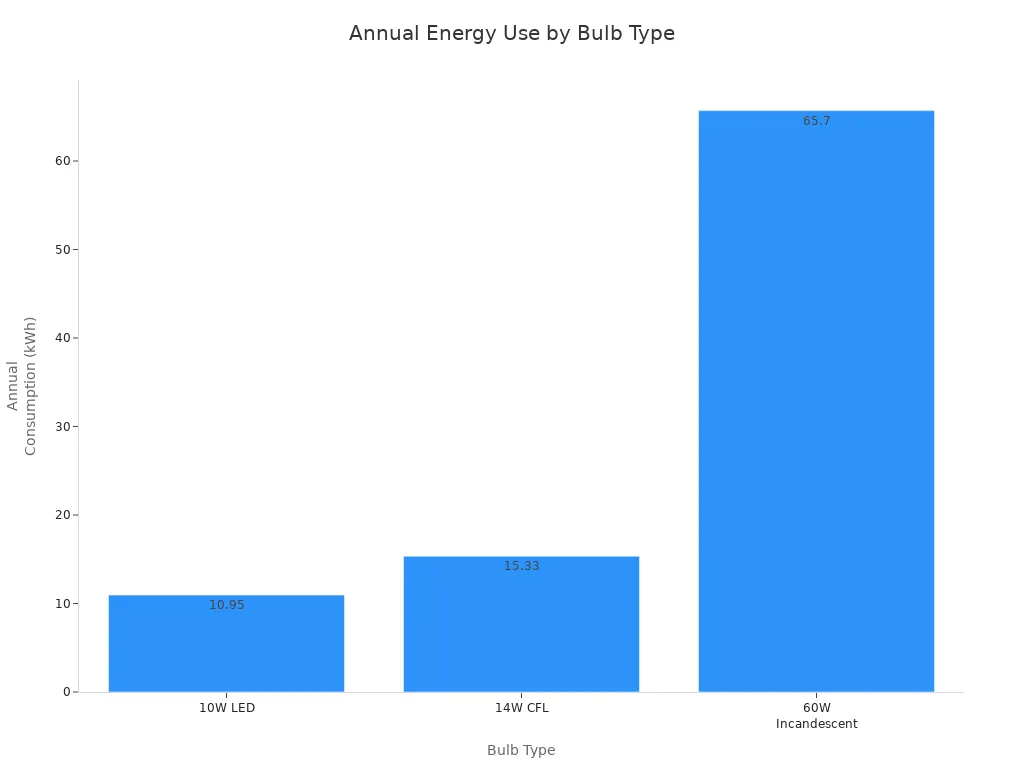
You can see that led lighting uses much less energy. This exceptional energy efficiency leads to significant long-term savings for your family.
Reduced Replacement and Maintenance Costs
You want lighting that lasts. LED bulbs have a long lifespan, often between 25,000 and 50,000 hours. Traditional bulbs burn out much faster. This means you spend less time and money replacing bulbs.
Aspect | LED Bulbs | Traditional Bulbs |
|---|---|---|
Lifespan | Long-lasting, fewer replacements | Short lifespan, frequent changes |
Maintenance Costs | Minimal upkeep required | High due to frequent replacements |
Total Cost Savings | Significant over 10 years | Higher costs due to replacements and energy use |
Switching to led bulbs means fewer trips to the store and less hassle at home. You also avoid the risk of injuries from changing bulbs in hard-to-reach places. For businesses, reduced maintenance costs mean fewer service calls and less downtime. Over ten years, you can save around $300 in energy and replacement costs compared to traditional bulbs.
LED bulbs can last up to 50,000 hours.
Fewer replacements lead to lower long-term costs.
Less time spent on bulb changes means more time for what matters to you.
This is a smart financial investment that brings real benefits to your daily life.
Payback Period and Long-Term Value
You may wonder if the higher upfront cost of led bulbs investment is worth it. The answer is yes. The payback period for LED lighting is short because of the rapid energy savings and reduced maintenance. Many households see a noticeable drop in their electricity bills soon after switching.
The initial cost of an LED bulb is about $8.
You can save up to $300 each year by replacing all bulbs in your home with LEDs.
LED bulbs last about 10 years, so you avoid frequent replacements.
The long-term value of led lighting is clear. You get cost savings, lower energy use, and less hassle. You also help reduce environmental impact and support sustainability. Many governments offer rebates and incentives for energy efficient upgrades, which can lower your upfront costs even more.
Tip: Choose LED lighting for your home to enjoy energy efficiency, cost savings, and environmental benefits. You will see the benefits in your wallet and in the world around you.
Making the shift to led is an energy efficient choice that pays off. You get brighter rooms, lower bills, and a greener future. Start building your energy efficient home today and enjoy the benefits for years to come.
LED Lighting Performance Benefits
Safety and Heat Reduction
You want your home to be safe for everyone. LED lighting gives you important safety benefits that older bulbs cannot match. LEDs stay cool to the touch, even after hours of use. This means you lower the risk of burns or fire in your home. Kids and pets can play near lamps without worry. You also avoid accidents because LEDs use low-voltage power, which reduces electrical hazards.
LED lights remain cool, even after long use.
Incandescent bulbs get very hot and can cause burns.
LEDs use low-voltage power, making them safer.
Here is a quick comparison of surface temperatures:
Bulb Type | Surface Temperature (°C) | Surface Temperature (°F) |
|---|---|---|
Incandescent | 150–260 | 302–500 |
LED | 40–70 | 104–158 |
You see that LED bulbs run much cooler. This safety feature adds peace of mind and supports the long lifespan and low maintenance needs of LED lighting.
Environmental Impact
You care about the planet. Making the shift to led brings strong environmental benefits. LED lighting uses much less energy, which means you help cut down on carbon emissions. Many businesses have seen a 60-80% drop in lighting-related energy use. This leads to big savings and supports sustainability.
LED bulbs do not contain mercury or other toxic materials. You do not need special disposal methods, so you protect the environment from harmful waste. By using LEDs, you help reduce pollution and make your home greener.
Note: By 2030, switching to LED lighting could cut 40.9 million metric tonnes of CO2 emissions. That is a huge step for environmental benefits and a cleaner future.
While LED bulbs have some metals, their energy efficiency and long lifespan mean you use fewer resources over time. You get both savings and a positive impact on the environment.
Health and Well-Being
LED lighting also supports your health. LEDs do not give off harmful UV rays, so you protect your skin and eyes. You avoid exposure to mercury, which is found in some older bulbs. This makes your home safer for everyone.
LEDs emit almost no UV radiation.
No mercury means less risk to your health.
Most LEDs are safe for eyes and skin.
LED bulbs can also help your sleep and mood. Some LEDs mimic natural sunlight, which supports your body’s natural rhythms. You feel better, sleep better, and enjoy the benefits of good lighting every day.
You get more than just energy savings and lower cost. You gain performance, safety, and health benefits that improve your life.
You gain real value when you choose LED bulbs. LEDs use 70-90% less energy, last over 10 years, and save you $50-$100 each year. They help the planet by cutting CO₂ and reducing waste. Make the switch today and enjoy these quick tips:
Check lumens for brightness, not watts.
Pick the right color temperature for each room.
Buy from trusted brands for longer life.
🌱 Every LED bulb you install brings you closer to a brighter, greener future.
FAQ
Are LED bulbs really worth the higher upfront cost?
Yes! You save money over time because LED bulbs use less energy and last much longer. You quickly recover your investment through lower bills and fewer replacements. 💡
Can you use LED bulbs in any fixture?
You can use LED bulbs in most fixtures. Always check the packaging for compatibility. Some enclosed fixtures or dimmers need special LED bulbs.
Do LED bulbs work with dimmer switches?
Many LED bulbs work with dimmers, but you need to choose bulbs labeled “dimmable.” Pair them with compatible dimmer switches for smooth performance.
Tip: Always match your LED bulb with a dimmer designed for LEDs to avoid flickering.
How do you dispose of old LED bulbs?
You can throw LED bulbs in your regular trash because they do not contain mercury. For extra care, recycle them at local centers if available. This helps protect the environment.
See Also
Evaluating LED Bulbs: Business Cost and Return on Investment
Choosing GE LED Bulbs: Key Features and Advantages Explained
Comparing LED Streetlights and Traditional Lights: Cost and Efficiency
Understanding LED Light Bulbs: Technology and Selection Guidance
Modern LED Street Bulbs: Efficiency, Longevity, and Installation Advantages