LED Down Lights or LED Tubes Finding the Right Fit for Your Room


Looking for the best lights for your room? If you need bright light in a big space, LED tubes are a good choice. If you want a warm feel or light for one spot, use LED down lights. Most homes use kits with many lights. In 2023, people put in over 240 million home kits! You can see how LED down lights and tubes are used in different places below:
Category | Quantity (millions) | Application Type |
|---|---|---|
Residential Kits | 240 | Residential |
Office Panels | 120 | Commercial |
Industrial High Bays | 95 | Industrial |
Retail Track Lights | 75 | Commercial |
Hospitality Downlights | 22 | Hospitality |
LED Tubes | 135 | Various |
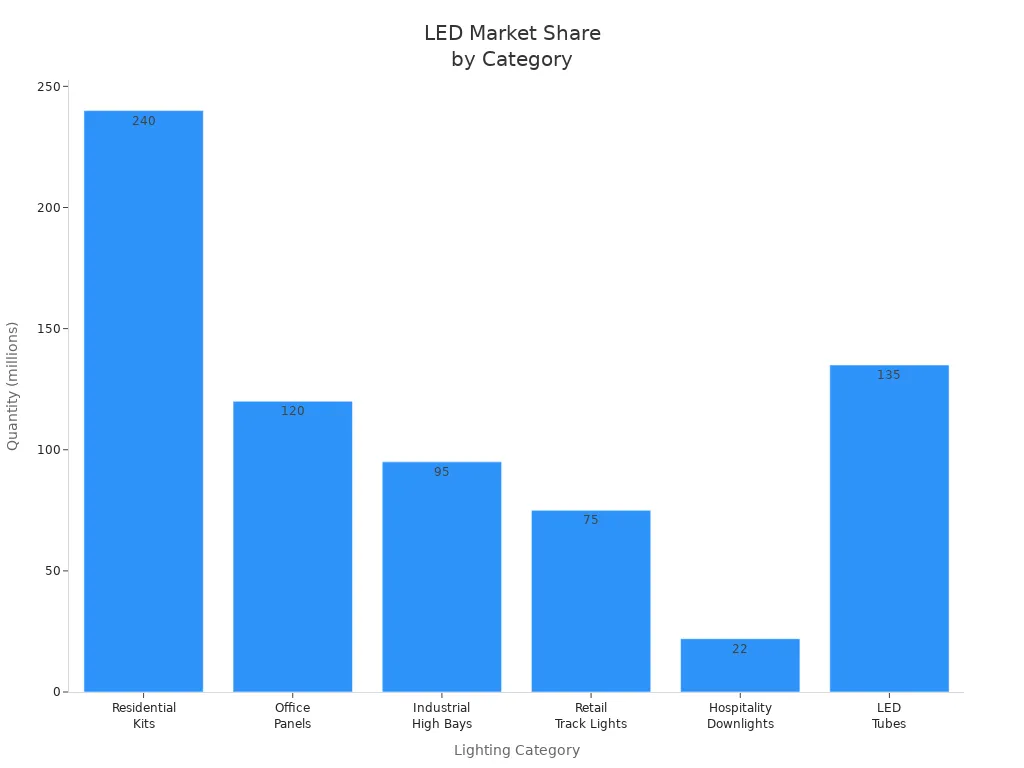
Switching to LED lights can save you up to 90% on energy. This is much better than old bulbs. People pick LEDs for their homes because they last a long time. They also help save money. Do you want lights that use less energy at home? You are in the right place to find what you need. Check out the About Us and Product pages to see more choices.
Key Takeaways
LED tubes work well in big rooms that need bright light, like garages and offices.
LED down lights make a room feel warm and can shine on certain spots, which is great for living rooms and kitchens.
Using LED lighting can help you save up to 90% on your energy bill, which is good for your money and the planet.
You can use both LED tubes and down lights in your house to get both bright light and special spot lighting.
Always look at energy ratings and make sure the lights fit your fixtures so you install them right and save money for a long time.
LED Down Lights vs. LED Tubes
What Are LED Down Lights?
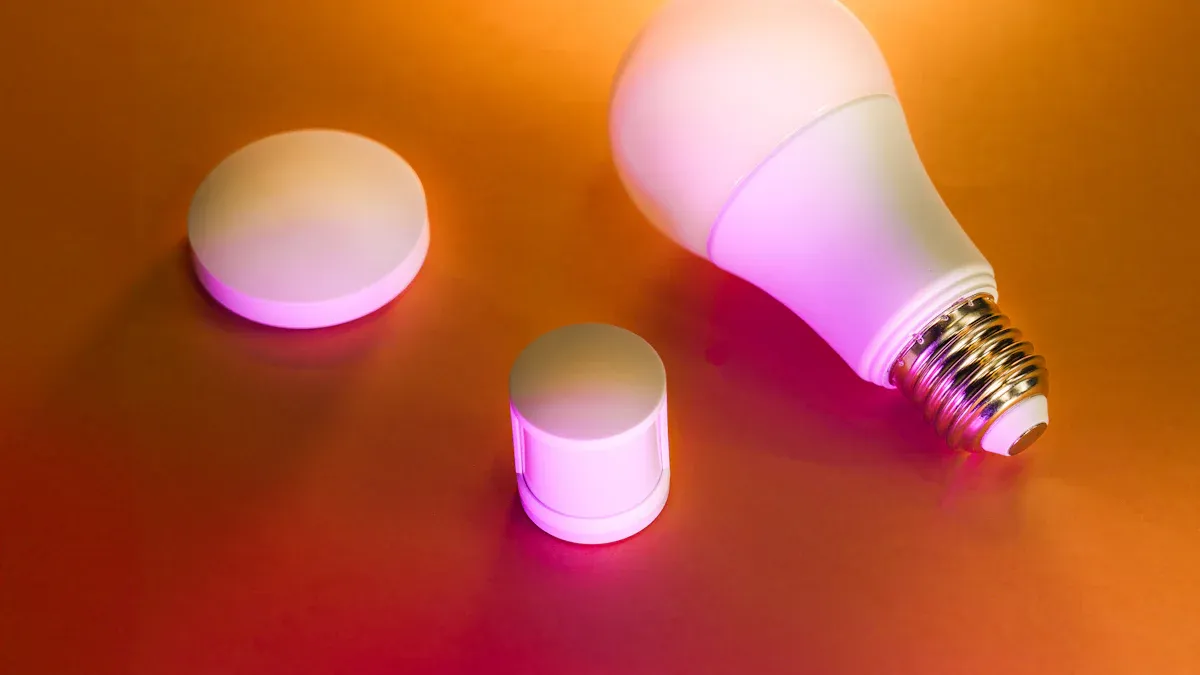
You might see led down lights in many modern homes. These lights sit inside the ceiling and shine light straight down. You can use them to make a room feel cozy or to highlight a special spot, like a painting or a reading chair. Led down lights work well when you want to create a certain mood or focus light on one area. People often use them in kitchens for task lighting, especially over counters and islands. You can also use them to show off artwork or cool features on your walls. In open-concept homes, led down lights help you set up different lighting zones. This gives you more control over how your space looks and feels.
What Are LED Tubes?
Led tubes look like the long, straight bulbs you see in schools or offices. These led tube lights fit into fixtures that used to hold old fluorescent tubes. When you need to light up a big area, led tubes do the job. They spread light evenly across the whole room. You might use led tubes in garages, basements, or offices where you want everything to be bright and easy to see. Led tube lights are also great for workshops, classrooms, and hallways. Some led tube light models fit right into your old fixtures, so you do not have to change much. Others may need a little rewiring, but most people find them easy to install.
Led tubes come in different lengths and brightness levels. You can pick the one that fits your space best. Led tube lights are popular because they last a long time and use less energy than old bulbs. You can also find led tube light options that work with led panel lights. This gives you even more ways to light up your room.
Key Differences
When you choose between led down lights and led tubes, you want to think about how you use your space. Here are the main things to know:
Feature | LED Down Lights | LED Tubes |
|---|---|---|
Installation Complexity | Requires cutting holes in the ceiling and wiring. | Generally simpler; may fit existing fixtures. |
Wiring | Involves connecting a driver to the electrical system. | May require rewiring if ballast is present. |
Fixture Modification | Needs modifications to the ceiling for installation. | Some may fit old fixtures without changes. |
Tip: If you want a quick upgrade, led tubes often let you use your old fixtures. Led down lights need more work but give you a sleek, modern look.
The way these lights spread light is also different. Led tubes give you broad, even coverage. This means you will not see dark spots in your room. Led tube lights work best in big spaces where you need everything to be bright. Led down lights, on the other hand, create focused beams. You can point them where you need light most. This helps you save energy and makes your room feel more comfortable.
Here is a quick list to help you see where each type shines:
Led down lights:
Great for task lighting in kitchens.
Perfect for highlighting art or special features.
Useful in open spaces for different lighting zones.
Led tubes:
Best for lighting up large rooms like garages or offices.
Good for places where you need even, bright light.
Easy to use with led panel lights for extra coverage.
The design of each fixture changes how light fills your room. Led tubes use a wide pattern to cover more space. Led down lights use a narrow beam to focus on one spot. If you want to avoid dark corners, led tubes are a smart pick. If you want to set a mood or highlight something, led down lights work better.
You can also mix both types. Use led tubes for general lighting and led down lights for special areas. Led panel lights can add even more options, giving you a bright and modern look.
Energy Efficiency of LED Lighting
LED Down Lights Efficiency
If you want to save energy at home, led down lights are a smart choice. These lights use little power and change most electricity into light. Your rooms stay bright without wasting energy. Led down lights can cut your electric bill by about 80% compared to old bulbs. They also help the earth because they lower carbon emissions. Here’s how led down lights and old lights compare:
Feature | LED Downlights | Traditional Lighting |
|---|---|---|
Energy Consumption | Uses little power and makes lots of light | Needs much more power for brightness |
Carbon Emissions | Makes less greenhouse gas because it uses less energy | Makes more emissions because it uses more energy |
Lifespan | Lasts much longer and makes less waste | Lasts a short time and needs more replacements |
Hazardous Materials | Has no toxic chemicals | Has mercury and other bad substances |
LED Tubes Efficiency
Led tubes also save lots of energy. You can use them in big rooms and still get good light. These tubes use less energy than fluorescent bulbs. T5 LED integrated tubes last up to 50,000 hours, so you do not need to change them often. This means less waste and less energy used. You save money and help the earth too. Led tubes light up large areas and keep saving energy. You can trust them for schools, offices, and garages.
Lifespan and Environmental Impact
You want lights that last long and help the earth. Both led down lights and led tubes last a long time. Most LED lamps work for 50,000 to 100,000 hours. Old bulbs only last about 1,000 hours. Fluorescent bulbs last around 10,000 hours. This means you change your lights less, so there is less waste. Here’s why a long life matters:
You buy fewer new lights, so you save money.
Less trash goes to landfills.
Factories make fewer lights, which helps the earth.
Fewer bad chemicals come into your home.
Tip: If you pick LED lighting, you get great energy savings, long life, and better light. You help your wallet and the earth every time you switch.
Light Quality and Coverage
LED Down Lights: Ambiance and Focus
You want your room to feel cozy or stylish. LED down lights help you do that. These lights shine straight down, so you can highlight a table, a piece of art, or a reading spot. You control where the brightness goes. If you want to set a mood, use these lights in small groups or zones. You can make your living room feel warm or your kitchen look modern. LED down lights work best when you want focused lighting instead of brighter illumination everywhere.
Tip: Try placing LED down lights above your favorite chair or over your kitchen island. You will notice how the brightness makes those spots stand out.
LED Tubes: Uniform Illumination
Do you need every corner of your room to be bright? LED tubes give you even coverage. These lights spread brightness across large spaces like garages, offices, or classrooms. You will not see dark spots or shadows. LED tubes work well when you want brighter illumination for working, studying, or playing. You can use them in basements or hallways for clear, steady light. LED tubes make it easy to see everything in the room.
Feature | LED Down Lights | LED Tubes |
|---|---|---|
Coverage | Focused, spot lighting | Broad, even lighting |
Best Use | Ambiance, highlights | General illumination |
Shadows | Can create shadows | Fewer shadows |
Color Temperature and Dimming
You can change the feel of your room with color temperature. Warm white makes a space feel soft and relaxing. Cool white gives you a crisp, clean look. Many LED lights let you pick the color temperature you like. Some models also offer dimming. You can lower the brightness for movie night or turn it up for homework. Dimming saves energy and helps you set the right mood. Always check if your LED lighting supports dimming before you buy.
Note: If you want both brightness and control, look for LED options with adjustable color temperature and dimming features.
Installation and Maintenance
Installing LED Downlights
You want your new lights to look great and work safely. Before you start, plan where you want each fixture. Measure your space and think about how much lighting you need. Always turn off the power at the circuit breaker first. Use a non-contact voltage tester to make sure no electricity is flowing. Check your ceiling to see if it can hold the fixture and if there is enough insulation. When you cut holes, use a hole saw for clean edges. Follow the manufacturer’s instructions for wiring and connections. Place each fixture at the right angle and height for the best effect. Make sure there is good airflow around the lights to prevent overheating.
Tip: Clean your fixtures often and check for loose wires. This keeps your lighting safe and bright.
Installing LED Tubes
LED tubes make upgrades easy. Many fit right into your old fixtures, so you do not need to change much. Some tubes need you to bypass the ballast, while others work with what you already have. Always read the instructions before you start. Turn off the power and remove the old tube. If you need to rewire, follow the steps in the guide. Place the new tube in the fixture and turn the power back on. You will see bright, even light right away.
Maintenance Needs
You want your lights to last a long time and save energy. LED tube lights usually need less care because they do not get as hot. LED down lights may need more attention since they can get warmer. Here is a quick look at how they compare:
Aspect | LED Tube Lights | LED Down Lights |
|---|---|---|
Maintenance Frequency | Generally lower due to reduced heat generation | Typically higher due to varying heat levels |
Heat Generation | Lower wattage leads to less heat and longer life | Higher wattage can lead to more heat and failures |
Compatibility | Some require ballast bypass, others compatible | Usually direct replacements for existing fixtures |
Longevity | Longer lifespan with optimized wattage | Varies based on design and usage |
You can keep both types working well by cleaning them and checking for any problems. Replace any faulty parts quickly to keep your lighting safe and bright.
Cost Comparison
Upfront Costs
When you shop for new lights, you probably look at the price tag first. LED down lights and LED tube lights have different starting costs. LED down lights often cost more because you need to buy the fixture and sometimes pay for installation. You might need to cut holes in your ceiling or hire an electrician. LED tube lights usually cost less up front. You can often use your old fixtures, so you save money on installation. If you want to upgrade quickly, LED tube lights make it easy.
You can also get help with costs. Many states and utility companies offer rebates or incentives when you switch to energy-saving lighting. Here are some programs you might find:
Type of Incentive | Description |
|---|---|
State-Specific LED Lighting Rebates | Each state has unique programs, e.g., Efficiency Maine, Georgia Power, California’s Energy Star. |
Utility Company Incentives | Public utilities offer rebates, e.g., Consumers Energy, Energy Trust of Oregon. |
Federal Tax Incentives | Programs like the Energy-Efficient Commercial Buildings Tax Deduction for energy-efficient upgrades. |
Custom Incentive Programs | Specialized incentives from organizations like the Design Lights Consortium for innovative projects. |
Tip: Check with your local utility or state program before you buy. You might get money back or a discount on your new lights.
Long-Term Savings
You want to save money over time, not just at the start. LED lighting helps you do that. Both LED down lights and LED tube lights use less energy than old bulbs. You pay less on your electric bill every month. Over five years, LED tube lights can give you up to 60% savings in energy costs. That means more money stays in your pocket.
Here’s how long-term savings add up:
You spend less on electricity every year.
You replace your lights less often, so you save on new bulbs.
You help the planet by using less energy.
If you want the biggest savings, look for LED lights with high efficiency ratings. You can mix LED down lights and LED tube lights in your home to get the best balance of style and savings.
Note: The more you switch to LED lighting, the more you save. Your wallet and the environment both win.
Best Room Uses for LED Down Lights and Tubes
Living Room
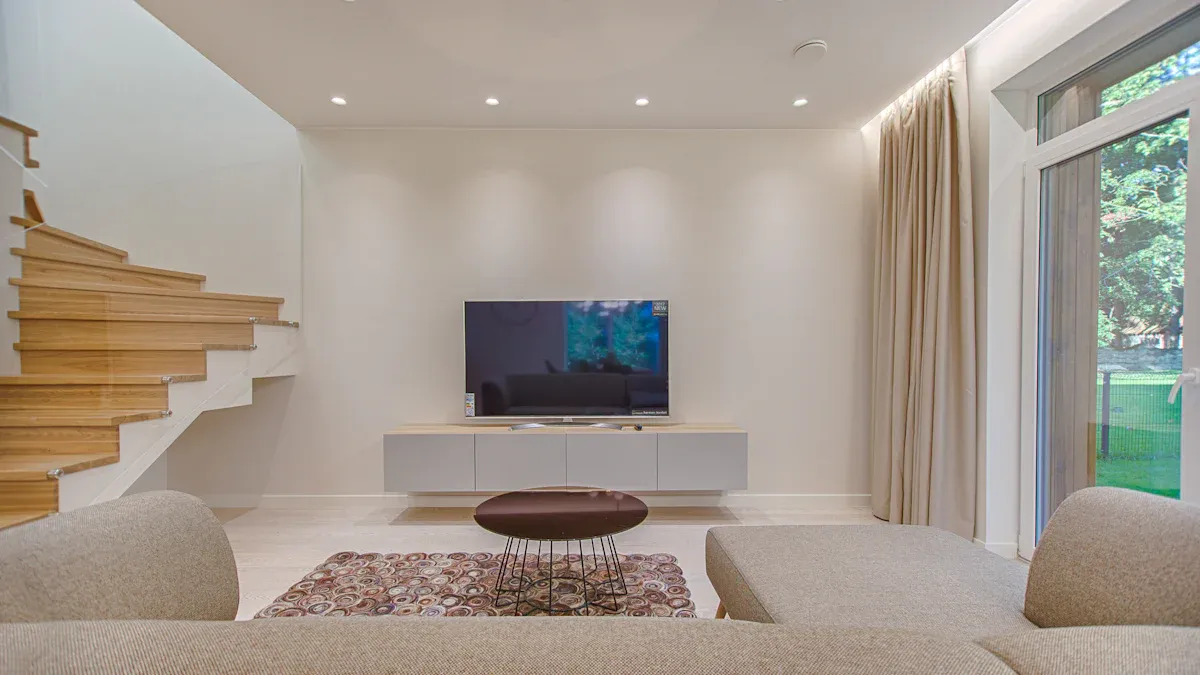
You spend a lot of time in your living room. You want it to feel comfortable and look great. LED down lights help you create a cozy mood. You can use them to highlight your favorite art or make a reading corner stand out. Place them above your sofa or around the edges of the ceiling for a soft glow. If you want bright, even light, try LED tubes. These lights fill the whole room with steady brightness. They turn on right away and do not flicker. You can pick different color temperatures to match your style. LED tubes also last a long time and use less energy, so you do not have to change them often. They work well if you have a big living room or want to save on your bills.
LED down lights: Great for setting the mood, highlighting art, or making zones.
LED tubes: Best for bright, even light in large living rooms.
Tip: Mix both types for the best effect. Use LED tubes for general lighting and LED down lights for special spots.
Kitchen
You need good light in your kitchen for cooking and cleaning. LED down lights work well over counters and islands. They help you see what you are doing and make your kitchen look modern. Place them in a row above your workspace for the best results. If you have a big kitchen, LED tubes give you bright, even light across the whole room. You will not see dark corners or shadows. LED tubes are easy to clean and last a long time. They also help you save energy, which is great for busy kitchens.
LED down lights: Perfect for task lighting over counters and sinks.
LED tubes: Good for general lighting in large kitchens.
Note: Try using LED down lights for tasks and LED tubes for overall brightness.
Bedroom
Your bedroom should feel calm and relaxing. LED down lights let you control the mood. You can dim them for a soft glow at night or make them brighter for reading. Place them above your bed or near your closet. If you want simple, bright light, LED tubes work too. They are easy to install and give you even coverage. Choose a warm color temperature to make your bedroom feel cozy. You can also use both types together. LED down lights help you set the mood, while LED tubes make sure you have enough light to get ready in the morning.
LED down lights: Best for mood lighting and reading spots.
LED tubes: Good for bright, even light.
Office and Workspace
You need clear, bright light to work well. LED tubes are a smart choice for offices and workspaces. They give you even light with no dark spots. This helps you see your work and stay focused. Place the tubes so you do not get glare on your screen or desk. You can also use LED down lights for accent lighting or to highlight special areas. Try mixing both types for the best results. Make sure your fixtures work with dimmers if you want to control the brightness. Clean your lights often to keep them working well. Think about smart lighting systems that adjust based on how much natural light you have. This saves energy and keeps your workspace comfortable.
Use a mix of ambient, task, and accent lighting for the best effect.
Position your lights to avoid glare and shadows.
Choose energy-efficient options to save money in commercial spaces.
Tip: Set up a regular cleaning schedule for your lights. This helps them last longer and keeps your workspace bright.
Hallways and Utility Areas
You want your hallways and utility areas to be safe and easy to use. LED tubes are perfect here. They give you bright, even light from end to end. You will not trip over anything in the dark. LED tubes last a long time and do not need much care. If you want to add style, use LED down lights to highlight doors or artwork. In small spaces, one or two LED down lights can make a big difference. For large hallways, stick with LED tubes for the best coverage.
Area | Best Lighting Type | Why It Works |
|---|---|---|
Hallways | LED tubes | Bright, even light, no dark spots |
Utility rooms | LED tubes | Easy to install, low maintenance |
Entryways | LED down lights | Adds style, highlights features |
Note: LED tubes are tough and last a long time, so you do not have to worry about changing them often in busy areas.
You can use these tips to pick the right lights for every room. Think about what you need most—mood, brightness, or energy savings. The right choice makes your home or workspace look and feel just right.
LED Downlights and LED Tubes: Pros and Cons
LED Downlights Pros and Cons
When you look at led down lights, you notice they bring a modern touch to any room. These lights blend into your ceiling, making your space feel open and clean. You save energy because they use less power than old bulbs. You also get durable lighting that lasts for years. If you want a sleek look, led down lights fit right in.
Here’s a quick table to help you see the main points:
Aspect | Pros | Cons |
|---|---|---|
Energy Use | Highly efficient, uses less power | Higher initial cost |
Installation | Sleek, modern design | Can be tricky to install |
Aesthetics | Blends into ceiling, open feel | Limited dimming options, needs special dimmers |
You might find installation a bit challenging. Sometimes you need to cut holes or hire someone to help. Dimming can be limited unless you pick the right dimmer. The upfront cost is higher, but you get a stylish finish and long-lasting lights.
Tip: If you want a modern look and focused light, led down lights are a smart choice.
LED Tubes Pros and Cons
Led tubes give you bright, even coverage across large spaces. You save money over time because they use less energy and last longer. These tubes work well in offices, garages, and hallways. You get higher lumens per watt, so your rooms stay bright without wasting power.
Here’s a table to show the main pros and cons:
Aspect | Pros | Cons |
|---|---|---|
Cost | Saves money on bills and replacements | Higher initial cost than old bulbs |
Coverage | Efficient, bright light for big areas | Can be hard to install in older buildings |
Maintenance | Lasts long, less frequent replacements | May need fixture changes for compatibility |
You might face challenges if your building is older. Sometimes you need to retrofit fixtures or make changes for the tubes to fit. The initial price is higher, but you spend less on replacements and electricity.
Note: Led tubes are great for spaces where you want steady, bright light and easy maintenance.
Decision Guide for LED Lighting
Quick Checklist
Not sure which lights fit your room? Use this checklist to make a smart choice:
Decide how bright you want your space. Do you want a cozy feel (about 150 lux) or a bright area (around 300 lux)?
Check if the total light output matches your room’s needs. You want enough brightness for every corner.
Look at the spacing. Make sure your fixtures are not too close to walls or each other.
Pick the right color temperature and CRI. Warm tones work well for relaxing rooms. Cool tones help you focus in work areas.
For bathrooms or laundry rooms, choose IP65-rated fixtures. These handle moisture and keep you safe.
Match the fixture cutouts to your ceiling openings. This step helps you avoid extra work during installation.
Tip: Walk through your room with this list before you buy anything. You will save time and avoid surprises.
Common Mistakes
Many people make the same mistakes when picking led lighting. You can avoid these problems with a little planning.
Skipping the brightness check. If you pick lights that are too dim, your room feels dull. Too bright, and it feels harsh.
Forgetting about fixture spacing. Crowded fixtures can cause shadows or uneven light.
Ignoring color temperature. The wrong tone can make a cozy room feel cold or a workspace feel sleepy.
Overlooking energy ratings. Low-quality options use more power and cost you more in the long run.
Not checking for wet area ratings. Regular fixtures in bathrooms or laundry rooms can be unsafe.
Choosing the wrong size. Fixtures that do not fit your ceiling openings lead to extra work and frustration.
Note: Take a few minutes to double-check your choices. You will get better results and enjoy your new lights for years.
You want the right lights for every room. Check out this table to see which option fits your needs:
Type | Strengths | Best Rooms |
|---|---|---|
Uniform light, less glare | Living rooms, bedrooms | |
LED tube lights | Energy savings, long lifespan | Offices, hallways |
Think about what matters most—energy, cost, ambiance, and installation. If you want easy upgrades and bright lighting, go with LED tube lights. For a cozy feel, choose LED down lights. Ready to make your space shine? Pick the LED solution that matches your style!
FAQ
Can I mix LED down lights and LED tubes in one room?
Yes, you can mix both types. Use LED tubes for general lighting. Add LED down lights to highlight special areas or create a cozy mood. This gives you more control over your room’s look.
Do LED tubes work in old fluorescent fixtures?
Most LED tubes fit old fixtures. Some need you to remove the ballast first. Always check the product instructions before you install. You can upgrade your lighting without buying new fixtures.
How do I choose the right color temperature?
Pick warm white for bedrooms and living rooms. Choose cool white for kitchens, offices, or workspaces. Warm light feels soft and relaxing. Cool light looks bright and clean.
Are LED lights safe for wet areas like bathrooms?
You need to use IP65-rated LED fixtures in wet areas. These lights resist water and keep you safe. Always check the rating before you install in bathrooms or laundry rooms.
What is the lifespan of LED down lights and tubes?
LED down lights and tubes last between 50,000 and 100,000 hours. You change them less often than old bulbs. This saves you money and reduces waste.
See Also
A Guide to Measuring LED Tubes for Fluorescent Replacements
Selecting Ideal LED Light Replacements for Home and Business
Measuring LED Tubes Correctly for Perfect Replacements