LED Downlights: Types, Installation, and Benefits for Modern Lighting

You see LED downlights almost everywhere now. These small but powerful fixtures give your space a clean look and bright, even lighting. You can use downlights in your living room, kitchen, bathroom, or hallway at Home. Offices and meeting rooms often use them to help people focus. Shopping malls and stores pick them for safety and style, while hotels and restaurants use them to create a cozy mood. Choosing a Led Light means you get energy savings and a modern feel. If you want more details, the About Us and Product pages can help you learn about led options.
Key Takeaways
LED downlights use less energy. They can lower your electricity bills by up to 90%. Using LED lighting is good for your money. It also helps the environment.
There are different types of LED downlights. Each type has a special use. Fixed downlights are good for general lighting. Adjustable ones help you light up certain spots.
LED downlights last a long time. They can work for 25,000 to 60,000 hours. You will not need to replace them often. This means you do less maintenance.
Picking the right color temperature can change how a room feels. Warm white makes living rooms feel cozy. Cool white works well in places where you need to focus.
Installing LED downlights can be easy. Get the right tools before you start. Follow safety tips for a safe and good setup.
What Are LED Downlights
Basic Features
When you look up and see a round light flat on the ceiling, that is a LED downlight. These lights are made to fit in with your room. They help your space look neat and modern. You can use downlights for many things. They work for general lighting, accent lighting, or lighting over a kitchen counter. LED downlights use new technology to turn on right away. You do not have to wait for them to get bright. You can change the color temperature. This lets you make your room feel warm or bright, depending on what you want.
LED downlights use much less energy than old bulbs. You could save up to 80% on your energy bill. These lights last a long time. Some can work for over 50,000 hours. You will not need to change bulbs very often. If you want a light that is easy to use and lasts long, LED downlights are a good pick.
Tip: Try using different downlights in your house. Use adjustable ones for reading spots and fixed ones in hallways.
LED Downlights vs. Traditional Lighting
You may wonder how LED downlights are different from old lights like incandescent or fluorescent bulbs. The main difference is how much energy they use and how long they last. Here is a simple table:
Lighting Type | Lifespan (hours) | Energy Consumption | Notes |
|---|---|---|---|
LED | 25,000 - 50,000 | Low | Durable, eco-friendly, lower maintenance costs. |
Fluorescent | 7,000 - 15,000 | Moderate | Can dim over time, contains mercury, more frequent replacements needed. |
Incandescent | 1,000 - 1,500 | High | Short lifespan, high energy costs, frequent replacements required. |
LED downlights last much longer than other lights. You can use the same LED for years. Incandescent bulbs might need changing every few months. LEDs cost more at first, but you save money later. You buy fewer bulbs and use less electricity. LED downlights are also better for the planet. They use less power and do not have harmful chemicals.
Types of LED Downlights
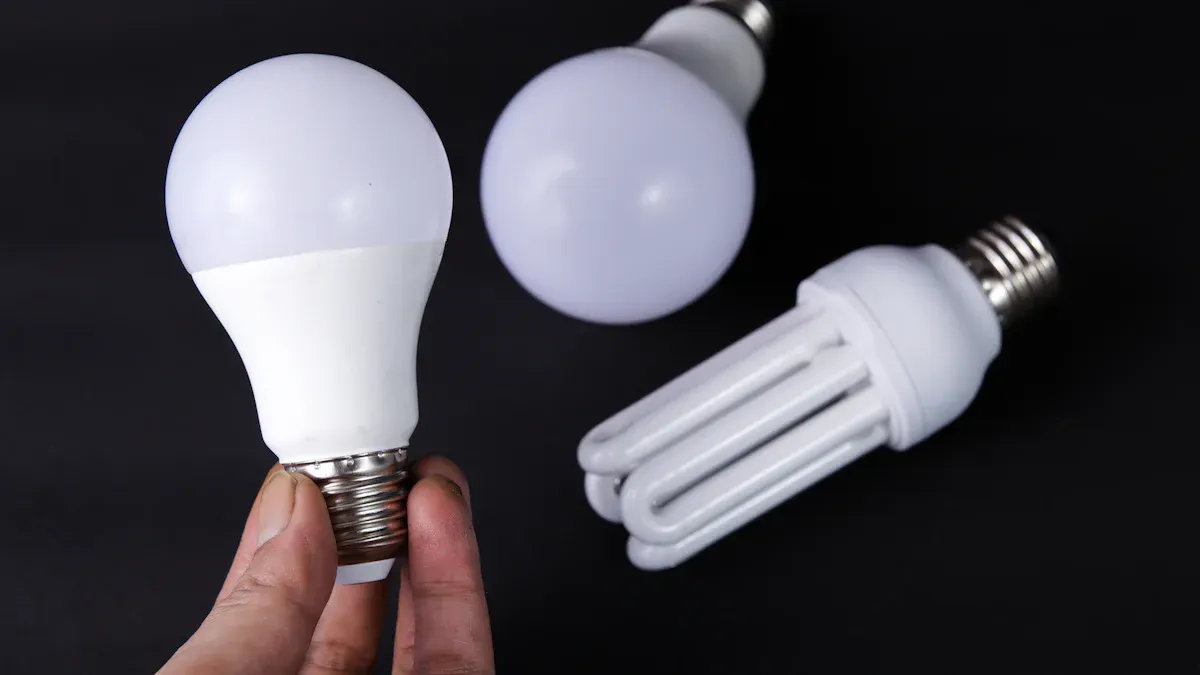
You have many choices when it comes to led downlights. Each type brings something special to your space. Let’s look at the different types of led downlights and see where they work best.
Tip: Picking the right downlight fixtures can change the whole feel of your room.
Here’s a quick table to help you compare the main types:
Type of Downlight | Features & Benefits | Drawbacks | |
|---|---|---|---|
Fixed Downlights | Living rooms, bedrooms, corridors, offices | Affordable, easy to install, wide beam for general lighting | Cannot adjust beam direction |
Adjustable Downlights | Galleries, retail displays, restaurants | Flexible, can aim light, great for accent lighting | Smaller coverage area |
Ultra-Thin Downlights | Apartments, offices, basements | Space-saving, sleek look, fits low ceilings | Limited thermal dissipation |
Surface-Mounted Downlights | Hallways, foyers, limited ceiling space | Easy to install, stylish, high light output | May stand out more visually |
Recessed Downlights | Living rooms, kitchens, bedrooms, general lighting | Clean look, flush with ceiling, versatile | Needs ceiling space for install |
Fixed LED Downlights
Fixed led downlights are the most common type you’ll see. These downlight fixtures sit flat in your ceiling and shine straight down. You get a wide beam of light that covers a big area. This makes them perfect for general lighting in living rooms, bedrooms, and offices. You can use them in hallways or corridors too.
Fixed downlights cost less than other types.
They are easy to install if you have the right wiring.
Many models let you dim the lights for a cozy mood.
You can count on them for even, bright lighting.
You can’t move the light beam, so you won’t use these for highlighting art or special spots. If you want simple, reliable lighting, fixed led downlights are a smart pick.
Adjustable LED Downlights
Do you want to highlight a painting or show off a display? Adjustable led downlights let you point the light where you need it. You can tilt or rotate the head of these downlight fixtures. This gives you control over the direction of the light.
Adjustable downlights work well in galleries, retail stores, and restaurants.
You can use them for accent lighting, task lighting, or even general lighting.
They are great for spaces with sloped ceilings.
You can change the focus as your needs change.
You get more flexibility, but the coverage area is smaller than fixed downlights. If you like to change your room’s look or want to spotlight something special, adjustable led downlights are a great choice.
Ultra-Thin LED Downlights
Ultra-thin led downlights are perfect for places with low ceilings or tight spaces. These downlight fixtures have a slim design, so they fit where other lights can’t. You might use them in basements, apartments, or renovated buildings.
Ultra-thin downlights save space and look modern.
They give you a wide beam of light, even in small rooms.
You can use them in offices or corridors where ceiling space is limited.
They may not handle high wattage as well as thicker models, but they still give you bright, even lighting. If you want a clean look and need to save space, ultra-thin led downlights are the way to go.
Surface-Mounted LED Downlights
Sometimes you can’t cut into the ceiling. That’s when surface-mounted led downlights come in handy. These downlight fixtures attach right to the ceiling surface. You don’t need to make a hole or worry about what’s above the ceiling.
Surface-mounted downlights are easy to install.
They give you more light than recessed options.
You can use them in hallways, foyers, or any area with limited ceiling space.
They add a stylish touch and come in many shapes and colors.
You might notice them more than recessed lights, but they offer great flexibility. If you want strong lighting without a big project, surface-mounted led downlights are a solid pick.
LED Recessed Downlights
Recessed led downlights are a favorite for modern homes and offices. These downlight fixtures sit flush with the ceiling, so you see only the trim and the light. You get a clean, uncluttered look.
Recessed downlights work well for general lighting in living rooms, kitchens, and bedrooms.
They save space and blend in with your ceiling.
You can find dimmable options for mood control.
They come in many sizes and color temperatures.
You need enough ceiling space for installation. Make sure to measure the cutout size and check your ceiling structure. Recessed led downlights give you a modern look and work for almost any lighting need.
Note: Regular cleaning keeps your recessed downlights shining bright.
You can see that different types of led downlights fit different spaces and needs. Fixed downlights give you simple, wide lighting. Adjustable ones let you aim the light. Ultra-thin models fit tight spots. Surface-mounted downlights work where you can’t cut the ceiling. Recessed led downlights give you a sleek, modern look. Think about your space and what you want your lighting to do. You’ll find the right downlight fixtures for every room.
Features & Pros/Cons
Fixed Downlights
Fixed downlights give you steady, even lighting. You can use them in bedrooms, hallways, or offices. These fixtures stay in one spot and shine straight down. You get a wide beam that covers a big area. Fixed led downlights cost less and install easily. You can dim many models to set the mood.
Pros:
Simple design
Wide coverage
Budget-friendly
Cons:You cannot change the direction of the light
Not great for highlighting art or special spots
Tip: Fixed downlights work best for general lighting in rooms where you want a clean look.
Adjustable Downlights
Adjustable downlights let you point the light where you want. You can tilt or rotate the head. These led downlights help you highlight a painting or a display. You get more control over your lighting.
Pros:
Flexible direction
Good for accent lighting
Useful in galleries or stores
Cons:Smaller coverage area
May cost more than fixed types
Ultra-Thin Downlights
Ultra-thin downlights fit in tight spaces. You can use them in basements, apartments, or offices with low ceilings. These led fixtures look sleek and modern.
Pros:
Space-saving
Modern style
Fits almost anywhere
Cons:May not handle high wattage
Limited heat control
Surface-Mounted Downlights
Surface-mounted downlights attach right to the ceiling. You do not need to cut a hole. These led fixtures stand out more but give strong lighting.
Pros:
Easy to install
High light output
Good for hallways or foyers
Cons:More visible
May not blend in with ceiling
LED Recessed Downlights
LED recessed downlights sit flush with the ceiling. You see only the trim and the light. These fixtures give you a clean, modern look.
Pros:
Sleek design
Saves space
Works for many lighting needs
Cons:Needs ceiling space for install
May require professional help
Here’s a quick look at the main pros and cons of using led downlights in homes and businesses:
Pros | Cons |
|---|---|
Initial costs | |
Superior lighting | Compatibility issues |
Creates a cozy ambiance | N/A |
Easy installation | N/A |
Long lifespan | N/A |
You can see that led downlights offer great lighting performance and save energy. You may pay more at first, but you get a long-lasting fixture that fits many spaces.
Best Uses for LED Downlights
Residential Spaces
You want your home to look nice and feel cozy. LED downlights help with both. You can pick different color temperatures for each room. Warm white light is good for bedrooms and living rooms. It makes these rooms feel warm and relaxing. Cool white light is better for kitchens and home offices. It gives you bright light for working or cooking. This means you can make a lighting plan that fits every room. Using residential downlighting gives your home a modern style. You can put led downlights in hallways, bathrooms, and closets. They make your home brighter and more welcoming.
Tip: Use both fixed and adjustable downlights in your home. This gives you general light and lets you highlight special spots.
Commercial Applications
Good lighting is important for any business. LED downlights work great in offices, stores, and hotels. These lights last a long time, so you do not need to replace them often. You save money and spend less time on maintenance. LED downlights use less energy, so your bills go down. This also helps the environment. Businesses that use led downlights show they care about being green. These downlights give steady light, which makes places safer. In offices, good lighting helps people work better and keeps their eyes from getting tired. Commercial buildings get lower costs and help the planet with efficient lighting.
Commercial Space | Benefits of LED Downlights |
|---|---|
Offices | Boosts focus, saves energy |
Retail Stores | Highlights products, lowers costs |
Hotels/Restaurants | Creates mood, reduces maintenance |
Hospitals | Improves safety, supports efficiency |
Accent & Task Lighting
LED downlights are not just for general lighting. You can use them to highlight art, shelves, or special things in your home or business. These downlights help you draw attention to what matters most. You can make rooms look more interesting with layers of light. Task lighting helps you see better when you read, cook, or do work. Recessed led downlights come in many shapes and sizes. You can dim them or use smart devices to control them. Focused light from led downlights makes accent and task lighting simple and saves energy.
Accent lighting makes objects or areas stand out.
Downlights add depth and make rooms look cool.
You can change brightness for different needs.
Smart controls make using lights easier.
Note: Put led downlights in the right spots to get the best lighting for your home or business.
LED Downlighting Installation Guide
Preparation & Tools
Before you start with led downlighting, gather everything you need. This makes the job smoother and safer. Here’s a handy checklist:
Choose your led downlights. Pick the right size and style for your space.
Use marine grade wiring, like tinned copper wire, to prevent rust.
Grab waterproof wire connectors or heat shrink terminals for strong connections.
Get your tools: drill with a hole saw, screwdriver, wire stripper, crimping tool, and a multimeter.
Have mounting hardware ready, such as stainless steel screws or adhesive mounts.
Clean the area with isopropyl alcohol and a microfiber cloth.
Wear gloves, safety glasses, and a dust mask if you need to drill or sand.
Optional: Add a dimmer switch or RGBW controller for more control.
Tip: Always clean the ceiling before you start. Dirt can stop your downlights from sticking or sitting flat.
Safety Tips
Stay safe during led downlighting installation. Follow these steps:
Check the packaging for damage. If something looks wrong, contact the seller.
Turn off the power before you touch any wires.
Make sure you have enough led downlights and the right power supply.
Only use led downlighting outdoors if the fixtures are waterproof.
Avoid turning the power on and off too often. This helps your lights last longer.
Install your downlights in a stable spot, away from vibrations.
Store extra led downlights in a cool, dry place.
Installation Steps
You can handle most led downlighting projects with these steps:
Find where you want each light. Use a stud finder to avoid beams.
Mark the spot with a pencil and use the template for accuracy.
Drill a small hole in the center of your mark.
Check above the ceiling for wires or insulation.
Use a hole saw to cut the opening for your downlight.
Pull the power cable through, leaving about 18 inches to work with.
Connect the wires: black to black, white to white, and green or bare to ground.
Mount the housing and trim as the instructions say.
Turn the power back on and test your led downlighting.
Troubleshooting
Sometimes, led downlighting does not go as planned. Here’s a quick table to help you fix common problems:
Problem | Solution |
|---|---|
Inadequate brightness | Use higher lumen bulbs or add more downlights |
Overheating | Check for good airflow and use led-rated fixtures |
Flickering | Use compatible dimmers and stable power |
Buzzing or humming | Make sure voltage is correct and dimmers match |
Inconsistent color temperature | Use bulbs from the same brand and check ratings |
When to call an electrician | If you see damage, flickering, or overheating |
Note: Clean your led downlighting fixtures often and check for wear. If you spot big problems, call a pro.
Benefits of LED Downlights
Energy Efficiency
You want to save money and help the planet, right? LED downlights make that easy. When you switch from old bulbs to LED downlights, you use up to 90% less energy. That means your lighting costs can drop by almost 90%. A regular LED bulb only needs 8-12 watts to shine as bright as a 60-watt incandescent bulb. Most of the energy goes straight into light, not heat. You get cool rooms and lower bills. This is what people mean when they talk about energy-efficient lighting.
LED downlights use less power than traditional bulbs.
You spend less on electricity every month.
Your home or business stays cooler because LEDs don’t waste energy as heat.
Tip: If you want to see a big change in your bills, try replacing all your old downlights with LED ones.
Longevity & Low Maintenance
You probably don’t want to climb up and change bulbs all the time. LED downlights last much longer than other lights. You can use them for years before you need a new one. Take a look at this table:
Bulb Type | Average Lifespan (hours) |
|---|---|
LED | 25,000 - 60,000 |
Incandescent | 1,000 - 1,500 |
Fluorescent | 6,000 - 15,000 |
You see the difference, right? LED downlights are long-lasting and durable. You don’t have to replace them often. That means less work for you and fewer trips to the store. You also save money because you buy fewer bulbs. Downlighting with LEDs means you spend less time and money on maintenance.
LED downlights need fewer replacements.
You get lower operational costs.
You enjoy more free time because you don’t have to worry about your lighting.
Design Flexibility
You want your space to look modern and stylish. LED downlights help you do that. These lights fit right into the ceiling, so you don’t see bulky fixtures. Your room looks clean and open. Downlighting gives you a minimalist style that works in homes, offices, and stores. You can pick from many sizes and brightness levels. Some LED downlights let you dim the lights to set the mood. You can use them for ambient lighting, accent lighting, or task lighting.
LED downlights blend into the ceiling for a sleek look.
You can create different moods with dimmable options.
Downlighting works for any room, from kitchens to bedrooms.
Note: If you want to keep your space looking fresh, try mixing fixed and adjustable downlights for both general and accent lighting.
Cost Savings
You might wonder if LED downlights are worth the price. The answer is yes. High-end LED downlights use advanced technology to save electricity. Over time, you save more money than you spend at first. These lights last longer, so you don’t pay for replacements or repairs as often. You get lower service costs and more value for your home. If you ever sell your house, having LED downlights can make it worth more.
Downlighting with LEDs means you get energy efficiency and cost savings. You spend less on bills and maintenance. You also add value to your property. That’s a smart choice for any homeowner.
Environmental Impact
You care about the environment, and LED downlights help you make a difference. These lights use 75% less energy than old bulbs. They last up to 25 times longer, so you throw away fewer bulbs. If every home in the country replaced just one bulb with an LED, greenhouse gas emissions would drop by 9 million pounds each year. LEDs turn 95% of their energy into light. Old bulbs only manage about 10%. That means less waste and a cleaner planet.
LED downlights use less energy and last longer.
You help reduce pollution and save resources.
Downlighting with LEDs is a simple way to go green.
Tip: The benefits of LED downlights go beyond your home. You help the whole planet when you choose energy-efficient lighting.
You see how LED downlights offer so many benefits. You get energy efficiency, long life, and low maintenance. Your rooms look modern and stylish. You save money and help the environment. Downlighting with LEDs gives you better lighting and a better future. If you want to know more about the advantages of led recessed downlights or how to choose the right led recessed downlight, keep reading. You’ll find the perfect fit for your space and enjoy all the benefits of led downlights.
Choosing LED Downlights
Key Factors (Brightness, Color, Size)
When you pick led downlights, you want the right brightness, color, and size. You can use a simple table to compare what matters most:
Factor | Description |
|---|---|
CRI | Color Rendering Index; higher CRI (90+) is better for spaces needing accurate color representation. |
Dimming capability | Options like standard dimming and dim-to-warm enhance flexibility and ambiance. |
Energy efficiency | Choose fixtures based on lumen output and energy use; consider room characteristics. |
Glare control | Look for designs that minimize glare, such as prismatic lenses or deep regress. |
Consistency and binning | Purchase from the same series to ensure uniformity in light output and color temperature. |
Matching existing lighting | Ensure new lights match existing color temperature and CRI for a cohesive look. |
You can choose warm white for bedrooms, neutral white for bathrooms, and cool white for workspaces. Warm white (2700K - 3000K) gives you a relaxing feel. Neutral white (3500K - 4100K) works well in busy areas. Cool white (5000K - 6500K) helps you see better when you need high visibility.
Matching Downlights to Space
You want your downlights to fit your room. Think about ceiling height, room size, and what you do in each space. Living rooms and bedrooms look best with soft, wide beams. Kitchens and workspaces need brighter, focused light. You can use smart controls to adjust brightness and color for every activity. Smart sensors can turn lights on when you walk in. Smart dimmers let you change the mood with a tap. Smart timers help you save energy by turning lights off when you leave.
Tip: Use smart switches to group your downlights and control them from your phone.
Installation & Maintenance Tips
You want your led downlights to last. Clean them with a soft, lint-free cloth to keep dust away. Make sure there is enough airflow around each fixture. Use high-quality drivers and surge protectors for stable voltage. Smart dimmers designed for led fixtures help prevent flickering. Check your lights for damage and replace broken parts quickly. Try not to turn your lights on and off too much. Smart schedules can help you manage this.
Clean fixtures often
Check for good ventilation
Use smart surge protectors
Pick smart dimmers for led lights
Inspect for damage
Limit on/off cycles with smart timers
LED Recessed Downlights Selection
You want the best recessed downlights for your space. Look at installation needs and available space. Think about what you want your lighting to do. For outdoor or wet areas, pick fixtures with an IP65 rating to keep out dust and water. Choose beam angles based on ceiling height. Wide angles (60°+) give soft light. Narrow angles give sharp, direct light. Pick color temperatures that match each room. Living areas feel cozy with 2500K-3500K. Kitchens work well with 4000K. Workspaces need 4100-5000K.
Check installation space
Match lighting to room use
Use IP65 for wet areas
Pick the right beam angle
Choose color temperature for each room
Make sure fixtures meet codes like IC, AT, and UL/DLC
Smart recessed downlights let you control everything from your phone. You can set scenes, adjust colors, and schedule lights for every part of your day.
You get so many benefits when you choose led downlights for your lighting upgrade. Here are the top reasons to make the switch:
Energy efficiency helps you save money and protect the planet.
Long lifespan means less hassle and fewer replacements.
Adjustable color temperatures let you set the mood in any room.
Versatile designs fit every space and style.
Safer construction keeps your home cool and safe.
Tip: Pick downlights that match your space and ask a professional if you need help with installation. You’ll enjoy better lighting and peace of mind.
FAQ
What are led recessed downlights?
You see led recessed downlights as lights that sit flush with your ceiling. They give you a clean look and bright light. You can use them in almost any room. These lights work well for homes, offices, and stores.
How do I choose the right types of led recessed downlights?
You want to think about your room size, ceiling height, and what you do in the space. Some types of led recessed downlights work best for general lighting. Others help you highlight art or create a cozy mood.
Where can I use led recessed downlights?
You can use led recessed downlights in kitchens, living rooms, bedrooms, and bathrooms. Offices, hotels, and shops also use them. The applications of led recessed downlights cover almost any space that needs good lighting.
Tip: Try led recessed downlights in hallways for a modern touch.
What are the main benefits of led recessed downlights?
You get energy savings, long life, and a modern look. Led recessed downlights need little maintenance. They fit many styles and spaces. You can dim them or use smart controls. These lights help you save money and keep your home cool.
Can I install led recessed downlights myself?
You can install led recessed downlights if you feel comfortable with tools and wiring. Always turn off the power first. If you feel unsure, call a pro. You want your lights safe and working right.
Step | What to Do |
|---|---|
1 | Turn off the power |
2 | Mark your ceiling spots |
3 | Cut holes carefully |
4 | Connect wires correctly |
5 | Test your new lights |
See Also
Exploring LED Replacement Lights: Varieties, Advantages, and Setup
Understanding LED Outdoor Lighting: Advantages, Varieties, and Setup Tips
Outdoor LED Lighting: Varieties, Advantages, and Installation Guidance
Recessed Light Fixtures: Varieties, Setup, and Design Factors
LED Area Lighting: Uses, Advantages, and Installation Guidelines