LED Light Bulbs: Energy Savings, Environmental Benefits, and Long-Term Value

You want to know if led light bulbs really make a difference. The answer is yes. When you choose led and other energy-efficient light bulbs, you see real savings and reduce your environmental impact.
Switching from incandescent bulbs to led can cut your energy use by up to 90%.
You may save about $645 each year at Home just by upgrading to efficient Led Light options.
Each Product uses less energy and lasts longer, so you buy fewer replacements.
LEDs do not harm the environment and support a cleaner future.
You get more value for your money and help the planet at the same time. If you want to learn more, About Us can help you make the switch.
Key Takeaways
If you use LED bulbs, you can use up to 90% less energy. This means you can save a lot of money on your electric bills. LED lights last much longer than regular bulbs. You will not need to change them as often. This helps make less trash. Using LED bulbs can also help the environment. They lower your carbon footprint by making less greenhouse gas. LED lights do not have dangerous things like mercury. This makes them safer for your house and the earth. Buying LED bulbs is a smart choice for the future. You will spend less money and save more energy over time.
LED Light Bulbs: Energy Savings

How LED Light Bulbs Reduce Electricity Use
You want your home to use less energy and save money. LED lights help you do both. These energy-efficient light bulbs use a special technology called light emitting diode. This means they turn more electricity into light and waste less as heat. You get bright rooms without high bills.
Here is a table that shows how different bulbs compare:
Bulb Type | Luminous Efficacy (lm/W) | Energy Conversion to Light (%) | Lifespan (hours) |
|---|---|---|---|
Incandescent | 16 | <5% | 1,000 |
CFL | 60 | 30% | 10,000 |
LED | 150 | 20% | 30,000 |
LED light bulbs use only 20-25% of the energy that incandescent bulbs need for the same amount of light. CFLs use about 70% less energy than incandescent bulbs. Incandescent bulbs waste most of their energy as heat. You get more light for your money with LED lights.
LED vs. Traditional Bulbs
You may wonder how LED lights stack up against older bulbs. The answer is clear when you look at the numbers. LED lights use much less power to shine just as bright.
Bulb Type | Watts Used | Average Lifespan | Total Estimated Cost Over 20 Years |
|---|---|---|---|
Incandescent | 60W | 1,200 hours | $211 |
CFL | 14W | 8,000 hours | $54 |
LED | 7W | 25,000 hours | $34 |
You can see that LED lights use the least energy and last the longest. They also cost less over time. This means you buy fewer bulbs and pay less for electricity. LED technology gives you the best mix of efficiency and value.
Tip: If you replace a 60-watt incandescent bulb with a 12-watt LED, you use about 80% less energy for the same brightness.
Real-World Savings With LED Lights
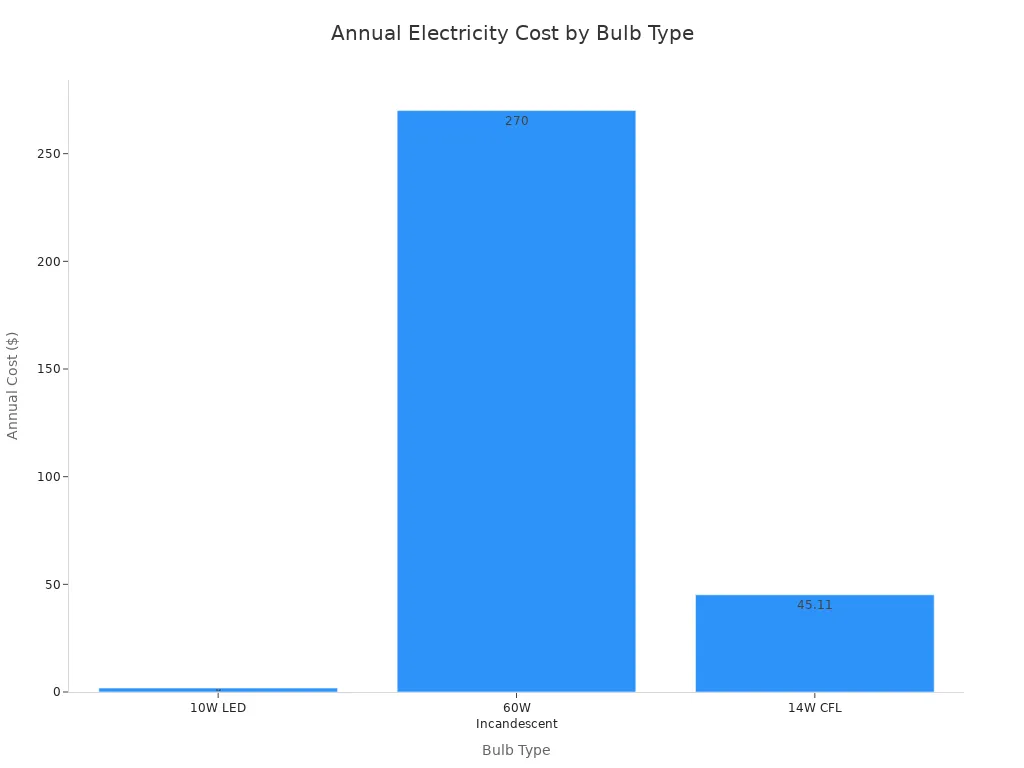
Switching to LED lights brings real savings to your home or business. You can see the difference in your electricity bill each month. Here is a chart that shows how much you can save each year:
Let’s look at some numbers:
Bulb Type | Power Consumption (W) | Annual Cost ($) | Annual Savings ($) |
|---|---|---|---|
10W LED | 10 | 1.80 | 225 |
60W Incandescent | 60 | 270 | |
14W CFL | 14 | 45.11 |
You can save about $65 each year in an average home by switching from incandescent bulbs to LED lights. In bigger places like stores or hospitals, the energy savings add up even more. For example, homes can cut energy use by 75%, and cities can lower energy costs and help the environment.
You also get your money back fast. Most people see the cost of new LED lights paid off in about five years. If you get help from your local utility, you may see payback in less than four years.
LED light bulbs give you lower energy consumption, less waste, and more money in your pocket. When you choose energy-efficient light bulbs, you make a smart choice for your wallet and the planet.
Environmental Impact of LED Lights
Lower Carbon Footprint With LED
You can make a big difference in your carbon footprint by switching to led lights. These efficient lights use much less energy than traditional bulbs. When you use less energy, power plants burn less fuel. This means fewer greenhouse gases go into the air.
Look at the numbers below to see how much carbon dioxide you can keep out of the atmosphere:
Bulb Type | CO2 Emissions per 100 Bulbs |
|---|---|
Incandescent Bulbs | 17 pounds |
LED Bulbs | 4 pounds |
If you use 30 bulbs in your home, the annual emissions look like this:
Bulb Type | Annual CO2 Emissions (30 bulbs) |
|---|---|
Incandescent Bulbs | 4500 pounds |
LED Bulbs | 451 pounds |
Switching to led lights can cut your carbon footprint by up to a third. You help the planet every time you choose efficient lighting. This simple change supports sustainability and a cleaner environment for everyone.
No Toxic Materials in LED Bulbs
You want safe lighting for your home and the planet. Led lights do not contain mercury, which is found in many older bulbs. Mercury can harm people and the environment if a bulb breaks or ends up in a landfill.
Here is a table that shows what is inside different types of bulbs:
Bulb Type | Hazardous Materials Present | Hazardous Materials Absent |
|---|---|---|
Incandescent | Mercury | None |
CFL | Mercury | None |
LED | Lead, Arsenic, Antimony | Mercury |
Led lights do not need mercury vapor to work. This means you do not have to worry about special disposal or the risk of mercury leaks. By choosing led, you protect your family and the environment from toxic substances. Mercury-free lighting is safer for children and pets. It also lowers the risk of pollution from broken bulbs.
Note: Replacing mercury-filled lights with led lights helps keep your home and community safe. You avoid the long-term health risks linked to mercury exposure.
Reducing Waste With Long-Lasting LEDs
Led lights last much longer than traditional bulbs. You do not have to replace them as often, which means less waste goes to landfills.
Led bulbs can last up to 50,000 hours or more. Incandescent bulbs last about 1,000 hours.
Fewer replacements mean you throw away fewer bulbs.
Using led lights helps save raw materials and lowers the carbon footprint from making new bulbs.
Led lights are also 100% recyclable. You can recycle every part of the bulb. This reduces waste and helps protect the environment. One led bulb can replace up to 25 incandescent bulbs. This means you create less waste and support sustainability with every switch.
Choosing led lights means you help reduce waste and support a cleaner planet. You make a positive impact on the environment with every efficient bulb you use.
Long-Term Value of Energy-Efficient Light Bulbs
LED Lifespan and Durability
You want lights that last and stand up to daily use. LED lights give you a long lifespan and strong durability. Most LED light bulbs work for 25,000 to 50,000 hours. That is much longer than incandescent or CFL bulbs.
Bulb Type | Average Lifespan (hours) |
|---|---|
LED | 25,000 - 50,000 |
Incandescent | 1,000 |
CFL | 8,000 - 10,000 |
LED lights do not have fragile filaments or glass parts. You can use them in places with lots of movement or vibration. They handle frequent switching on and off better than other bulbs. This makes them a smart choice for busy homes and businesses. You get less waste and more efficiency with every bulb.
Tip: Choose LED lights for areas where you need strong, reliable lighting.
Fewer Replacements Needed
You save time and money when you do not have to replace bulbs often. LED lights last so long that you may not need to change them for years. Over a 10-year period, you will need far fewer replacements than with incandescent bulbs.
Bulb Type | Total Cost Over 10 Years | Lifespan Estimate |
|---|---|---|
LED | $11.74 - $15.40 | More than 10 years |
Incandescent | At least $61 | Less than 1-2 years |
CFL | $19 - $25 | N/A |
The longevity of LED lights means less waste and lower maintenance costs. You spend less on new bulbs and enjoy more energy savings. This supports sustainability and keeps your home efficient.
Cost-Effectiveness Over Time
LED lights give you the lowest total cost of ownership. Even though the price at the store may be higher, you save money over time. Energy-efficient light bulbs use less energy and last longer. You see lower electric bills and fewer trips to buy replacements.
Long-term savings on energy costs
Reduced maintenance expenses
Lower replacement costs due to longevity
Switching to energy-efficient light bulbs can cut your energy consumption by up to 90%. You help the planet and your wallet. Homes and businesses with efficient lighting attract buyers who care about sustainability. Investing in LED lights means you get efficiency, savings, and a brighter future.
Practical Tips for Switching to LED
Upfront Cost vs. Savings
LED lights cost more than other bulbs at first. The price can look high, but you save money later. Check the table to see the price difference:
Bulb Type | Upfront Cost |
|---|---|
Incandescent | $0.94 |
CFL | $1.60 |
LED | $4.99 |
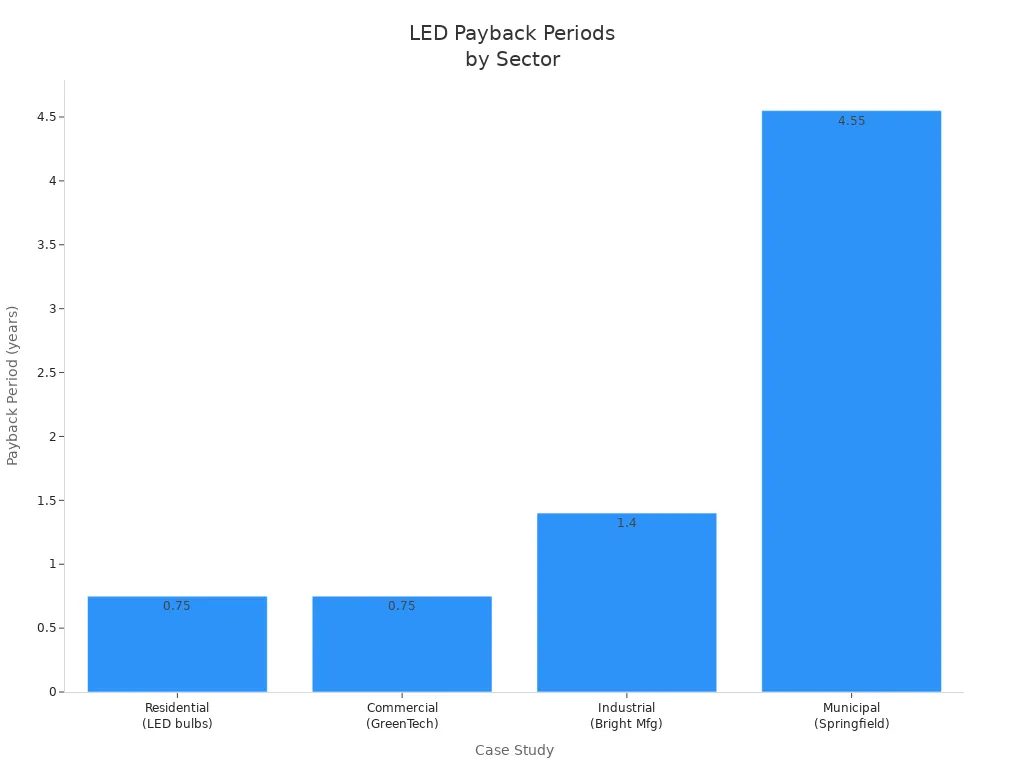
LED lights use less energy and last a long time. You get your money back fast because your bills go down. Most people see savings in less than a year. The chart shows how quickly you can get your money back in different places:
Compatibility With Fixtures and Dimmers
You want your new lights to fit your old fixtures. Most energy-saving bulbs fit in regular sockets. If you use dimmer switches, remember these tips:
LED bulbs need to say 'dimmable' to work with dimmers.
You need a dimmer switch that works with LED bulbs.
Some fixtures do not let you dim the lights, which can cause flickering.
Dimmable LED bulbs work in normal on/off sockets.
Do not use non-dimmable LED bulbs in dimmable sockets because they might flicker.
When you match bulbs and switches, your lights work better. This helps you avoid flickering and keeps your lights steady.
Light Quality and Color Options
LED lights come in many colors and brightness levels. You can pick warm, neutral, or cool colors for each room. The table shows how the bulbs are different:
Bulb Type | Light Quality | Color Temperature Options |
|---|---|---|
Incandescent | Warm, natural lighting | Limited color temperatures |
CFL | Varies, less warm than incandescent | Available in various color temperatures |
LED | Wide range of colors and temperatures | Extensive options for ambiance creation |
Pick warm white (2700K-3000K) for bedrooms. Use neutral white (3500K-4000K) for kitchens. Cool white (5000K+) is good for work spaces. LEDs turn on right away and use less power. You can make every room feel just right with these lights.
Addressing Common Concerns
Some people worry about the price, light, or changing fixtures. Many think LED lights are too expensive or too bright. New LED technology gives soft, nice light and fits most fixtures. If you worry about blue light, pick warmer colors to relax. New light emitting diode bulbs do not flicker and show colors well. You usually do not need to change your fixtures. Using long-lasting bulbs means you throw away less.
Tip: Choose LEDs with a high color rendering index (CRI) for true colors and a better look.
LED lights help you save energy, make less waste, and enjoy good lighting everywhere.
You save money and help the environment with led light bulbs. These bulbs use less energy and last a long time. You do not need to replace them often, so there is less waste. Choosing led is good for your home or business. LEDs help lower carbon emissions and make your bills smaller. They give you bright light and work well for modern life.
Spend less because you use less energy
Change bulbs less often
Help keep the planet clean
Switching to led is a smart choice now and later. Try led bulbs and see the good changes!
FAQ
Do LED light bulbs save you money?
Yes, you save money with LED bulbs. They use less electricity and last longer than traditional bulbs. You spend less on replacements and energy bills.
Tip: You can see savings in your first year after switching.
Can you use LED bulbs in any light fixture?
You can use LED bulbs in most fixtures. Check the bulb size and socket type before buying.
Fixture Type | LED Compatibility |
|---|---|
Table Lamp | Yes |
Ceiling Fan | Yes |
Dimmer | Use dimmable LED |
How long do LED bulbs last?
LED bulbs last up to 25,000 hours or more. You may not need to replace them for years.
:bulb: You get reliable light for a long time.
Are LED bulbs safe to recycle?
You can recycle LED bulbs. They do not contain mercury or other toxic materials.
Note: Check your local recycling program for details.
See Also
Understanding LED Light Bulbs: Advantages and Choosing Tips
Exploring GE LED Light Bulbs: Key Features and Benefits
Benefits of LED Street Bulbs: Efficiency and Longevity Insights
Comparing LED Streetlights and Traditional Lights: Cost and Efficiency
Industrial LED Bulbs: Applications, Efficiency, and Choosing Guide