LED Lighting Solutions for Industrial Facilities

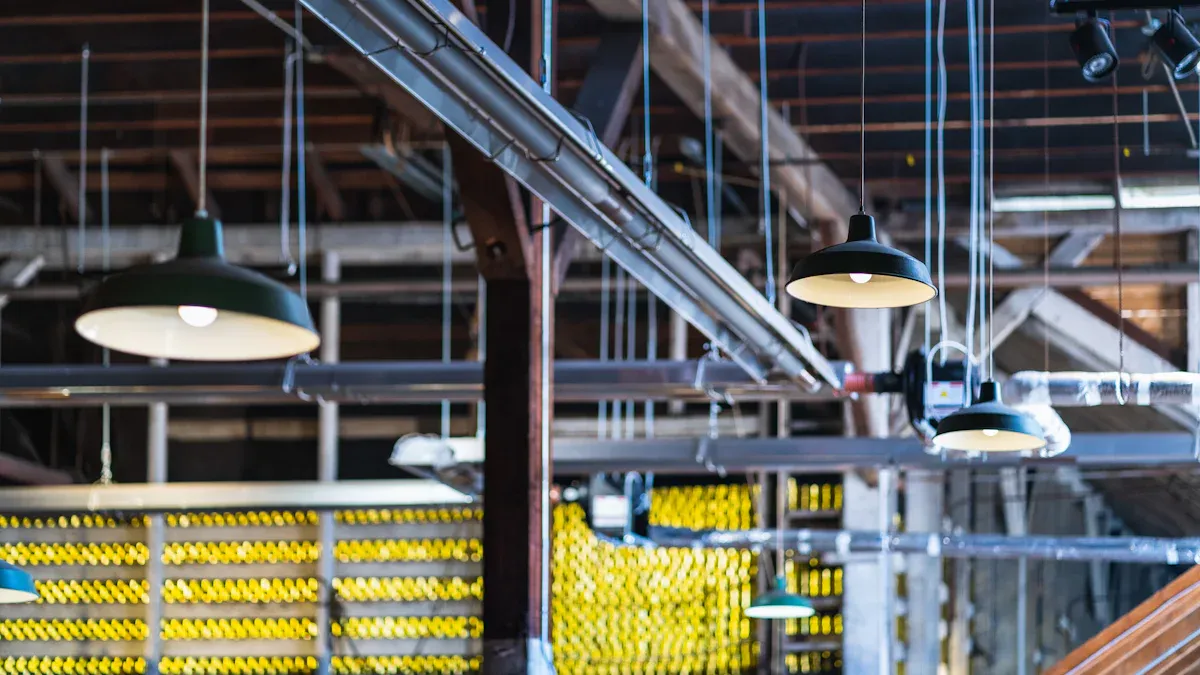
You need good lighting for your industrial facility. LED lighting solutions help you save energy and money. Some places use up to 75% less electricity each month. High-quality LED fixtures last from 5 to 10 years. They keep working well with L80 or L90 durability ratings. These lights work in tough or hot areas. They make things safer and easier to see. You can find the right Product for any space. This is true if you manage a warehouse, a Home workshop, or want to learn more About Us.
Key Takeaways
Switching to LED lighting can help save a lot of money. You can save up to 80% on energy bills. This means industrial facilities spend much less.
LED lights last much longer than regular bulbs. They can work for up to 100,000 hours. This means you do not need to change them often. You will spend less time and money on maintenance.
Good lighting makes the workplace safer. It helps people see better. Workers can spot dangers more easily. This can lower accidents by up to 60%.
LED lighting solutions work well in tough places. They are made for harsh environments. This makes them great for industrial settings with extreme conditions.
Buying LED lighting is a smart choice. You can get your money back fast. Many businesses recover their costs in about 2.5 years.
Why Choose LED Lighting Solutions
Challenges with Traditional Lighting
There are many problems with old industrial lighting. These lights use a lot of energy and break often. You have to change bulbs and parts a lot. This costs you money and takes up your time. Old lights can also make your work area less safe. Sometimes, they do not give enough light.
Here is a table that shows some common problems with old lighting:
Challenge | Description |
|---|---|
Voltage Fluctuations | Big machines can change the voltage. This makes lights flicker or stop working. |
Heat Dissipation | Old lights get very hot. This heat can hurt parts or even start fires. |
Wiring Complexity | You need lots of wires to keep things safe and add smart controls. This makes it hard to install. |
Old lighting uses more power than new lights. Look at this table to see how much energy different lights use compared to LED lights:
Lighting Type | Power Consumption (W) | Equivalent LED Consumption (W) |
|---|---|---|
Incandescent Bulbs | 60 | 10 |
Compact Fluorescent Lamps | 13-15 | < 10 |
High-Pressure Sodium (HPS) | 250-1000 | 300 |
If you switch to LED lighting, you can save up to 80% on energy bills. This helps your building use less energy and saves you money.
You also spend more on fixing old lights. Incandescent bulbs last about 1,000 hours. You have to change them a lot, which means more work and higher costs. Fluorescent bulbs break easily and do not last long. These problems cause more downtime and less work gets done. LED lights last much longer—up to 100,000 hours. You do not need to replace or fix them as much.
In factories and other work buildings, good lighting helps people work better and safer. It also helps machines run safely, makes products better, and stops accidents. LED lights help with these things because they give better light, need less fixing, and use less energy. Bad lighting can hurt your eyes, give you headaches, and make you tired. This can cause mistakes, accidents, or even bad injuries. Good lighting helps you see better and pay attention, so everyone is safer.
How LEDs Meet Industrial Needs
LED lighting fixes many problems that come with old lights. LEDs use less energy and last longer. They give better light, so your team can work safely and well.
Here is a table that compares LED lighting to old lighting in tough places:
Feature | LED Lighting Solutions | Traditional Lighting Solutions |
|---|---|---|
Durability | Made to be strong and last a long time | Often break easily, need covers |
Performance in Harsh Conditions | Work well in dusty, wet, and shaky places | Do not work as well in tough spots |
Temperature Resistance | Can handle very hot or cold places | Do not like heat or cold |
LEDs are solid-state devices. They do not break from bumps or shakes. You can use them where there is dust, water, or heat.
LEDs work in very hot or cold places. Old sodium lamps break easily and do not like heat or cold.
Experts say LEDs are the best for tough jobs. They give you light that works even when things get rough.
LEDs give better and clearer light. They show colors well, help you see details, and make your building look nice. This is good for workers and customers.
LEDs also help you follow safety rules. Good lighting helps you see dangers and stop accidents. Your team can focus better and make fewer mistakes.
When you pick energy-saving lights for your building, you get many good things. You save money, have less downtime, and make your workplace safer. LED lighting gives you the strong and steady light you need everywhere you work.
Energy-Efficient Lighting Benefits
Lower Energy Consumption
Switching to LED lighting helps you use less energy. LEDs need much less power than old bulbs. Many factories save up to 80-90% on energy. This means you pay less for electricity every month. Look at this table to see the difference:
Lighting Type | Energy Reduction (%) | Potential Savings (kWh) |
|---|---|---|
Traditional Systems | 0 | 0 |
LED Lighting | 80 - 90 | 43 billion |
LEDs make less heat. This keeps your building cooler. You also pay less for utilities. An 11-watt LED is as bright as a 75-watt bulb. You save money and use less energy.
Using LEDs can save enough energy to light 30 million homes. American factories could save $3.6 billion each year.
Reduced Maintenance and Costs
LED lights last much longer than old bulbs. Good LED fixtures work for 5 to 10 years. They keep working even in tough places. You do not need to change them often. This means less work and fewer stops. Old lights break more and need more repairs. LEDs only need simple cleaning and checks.
LEDs last longer, so you do less maintenance.
You spend less money on new bulbs and repairs.
Businesses save money and can use it for other things.
ROI for Industrial Facilities
You get your money back quickly with LED lighting. Many companies recover costs in about 2.5 years. One company had a first-year ROI of 39.1%. Case studies show big savings:
Case Study | Description | Cost Savings |
|---|---|---|
Element Materials Technology | Upgraded lab for energy efficiency with LED technology | Substantial annual savings |
General Industry | Many businesses cut electricity bills after LED upgrades | Energy expenses reduced |
Factories and stores pay less for electricity. They also have better places to work. You make things safer and save money at the same time.
Safety and Performance Advantages
Enhanced Visibility and Safety
You want your team to see well and stay safe. LED lighting gives bright and even light. This helps everyone notice dangers before accidents happen. Bad lighting can make people slip, trip, or fall. It can also make workers bump into moving machines. Using LED lights can lower accidents by up to 60%.
LED lighting helps you see spills, cords, and things in the way.
Workers can stay away from danger and move safely near machines.
Good lighting helps you see warning signs and labels.
LED lighting makes it easier to see dangers at work. You can find risks faster and act quickly. This keeps your team safe and stops injuries.
In 2015, U.S. workers had 2.9 million injuries and over 4,800 deaths. Many of these happened because people could not see well enough. You can help stop these problems with better lighting.
Compliance and Productivity
You need to follow safety rules in your building. LED lighting products meet strict rules for factories and other tough places. These lights go through many tests to make sure they are safe. Here is a table that shows some important safety certifications and what they mean for your workplace:
Certification/Standard | What It Means for You |
|---|---|
ETL Certification | Products meet safety norms for hazardous locations |
OSHA Compliance | Meets workplace safety rules and reduces incidents |
Explosion-Proof | Safe to use in areas with fire or explosion risks |
LED lighting also helps you follow energy codes and safety rules from groups like IEC and UL. You can trust that your lights are safe and work well.
Good lighting does more than keep you safe. It helps people work better. When you have bright light, your team works faster and makes fewer mistakes. LED lights help workers stay awake, even at night. They also keep the work area cooler, so everyone can focus.
Benefit | Impact on Productivity |
|---|---|
Improved visibility for tasks | Increases accuracy and work speed |
Less heat | Keeps workers comfortable and focused |
Fewer injuries | Reduces time away from work |
You get a safer place to work and better results when you use LED lighting.
Environmental Impact of LED Lighting
Lower Carbon Footprint
LED lighting helps the planet. LEDs use less energy than old bulbs. This means you make less pollution every day. When you use LEDs, you lower greenhouse gas emissions. In 2017, people cut 570 million tons of CO2 with LEDs. That is like turning off 162 coal power plants.
Here are some ways LEDs help the environment:
LEDs use up to 80% less energy than old lights.
You save about 75% of energy for each bulb you change.
LEDs use 40% less power than fluorescent bulbs and 80% less than incandescent bulbs.
You help your facility meet green goals and pay less for electricity.
Every upgrade makes a big difference. Using less energy means less pollution and cleaner air for everyone.
Less Hazardous Waste
LED lighting helps you make less waste. Old bulbs break a lot and need to be replaced often. You throw away more bulbs and pay more to get rid of them. LEDs last up to 25 times longer than incandescent bulbs and ten times longer than fluorescent bulbs. You do not need to change them as much, so you send less waste to landfills.
Here is a table that shows how LEDs help with waste and costs:
Lighting Type | Average Lifespan | Disposal Fees |
|---|---|---|
Incandescent Bulbs | 1,000 hours | High |
Fluorescent Bulbs | 10,000 hours | $2,000 |
LED Flood Lights | 25,000+ hours | $250 |
LEDs do not have dangerous stuff like mercury. You do not have to worry about handling or throwing away toxic things. LEDs do not give off ultraviolet radiation, so you keep your team healthy and safe. You also do not need special workers or tools for maintenance.
When you pick LEDs, you make less waste, save money, and keep your workplace safer for everyone.
LED Lighting Types for Industrial Facilities
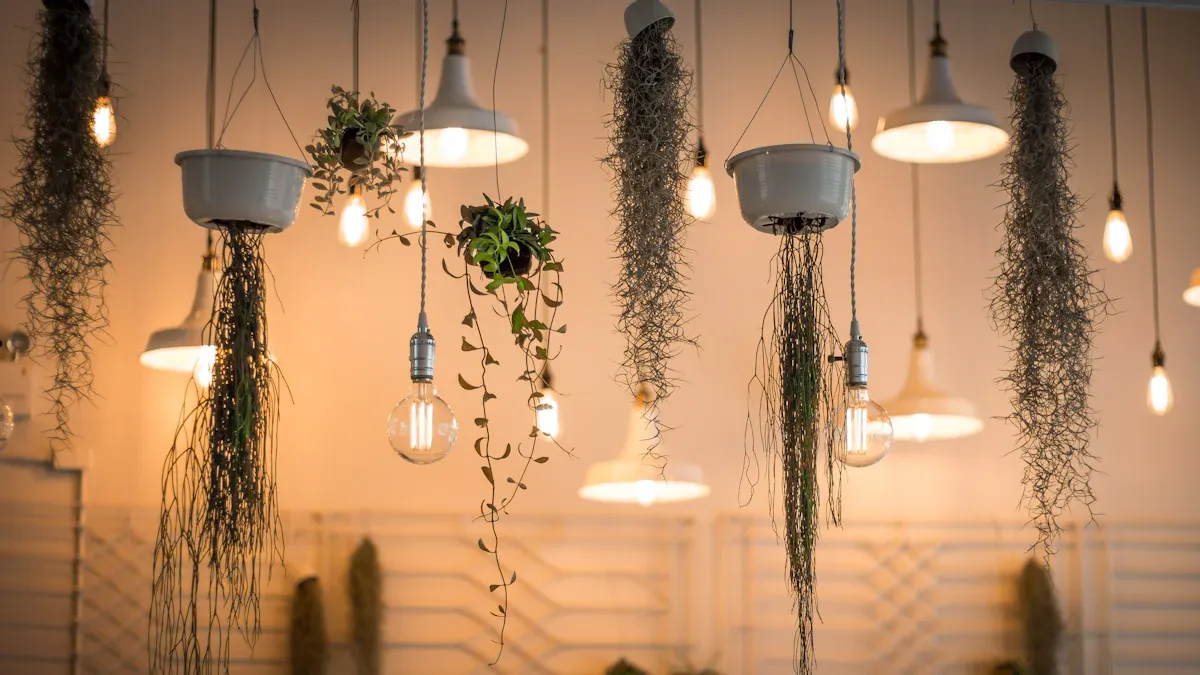
High Bay and Low Bay LEDs
You need lights that match your ceiling height. High bay LEDs are best for tall ceilings over 20 feet. They shine bright and point light down to the ground. You see these lights in big places like warehouses and gyms. Low bay LEDs work for ceilings under 20 feet. They spread light out wide, so they fit small rooms and workshops.
High bay lights work for ceilings from 10 to 40 feet. They give strong light for large spaces.
Low bay lights are good for ceilings between 8 and 20 feet. They give softer light for close-up jobs.
Picking the right lights helps you see better and save energy.
Linear, Strip, and Panel LEDs
Linear, strip, and panel LEDs light up long rows and work tables. These lights are great for places that need even light with no shadows. You can use them in assembly lines, storage rooms, or offices.
Lighting Type | Benefits | Industrial Environments |
|---|---|---|
LED Panel | Makes it easier to see, saves money | Factories, offices, stores |
LED Strip | Can be changed, keeps workers safe | Work areas, assembly lines, storage |
You can change these lights for special jobs. Some let you dim the light or use smart controls. This saves energy and keeps people safe.
Temporary and Specialty LED Solutions
Sometimes you need lights for a short time or tough places. Temporary and specialty LEDs give strong light where you need it. These lights last over 25,000 hours and use less power than old bulbs. They turn on right away, so you get full light fast.
Advantage | Description |
|---|---|
Higher Durability | Handles bumps and rough use |
Longer Lifespan | Lasts much longer than regular bulbs |
Lower Power Use | Saves energy and needs lighter wires |
Enhanced Safety | Instant light makes job sites safer |
You can trust tough LED lights in hard places like oil rigs, mines, or cold storage. These lights fight off water, dust, and shaking. They keep working in hot or cold spots, so your building stays safe and bright.
Tip: Pick led lighting solutions made for your space. You get lights that last and work well, even in hard places.
Lighting Solutions for Key Industrial Areas
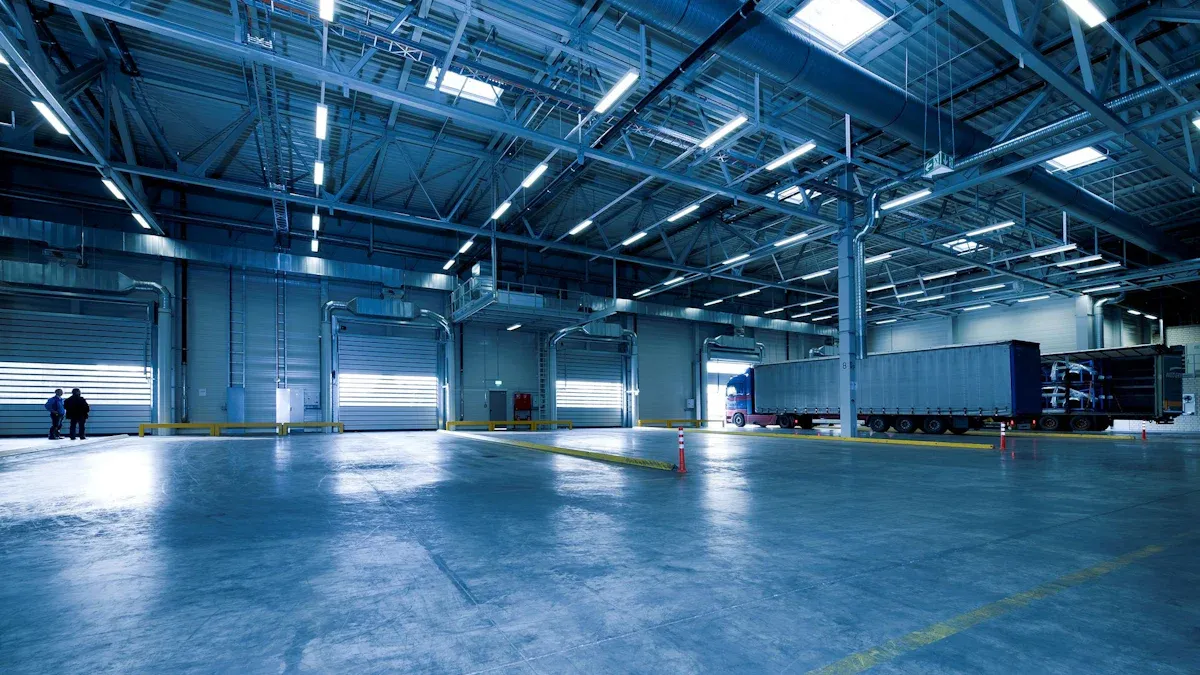
Warehouses and Storage
Warehouses need good lighting to help workers and keep them safe. These places have high ceilings and lots of space. They need strong light that spreads out evenly. The table below shows which LED lights work best in these spots:
Lighting Solution | Ideal Use Cases |
|---|---|
Warehouses with high ceilings, large industrial spaces | |
High-ceilinged warehouses, industrial plants | |
Linear High Bay Lights | Aisle lighting and task areas within a warehouse |
LED Wall Pack Lights | Outdoor lighting for warehouses, parking lots |
Vapor Tight Lights | Outdoor storage, loading docks, areas with moisture or dust |
These lights help you see better and save energy. Good lighting lets you find dangers and move things faster. This helps everyone work better in the warehouse.
Production and Manufacturing
Workers need to stay awake and safe in production areas. LED lights help a lot in these places. Here are some ways they help:
Workstations are brighter, so hazards are easier to spot.
Fewer shadows mean you can see problems quickly.
Colors look better, so quality checks are easier.
Workers make fewer mistakes because they feel less tired.
Assembly lines move faster, so more work gets done.
LED lights help your team stay safe and make good products.
Loading Docks and Outdoor Areas
Loading docks and outdoor spaces need bright lights that always work. You can use LED wall pack lights and vapor tight lights here. These lights give you:
Better security, so it is harder for people to steal things.
Lower energy bills because LEDs use less power.
Safety rules are easier to follow, so you avoid fines.
The right lights help your building run well and keep your team safe.
Offices and Support Spaces
Offices and support rooms need good light for reading and meetings. LED lights give many benefits in these places:
Benefit Type | Description |
|---|---|
Cost Savings | Saves 50-90% of energy costs and lasts up to 450,000 hours |
Operational Benefits | Instant ON/OFF, low heat, and high shock resistance |
Light Quality | Focused, full-spectrum light with no flicker |
Environmental Benefits | Green, RoHS compliant, no mercury or lead |
LED lights help workers focus and feel comfortable. Good lighting helps everyone do their best work.
Tip: Pick LED lights that fit each part of your building. You will get better safety, more work done, and save money.
Upgrading to LED Lighting
Assess Current Lighting
You should start by looking at your current lighting solutions. Walk through your facility and check each area. Write down the types of lights you use, how bright they are, and how often you replace them. Make a list of places where the light is too dim or where bulbs burn out quickly. This step helps you see which areas need better lighting and where you can save the most energy.
Tip: Use a simple checklist to track your lighting. This makes it easier to compare old lights with new options.
Calculate Savings and ROI
Next, you need to figure out how much you can save by switching to led lighting solutions. Add up your monthly energy bills and maintenance costs. Use online calculators to estimate how much less you will spend with led lights. Many facilities see a return on investment in less than three years. You can also look at case studies from other businesses to see real savings.
Step | What to Do | Why It Matters |
|---|---|---|
Gather Data | Collect bills and repair costs | Know your starting point |
Use Calculators | Estimate new energy use | See possible savings |
Review Case Studies | Learn from others | Set realistic goals |
Select and Install LEDs
Choose the right lighting solutions for each area. High bay lights work well for tall spaces. Panel lights fit offices and meeting rooms. Pick products that match your needs and last a long time. You should talk to lighting professionals for advice. They help you find the best options and plan the installation. During upgrades, use temporary lights to keep your facility safe and running.
Pick lights with strong warranties.
Ask experts about smart controls and sensors.
Schedule installation during slow times.
Monitor and Optimize
After you install new lights, keep checking how they work. Watch your energy bills and see if your team likes the new lighting. Adjust brightness or add controls if needed. Regular checks help you get the most from your investment.
Note: Good monitoring helps you spot problems early and keep your lighting solutions working well.
You get lots of good things with led lighting solutions. You use less energy and spend less money. Your team works better in bright, safe spaces. You help the planet by using less power and making less trash.
Check what kind of lights you need.
Ask experts to help you pick the best lights.
Change your lights to make your building work better.
Start now. Make your workplace safer and help everyone do their job with new lighting.
FAQ
What are the main benefits of LED lighting in industrial facilities?
You save energy and money with LED lighting. You get brighter light and better safety. LEDs last longer than old bulbs. You spend less time fixing lights. Your facility becomes more efficient.
How do I choose the right LED lights for my facility?
You look at your ceiling height and work areas. High bay LEDs fit tall spaces. Panel LEDs work in offices. Ask a lighting expert for advice. Pick lights with strong warranties and safety ratings.
Can LED lights handle harsh environments?
You can trust LEDs in tough places. They work in hot, cold, wet, or dusty areas. Many LED products have strong covers and ratings for harsh conditions. You keep your facility safe and bright.
How much money can I save by switching to LED lighting?
You can cut energy bills by up to 80%. You spend less on repairs and replacements. Many businesses see a return on investment in less than three years. You save money every month.
Do LED lights help with workplace safety?
You improve safety with LED lighting. Bright, even light helps workers see hazards. You reduce accidents and injuries. LEDs meet safety standards for industrial spaces. Your team works better and stays safe.
See Also
Innovative Outdoor Lighting Options For Safety And Aesthetics
High Bay LED Lights: Uses, Advantages, And Installation Tips
Effective Commercial Lighting Strategies For Business Settings
Energy-Efficient Indoor LED Lighting Solutions For Spaces
Integrating Light Commercial Electrical Systems For Best Lighting Results