Best Electric Lamps with the Longest Lifespan from Classic Bulbs to Modern LEDs

You want lights that last a long time, save money, and help the Earth. Picking the right electric lamps can really help your budget and the planet. Check out the table below to see how long each lamp type lasts:
Type | Average Lifespan (hours) |
|---|---|
Incandescent | 750 to 1,200 |
CFL | 8,000 |
LED | 25,000 |
If you choose energy-efficient lighting, you use less electricity. This means your bills go down and you help the environment. LEDs make about 70% less CO2 than incandescent bulbs. The Longest Lasting Electric Lamps let you wait longer before changing bulbs, have fewer problems, and save more money. If you want to know more About Us, go to our Home or look at our Product pages.
Key Takeaways
Pick LED bulbs if you want them to last long. They can work for up to 50,000 hours. This means you will not need to change them often. You will also spend less money.
Lamps that save energy, like LEDs, use less power. This can make your electric bills lower. It also helps the planet by making less pollution.
If you put in and take care of lamps the right way, they last longer. This also helps you save more energy.
Smart LED bulbs are easy to use. You can control them from far away or set timers. These features are good for homes today.
Lamps that last a long time make less trash. This helps the earth because fewer bulbs get thrown away.
Quick Guide: Longest Lasting Electric Lamps
Top 10 Longest Lasting Lamps
If you want to find the longest lasting lamps for your home or business, you should look at both classic and modern choices. Here are the top 10 options based on how long they last and how well they work:
LED A19 Bulbs
LED A19 Smart Bulbs
LED A19 Dimmable Bulbs
LED A19 Daylight Bulbs
LED A19 Warm White Bulbs
LED A19 High Lumen Bulbs
CFL Spiral Bulbs
Halogen A19 Bulbs
High-Pressure Sodium Lamps
Metal Halide Lamps
You can see that led bulbs take most of the top spots. These led options give you the longest lasting lamps for everyday use. If you want a lamp that lasts for years, led bulbs are the best choice.
Key Features and Lifespan Overview
The table below shows the main features and lifespan for each lamp type. You can use this guide to compare which lamp fits your needs.
Lamp Type | Lifespan (hours) | Key Features | Pros | Cons |
|---|---|---|---|---|
LED A19 Bulbs | Up to 50,000 | Standard led, energy saving | Very long life, low energy | Higher upfront cost |
LED A19 Smart Bulbs | Up to 50,000 | Smart controls, led tech | Remote control, longest lasting lamps | Needs Wi-Fi |
LED A19 Dimmable Bulbs | Up to 50,000 | Works with dimmers, led | Adjustable brightness | May need special switches |
LED A19 Daylight Bulbs | Up to 50,000 | Bright white led light | Good for work spaces | Can feel harsh |
LED A19 Warm White Bulbs | Up to 50,000 | Soft led light | Cozy feel, longest lasting lamps | Not as bright |
LED A19 High Lumen Bulbs | Up to 50,000 | Extra bright led | Great for large rooms | Uses more energy |
CFL Spiral Bulbs | 8,000-10,000 | Energy saving | Cheaper than led | Shorter life, contains mercury |
Halogen A19 Bulbs | 2,000-4,000 | Classic style | Good color, easy to find | Not the longest lasting lamps |
High-Pressure Sodium Lamps | Up to 24,000 | Outdoor lighting | Very long life outdoors | Orange light, bulky |
Metal Halide Lamps | Up to 20,000 | Industrial use | Bright, longest lasting lamps for big areas | Slow to start |
Tip: If you want the longest lasting lamps, choose led bulbs. You will save money and change bulbs less often.
Why Lamp Lifespan Matters
Cost and Savings
Picking lamps that last a long time helps you save money. Think about buying a bulb that works for years, not just a few months. You will not need to buy new bulbs as often. This means you spend less on fixing or replacing them. Lamps like LEDs can work for more than 25,000 hours. You do not have to climb ladders or ask for help as much. These lamps also use less energy, so your bills go down. When your lamp uses less power, you keep more money.
Tip: Lamps that last longer mean fewer blackouts and less work for you.
Benefit | Description |
|---|---|
Reduced Maintenance Costs | You change bulbs less, so you pay less for repairs. |
Lower Energy Consumption | LED lamps use less power, so you save on your bills. |
Decrease in Waste Generation | Long-lasting bulbs mean you throw away fewer, which is better for the Earth. |
Environmental Benefits
Using lamps that last longer is good for the planet. You make less trash because you throw away fewer bulbs. Lamps like LEDs use less power, so power plants do not have to work as hard. This means less pollution and a smaller carbon footprint. LED bulbs do not have bad chemicals like mercury, so they are safer to get rid of. Using bulbs that can be recycled helps the environment even more.
LED and CFL bulbs last longer, so there is less e-waste.
LED lights can cut your carbon footprint by about one-third.
One LED bulb can take the place of 25 incandescent bulbs.
Maintenance and Convenience
Lamps that last a long time make life easier. You do not have to change bulbs as much, so you have more free time. Fewer replacements mean you spend less on repairs. In stores or offices, fewer outages mean things run better and customers are happier. Knowing how long your lamps last helps you plan when to change them. This lets you use your time and money better and keeps your home or business working well.
Note: Lamps that save energy and last a long time give you the best mix of savings, ease, and helping the planet.
Lamp Technology Comparison
Incandescent and Halogen
You may know incandescent bulbs as the classic choice for homes. These bulbs give off a warm light but do not last long. Most incandescent bulbs work for about 1,000 hours. They use more energy and cost more to run. Halogen bulbs are a newer version. They last a bit longer, up to 3,500 hours, and use less energy than regular incandescent bulbs. You can see the difference in the table below:
Bulb Type | Lifespan (hours) | Energy Consumption |
|---|---|---|
Incandescent | 750 to 1,000 | Higher |
Halogen | 2,250 to 3,500 | Up to 28% less |
You will find that both types need frequent replacement. They also use more power than other options.
CFLs and Fluorescent Tubes
CFLs and fluorescent tubes use much less energy than incandescent bulbs. You can save up to 75% on energy bills with these lamps. CFLs last up to 10 times longer than incandescent bulbs. Fluorescent tubes can last between 7,000 and 15,000 hours. You will notice that both types help lower your carbon footprint. For example, an 18-watt CFL can save you about $45 over its life compared to a 75-watt incandescent bulb.
CFLs use one-third the electricity of incandescent bulbs.
Fluorescent tubes last much longer than classic bulbs.
Both types reduce waste and save money.
LED and Modern LED Technology
You get the best results with led lamps. These lamps last from 15,000 to 50,000 hours. They use less energy and give off less heat. The solid-state design makes them strong and less likely to break. You can use led bulbs in many places, from homes to offices. Modern led technology lets you control lights with smart systems. Some led lamps adjust brightness and color based on your needs. You will save money and time because you change led bulbs less often. The table below shows how led compares to other types:
Lamp Type | Lifespan (hours) | Energy Efficiency (lumens/watt) |
|---|---|---|
Incandescent | 1,000 | 10-17 |
Halogen | 2,000 | 16-24 |
CFL | 7,000 | 35-100 |
Fluorescent | 7,000-15,000 | 35-100 |
LED | 15,000-50,000 | 80-100 |
You will see that led lamps last much longer and use less energy than other bulbs. Modern led technology also means fewer replacements and lower costs.
Specialty and Industrial Lamps
You may need special lamps for large spaces or outdoor areas. Induction and HID lamps can last from 60,000 to 100,000 hours. You will find these lamps in streetlights, warehouses, tunnels, and parking garages. They work well in places where safety and visibility matter. These lamps help reduce maintenance in hard-to-reach spots.
Tip: For most homes and businesses, led lamps give you the best mix of long life, energy savings, and low maintenance.
Detailed Review: Longest Lasting Lamps
Standard LED Bulbs
You find standard led bulbs in homes, schools, and offices. These bulbs use advanced technology to give you bright light and save energy. Manufacturers say that standard led bulbs last between 25,000 and 50,000 hours. If you use them in the right way, you can expect up to 20 years of service. Some led replacement bulbs even reach 100,000 hours. You get a long life, low energy bills, and less hassle with replacements. Led a19 bulbs work well in most fixtures and give you steady light.
Lifespan: 25,000–50,000 hours
Pros: Very long life, low energy use, fits many fixtures
Cons: Higher upfront cost, may need compatible dimmers
Tip: Choose led a19 bulbs for the longest lasting electric lamps in your home.
Energy-Saving LED Bulbs
You see energy-saving led bulbs in places where people want to cut costs and help the planet. These bulbs use about six times less energy than old incandescent bulbs. You get up to 50,000 hours of use, which means fewer replacements. Energy-saving led bulbs also lower your carbon footprint. Some energy-efficient led bulbs convert 80% to 90% of energy into light. You save money and help the environment at the same time. Led replacement bulbs in this category work well in kitchens, offices, and schools.
Advantages of LED Bulbs | Disadvantages of LED Bulbs |
|---|---|
Energy efficiency: Uses about six times less energy than incandescent bulbs, leading to significant savings on electric bills. | High initial cost per bulb, which can be a barrier for some consumers. |
Long lifespan: Lasts up to 50,000 hours, reducing the need for frequent replacements. | Variability in light quality; some bulbs may emit cooler, blue-tinted light rather than warmer tones. |
Reduced environmental impact due to lower energy consumption. | Not all LED bulbs are dimmable, and compatibility with existing fixtures may vary. |
Note: Energy-saving led bulbs give you the best mix of long life and energy savings.
Induction and HID Lamps
You use induction and HID lamps in places that need strong light for a long time. These bulbs work well in parking lots, warehouses, and streetlights. Induction lamps can last up to 100,000 hours. HID lamps, like metal halide and high-pressure sodium, reach up to 24,000 hours. You get the longest lasting electric lamps for outdoor and industrial use. These bulbs need less maintenance and give you bright light in large spaces.
Lifespan: Induction (up to 100,000 hours), HID (up to 24,000 hours)
Pros: Very long life, strong light, low maintenance
Cons: Bulky size, slow start, not for small fixtures
CFL Spiral Bulbs
You find CFL spiral bulbs in homes and offices that want to save energy. These bulbs last between 8,000 and 10,000 hours for screw-based types. Plug-in CFLs reach up to 20,000 hours. CFLs use less energy than incandescent bulbs and work best when left on for long periods. If you turn them on and off often, their lifespan drops. You get a long life and lower bills if you use them in hallways or living rooms.
Bulb Type | Average Rated Lifespan (hours) |
|---|---|
Compact Fluorescent (plug-in) | 10,000 – 20,000 |
Compact Fluorescent (screw-based) | 8,000 – 10,000 |
Pros: Good energy savings, lower cost than led, long life in steady use
Cons: Contains mercury, shorter life with frequent switching
Tip: Use CFL spiral bulbs in places where you keep the lights on for hours.
Long-Life Incandescent Bulbs
You may still use long-life incandescent bulbs in some fixtures. These bulbs last longer than regular incandescent bulbs, but not as long as led or energy-saving led bulbs. Standard incandescent bulbs last around 1,000 hours. Some long-life versions reach up to 15,000 hours if you use them on protected circuits and at lower wattage. You get better results with reputable brands. Continuous use helps these bulbs last longer by reducing stress cracks in the filament.
Feature | Description |
|---|---|
Low Wattage | Lower wattage bulbs tend to last longer than higher wattage counterparts. |
Reputable Brand | Established brands usually offer higher quality products. |
High Lumen Output | Higher lumens indicate brighter light output. |
Long Lifespan Rating | Look for bulbs with at least 15,000 hours of estimated lifespan. |
Average Lifespan | Standard incandescent bulbs last around 1,000 hours. |
Usage Conditions | Many long-life bulbs operate at lower wattage and are kept on protected circuits to ensure consistent power. |
Continuous Use | Continuous operation reduces stress cracks in the filament, contributing to longevity. |
Pros: Warm light, easy to find, fits old fixtures
Cons: Shorter life than led, higher energy use
Smart LED Lamps
You see smart led bulbs in homes that want modern features. These bulbs last between 15,000 and 25,000 hours. You control them with your phone or voice. Smart led bulbs let you change brightness, color, and schedule. You connect them to smart home systems for easy use. Led a19 bulbs with smart features give you flexibility and long life. Traditional bulbs need to be replaced about 25 times more often than smart led bulbs.
Type of Bulb | Lifespan (hours) |
|---|---|
Smart LED Bulbs | 15,000 to 25,000 |
Traditional LED Bulbs | Up to 50,000 |
Pros: Remote control, customizable lighting, smart home integration
Cons: Needs Wi-Fi, may cost more, shorter life than standard led bulbs
Note: Smart led bulbs make your home easier to manage and give you long life.
Vintage LED Bulbs
You choose vintage led bulbs for style and long life. These bulbs look like old Edison bulbs but use led technology. You get up to 20,000 hours of use. Vintage led bulbs like the Ascher Dimmable Vintage LED Edison and Tala bulbs combine classic looks with modern efficiency. Led a19 bulbs in vintage styles fit most fixtures. You enjoy warm light and save energy at the same time. These bulbs work well in living rooms, restaurants, and cafes.
Lifespan: Up to 20,000 hours
Pros: Stylish design, warm light, long life, energy savings
Cons: Lower brightness, higher cost than regular bulbs
Tip: Vintage led bulbs give you the longest lasting electric lamps with a classic look.
Comparison Table: Lifespan & Efficiency
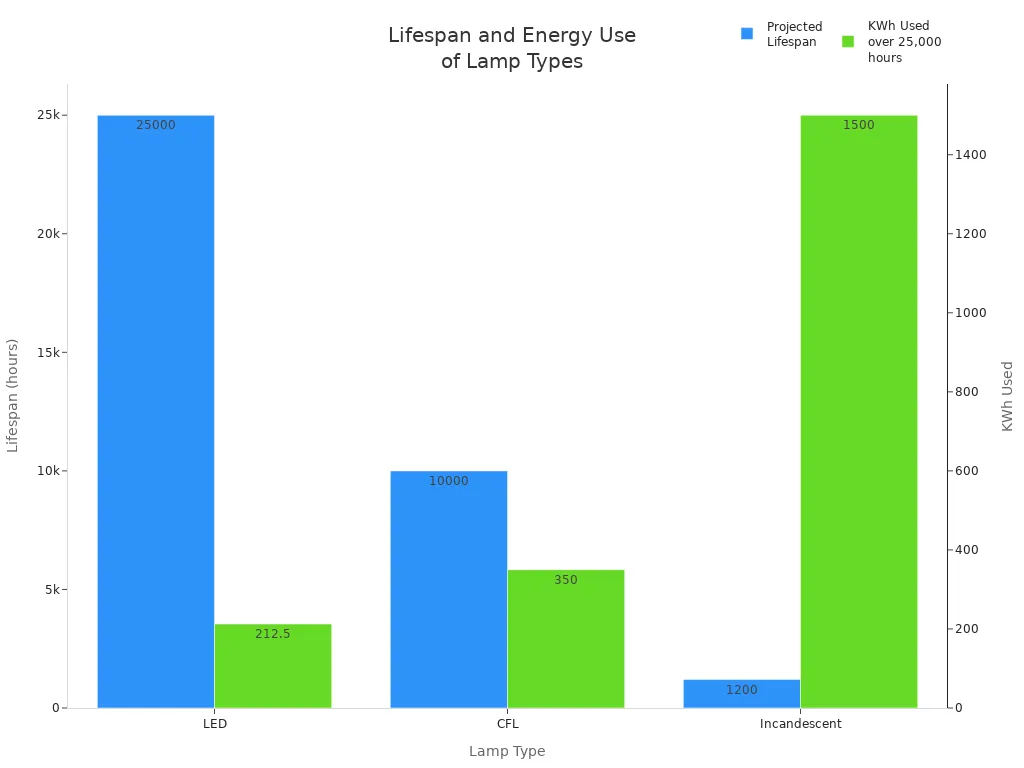
When you choose a lamp for your home or business, you want to know how long it will last and how much energy it will use. Lamps with longer lifespans help you save money and reduce waste. You also spend less time changing bulbs. The table below shows how LED, CFL, and incandescent lamps compare in lifespan, energy use, and cost.
Lamp Type | Projected Lifespan | Watts per Bulb | Cost per Bulb | KWh Used over 25,000 hours | Cost of Electricity | Total Cost for 25,000 hours |
|---|---|---|---|---|---|---|
LED | 25,000 hours | 8.5 | $5 | 212.5 | $21.25 | $26.25 |
CFL | 10,000 hours | 14 | $2 | 350 | $35 | $40 |
Incandescent | 1,200 hours | 60 | $1 | 1500 | $150 | $171 |
You can see that LED lamps last much longer than CFL and incandescent bulbs. You use less electricity with LED bulbs, which means lower bills. The total cost for 25,000 hours of led bulb usage is much less than other types. If you want to save money and help the environment, LED lamps are the best choice.
Tip: If you switch to LED bulbs, you get more hours of light and spend less on electricity. You also throw away fewer bulbs, which helps keep the planet clean.
You may notice that incandescent bulbs use the most energy and cost the most over time. CFL bulbs use less energy, but they do not last as long as LEDs. When you pick LED lamps, you get the longest lifespan and the best energy savings. You make a smart choice for your wallet and the environment.
If you want to make your lighting last longer and cost less, look at the numbers in the table. You can see why LED lamps are the top choice for homes, schools, and businesses.
Factors Affecting Lamp Longevity
Usage and On/Off Cycling
The way you use lamps changes how long they last. Turning lamps on and off a lot makes them wear out faster. Incandescent and halogen bulbs break sooner if you flip the switch often. This is because they get hot and cool down quickly, which hurts them. CFLs also do not like being turned on and off many times. Their inside parts can stop working faster. LEDs are better with switching. They last longer even if you turn them on and off. For LEDs, how long they are used matters more than how often you switch them. Still, cheap LED drivers might break if you cycle them too much.
Lamp Technology | Impact of Frequent Cycling |
|---|---|
Incandescent | Switching a lot makes them fail sooner from heat. |
Halogen | Like incandescent, they do not last as long with cycling. |
Compact Fluorescent | Turning on and off often wears out their electronics. |
LED | Handles switching well; lifespan depends on hours used. |
Power Quality and Voltage
Lamps last longer if the power stays steady. If your house has power spikes, lamps can break early. This happens more where big machines run. Good power supply design helps lamps shine the same all the time. Surge protectors can keep LED lamps safe from sudden voltage jumps. These things help lamps work better and last longer.
Bad power and voltage swings make lamps die faster.
Surge protectors and steady drivers stop early lamp failures.
Heat and Ventilation
Heat makes lamps wear out faster. High heat can hurt the lamp’s inside parts. LEDs do not like getting too hot. If air cannot move around the lamp, heat builds up and shortens its life. Using heat sinks and vents keeps lamps cool and helps them last longer.
Key Point | Description |
|---|---|
Heat Impact | Too much heat makes lamp parts wear out fast. |
Ventilation | Airflow keeps lamps cool and helps them last longer. |
Thermal Management | Heat sinks and vents stop overheating and color changes in LEDs. |
Build Quality
How a lamp is made changes how long it works. Good materials and smart design help lamps last longer. Strong outlets give a steady connection and stop flickering. Bad outlets can get too hot and may even cause fires. Make sure your lamp matches the outlet’s power limit. Using energy-saving bulbs and following safety rules also helps lamps last longer.
Good outlets and materials stop flicker and lamp failures.
Following power limits and using efficient bulbs stops overheating.
Tip: Pick lamps and fixtures made with strong parts and good design. This helps every bulb last as long as possible.
Tips to Maximize Lamp Lifespan
Proper Installation
You can make your lamps last longer by installing them the right way. Always follow the instructions from the manufacturer. Use the correct wattage and check that your fixtures match the lamp type. Make sure you use compatible transformers for special bulbs. This helps prevent flickering and early failures. You should also follow local electrical codes. Good installation keeps your lamps safe and efficient. Regular checks and cleaning help you spot problems early.
Tip: A well-installed lamp gives you better energy savings and fewer headaches.
Using Dimmers and Timers
Dimmers let you control how bright your lights are. Lowering the brightness and lumens reduces heat, which helps your bulbs last longer. Timers turn your lights on and off at set times. This means your lamps only run when you need them. You save energy and money. Smart dimmers and timers can even adjust your lighting for comfort and security. These tools work well with energy-efficient lighting solutions.
Dimmers cut down on energy use and extend lamp life.
Timers help you avoid leaving lights on by mistake.
Cleaning and Maintenance
Dust and dirt can block light and make your lamps work harder. You should clean your bulbs and fixtures often. Use a dry cloth to wipe away dust. Clean lamps shine brighter and use less power. This simple step can add months or years to your lamp’s life. Regular maintenance also helps you spot loose connections or other issues before they cause trouble.
Note: Clean lamps give you better light and help you save money.
Choosing the Right Lamp
Pick lamps that fit your needs and fixtures. Look for bulbs with long lifespans and high energy ratings. Choose products from trusted brands. Check the packaging for details about hours of use and energy savings. If you want less work and lower bills, go for LED or other energy-efficient lighting solutions. Always match the lamp to the job, whether you need bright light for work or soft light for relaxing.
Lamp Type | Best Use | Lifespan (hours) |
|---|---|---|
LED | Most rooms | 25,000–50,000 |
CFL | Steady lighting | 8,000–10,000 |
Halogen | Accent lighting | 2,000–4,000 |
Remember: The right lamp gives you the best mix of light, savings, and long life.
You now know that modern LED lamps are a great choice. They save energy, last a long time, and work well. The table below shows the main good things about LEDs:
Advantage | Description |
|---|---|
Energy Efficiency | LEDs use less power and lower your bills. |
Longevity | LEDs last longer, so you change bulbs less. |
Durability | LEDs can handle bumps and shaking. |
Environmental | LEDs can be recycled and are better for Earth. |
Versatility | LEDs work in many places and look good. |
Aesthetic Appeal | LEDs make rooms look nicer. |
You help the planet by using less energy.
You do not have to worry about bad stuff in old bulbs.
You help stop too much light in the sky.
You keep more money because you use less energy.
You do not spend as much fixing or changing bulbs.
You get more for your money as time goes on.
You should read about the products and talk to lighting experts before you buy. Use the tips in this guide to help you pick the best lamp for you.
FAQ
How do LED lamps help you save money?
LED lamps use less electricity than other bulbs. You get high energy savings because they last longer and need fewer replacements. You spend less on your electric bill and buy bulbs less often.
Can you use smart bulbs in smart homes?
Yes, you can use smart bulbs in smart homes. These bulbs connect to your Wi-Fi and let you control lights with your phone or voice. You can set schedules and change colors easily.
What are smart systems in lighting?
Smart systems let you control your lights from anywhere. You can use apps or voice commands to turn lights on or off. Some systems let you set timers or adjust brightness for comfort and safety.
Do all long-lasting bulbs work in every lamp?
Not every bulb fits every lamp. You should check the size and type before you buy. Some lamps need special sockets or wattage. Always read the package to make sure the bulb matches your fixture.
How often should you clean your lamps?
You should clean your lamps every few months. Dust and dirt can block light and make bulbs work harder. Use a dry cloth to wipe bulbs and fixtures. Clean lamps shine brighter and last longer.
See Also
Best 10 LED Bulbs for Energy Savings and Durability
Advantages of LED Street Lights: Efficiency, Longevity, and Setup
Comparing LED Lamps and Conventional Lighting Solutions
A Comprehensive Overview of LED Lamps: Varieties and Advantages