Understanding Mercury in Electric Lighting: Safety Considerations and Disposal Guidelines


You might ask if mercury in electric lighting is unsafe. The answer is yes, it can be. Mercury in electric lighting can harm your health if you do not handle bulbs the right way. You should always follow safety and disposal rules to keep yourself and your environment safe. When you use the right steps, you make things safer for your family and community. If you want more information, look at the About Us page for helpful resources.
Key Takeaways
Be careful when you touch mercury bulbs. Always put on gloves to keep your skin safe.
Get rid of mercury bulbs the right way. Do not put them in the trash. Take them to a hazardous waste recycling center.
Learn which bulbs have mercury inside. Check for labels and pick safer bulbs like LED bulbs if you can.
If a bulb breaks, move fast. Open the windows and leave the room. Follow safe steps to clean up so you do not get exposed.
Learn about your local rules for throwing away bulbs. Knowing the rules helps you avoid getting fined and keeps the environment safe.
Mercury in Electric Lighting: Risks

Health Hazards of Mercury
You might wonder if mercury in electric lighting is risky for your health. The answer is yes, especially if you do not handle bulbs safely. If a bulb breaks, mercury vapor can get into the air. Breathing this vapor can hurt your nervous system, lungs, and kidneys. Kids and pregnant women are at higher risk because their bodies are more sensitive.
Some people think all mercury bulbs are very dangerous. But compact fluorescent lamps (CFLs) have only a little mercury—about 3 to 5 milligrams. This is much less than what is in old thermostats. If a CFL bulb breaks, it lets out only 0.04 to 0.7 milligrams of mercury. This is a small amount, but you should still clean up carefully to stay safe.
Tip: Worries about mercury from CFLs are often too high. You can lower your risk by using safe handling and disposal steps.
Health experts set strict rules for safe mercury exposure. The table below shows the highest levels allowed in the air:
Health Authority | Exposure Limit (μg/m³) |
|---|---|
OSHA | 0.1 |
NIOSH | 0.05 |
ACGIH | 0.025 |
Environmental Impact
Mercury in electric lighting does not just affect people. It also hurts the environment. If you throw bulbs in the trash, mercury can leak out. This mercury can get into the air, water, and soil. Over time, it turns into methylmercury, which is very toxic. Methylmercury builds up in fish and other animals. This can harm whole ecosystems and make some fish unsafe to eat.
You can help the environment by recycling bulbs at special centers. Safe disposal keeps mercury out of landfills and lowers pollution. Remember, what you do matters for people and nature.
Common misunderstandings about mercury in electric lighting:
CFL bulbs have much less mercury than most people think.
A broken CFL bulb lets out only a tiny bit of mercury.
Safe handling and disposal can stop most problems.
Identifying Mercury-Containing Bulbs
Types of Mercury Bulbs
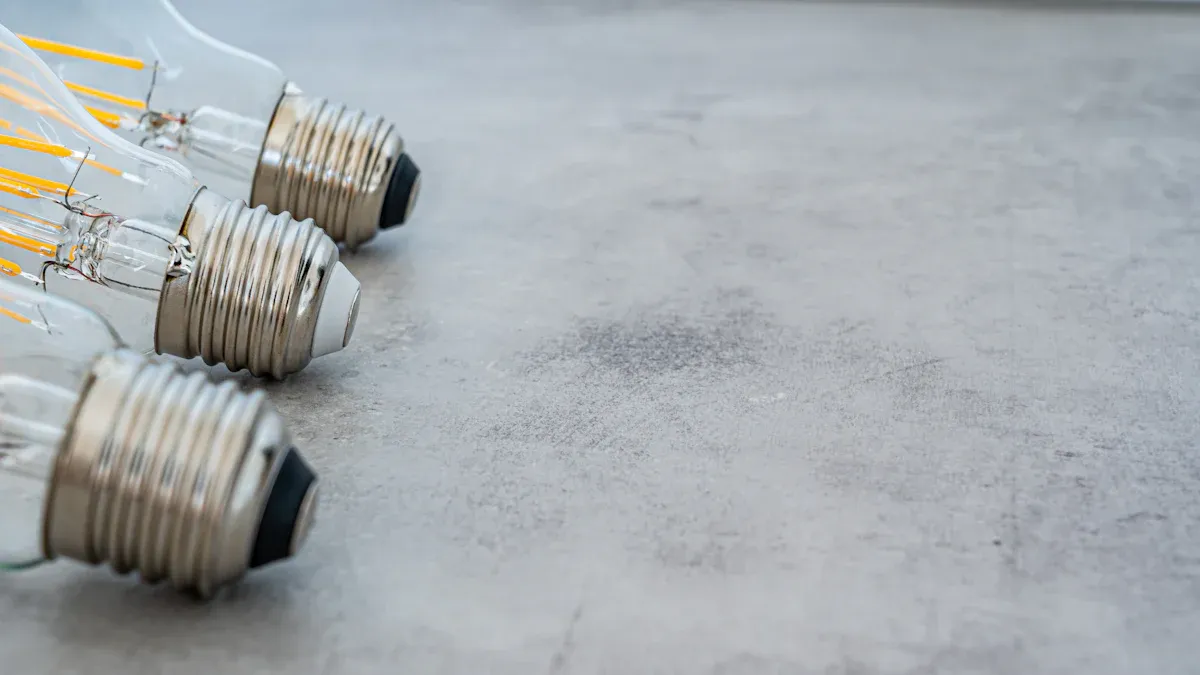
You can find many lamps with mercury in homes and schools. Businesses also use these bulbs. It is important to know which bulbs have mercury. This helps you stay safe when you use them. Most mercury in electric lighting is in fluorescent light bulbs. These bulbs come in many shapes and sizes. Some are long tubes. Others are small spirals.
Here are the most common types of bulbs that have mercury:
Fluorescent and compact fluorescent bulbs (CFLs)
Black lights
High intensity discharge (HID) bulbs, like mercury vapor, metal halide, and high pressure sodium lamps
Ultraviolet bulbs
Neon bulbs
Some low mercury fluorescent bulbs have green ends made of metal. The green color makes them easy to spot. You might also see special labels on the box. These labels tell you if the bulb has mercury. In stores, look for Lighting Facts labels or other warnings about mercury.
Tip: Always read the box for mercury information. Labels help you pick the right bulb and use it safely.
Mercury Content Levels
Not all bulbs with mercury have the same amount inside. The amount depends on the type of bulb. You can use the table below to see how much mercury is in each bulb:
Type of Light Source | Mercury Content (mg) |
|---|---|
Standard Fluorescent Lamp | 8 to 14 |
Low-Mercury Lamp | 3.5 to 4 |
CFL (Compact Fluorescent) | Approximately 4 |
CFLs usually have about 4 milligrams of mercury. Standard fluorescent lamps can have up to 14 milligrams. Low-mercury lamps have less, about 3.5 to 4 milligrams. Old thermometers can hold about 500 milligrams of mercury. That is much more than any one bulb.
You can keep yourself and the environment safe by knowing which bulbs have mercury and how much is inside. This helps you make better choices when you buy, use, or throw away these bulbs.
Handling Mercury Bulbs Safely
Safe Handling Tips
You need to handle mercury bulbs with care to protect yourself and others. When you touch these bulbs, you should always wear gloves. Gloves keep your skin safe from mercury. If you work with many bulbs, you should also wear coveralls. Clean clothing helps stop mercury from getting on your clothes and skin. If you break a bulb, mercury gas can escape. This gas is toxic and can harm your health if you breathe it in.
Tip: Never twist or force a bulb into a socket. Gentle handling lowers the risk of breakage and mercury release.
If you work in a place with many bulbs, you should use air quality monitors. These devices check for mercury in the air. If the air has too much mercury, you need to wear a respirator. Always follow clean-up steps if a bulb breaks. You should never touch broken glass or powder with bare hands.
Here is a table showing what you should wear when handling mercury bulbs:
Protective Item | Purpose |
|---|---|
Gloves | Protects hands from mercury |
Coveralls | Keeps mercury off your clothes |
Respirator | Protects lungs from mercury gas |
Storage Precautions
You must store mercury bulbs in a safe place. Use strong containers that will not break easily. Keep these containers closed unless you are adding or removing bulbs. Closed containers stop mercury from leaking out if a bulb breaks. You should check containers often for leaks or damage. If you see a problem, tell your supervisor or manager right away.
Store bulbs in a cool, dry area.
Use boxes or bins that fit the bulbs well.
Never stack heavy items on top of bulbs.
Do not break any bulbs on purpose.
Send used bulbs to a hazardous waste recycling center.
Note: Proper storage keeps mercury from escaping and protects the environment.
Installation and Removal Safety
When you install or remove mercury bulbs, you should follow safety steps. Turn off the power before you start. This stops electric shocks and lowers the chance of breaking a bulb. Hold the bulb by its base, not the glass. Use gentle pressure to fit or remove the bulb. If you feel resistance, stop and check for problems.
If you work in a large building or factory, you may handle bigger bulbs. These bulbs have more mercury and can be more dangerous if they break. Always wear gloves and protective clothing. If you remove old bulbs, place them in a safe container right away. Do not leave used bulbs lying around.
🛡️ Safety Reminder: Always wash your hands after handling mercury bulbs, even if you wore gloves.
You can keep yourself and others safe by following these steps every time you work with mercury bulbs. Careful handling, proper storage, and safe installation help prevent accidents and protect your health.
Disposal Guidelines for Mercury Bulbs
Why Proper Disposal Matters
You must follow disposal guidelines for mercury bulbs. This keeps you and the environment safe. Mercury is very poisonous. If you throw mercury lamps in the trash, mercury can leak out. The mercury can get into water and dirt. Fish and animals can take in the mercury. People can get sick if they eat seafood with mercury. Kids and pregnant women are most at risk. The World Health Organization says mercury is a big health danger. Even one broken bulb can let out mercury vapor. This vapor can hurt anyone close by. You can stop these problems by using safe ways to throw away lamps.
If you do not follow the rules, you can get in trouble with the law. Many states and the federal government have strict rules for mercury lamp disposal. You might have to pay fines if you break these rules. The first fine can be up to $1,000. If you break the rules again, you could pay up to $5,000 each time. These fines help protect people and nature.
⚠️ Note: Always follow disposal guidelines. This helps you avoid health risks, harm to the environment, and legal trouble.
How to Dispose of Mercury Bulbs
You can get rid of mercury lamps safely by following easy steps. These steps keep you and others safe from mercury.
Look around your home or building for old or used bulbs. Know where you keep them.
Learn about your state and federal disposal rules. Some states have tougher rules than others.
Pick a recycling company that takes mercury lamps. Make sure they use safe methods.
Make a storage spot for used bulbs. Use strong, closed boxes so bulbs do not break.
Be careful when you handle and store bulbs. Do not drop or smash them.
If a bulb breaks, clean it up right away. This stops mercury from spreading.
Plan for safe transport to a recycler. Some companies will pick up or let you mail in bulbs.
Never put mercury bulbs in the regular trash. The Universal Waste Rule and the Resource Conservation and Recovery Act say you must recycle or use a hazardous waste center. Some states do not allow mercury bulbs in landfills. Always check your local rules before you throw away any lamp.
Here is a table with important rules for lamp disposal:
Regulation Type | Description |
|---|---|
Universal Waste Rule (UWR) | Does not allow mercury bulbs in city landfills and makes recycling easier. |
Resource Conservation and Recovery Act (RCRA) | Sets rules for hazardous waste, including mercury lamp disposal. |
State Regulations | Some states have even stricter rules than the federal ones. |
Small Quantity Handler | Has easier rules for small amounts of universal waste. |
Full Subtitle C Requirements | Needs an EPA ID, special papers, and a certified hauler for large amounts. |
💡 Tip: Keep used bulbs in a safe place until you recycle them. This stops mercury leaks and keeps your area safe.
Finding Local Disposal Resources
You can find many places to help with lamp disposal. Government-approved hazardous waste centers take mercury bulbs for recycling. These centers use special ways to keep mercury out of nature.
Clean Harbors: Recycles many kinds of bulbs and separates all parts safely.
Clean Earth: Uses a dry way to crush and recycle fluorescent lamps.
You can also ask your local waste agency for help. Many towns have special days to drop off hazardous waste. Some hardware stores collect used bulbs for recycling. Always ask if the place takes mercury bulbs before you go.
🗺️ Callout: Only use government-approved centers for mercury lamp disposal. This keeps your community and the environment safe.
You help keep mercury out of landfills and water. By following disposal rules, you protect your family, your neighbors, and the planet.
Cleaning Up Broken Mercury Bulbs
Immediate Safety Steps
If you break a mercury bulb, you need to act quickly to keep everyone safe. First, ask people and pets to leave the room. Do not let anyone walk through the area where the bulb broke. Open a window to let fresh air in, and leave the room for at least 15 minutes. Turn off your central heating or air conditioning system if you have one. These steps help keep mercury vapor from spreading.
🛑 Tip: Never touch broken glass or powder with your bare hands. Always use tools or gloves.
Cleanup Procedures
You can clean up a broken mercury bulb by following these steps:
Use stiff paper or cardboard to scoop up glass pieces and powder. Place them in a glass jar with a metal lid or a sealed plastic bag.
Pick up small glass fragments and powder with sticky tape. Put the used tape in the jar or bag.
Wipe the area with damp paper towels or disposable wet wipes. Place these in the jar or bag too.
For hard surfaces, do not use a vacuum or broom. If you must vacuum carpet or rugs after picking up all visible pieces, open a window and turn off the central system. Remove the vacuum bag or clean the canister and put the debris in a sealed bag.
If clothing or bedding touches broken glass or powder, throw it away. Do not wash these items. You can wash clothing exposed only to mercury vapor.
Place all cleanup materials outside in a trash container until disposal. Always check your local rules for proper mercury disposal and cleanup guidance.
Wash your hands well after you finish.
Preventing Future Breakage
You can lower the risk of breaking mercury bulbs by using safe habits. The table below shows some easy ways to prevent accidents:
Preventive Measure | Description |
|---|---|
Safe Handling | Wear gloves and goggles when you handle mercury bulbs. |
Secure Storage | Keep bulbs in labeled containers, away from children and pets. |
Use of Alternatives | Choose mercury-free bulbs when possible to reduce the need for special cleanup. |
💡 Note: Careful handling and proper storage make cleanup and disposal much easier if a bulb breaks.
By following these steps, you protect your health and the environment. Always remember to use safe disposal methods for mercury bulbs.
You help keep your home and neighborhood safe from mercury. Always be careful with bulbs and follow your state’s recycling laws. Here are some easy tips to remember:
Wear gloves and goggles when you touch bulbs.
Do not use a vacuum if a bulb breaks.
Pick LEDs to make less mercury waste.
Recycle all fluorescent and HID lamps.
If you need more help, look at these resources:
Resource | Description |
|---|---|
Learn about mercury in things at home. | |
Find health facts about mercury. | |
Get tips for safe disposal and spills. | |
See ways to recycle bulbs safely. |
You can keep yourself and nature safe by making good choices every day.
FAQ
What should you do if you accidentally break a mercury bulb?
Open a window and leave the room for 15 minutes. Wear gloves to clean up the pieces. Use sticky tape for small bits. Place everything in a sealed bag. Take it to a hazardous waste center.
Can you throw mercury bulbs in the regular trash?
No, you should not put mercury bulbs in the trash. Mercury can leak and harm the environment. Always recycle them at a hazardous waste facility or a special recycling center.
How can you tell if a bulb contains mercury?
Look for labels on the box or bulb. Many bulbs have a mercury symbol (Hg) or a warning. CFLs, fluorescent tubes, and HID lamps usually contain mercury.
Are LED bulbs a safer choice?
Yes, LED bulbs do not contain mercury. You can use them to lower your risk and reduce hazardous waste. LEDs also last longer and use less energy.
See Also
Effective Commercial Lighting Strategies for Business Spaces
Street Lighting Guidelines: Brightness, Color, and Community Effects
Outdoor Commercial Lighting: Enhancing Safety, Efficiency, and Aesthetics
Optimizing Lighting Solutions for Retail Environments
Comprehensive Overview of Electric Lamps: Varieties and Uses