Mercury Lamps Explained: How They Work, Applications, and Modern Alternatives

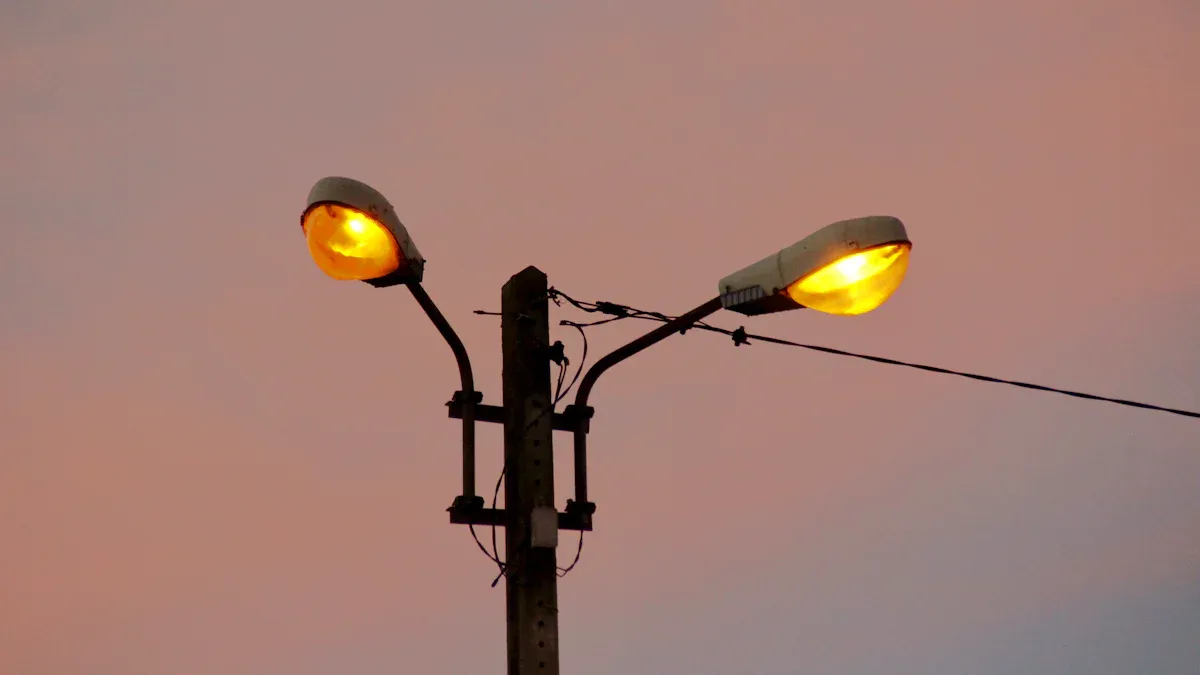
If you want to know about Mercury Lamps Explained in simple terms, start with the mercury-vapor lamp. This lighting uses mercury vapor to produce bright light. When you turn on a mercury vapor lamp, electricity flows through mercury gas. The energy excites the mercury atoms, which then emit light in ultraviolet and visible colors. Initially, you see a blue glow, which turns white as the lamp heats up. Mercury lamps require a ballast to regulate the electric current because the lamp functions as a negative resistance device.
There are two main types: low pressure and high pressure mercury vapor lamps. Each type serves its own purpose in lighting. Low pressure lamps are effective for germicidal applications and scientific use, while high pressure lamps are ideal for outdoor settings and industrial environments.
The world market for mercury vapor lamp products is still expanding, particularly for outdoor and factory lighting. This growth is driven by the demand for energy-saving lights and advancements in technology.
Lighting Technology | Market Share (2018-2032) | Environmental Hazard |
|---|---|---|
Mercury vapor lamp | Moderate | High (due to mercury) |
Metal halide | High | Moderate |
Incandescent | Declining | Low |
While mercury is beneficial, it poses environmental risks if lamps are not disposed of properly. Each year, millions of mercury vapor lamp units contribute thousands of tons of mercury waste. It is essential to check the About Us, Home, and Product pages of sellers. This will help you learn about safe disposal methods for lamps and discover better lighting options.
Key Takeaways
Mercury vapor lamps make bright light with mercury gas. They need a ballast to work safely.
There are two kinds of mercury vapor lamps. Low pressure lamps kill germs. High pressure lamps light up outdoor and factory spaces.
Mercury lamps work well, but they can harm the environment. This is because they have mercury inside. It is important to throw them away the right way.
New lights like LED lights save more energy. They last longer and show colors better. LEDs are also safer to use.
Using LEDs can lower energy bills a lot. They also help the environment. This is good for people and the Earth.
Mercury Lamps Explained: Basics
What Is a Mercury-Vapor Lamp?
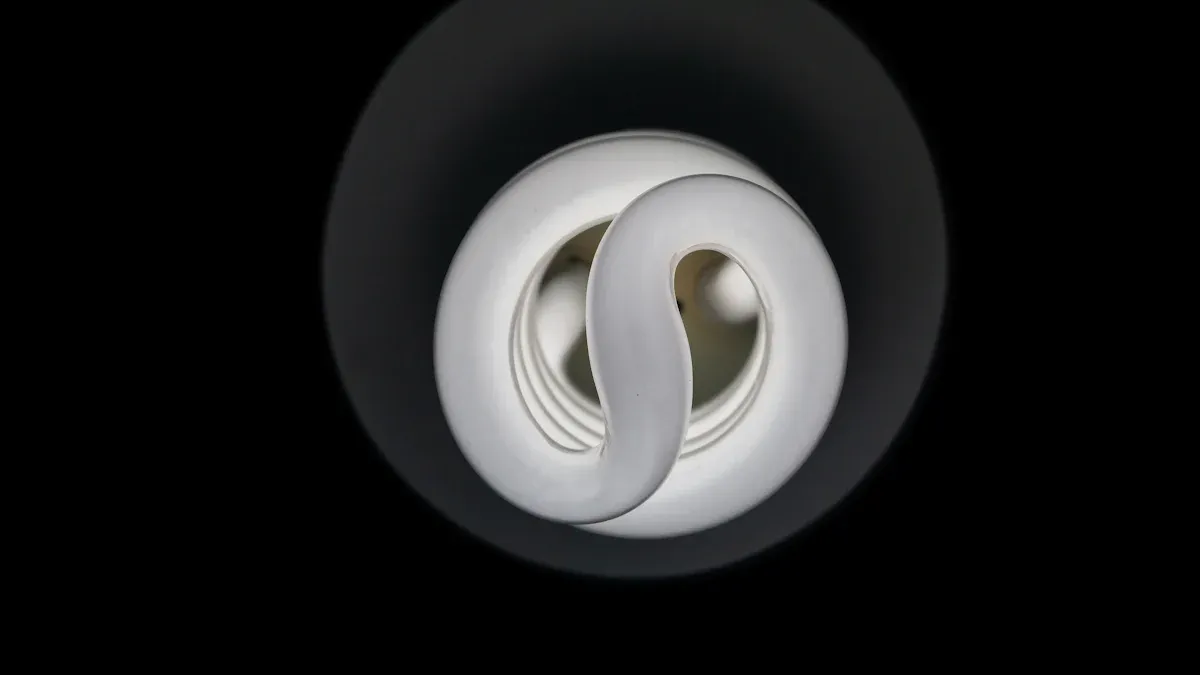
A mercury-vapor lamp is a kind of gas discharge lamp. It uses mercury vapor to make light. These lamps are common because they shine very brightly. The lamp has several important parts that work together.
The quartz arc tube is in the middle. It holds a little mercury and an inert gas called argon.
There are two main electrodes, one at each end. They let electricity flow and make an arc.
A starting electrode helps the lamp turn on fast.
The outer glass bulb goes around the arc tube. It protects the tube and blocks harmful ultraviolet rays.
The base connects the lamp to the fixture and gives it power.
All mercury vapor lamps have these parts. The design lets the lamp handle high heat and stay safe. The outer bulb also keeps the lamp steady and protects your eyes from UV rays.
How Mercury Vapor Lamp Works
You may wonder how this lamp makes light. The process starts when you turn on the lamp. Electricity moves through the lamp and makes an electric arc inside the quartz tube. This arc goes through the mercury vapor and does a few things:
The arc sends current through the mercury vapor.
Electrons in the current hit mercury atoms.
These hits excite the mercury atoms and give them more energy.
When the atoms calm down, they give off ultraviolet light.
The arc also heats the mercury, making more vapor and brighter light.
At first, most of the light is ultraviolet, which you cannot see. A special coating inside the bulb or the glass changes some ultraviolet light into visible light. As the lamp gets warmer, the light gets brighter and turns from blue to white. This makes a strong light that works well for big spaces.
A mercury vapor lamp usually uses about 220 volts. It needs a ballast to control the current and keep the lamp safe.
Lamp Type | Typical Voltage (Vrms) | Typical Current (A) |
|---|---|---|
Mercury Vapor Lamps | 220 | N/A |
Metal Halide Lamps | 300 | N/A |
Types: Low vs. High Pressure
There are two main types of mercury vapor lamps. One is the low-pressure mercury-vapor lamp. The other is the high-pressure mercury vapor lamp. Each type is used for different things.
The low-pressure lamp makes mostly ultraviolet light. You see these in germicidal lamps, water cleaning, and science tools. The light is not very bright, but the UV rays are strong and good for killing germs.
The high-pressure lamp makes a much brighter, bluish-white light. You find these in street lights, factories, and sports arenas. The higher pressure inside the tube makes more visible light. This makes the lamp good for big outdoor or work spaces.
You pick the type you need for your job. If you want strong UV light for cleaning or science, use the low-pressure lamp. If you want bright light for outside or work areas, use the high-pressure lamp. Both types use mercury to work well and last a long time.
Applications
Industrial and Outdoor Lighting
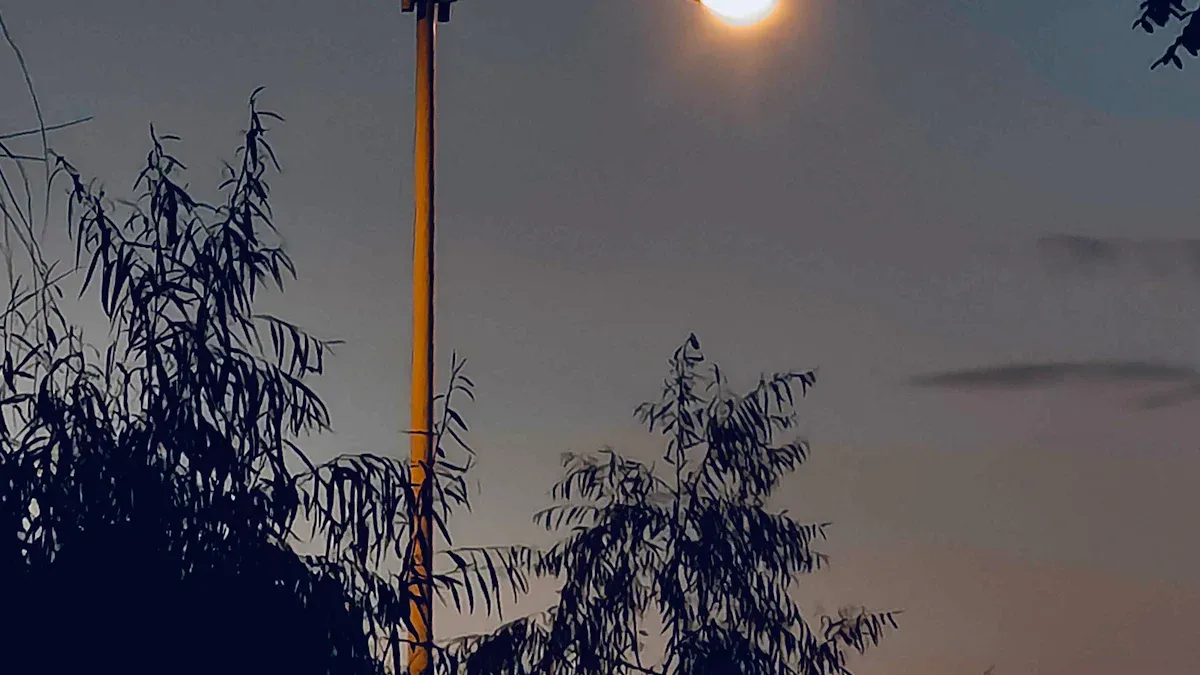
Mercury vapor lamps are used in many big places. They light up streets, parking lots, and warehouses. People pick these lamps for a few reasons:
They use less energy, so you save money.
They last a long time, so you change them less.
They make bright light that fills large spaces.
They help you see colors better than some other lights.
These lamps give steady light for big areas. But fixing them can cost a lot. Changing lamps in parking lots needs special tools. Over three years, you might spend $1,200 for each lamp just to keep them working. Newer lamps, like metal halide, can take the place of mercury vapor bulbs. They save even more energy and money. For example, a 100-watt metal halide lamp can replace a 175-watt mercury vapor bulb. This can cut outdoor lighting costs by about 40%.
Specialized Uses
Mercury lamps do more than just light up rooms. They are used where ultraviolet light is needed. Here are some special uses:
Killing germs in water and air
Cleaning for medicine
Helping skin or mood
Tanning lamps made by certain companies
You also find mercury lamps in:
Cleaning medical tools and water
Water plants to get rid of germs
Air systems to kill tiny bugs
Factories to dry glue and make tiny parts
UV lights for art or safety
Hospitals use ultraviolet light from mercury lamps to clean syringes and dialysis machines. Water plants use ultraviolet light to keep water safe to drink. Air cleaning systems in hospitals use ultraviolet light to kill germs.
Note: Mercury vapor lamps are special for these uses. They turn 40% of electricity into strong ultraviolet light. Lamps made to last keep 80% of their ultraviolet power even when old. High-power lamps give up to two-thirds more ultraviolet light. This makes them great for tough jobs.
Advantage | Description |
|---|---|
Energy Efficiency | Mercury vapor lamps turn 40% of electricity into strong UVC light. |
Long Lamp Life | Long-lasting lamps keep 80% of their UVC light when old. |
High Output | High-power lamps give up to two-thirds more UVC light. |
This is why mercury lamps are still used for many jobs.
Pros and Cons
Efficiency and Lifespan
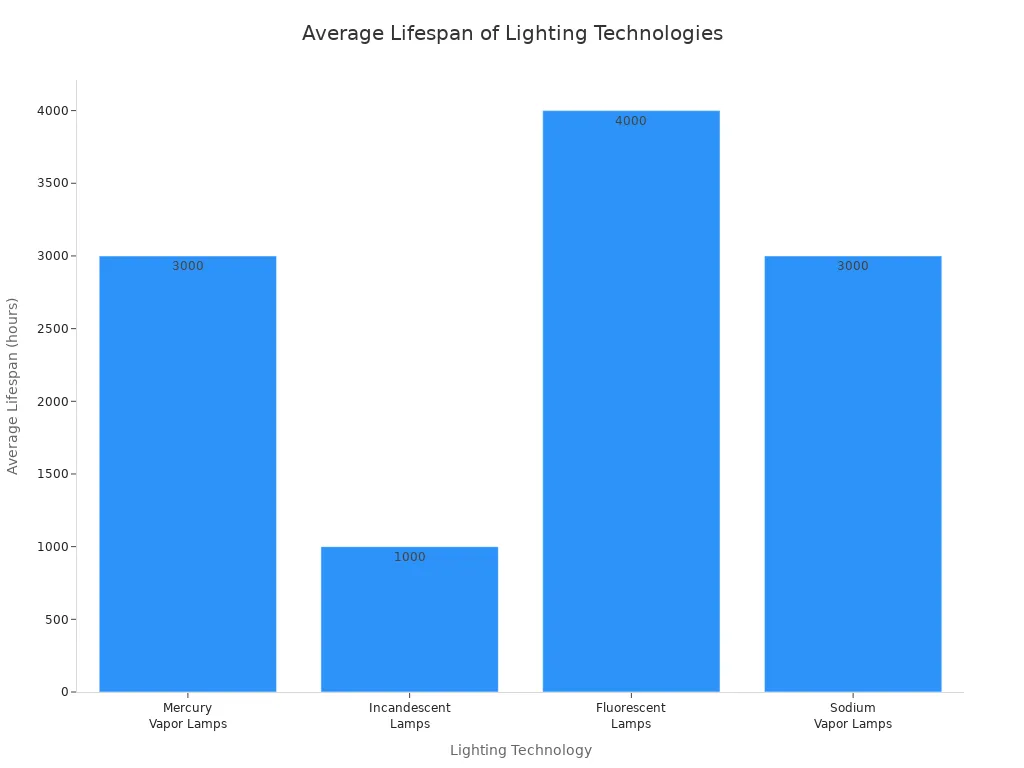
Mercury vapor lamps last longer than many old bulbs. Most work for about 3,000 hours. This is three times longer than incandescent bulbs. But they do not last as long as some fluorescent lamps. You can see the difference in the table below:
Lighting Technology | Average Lifespan (hours) |
|---|---|
Mercury Vapor Lamps | 3000 |
Incandescent Lamps | 1000 |
Fluorescent Lamps | 4000 |
Sodium Vapor Lamps | 3000 |
Mercury vapor lamps use less energy than old bulbs. But fluorescent lights save even more energy. If you want to use less power, try newer lights.
Light Quality and Color Rendering
Mercury vapor lamps make a bluish-white light. Their color rendering index is low, about 20. This means colors can look dull or odd. The light has sharp spikes in its spectrum. Reds and greens may not look right. So, these lamps are not good for places where true colors matter, like art galleries or stores. Fluorescent lamps and other new lights show colors better.
Light Source | Average CRI Range | Average CCT Range |
|---|---|---|
Mercury Vapour Lamps | ~20 | 5600K - 6400K |
Mercury vapor lamps also make ultraviolet light. Ultraviolet is useful for cleaning or science. But it does not help with color quality.
Environmental and Safety Issues
Mercury vapor lamps have mercury inside. Mercury is dangerous for people and nature. If a lamp breaks, mercury vapor comes out. You cannot see or smell it. Breathing it is bad for your health. Mercury can turn into methylmercury. This builds up in fish and animals. It can hurt the environment and food chains.
Tip: Always recycle mercury vapor lamps the right way. Many countries have rules to keep people and nature safe. For example, ACGIH says you should not breathe more than 25 μg/m³ of mercury. OSHA allows up to 100 μg/m³. New laws ban most mercury lamps for regular lighting. Companies must report how they handle these lamps.
Regulation Source | Exposure Limit (μg/m3) | Description |
|---|---|---|
ACGIH | 25 | Threshold limit value to prevent adverse health effects |
NIOSH | 50 | Recommended exposure limit for worker safety |
OSHA | 100 | Legally enforceable permissible exposure limit |
Mercury vapor lamps have liquid mercury, which is harmful.
If broken, they let out mercury vapor. You cannot see it, but it can be breathed in and is very risky.
Mercury can change into methylmercury. This is even more toxic and builds up in food chains.
If you care about the earth, think about these dangers before picking mercury vapor lamps.
Modern Alternatives
LED Retrofitting
You can switch your mercury vapor lamp to LED lights. This upgrade gives you many good things. You save money because LEDs use half the energy. Your power bills go down right away. LEDs last longer, so you do not need to change them often. This means you spend less on repairs and new bulbs. Cities check their streetlights before changing to LEDs. This helps them plan and spread out the lights better. LEDs can dim by themselves with special systems. This saves even more energy. The light from LEDs is better and colors look clearer. This makes it safer for people at night. LEDs also help the planet by making less greenhouse gas. Power companies sometimes give you money back or discounts for using LEDs. This makes it cheaper to upgrade. Businesses that use LEDs show they care about the earth. This can bring in customers who like green choices.
There are some problems you might face when changing to LEDs. The table below shows what can go wrong:
Challenge Type | Description |
|---|---|
Degradation of LED Driver | The LED driver can get worse and stop working well. |
Changes in Chromatic Properties | Over time, the color of the light can change if parts wear out. |
Thermal Management | LEDs need to stay cool to work right, so good heat control is important. |
Other HID Lamps
You can pick other HID lamps instead of mercury vapor lamp. Metal halide and high-pressure sodium lamps use less energy and last longer. The table below shows how these lamps compare:
Lamp Type | Typical Lifespan | Efficiency (lm/W) | Color Rendering |
|---|---|---|---|
Mercury Vapor | 24,000 hours | 35-60 | Whiter light |
High-Pressure Sodium | 24,000 hours | Up to 140 | Poorer |
Metal Halide | 10,000-20,000 | Better than MV | Better |
25,000+ hours | More efficient | Best | |
Fluorescent | 7,000-15,000 | Better for interiors | Good |
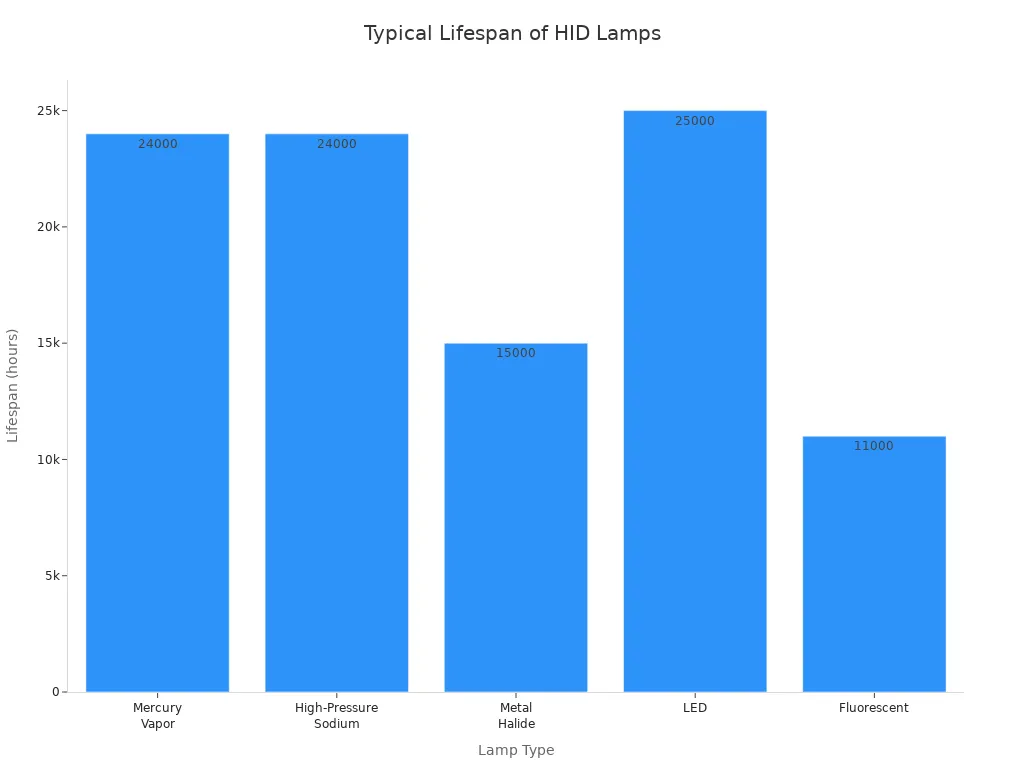
Modern fluorescent lights are good for inside spaces. Fluorescent lights show colors well and use less power than mercury vapor lamp. You see these lights in schools, offices, and homes.
Choosing Between Mercury Vapor Lamp and Alternatives
When you choose a light, think about energy use, price, and the earth. Mercury vapor lamp uses more power and costs more to run. Metal halide and LED lights use less energy and cost less. Mercury vapor lamp has mercury inside, which is bad for nature if not thrown away right. Newer lights like LED and fluorescent are safer and better for the planet. LEDs last longer, so you do not have to change them as much. This saves you money and time. Mercury vapor lamp makes ultraviolet light, but LEDs and fluorescent can do this too for special jobs. If you want better color, pick LED or metal halide. These choices help the earth and make your lights work better.
Tip: Always recycle mercury vapor lamp and fluorescent lights so mercury does not get into the environment.
You now know how mercury-vapor lamps work and where to use them. These lamps are bright and last a long time. But they have toxic mercury inside. If you want safer and more efficient lights, pick LED lights. LEDs use less energy and help the planet.
More people are picking LEDs now. This is because of new rules and lower prices.
It is important to throw away mercury lamps the right way. This keeps the environment safe.
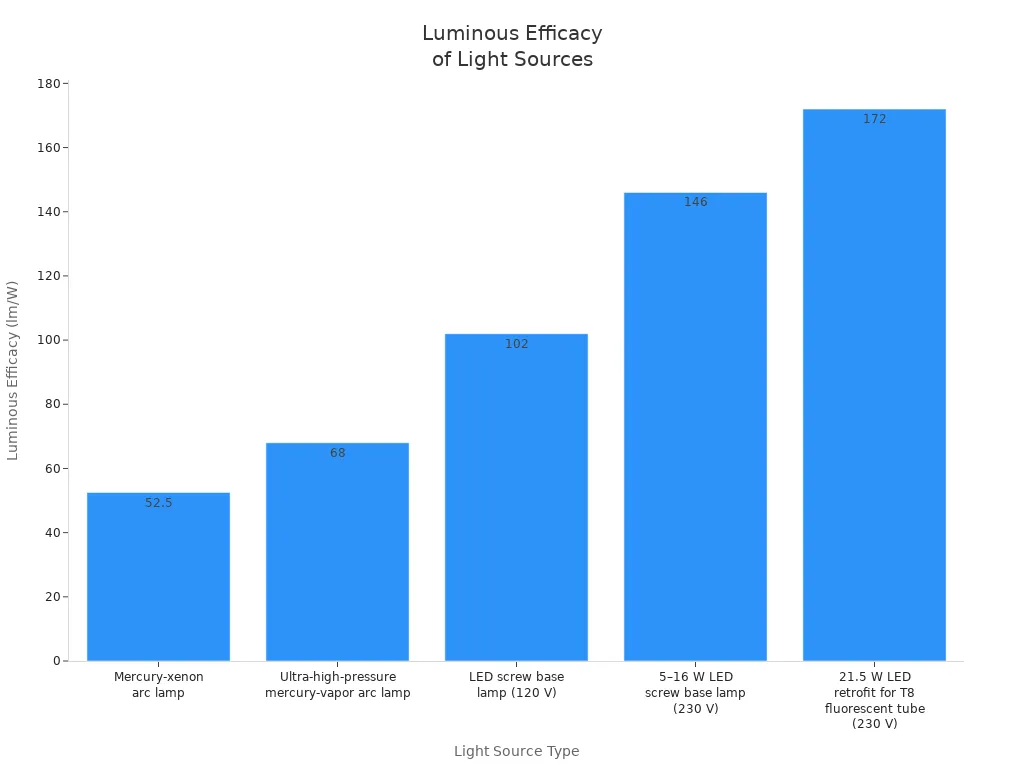
Light Source Type | Luminous Efficacy (lm/W) |
|---|---|
Mercury-xenon arc lamp | 50–55 |
Ultra-high-pressure mercury-vapor | 58–78 |
LED screw base lamp (120 V) | 102 |
5–16 W LED screw base lamp (230 V) | 75–217 |
21.5 W LED retrofit for T8 tube | 172 |
Think about what you need, your safety, and the earth before you choose a light.
FAQ
What is the main advantage of mercury vapor lamps?
You get bright light for large spaces. Mercury vapor lamps last longer than incandescent bulbs. You save money on replacements. These lamps work well outdoors and in factories.
Are mercury vapor lamps safe to use?
You must handle mercury vapor lamps with care. If a lamp breaks, mercury can escape. Always recycle old lamps at approved centers. This keeps you and the environment safe.
Can you replace mercury vapor lamps with LED lights?
Yes, you can switch to LED lights. LEDs use less energy and last longer. You get better color and save money on electricity. Many cities now use LEDs for street lighting.
Where do you find mercury vapor lamps most often?
You see mercury vapor lamps in streetlights, parking lots, and warehouses. Some hospitals and water plants use them for ultraviolet cleaning. These lamps work best in big, open areas.
See Also
Exploring Electric Lamps: Varieties, Innovations, and Uses
All About LED Lamps: Varieties, Advantages, and Uses
Modern LED Indoor Lighting: Efficiency, Varieties, and Uses
Street Light Bulbs Explained: Types, Innovations, and Uses
Indoor LED Lamps: Varieties, Advantages, and Home Applications