Outdoor Street Lights: Types, Benefits, and Installation Best Practices

When you walk outside at night, street lights help you feel safe. They also help you see where you are going. Picking good street lights makes your city safer. It also saves energy and changes how your city looks. LED street lights are the most popular now. Almost half of all street lights use LEDs. Cities want better lights and lower bills. So, they use more LED lights every year. You can find LED lights in places like Home, About Us, and Product pages on city websites. This shows that LED lights are very important for cities today.
The most common outdoor street lights are:
LED lights
High-Intensity Discharge lamps
Fluorescent lights
Plasma lamps
Year | Number of LED Street Lights Installed (millions) |
|---|---|
2010 | 0.5 |
2020 | 5.7 |
Key Takeaways
LED street lights are great for cities. They use less energy. They last a long time. They give off bright light.
Solar-powered street lights are good for the environment. They do not need electricity to work. They help save money on energy.
It is important to take care of street lights. Check them often and clean them. This keeps them safe and bright.
Smart street lights can change how bright they are. They do this by watching traffic. This helps save energy and money.
Picking the right street light depends on where you put it. Think about how bright it is. Think about how much energy it uses. Think about how much it costs to take care of it.
Types of Outdoor Street Lights
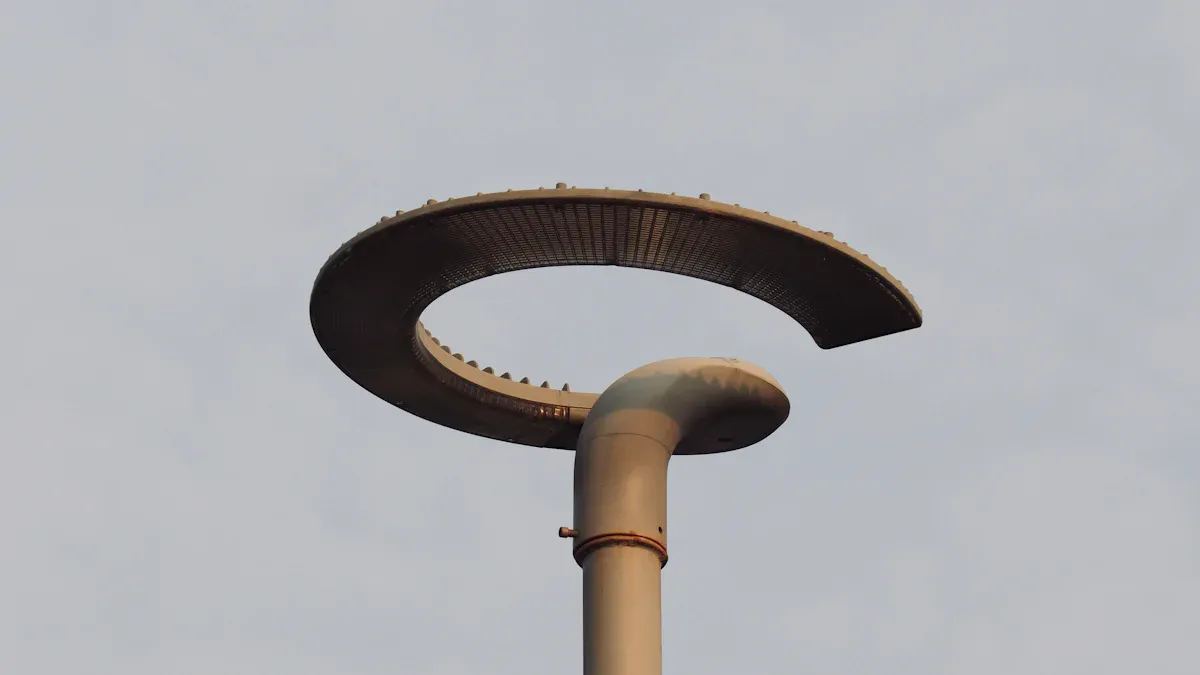
Cities and towns use different outdoor street lights. Each type has good and bad points. When picking street lights, think about saving energy. Also, think about how often you need to fix them. Make sure they light up the streets well. Here are the main types you might see.
LED Street Lights Overview
LED street lights are very popular today. They give bright light, so people see better at night. LED lights use less energy than old lights. They last longer, so you change bulbs less often. Smart systems can dim or brighten them as needed.
Tip: LED street lights can help your city save up to 80% on energy bills compared to older lights.
This table shows how LED street lights compare to older lights:
Feature/Specification | LED Street Lights | Traditional Lighting (HPS/Metal Halide) |
|---|---|---|
Energy Efficiency | 50-80% energy savings | Higher energy consumption |
Lifespan | 50,000 to 100,000 hours | 10,000 to 20,000 hours |
Light Quality | Bright, white light | Orange-yellow light |
Environmental Impact | Lower CO₂ emissions, no hazardous materials | May contain mercury, higher carbon footprint |
Smart Control Features | Yes, remote management and dimming | No |
Initial Cost | Higher upfront cost | Lower upfront cost |
Start-up Time | Instant illumination | Takes time to warm up |
Temperature Reliability | Less affected by extreme temperatures | More affected by extreme temperatures |
LED street lights turn on right away. They work in hot or cold weather. They help cities lower pollution.
LED streetlights use about $30 to $40 of energy each year.
They can last 20 to 25 years.
Cities can save 40 to 80 percent of energy by using LED street lights.
LED lights use much less energy than old bulbs.
Solar LED Street Lights
Solar-powered LED street lights get energy from the sun. You do not need wires to connect them to power. They are good for places far from electricity. You save money and help the planet.
Advantages | Limitations |
|---|---|
Simple installation | Large initial investment |
Energy-saving and eco-friendly | Battery service life |
Safety | Batteries can be stolen |
Durable | Low conversion efficiency |
Low maintenance cost | Weather dependence |
Short payback period |
Solar street lights work best where there is lots of sun.
You can put them in without digging for wires.
You need to change batteries every few years.
Bad weather can make them work less well.
Dirty or shaded solar panels lose power.
Note: Solar-powered LED street lights cost more to install but cost less to keep working. You do not pay for electricity. You only clean panels and change batteries.
Solar street lights break less often than wired ones.
You mostly clean and change batteries for upkeep.
Wired systems need more repairs and help from power companies.
High Pressure Sodium Types
High pressure sodium street lights are used in older systems. You see them in tunnels, parking lots, and streets. They shine with a yellow-orange color. They use less power than old bulbs and last a long time.
Application | Performance Characteristic |
|---|---|
Street and area lighting | Effective illumination of large spaces, enhancing visibility |
Horticultural lighting | Promotes flowering and fruiting, beneficial for plant growth |
Cost-effectiveness | Long lifespan reduces replacement frequency, saving costs |
Light pollution reduction | Yellow hue preferred in residential areas for softer glow |
HPS lights are good for big spaces.
You find them in greenhouses and indoor gardens.
They are used for tunnels, parking lots, and streets.
HPS lamps make colors look dull because their Ra is only 23-25.
LED lights have a Ra of 70-80, so colors look better.
HPS lights save energy and lower costs.
Metal Halide Types
Metal halide street lights give off bright, white light. You see them in places that need strong light, like sports fields and busy roads. They show colors better than HPS lights.
Strengths | Weaknesses |
|---|---|
Higher Color Rendering Index (CRI) | Shorter lifespan than HPS or LED |
Better visibility compared to high-pressure sodium | Long warm-up and restrike times |
Strong vertical illumination | High maintenance frequency and lamp replacement costs |
Useful in areas requiring intense brightness | Poor performance in cold environments |
Not compatible with smart controls |
Metal halide lights need more fixing than LED or HPS lights.
You must change bulbs more often.
They take longer to turn on and do not work well in cold.
These lights do not work with smart controls.
LED lights need almost no fixing and last longer.
HPS lights last longer than metal halide but still need new bulbs.
Metal halide lights cost more to keep working because you change bulbs often.
Induction and Other Types
Induction street lights are not common but have special uses. You find them where changing bulbs is hard, like factories or faraway roads. Induction lights use magnets to make light.
Feature | Description |
|---|---|
Energy Efficiency | Induction lamps use up to 60% less power than older types. |
Light Quality | They give natural, high-quality white light with good color rendering. |
Longevity | Induction lights can last ten years or more. |
Instant Start | They turn on right away, even in cold weather. |
Eco-friendly Benefits | Lower energy use and less waste help the environment. |
Applications | Good for street and roadway lighting, especially in hard-to-reach places. |
Induction lights last a long time and use less energy.
They cost more at first and are harder to buy.
You might use induction lights in places where changing bulbs is tough.
LED lights are better for homes and businesses because they save energy and work everywhere.
Types Comparison
You should compare street lights before picking one. Each type has different costs, lifespans, and energy sources.
Feature | Traditional Street Lights | Solar Street Lights |
|---|---|---|
Energy Source | Grid electricity | 100% solar-powered |
Operating Costs | Ongoing electricity bills | Zero electricity costs |
Lifespan | 5,000 – 8,000 hours | LED: 20-25 years, Battery: 10-12 years, Solar Panel: 30-35 years |
When picking outdoor street lights, think about these things:
Factor | Description |
|---|---|
Location Requirements | Highways need brighter lights; homes need softer lighting. |
Brightness and Color Temp | LED lights range from 3000K to 6000K; cool white for traffic, warm white for homes. |
Pole Height and Spacing | Tall poles fit highways; short poles fit homes. |
Budget and Maintenance Costs | LEDs cost more at first but save money over time. |
Environmental Impact | LEDs help cities meet sustainability goals. |
Pick batteries that last a long time.
Choose the right brightness for your area.
Pick solar panels that work well.
Check for good warranties and support.
Remember: The best street lights for your city depend on your needs, budget, and location. LED and solar-powered LED street lights save energy and last a long time. HPS and metal halide types work well in some places but need more fixing. Induction types are good for special cases.
You can make streets safer and save money by picking the right street lights for your community.
Benefits of Street Lighting
Energy Efficiency
If you pick good led street lights, you save energy. These lights use less power but shine brighter. The table below shows how led street lights are better than old lamps:
Evidence Type | Details |
|---|---|
Lumens per watt | Old HPS lamps make about 100 lumens for each watt. New leds can give 130 lumens or more for each watt. |
Lifespan | Led street lights last from 50,000 to 100,000 hours. Old lamps last only 10,000 to 25,000 hours. |
Maintenance costs | Using led lights can cut repair costs by half. |
Led street lights cost more when you buy them. But you save money later. They use less energy and break less often. This makes them the best choice for saving energy and money.
Safety and Visibility
Street lights help people feel safe at night. They make roads and sidewalks easier to see. This helps everyone worry less about safety. The table below shows how better lights help your town:
Study | Findings |
|---|---|
US Department of Justice | More street lights can lower crime by 20%. |
American Medical Association | Good street lights can cut pedestrian deaths by half and car crashes by 63%. |
2019 NYC Study | Violent crime at night dropped 36% in some areas with extra streetlights. |
Good lights lower crime and accidents. You make your town safer by picking the right street lights.
Longevity and Maintenance
Led street lights last much longer than old ones. You do not need to change them as often. This saves your town time and money. The chart below shows how long each type lasts:
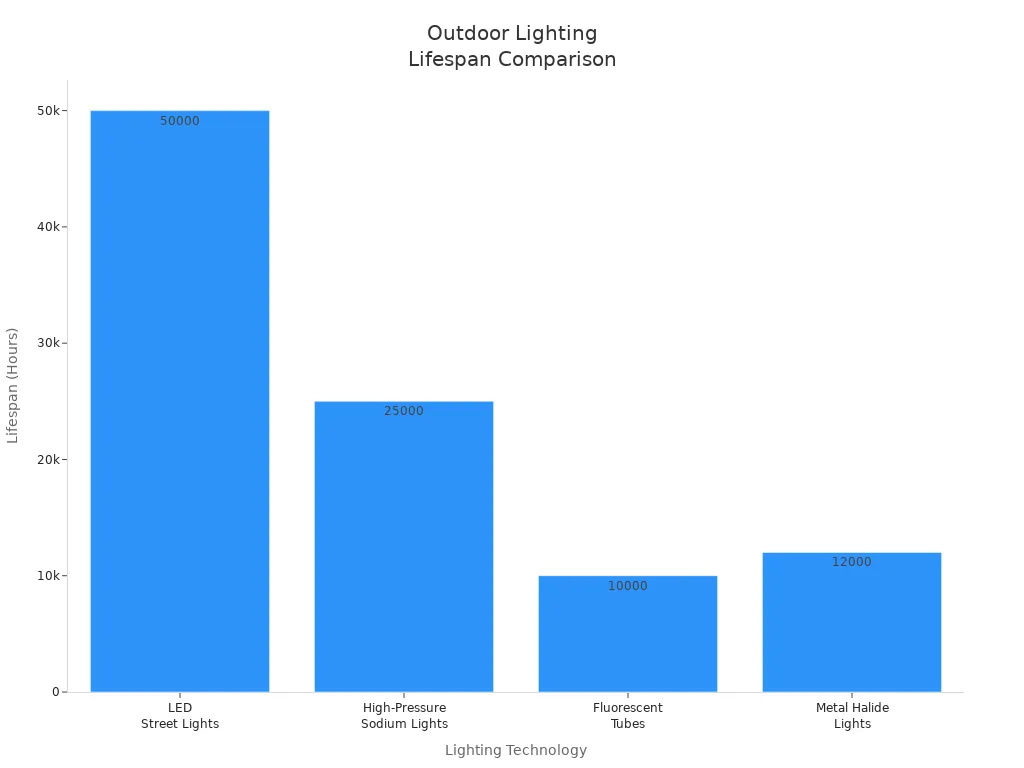
Led street lights can last up to 100,000 hours. Sodium and metal halide lights do not last as long. This means less work and lower costs for your city.
Environmental Impact
Picking energy-saving street lights helps the planet. Led and solar street lights use less energy and make less pollution. They also help us use fewer fossil fuels. But led lights can cause more light pollution, which can bother bugs and animals. Solar street lights use energy from the sun and help your town go green.
Solar street lights use no electricity from the grid.
Led street lights use up to 75% less energy than old lights.
Lights that last longer mean less trash and fewer replacements.
Smart Features
New street lights have smart features. These include sensors, remote controls, and ways to find problems fast. You can change how bright the lights are based on traffic or weather. This saves energy and works better. The table below shows smart features and what they do:
Feature | Benefit |
|---|---|
Smart controllers | Let you check and control lights from far away, making things run better. |
Sensors (motion, daylight) | Lights change brightness when needed, saving energy. |
Central Management Software | Helps collect and study data for smarter choices. |
Real-time fault detection | Finds problems early so repairs cost less. |
Integration with solar power | Uses clean energy and helps the planet. |
Tip: Led street lights with smart features can cut bills by 70% and last 15-20 years.
You help your city be safer, cleaner, and smarter by picking the best street lights with smart technology.
Street Light Installation Best Practices
Putting up outdoor street lights helps people feel safe. It also makes it easier to see at night. You need to follow steps to make sure the lights work well. Good planning helps your lights last longer. Careful installation keeps your system working right.
Site Assessment
Before you install street lights, look at the area first. You want the lights to fit what the place needs. Here are things you should check:
Road type and how cars move
Where to put poles for best light
What kind of lights to use
Goals for saving energy
Even light across the whole area
Ways to stop too much light
How strong the equipment is
How often you need to fix things
Using smart systems to watch the lights
Match the lights to the road type. Highways need bright lights. Neighborhood streets need softer lights. Put poles so light spreads everywhere. You do not want dark spots.
The table below shows how site details change your choices:
Factor | Influence on Lighting Choice |
|---|---|
Pole Height and Spacing | Decides how much area gets light and how even it is. |
Wattage and Lumen Output | Matches light to what you need, keeping things safe and saving energy. |
Weatherproof Ratings | Makes sure lights last in bad weather, so you fix them less. |
Dark Sky Compliance | Helps stop light from going where it should not, good for homes and nature. |
Tip: Pick the right pole height and spacing. This helps keep people safe and saves energy.
Equipment Selection
Choosing the best street lights means looking at many things. You want lights that are bright, safe, and easy to fix. Use this table to help you pick:
Criteria | Description |
|---|---|
Adequate Illuminance | Enough brightness for roads and nearby places. |
Uniform Light Distribution | Even light so there are no shadows. |
Glare Control | Stops too much glare so drivers and walkers are safe. |
Minimized Light Pollution | Light goes where it should, not everywhere. |
Adaptation to Traffic Conditions | Change light for busy or quiet times to save energy. |
Understand the Application | Know what kind of road you have to pick the right lights. |
Choose the Right Type of Light Source | LEDs save energy and last a long time. |
Evaluate Technical Specifications | Make sure lights meet rules and do not leave dark spots. |
Consider the Fixture Design | Pick beam angles that fit the road size. |
Assess Energy Efficiency | Use smart controls to save power. |
Prioritize Durability and Maintenance | Pick strong lights that are easy to fix. |
Ensure Easy Installation and Maintenance | Modular designs help you change parts fast. |
Verify Standards and Certifications | Make sure lights meet safety and green rules. |
Evaluate Cost and Warranty | Think about price now and money saved later. |
Pick lights that are easy to put up and fix. Modular lights let you swap parts fast. Weatherproof lights last longer and break less. Always check for safety marks before you install.
Permitting and Compliance
You must follow city rules before you put up street lights. Big cities have strict rules. Here are steps you need to follow:
Get permits from the city or power company.
Hire licensed workers for permanent jobs.
Give drawings for temporary setups or events.
Register if you want holiday lights.
Here are steps you can use in most cities:
Fill out a request to review your streetlight plan.
Work with city staff to look at your plan and pick poles and lights.
Apply for new or old power service.
Add details about where power will come from.
Get your plan approved by the city.
Pay for inspections.
Set up inspections with city workers.
Build the base and put up poles and lights.
Ask for a final check.
Fix any problems found during the check.
Get a paper that says your lights are accepted.
Note: Always look at local rules before you start. Permits and checks keep your project safe and legal.
Installation Steps
Follow clear steps to put up street lights. This helps you avoid mistakes and keeps things safe.
Check the spot for lighting needs and where poles go.
Get all permits and approvals.
Pick the right lights for your area.
Get the ground ready for poles.
Put up the pole so it is strong.
Wire the light safely.
Test the light to see if it works.
Keep checking the lights to make sure they stay good.
Always follow local rules. Good installation stops accidents and keeps your lights working.
Tip: Test each light after you put it up. This helps you find problems early and fix them fast.
Maintenance Tips
To keep your streetlights working, you need to take care of them. You want your lights to last long and stay bright.
Check lights often to find and fix problems.
Clean the lights so they shine bright.
Fix electrical problems fast to stop accidents.
Check LED drivers and change bad ones.
Look at the housing to make sure it is waterproof and strong.
The table below shows important ways to care for your lights:
Maintenance Practice | Importance |
|---|---|
Regular inspections | Helps you find problems early so you can fix them. |
Cleaning | Gets rid of dirt so lights stay bright and work well. |
Addressing electrical issues | Stops short circuits and keeps things safe. |
Checking LED drivers | Changing bad drivers keeps all lights working right. |
Inspecting housing | Makes sure the case is waterproof and strong against bumps. |
Remember: Good care keeps your street lights safe and working. You help your town by making sure the lights work every night.
Picking outdoor street lights helps your town stay safe and bright. Street lights help people see better at night. They also save energy for your community. When you pick street lights, think about cost and how long they last. Smart features can make lights work better. Solar powered streetlights are good for the environment. Always check local rules before you begin. Talk to experts to get advice. Planning well makes streets safer and your town nicer.
FAQ
What is the best type of street light for cities?
You should choose LED street lights for cities. They save energy, last a long time, and give bright light. Many cities use them because they lower costs and help the environment.
How often do you need to maintain street lights?
You should check street lights every few months. Clean the fixtures and look for damage. Replace parts if needed. Regular checks keep your lights working well and safe.
Can solar street lights work in cloudy weather?
Solar street lights can still work on cloudy days. They store energy from the sun. Less sunlight means less power, but most systems have batteries to keep lights on at night.
Why is street lighting important for safety?
Street lighting helps you see better at night. It lowers the risk of accidents and crime. Good lighting makes roads and sidewalks safer for everyone.
How do smart street lights save energy?
Smart street lights use sensors and timers. They adjust brightness when fewer people are around. This saves energy and lowers bills.
See Also
Exploring LED Outdoor Lighting: Advantages, Varieties, and Setup Tips
Types and Advantages of LED Outdoor Lights with Installation Advice
Understanding LED Area Lighting: Uses, Benefits, and Setup Guidelines
A Comprehensive Overview of LED Area Lights: Types and Uses
Outdoor Signage Lighting: Varieties, Uses, and Effective Practices