Choosing the Perfect LED Light Tube: Brightness, Color Temperature, and Beam Angle Explained

Have you ever entered a room and felt awake or calm? The reason is often the Perfect LED Light Tube you choose. When selecting a LED light tube, focus on three key aspects: brightness, color temperature, and beam angle. Each of these factors influences how you feel in your home, office, or other environments. Brightness can help you feel more alert, while color temperature can significantly affect your mood. Beam angle determines how light fills a room. Consider how these elements transform your space:
Aspect | Impact |
|---|---|
Brightness | Changes how you feel, work, and focus. |
Color Temperature | Affects feelings and fits different places. |
Beam Angle | Alters how light spreads in a room or workspace. |
As you explore About Us, our Product offerings, and the benefits of LED Light, think about your space. Decide how you want your LED tube lights and LED lighting to enhance it. The right LED light bulbs can create the perfect ambiance for your lighting needs.
Key Takeaways
Pick LED lights by looking at lumens, not watts. More lumens make the light brighter. Brighter light helps you focus and feel comfortable in your room.
Match the color temperature to what you do in the room. Warm light (2700K-3000K) is good for relaxing. Cool light (4000K-6500K) helps you work and stay alert.
Choose the right beam angle for what you need. Narrow beams put light on one spot for tasks. Wide beams spread light out for a soft, gentle glow.
Think about what each room needs for lighting. Kitchens and offices need bright, even light. Bedrooms are better with softer, gentle light.
Use dimmers and layers of lighting to set the mood. Change the brightness for different things you do and different times of day.
Why These Factors Matter in LED Lighting
Lighting Quality and Mood
Lighting affects you every day. The brightness, color temperature, and beam angle of led tube lights change how you feel and act. Brightness helps you see better and stay awake. If the light is bright, you feel alert and can focus. If the light is dim, you feel calm and can relax. Color temperature also changes your mood. Warm, amber-colored light makes you feel cozy and peaceful. Cool, blue-colored light gives you more energy and helps you pay attention. Natural light from led lighting is good for your health and helps you think better.
Tip: Use warm color light in bedrooms and living rooms for a calm feeling. Pick cool color light in offices or study spaces to help you get work done.
Lighting can change your sleep. Too much artificial light at night can make it hard to sleep and change your mood. You can use dimmer switches or mix different led light bulbs to make each room feel right.
Space Suitability
Good lighting helps every space work well. You should match the brightness, color temperature, and beam angle to what the room is for. For example, kitchens need wide beams for general light and narrow beams for lighting over counters. Offices need wide beam angles and bright led tube lights to stop shadows and help you work. Retail stores use narrow beams to make products stand out and get your attention.
Here is a quick guide:
Space Type | Recommended Beam Angle | Purpose of Lighting |
|---|---|---|
Living Room | 40°-60° | Overall ambient light and artwork highlighting |
Kitchen | Wide beams + 25°-40° | General lighting and task lighting over work areas |
Bedroom | 60°+ | Soft ambiance with focused reading lights |
Retail Stores | Narrow beams | Accentuation of products to attract consumer attention |
Offices | Wider beams | Uniform lighting to enhance productivity and reduce shadows |
Galleries | Specific beam angles | Highlighting artwork without overwhelming the viewer |
Lighting also changes how you see a room. Brightness can make a small room look bigger. The direction and color of light can make a space feel warmer or cooler. When you use different types of led lighting together, you make the room more interesting and comfortable.
Brightness in LED Tube Lights

What Are Lumens?
When you choose led tube lights, you need to know about lumens. A lumen measures how much visible light a bulb or fixture gives off. The more lumens, the brighter the light appears to your eyes. This is different from watts, which only show how much energy the bulb uses. Led lighting uses less energy but can give you more brightness. You should always check the lumens, not just the watts, to make sure you get the right brightness for your space. Offices need enough brightness for focus without glare. Warehouses need strong, even light for safety. Retail spaces use brightness to make products look better.
Tip: Do not pick led tube lights based only on watts. Always look for the lumens to get the best lighting for your needs.
Lumens by Room Type
Every room needs a different level of brightness. Kitchens and bathrooms need more light for tasks. Bedrooms and living rooms need softer brightness for comfort. Led lighting lets you match the brightness to each space. For example, a 15-watt led tube can give you about 1,800 lumens, which is as bright as a 32-watt fluorescent tube. This means you save energy and still get the right amount of light. If you use led light bulbs in the wrong brightness, you might feel tired or strain your eyes.
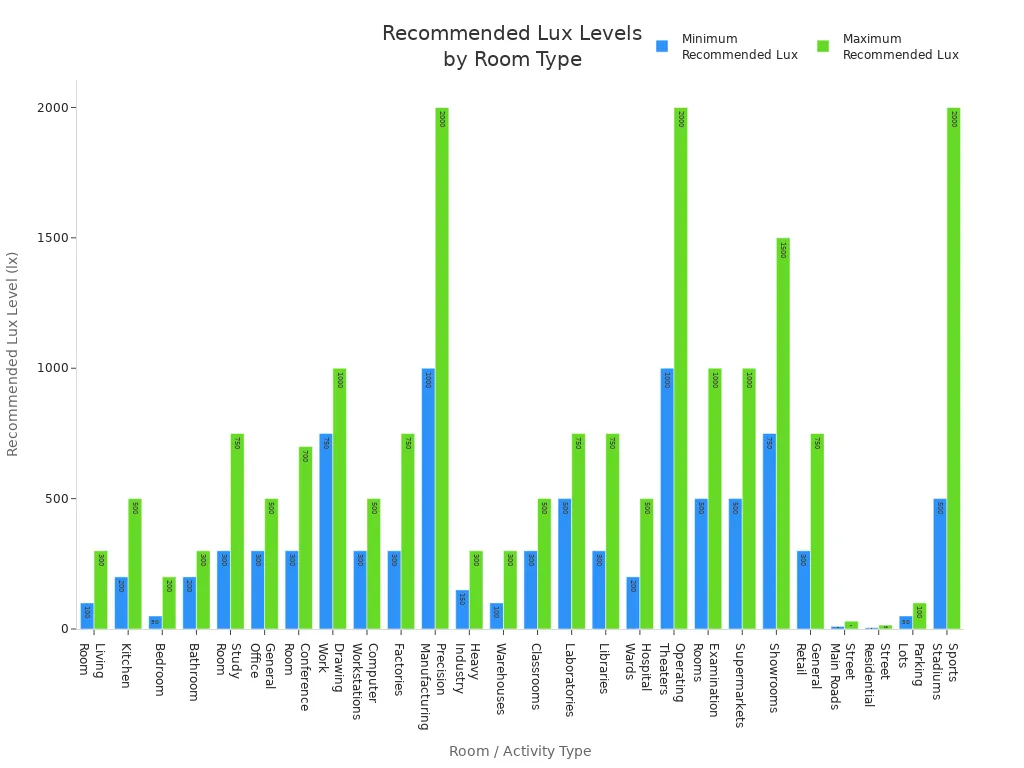
Brightness Reference Table
You can use this table to find the right brightness for each room. The table shows the recommended lux levels, which tell you how much light you need for different activities and spaces. One lux is one lumen per square meter. Use this guide to help you pick led tube lights and led lighting that fit your needs.
Area / Activity | Recommended Lux Level (lx) |
|---|---|
Living Room | 100 – 300 |
Kitchen | 200 – 500 |
Bedroom | 50 – 200 |
Bathroom | 200 – 300 |
Study Room / Reading | 300 – 750 |
General Office Work | 300 – 500 |
Conference Rooms | 300 – 700 |
Warehouses | 100 – 300 |
Supermarkets | 500 – 1000 |
Showrooms | 750 – 1500 |
When you match the brightness to the room, you make your space safer and more comfortable. Led tube lights and led lighting help you get the right light for every part of your home or business.
Color Temperature for Perfect LED Light Tube
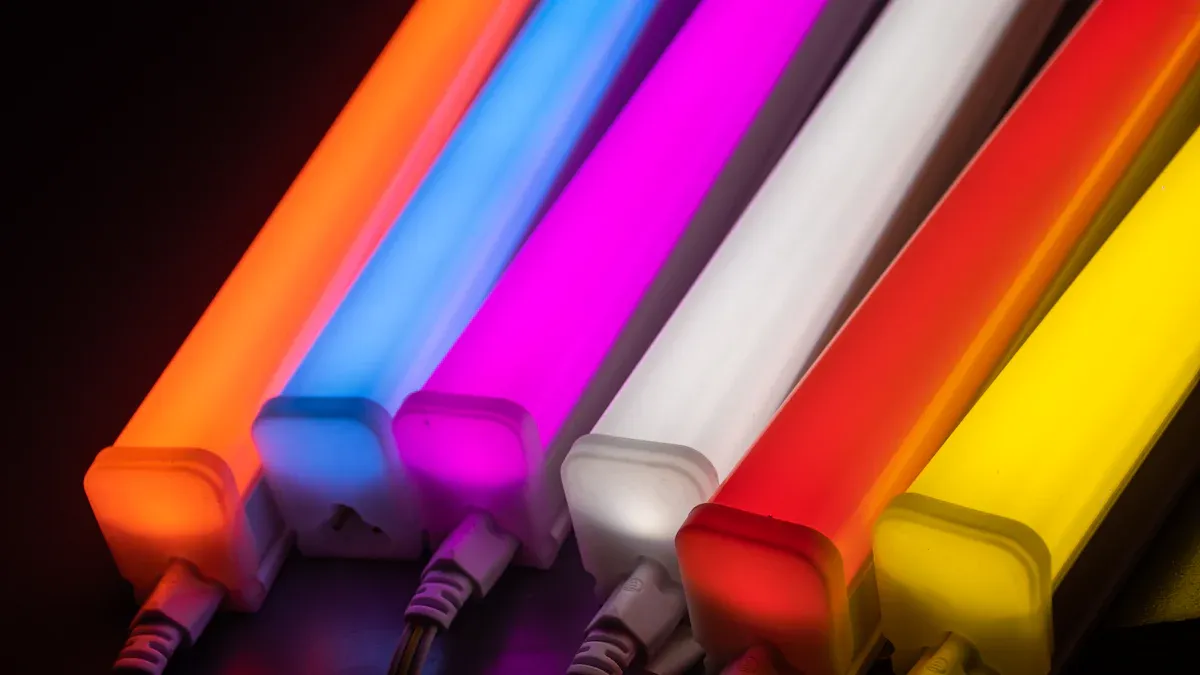
Kelvin Scale Explained
You can use the Kelvin scale to measure led color temperature. This scale shows how the color of light changes from warm to cool. Lower numbers on the Kelvin scale mean the light looks warm and yellow. Higher numbers mean the light looks cool and blue. Most led tube lights have a color temperature between 1800K and 6500K. You can see how the Kelvin scale works in this table:
Temperature Range | Description |
|---|---|
2000K-3000K | Warm, yellowish light |
3500K-4100K | Neutral white light |
5000K-6500K | Cool, bluish light |
8000K-10000K | Daylight |
The Kelvin scale helps you pick the right led lighting for your space. You can use it to make your home or office feel cozy or bright. Understanding led color temperature makes your lighting choices better.
Warm vs Cool Light
You can choose between warm and cool led tube lights. Warm light has a color temperature from 2000K to 3500K. It looks yellow or orange, like a sunset or a candle. Warm white led lighting makes rooms feel calm and relaxing. You can use warm led color temperature in bedrooms, living rooms, and dining rooms. Cool light has a color temperature from 4000K to 6500K. It looks blue or white, like daylight. Cool led lighting helps you focus and stay awake. You can use cool led color temperature in kitchens, offices, and workspaces. Here is a quick guide:
Lighting Type | Color Temperature (Kelvin) | Effects on Ambiance | Ideal Spaces |
|---|---|---|---|
Warm Lighting | 2000K - 3500K | Comfort and relaxation, cozy atmosphere | Bedrooms, living rooms, dining areas |
Cool Lighting | 4000K - 6500K | Enhances focus and productivity, invigorating | Workspaces, kitchens, task-oriented areas |
You can mix warm and cool led color temperature to get the best lighting for your needs.
Best Color Temperatures for Spaces
You should match led color temperature to each room. Warm white led tube lights work well in living rooms and bedrooms. Cool white led tube lights fit kitchens and offices. You can use this table to find the best led color temperature for your space:
Space Type | Recommended Color Temperature (K) |
|---|---|
Living rooms | 2700K to 3000K |
Dining rooms | 2700K to 3000K |
Kitchens | 3500K to 4000K |
Bathrooms | 3500K to 4000K |
Home offices | 4000K to 5000K |
Hallways and entries | 3000K to 3500K |
Kids rooms | 2700K to 3000K |
Garages and utility rooms | 4000K to 5000K |
You can use led lighting with the right color temperature to make your home or business look and feel better. Led color temperature helps you create the perfect mood and function for every space. Led tube lights give you many choices for warm or cool light. You can enjoy the benefits of led light bulbs and led lighting by picking the right led color temperature.
Beam Angle in LED Tube Lights
What Is Beam Angle?
You need to know about beam angle when you choose led tube lights. Beam angle tells you how wide the light spreads from the center to the edges. Led lighting gives you control over this angle. You can use led tube lights to make the light focus on one spot or spread out across a room. The beam angle affects how bright and even the lighting looks. A narrow beam angle makes the light strong in one area. A wide beam angle spreads the light softly and covers more space. Led lighting uses special lenses to control the beam, so you can pick the best one for your needs.
Narrow vs Wide Beam Angles
You can pick narrow or wide beam angles for different effects. Narrow beam angles work well for task lighting. They make the light bright and focused. You can use them to highlight artwork or help you see better when you work. Wide beam angles are good for ambient lighting. They make the room feel open and soft. You can use them in living rooms or bedrooms for a warm, cozy feeling. Here is a table to help you compare:
Beam Angle Type | Advantages | Disadvantages |
|---|---|---|
Narrow | Great for accent lighting, higher brightness, good for focus | Not good for general lighting, can feel harsh |
Wide | Reduces eye strain, makes spaces feel bigger, gives even lighting | May look less bright, less dramatic effect |
Choosing Beam Angle for Applications
You should match the beam angle to the room and the job you want the light to do. For task lighting, use a narrow beam angle of 0-25 degrees. This works well for reading, cooking, or working at a desk. For general office lighting or classrooms, a medium beam angle of 25-40 degrees gives you a balance of focus and coverage. For ambient lighting in large spaces, pick a wide beam angle of 40 degrees or more. This makes the light soft and even. Led lighting lets you choose the right beam for every space. You can use warm white light for bedrooms and cool white light for kitchens or offices. Led tube lights help you create the perfect mood, whether you want a warm, relaxing space or a cool, bright area for work.
Tip: Always match the beam angle to your lighting goal. Use narrow beams for tasks and wide beams for ambient light. This makes your led lighting both useful and comfortable.
Practical Guide to Choosing LED Tube Lights
Step-by-Step Checklist
You can follow this checklist to pick the best led tube lights for your space. This process helps you balance brightness, color, and beam angle for the best results. You will also save on costs and enjoy energy savings.
Decide how you will use the space. Will you rest, talk, cook, read, work, or sell products there?
Look at the surfaces and colors in the room. Warm woods like oak and walnut look best with 2700K to 3000K. White tiles and gray paint look better with 3500K to 4000K.
Pick a base color temperature:
Living rooms and bedrooms: 2700K to 3000K
Kitchens and bathrooms: 3500K to 4000K
Offices and study areas: 4000K
Warehouses and outdoor areas: 5000K or higher
Choose the right CRI (Color Rendering Index). Use CRI 80 for most rooms. Use CRI 90 for places where you need to see true colors, like art studios or kitchens.
Add layers of lighting. Use ambient light for general fill, task light for work areas, and accent light for art or texture. Match the color temperature across all layers.
Add controls. Use dimmers for different scenes, occupancy sensors for savings, and timers for easy schedules.
Test and adjust. Try two different color temperatures if you are not sure. Look at samples during the day and at night. Pick the one that feels right for you.
Know your tube size. Check if you need T5, T8, or T12 led tube lights.
Check the ballast type. Choose Type A, B, or A+B based on your installation needs.
Review wattage and lumens. Make sure the brightness matches your needs.
Check certifications. Make sure your led tube lights meet safety and performance standards.
Review the wiring diagram before installation.
Tip: Always check the packaging for details about brightness, color temperature, CRI, and beam angle. This helps you avoid extra costs and get the right led tube lights for your needs.
Common Mistakes to Avoid
Many people make mistakes when choosing led tube lights. You can avoid these problems and save on led tube light costs by planning ahead.
Not planning for changes in light distribution. You should think about how the light will spread in your space.
Forgetting to check the effects of color temperature. The wrong color can make a room feel cold or too yellow.
Using dimmers that do not work with led tube lights. This can cause flickering and shorten the life of your lighting.
Ignoring utility rebates. You can lower your costs and get energy savings by using rebates.
Overlooking the importance of CRI. Low CRI can make colors look dull and affect your work or mood.
Not matching the tube size or ballast type. This can lead to extra installation costs and delays.
Focusing only on price. Cheap led tube lights may have higher long-term costs due to poor quality and shorter lifetimes.
Note: Always check for compatible dimmers and look for rebates to reduce led tube light costs and energy costs.
Real-Life Selection Examples
You can use led tube lights in many places. Here are some examples to help you choose the right lighting for your needs and control costs.
In a kitchen, you can use led tube lights under cabinets for bright, focused light. Pick 3500K to 4000K for a clean look. Choose a wide beam angle for general lighting and a narrow beam for task areas. This setup gives you good brightness and saves energy.
In an office, install led tube lights with a neutral white color temperature (4000K). Use a wide beam angle for even lighting. This helps reduce shadows and boosts productivity. You will also see energy savings and lower led tube light costs over time.
In a warehouse, use wall-mounted led tube lights for low ceilings. Choose pendant-mounted led tube lights for medium ceilings. Pick 5000K or higher for clear, bright light. This improves safety and lowers energy costs.
In a garage or basement, led tube lights give you quick installation and bright light. You can use them for storage areas or workbenches. This choice reduces costs and gives you longer lifetimes.
In a hallway or living room, led tube lights add adjustable lighting. Pick warm white for a cozy feel. Use dimmers to control brightness and save on energy costs.
In commercial spaces, led tube lights help you lower energy costs and improve visibility. You can use them in showrooms, supermarkets, or offices for better lighting and lower led tube light costs.
Tip: Always match the led tube lights to your space and needs. This helps you get the best lighting, save on costs, and enjoy energy savings.
You can make better choices for your space when you understand brightness, color temperature, and beam angle. These three features shape how led lighting works in every room. You get more brightness with led tubes because they use less power and give strong light. The beam angle in led lighting spreads light evenly and helps reduce glare. Color temperature lets you set the mood, from warm and cozy to bright and clear.
Led lighting with high luminous efficacy gives you bright light and saves energy.
The right beam angle in led lighting improves comfort and makes light distribution better.
Color temperature in led lighting changes how you feel and see each space.
Use the guide and tables to pick led lighting that fits your needs. You can create the perfect light for any room. Start today and see how led lighting transforms your space.
FAQ
What makes led lighting better than traditional bulbs?
You get more energy savings with led lighting. Led bulbs last longer and use less power. You also see less heat from led lighting. This means you can save money and enjoy safer lighting in your home or office.
How do I choose the right led tube light for my room?
You should check the brightness, color temperature, and beam angle. Led lighting gives you many options. Pick the right led tube for your space and needs. You can use tables in this guide to help you decide.
Can I use led lighting with dimmer switches?
You can use led lighting with dimmers, but you must check compatibility. Some led lights need special dimmers. Always read the package or ask the seller. This helps you avoid flickering and get smooth lighting control.
Why does color temperature matter in led lighting?
Color temperature changes how your room feels. Warm led lighting makes spaces cozy. Cool led lighting helps you focus. You can pick the best light for each room. Led lighting lets you set the mood you want.
How do I know if my led tube light is bright enough?
You should look at the lumens, not just the watts. Led lighting uses less power but gives strong light. Check the recommended lux levels for your room. This helps you pick led lighting that fits your needs.
See Also
Selecting Ideal LED Lights for Display Cases: Brightness and Color
Exploring GE LED Bulbs: Key Features and Helpful Tips
Switching to LED: Complete Guide for Replacing Fluorescent Tubes
Understanding LED Bulbs: Advantages and How to Choose
Comparing LED High Bay Lights: UFO, Linear, and Round Styles