Recessed Light Fixtures: LED, Halogen, and Fluorescent Options for Modern Homes

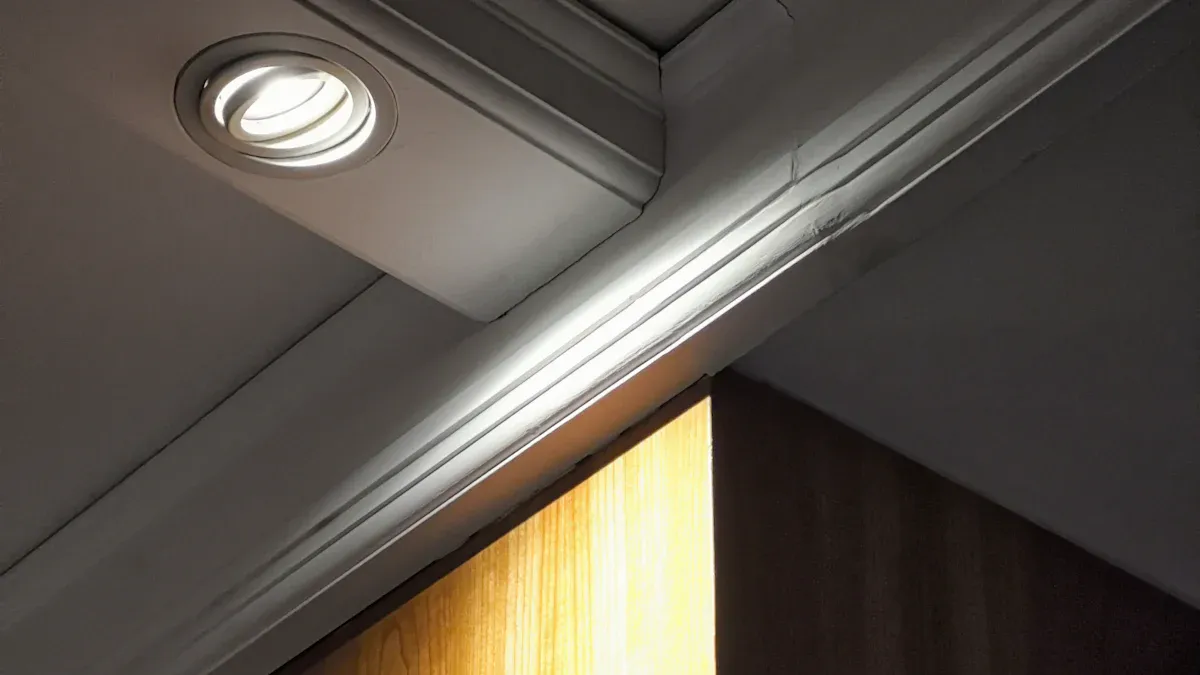
You see recessed light fixtures in many modern homes. They look neat and help save space. Most people pick LED for their recessed lighting fixtures. LED options use less energy and last longer. You can also choose from many styles. Halogen and fluorescent recessed lights give different light quality. But they do not save as much energy as LED. Picking the right lighting helps your home look better and work better. You can learn more about us and our product collections. We have LED light choices for every modern space.
Key Takeaways
LED recessed lights use less energy. They help you save money on your electric bill.
Halogen lights show colors very well. They do not last as long as LEDs. They use more energy than LEDs.
Fluorescent recessed lights are a good choice in the middle. They save some energy. You must recycle them carefully because they have mercury.
Think about what kind of light your room needs. Pick a style that fits your space. This helps you get the look you want.
Make a good plan before you install your lights. This helps you stop problems like glare or uneven light.
Recessed Light Fixtures Comparison
Energy Efficiency and Lifespan
Energy efficiency and how long lights last are important. You want lights that save power and work for years. Here is a simple chart to compare recessed light fixtures:
Fixture Type | Average Lifespan | Energy Consumption |
|---|---|---|
LED | 25,000+ hours | Most efficient |
Halogen | 2,000-4,000 hours | More efficient than incandescent |
Fluorescent | 10,000 hours | 75% less than incandescent |
LED recessed lights use the least energy. They can last more than 25,000 hours. Some LED lights last up to 50,000 hours. Halogen lights do not last as long. They use more energy than LED. Fluorescent lights last about 10,000 hours. They use less energy than halogen, but not as little as LED. LED bulbs last much longer, so you change them less often.
Cost Overview
LED recessed lights cost more at first. The price is higher than halogen or fluorescent lights. But you save money over time. LEDs use less power, so your bills go down. You do not need to replace them as much. This lowers your costs. Halogen lights cost less to buy. They use more energy and need more replacements. Fluorescent lights are in the middle for price and energy use.
Tip: LED recessed lighting saves you the most money over time.
Light Quality and Color Options
Light quality changes how your room looks. You want colors to look bright and real. The color rendering index (CRI) shows how well a light shows colors. Halogen bulbs have a CRI close to 100. They make colors look very real. Fluorescent bulbs can have a CRI of 90 or higher. This is also good. LED lights usually have a CRI of 80 or more. Some LEDs do not show reds as well as halogen. Many new LEDs have better color quality.
Light Type | CRI Value | Color Temperature (K) | Description |
|---|---|---|---|
LED | 80+ | 3000K to 5000K | Good color rendering, many options |
Halogen | ~100 | 2800K | Excellent color, warm light |
Fluorescent | 90+ | 3000K to 5000K | Good color, daylight and warm options |
LED recessed lights give you many color choices. You can pick warm white or cool daylight. Halogen lights give a warm and cozy glow. Fluorescent lights can be warm or cool. Sometimes they look less natural.
Dimmability and Controls
Dimmable lights let you change the brightness. LED recessed lights work with dimmers and smart home systems. You can use a switch, app, or voice to control them. Smart assistants like Alexa or Google Assistant can help. Halogen lights also dim well. They do not work with smart controls as easily. Fluorescent lights do not always dim well. They may flicker or buzz when dimmed.
Feature | Description |
|---|---|
Dimmability | LEDs and halogen lights dim smoothly; LEDs work with smart dimmers and apps |
Smart Home Compatibility | LEDs connect to Wi-Fi and voice assistants for easy control |
LED recessed lights give you the best control and flexibility.
Environmental Impact
Think about the environment when you pick recessed lights. LED lights do not have dangerous materials. They use less energy, which helps the planet. You can recycle LEDs, but you do not have to. Halogen bulbs do not have harmful chemicals. You can throw them in the trash. Fluorescent bulbs have mercury. You must recycle them the right way to avoid pollution.
Type of Bulb | Recycling Requirement | Hazardous Material Content |
|---|---|---|
Halogen | Trash disposal allowed | No hazardous materials |
Fluorescent | Must be recycled | Contains mercury |
LED | Recommended to recycle | No hazardous waste |
Note: LED recessed lighting helps you protect the planet and avoid dangerous waste.
LED Recessed Lighting for Modern Homes
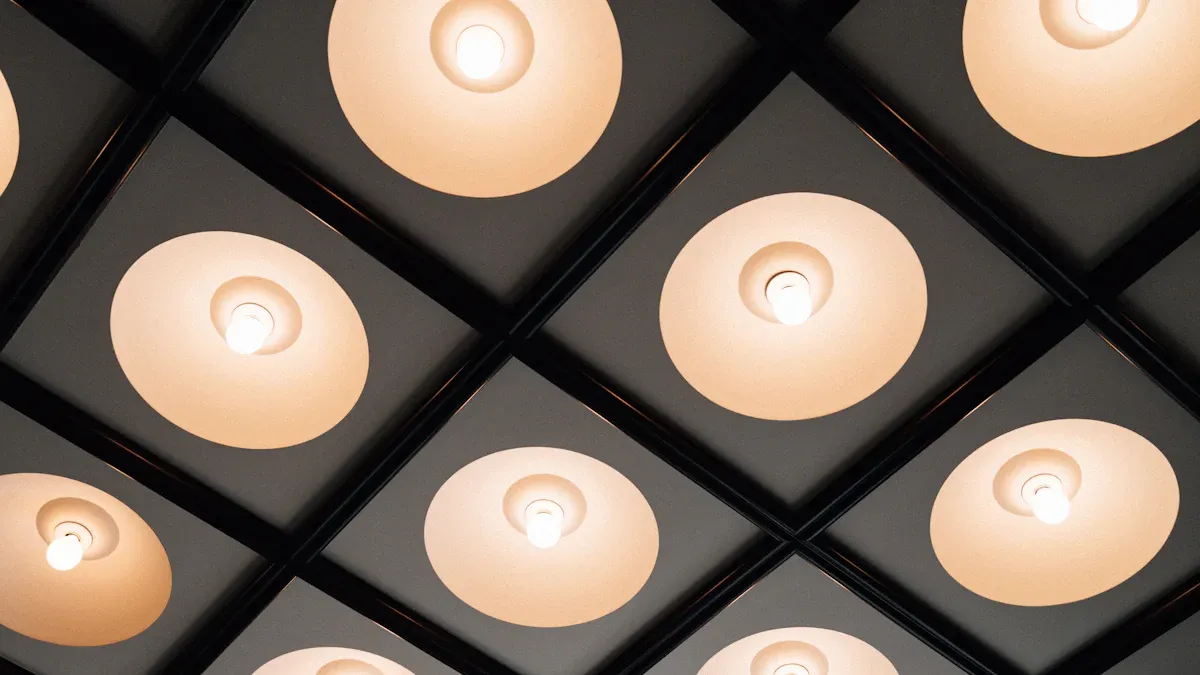
LED Features and Benefits
LED recessed lighting is popular in modern homes. These lights have many good points. Here are some of the main benefits:
Energy efficiency: LED bulbs use much less power than old bulbs. This means you pay less for electricity.
Longevity: LED recessed lights can last 25,000 hours or more. You do not need to change them often.
Dimming capability: You can make the lights brighter or dimmer with a switch. This lets you set the mood in your room.
Design flexibility: LED recessed lights come in many shapes and sizes. You can find one that matches your style.
Environmental impact: These lights do not have harmful stuff like mercury. They are safer for your home and the earth.
Instant illumination: LED recessed lights turn on right away. You do not have to wait for them to get bright.
Minimal UV emission: These lights give off very little UV light. This helps keep your art and furniture safe.
You can see how LED bulbs are different from older bulbs in this table:
Feature | LED Bulbs | Incandescent Bulbs |
|---|---|---|
Energy Consumption | Uses up to 80% less | Higher consumption |
Lifespan | Up to 25,000 hours | About 1,000 hours |
LED Drawbacks
LED recessed lighting has some downsides you should know:
Expensive: LED recessed lights cost more at first.
Installation: You need to cut holes in your ceiling for these lights.
Safety: You must be careful and follow safety rules when putting them in.
Hard to move: Once you put in recessed lights, you cannot move them easily.
Tip: Make a plan for your lights before you start putting in LED recessed lights.
Best Uses for LEDs
You can use LED recessed lights in many rooms at home. They work well in kitchens, living rooms, hallways, and bathrooms. You can also use them to shine light on art or special things. LED recessed lights are great for modern homes because they save energy, look nice, and fit many spaces.
Halogen Recessed Light Fixtures
Halogen Features
You may notice that halogen recessed lighting gives off a bright and clear light. These bulbs use a special gas that helps them shine with a warm glow. Halogen bulbs turn on instantly. You do not have to wait for them to reach full brightness. You can use halogen recessed lighting fixtures to highlight art or special areas in your home. The light from halogen bulbs shows colors very well. This makes your rooms look more natural and inviting.
Pros and Cons of Halogen
You should know the good and bad sides of halogen recessed lights. Here is a simple table to help you compare:
Pros | Cons |
|---|---|
Excellent color rendering | Shorter lifespan |
Instant full brightness | Higher energy use |
Dimmable with most switches | Gets hot during use |
Affordable upfront cost | Needs more replacements |
Halogen recessed lighting works well with dimmers. You can change the brightness to fit your mood. These bulbs cost less to buy than led or fluorescent options. However, halogen bulbs do not last as long. You will need to replace them more often. They also use more energy, which can raise your electric bill. Halogen bulbs get hot, so you must be careful when touching them.
Tip: Always let halogen bulbs cool before you change them.
When to Use Halogen
You might choose halogen recessed light fixtures if you want great color quality. These lights work well in places where you need bright and focused lighting. You can use them in kitchens, art studios, or over workspaces. Halogen recessed lighting fixtures are a good choice if you want lights that dim smoothly. If you do not mind changing bulbs more often, halogen can be a smart pick. You may also use halogen if you want a lower upfront cost compared to led or fluorescent recessed lighting.
Fluorescent Recessed Lighting
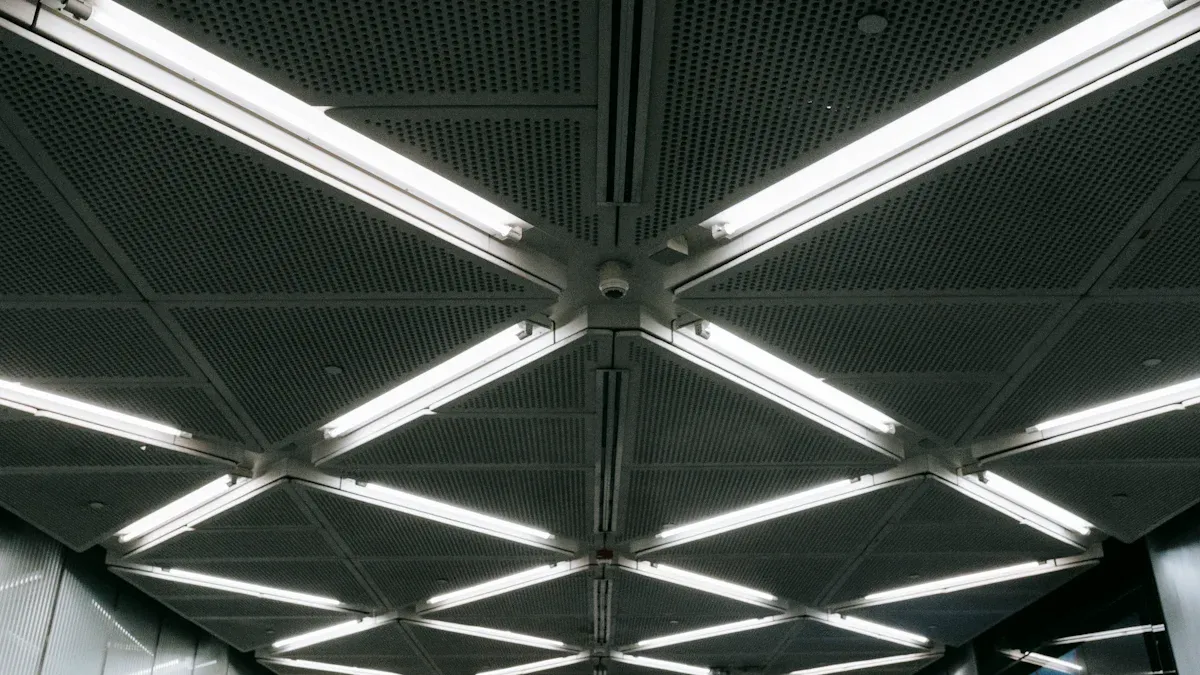
Fluorescent Features
You can find fluorescent recessed lighting in offices and kitchens. Some modern homes use these fixtures too. These lights use tubes or compact bulbs. They make light with a special gas and coating. The light is bright and spreads across big spaces. Fluorescent recessed lights turn on fast. They do not get very hot. You can pick warm white or cool daylight colors. Many fluorescent bulbs last longer than halogen bulbs. But they do not last as long as led options.
Feature | Description |
|---|---|
Light Output | Bright, even coverage |
Color Temperature | Warm to cool options |
Heat Emission | Low |
Lifespan | About 10,000 hours |
Fluorescent Pros and Cons
Fluorescent recessed lighting has good and bad sides. You save energy compared to older bulbs. You spend less money on replacements than halogen. The light works well for tasks and general lighting. But fluorescent bulbs have mercury inside. You must recycle them safely. Sometimes, these bulbs flicker or buzz with dimmers. The color may not look as good as halogen or led recessed lights.
Note: Always recycle fluorescent bulbs to help the environment.
Pros:
Saves energy
Makes less heat
Covers big rooms well
Costs less at first
Cons:
Has mercury inside
May flicker or buzz with dimmers
Does not last as long as led
Colors may look less real
Suitable Applications
You can use fluorescent recessed lights where you need bright light. These fixtures work well in kitchens, laundry rooms, offices, and garages. Fluorescent recessed lighting is good for large spaces that need steady light all day. If you want to save money and do not need perfect color, fluorescent recessed lighting can be a smart pick. Do not use them in rooms where you want cozy or fancy lighting.
Tip: Use fluorescent recessed lighting in workspaces and utility rooms where you need strong light.
Choosing the Right Recessed Lighting
Assessing Your Needs
You should start by thinking about what you want from your lighting. Every room has different needs. Some spaces need bright light for tasks, while others need soft light for relaxing. The size and shape of your room matter too. A large room or a high ceiling may need more fixtures. You also want to think about how colors look in your space. The color rendering index (CRI), lumens, and color temperature all affect how your room feels.
Here is a table to help you decide what to look for:
Factor | Description |
|---|---|
Lighting Needs | Decide if you want bright task lighting or soft ambient lighting. |
Size and Type of Space | Check your room size and ceiling height to choose the right number and type of fixtures. |
Quality of Light | Look at CRI, lumens, and color temperature to get the best effect. |
Tip: Write down your goals for each room before you shop for recessed lighting.
Comparing Energy Efficiency and Cost
You want to save money and energy. LED lights work best for this. They use about 80-90% less energy than halogen bulbs. This means you pay less for electricity. If you switch to energy-efficient lighting, you can save around $225 each year on your energy bills. Even though LED recessed lights cost more at first, they last much longer and use less power. You might pay $15 to $50 for an LED bulb, but only $5 to $15 for a halogen bulb. Over time, the savings from lower energy use and fewer replacements make LEDs the smart choice.
Note: Paying more for LED bulbs now helps you save more money later.
Considering Light Quality
Light quality changes how your home looks and feels. You want to pick fixtures that match your needs and style. Some lights spread light widely, while others focus it in one spot. The material and size of the fixture also matter. High-end fixtures often use die-cast aluminum and give you more control over brightness and color.
Here is a table to compare different levels of recessed lighting:
Market Level | Description |
|---|---|
Low-End | Slim or disc lights save energy but spread light too widely. |
Mid-Range | 2” to 4” fixtures give 400-1000 lumens and direct light better. |
High-End | Die-cast aluminum fixtures give over 1000 lumens, dim well, and have many trim options. |
Choose a fixture that gives you the right amount of light and fits your room’s style.
Installation and Maintenance
You need to think about safety and ease when installing recessed lights. Always turn off the power at the circuit breaker before you start. Use insulated wires and follow your local building codes. If you are not sure, talk to a licensed electrician. Make sure your fixtures and bulbs work together.
Here are the main steps for installing recessed lighting:
Cut holes in the ceiling as the manufacturer suggests.
Insert the housing and secure it with screws or brackets.
Wire the fixtures using the diagrams provided.
Attach the trim as the instructions say.
After you finish, test each light. Look for flickering or dim lights. These problems may mean you need to check your wiring or bulbs. If you cannot fix the problem, call a professional.
Safety first: Always double-check your work and ask for help if you need it.
Installation and Maintenance Tips
General Installation Advice
When you install recessed lighting, you want your home to look bright and welcoming. Many people face common problems during installation. Here are some challenges you might see:
The trims do not match your ceiling. This can make the room look uneven and cause glare.
The lights feel too bright. Harsh lighting can hurt your eyes.
The room feels flat. If you space the lights the same way everywhere, the room may look boring.
Poor fixture spacing can cause shadows or too much glare.
Ceiling height matters. Tall ceilings need different lighting than low ones.
Using only recessed lights can make a room feel cold. Try mixing in other types of lighting.
The wrong trim or bulb can lead to glare or weak light.
Forgetting dimmers or zones limits how you control the lights.
Tip: Plan your layout before you start. Think about where you want light and how bright you want each area.
Maintaining LED Fixtures
LED fixtures need little care. Dust the trim and lens with a soft cloth. If you see dim or flickering lights, check the bulb and the wiring. Replace the bulb if needed. Most LED recessed lighting lasts for years, so you will not need to change bulbs often.
Note: Always turn off the power before you clean or replace any part of your LED fixtures.
Maintaining Halogen Fixtures
Halogen bulbs get hot, so let them cool before you touch them. Clean the trim and lens with a dry cloth. If a bulb burns out, replace it with the same type. Check for dust, as it can make the fixture overheat. Halogen recessed lights may need more frequent bulb changes than LED.
Maintaining Fluorescent Fixtures
Fluorescent fixtures need safe handling. These bulbs contain mercury. When a bulb burns out, recycle it at a special center. Clean the trim and lens with a damp cloth. If you hear buzzing or see flickering, the bulb or ballast may need replacing.
Tip: Handle fluorescent bulbs with care and never throw them in the trash.
Customization Options for Recessed Lighting
Housing and Construction Types
You can choose from different housing types when you plan your recessed lighting. Each type works best for a certain situation.
New construction housing fits well in homes that are still being built. You can install these before the ceiling goes up. This makes it easy to add recessed lighting to any ceiling type.
Remodel housing is perfect for homes that already have ceilings. You do not need to reach the ceiling joists. This type helps you add new fixtures during a renovation.
Tip: Pick the housing type that matches your project stage for the best results.
Trim Styles and Sizes
Trim styles change how your recessed lighting looks and works. The trim sits on the outside of the fixture and affects glare and light spread. You can see the differences in this table:
Trim Style | Effect on Appearance | Effect on Performance |
|---|---|---|
White Baffle Trim | Blends into the ceiling when off | Reduces glare at the ceiling surface |
Black Baffle Trim | Gives a modern look | Reduces glare from the fixture opening |
Specular Clear Alzac Trim | Looks upscale and modern | Controls glare and spreads light evenly |
Sloped Ceiling Trim | Matches angled ceilings | Aims light in the right direction |
Different trim styles help you control glare and direct light where you need it. Black trims cut down on glare at the ceiling. Specular clear trims give you the best performance and help spread light.
Note: The right trim style can make your room feel more comfortable and stylish.
Color Temperature Choices
Color temperature changes the mood of your space. You can pick from several common options for recessed lighting in modern homes:
3000K gives a warm, cozy glow. Many people use this in living rooms and bedrooms.
4000K offers a bright, neutral white. This works well in kitchens and work areas.
6000K creates a cool, daylight effect. You might use this in garages or places where you need strong, clear light.
The color temperature you choose depends on how you want your room to feel and what you do there.
Tip: Think about the mood you want before you pick a color temperature.
You can pick from many recessed light fixtures for your home. LED recessed lighting saves the most energy and lasts longest. Halogen and fluorescent recessed lighting fixtures use more energy. They still give good light quality. Think about what you need and what style you like. Look at different lighting options to find your favorite.
Tip: Test different recessed lighting in each room to find what you like best.
FAQ
What is the best recessed lighting for saving energy?
You should choose LED recessed lights. These use the least energy and last the longest. You will save money on your electric bill. LEDs also need fewer replacements.
Can you dim all types of recessed lights?
Most LED and halogen recessed lights dim well. Fluorescent lights do not always dim smoothly. You may see flickering or buzzing with fluorescent bulbs.
Are LED recessed lights safe for every room?
Yes, you can use LED recessed lights in kitchens, bathrooms, and living rooms. They do not get hot. You can install them in almost any space.
How do you recycle old recessed light bulbs?
You must recycle fluorescent bulbs at a special center because they contain mercury. You can throw halogen bulbs in the trash. You should recycle LED bulbs if possible.
See Also
Exploring Recessed Lighting: Styles, Setup, And Design Tips
Commercial Track Lighting: Energy-Saving LED Choices Available
Types And Advantages Of LED Replacement Lighting Solutions
Enhancing Recessed Ceilings: Effective Lighting For Architecture