Safe and Responsible Light Bulb Disposal: Comparing Methods for Different Bulb Types

You need to know that light bulb disposal changes depending on the types of light bulbs you use. If you throw bulbs away the wrong way, you risk hefty fines and harm to the environment. Some bulbs, like CFLs and fluorescent tubes, contain mercury, which can poison people and animals. You could also face injuries from broken glass. Make sure you follow proper disposal steps and check local rules. If you use a Led Light or look for recycling options, you help prevent toxic metals from leaking into the ground. Always learn more about safe disposal with About Us or Product guides.
Key Takeaways
Throw away incandescent bulbs in your normal trash. Wrap broken bulbs in paper so you do not get cut.
Recycle CFLs and fluorescent tubes because they have mercury. Use your local recycling program to keep the earth safe.
Be careful with halogen bulbs. Do not put them in regular recycling. Look for special recycling places near you.
LED bulbs are a kind of e-waste. Take them to special drop-off spots or use mail-in kits so you do not pollute.
Always look up your local rules for throwing away light bulbs. Following these rules keeps your community and the planet safe.
Incandescent Light Bulb Disposal
Safe Trash Disposal
You can throw away incandescent bulbs in your normal trash. These bulbs do not have dangerous materials inside. You do not need to use special recycling programs for them. If a bulb breaks, wrap the pieces in paper or put them in a strong container. This keeps you and garbage workers safe from cuts.
Tip: Always look for sharp edges before you touch broken bulbs.
Put used or broken incandescent bulbs in a sealed bag or wrap them in newspaper.
Throw the wrapped bulb in your household trash bin.
Wash your hands after you touch broken glass.
Local Rules
Most states let you put incandescent bulbs in your regular trash. But rules for other bulbs, like CFLs, are not always the same. The table below shows how some states handle light bulb disposal for bulbs with mercury. Incandescent bulbs do not have these strict rules, but you should still check your local rules.
State | Legislation Name | Key Regulation Description |
|---|---|---|
Washington | Mercury-Containing Lights Product Stewardship Law | Mandates recycling of CFLs and prohibits disposal in trash. |
Vermont | Mercury-Added Products Law | Prohibits disposal of CFLs in regular trash. |
Rhode Island | Mercury Reduction and Education Act | Requires recycling of CFLs. |
New York | Mercury-Added Consumer Products Law | CFLs must be recycled, not thrown away. |
New Hampshire | Universal Waste Rule | CFLs must be disposed of properly. |
Maine | Mercury-Added Product Laws | Prohibits regular trash disposal of CFLs. |
Massachusetts | Mercury Management Act | Mandates recycling of CFLs. |
Minnesota | Mercury Reduction Act | CFLs must be recycled. |
Florida | Universal Waste Rule | CFLs cannot be disposed of in regular trash. |
California | Universal Waste Rule | CFLs must be recycled. |
Connecticut | Mercury-Added Products Law | Requires recycling of CFLs. |
Environmental Impact
Incandescent bulbs do not have mercury or other harmful stuff. Wrapping broken bulbs before you throw them away helps stop injuries. These bulbs are not a big danger to the environment, but you should not litter. Proper light bulb disposal keeps your home and neighborhood safe. If you want to help the environment more, you can use energy-efficient bulbs next time.
Halogen Light Bulb Disposal
Trash Disposal Steps
You can throw halogen bulbs away in your regular trash. These bulbs do not contain mercury, but you should not mix them with your glass or metal recycling. Halogen bulbs have special gases and materials that need careful handling. If you want to recycle, look for a specialized recycling center or an e-waste facility. Some local governments offer drop-off programs for bulbs. You can also check with stores or manufacturers to see if they have take-back programs.
Steps for safe disposal:
Do not put halogen bulbs in your regular recycling bin.
Place the bulb in a sturdy bag or wrap it in newspaper to prevent injury.
Check your local waste management website for recycling options.
Ask retailers or manufacturers about take-back programs.
Tip: Always wash your hands after handling used or broken bulbs.
Recycling Challenges
Recycling halogen bulbs is not easy. Many centers do not accept them because of the high cost and special equipment needed. Rules for recycling change from place to place, so you need to check what is allowed in your area. Most people do not know how to recycle these bulbs, which makes the process harder.
Recycling costs are high.
Many places do not have the right equipment.
Rules are different in each state or city.
People need more education about recycling bulbs.
Safety Tips
You should handle halogen bulbs with care. The glass can break easily and cause cuts. Always wrap broken bulbs before you throw them away. Keep bulbs away from children and pets. If a bulb breaks, pick up the pieces with gloves and place them in a sealed container.
Safety Tip | Why It Matters |
|---|---|
Wrap bulbs before disposal | Prevents cuts and injuries |
Use gloves for cleanup | Protects your hands |
Keep bulbs out of reach | Keeps kids and pets safe |
Light bulb disposal for halogen bulbs helps keep your home safe and protects the environment. You make a difference when you follow these steps.
CFL Light Bulb Recycling
Mercury Hazards
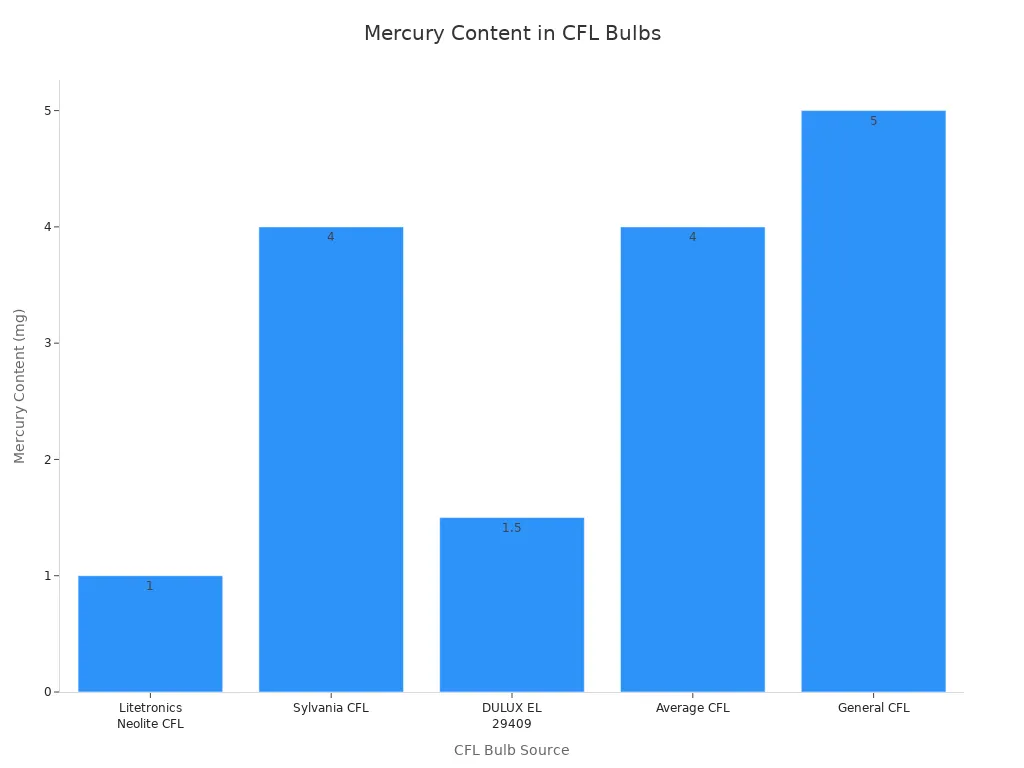
You should recycle light bulbs like CFLs because they have mercury. Mercury is a dangerous metal that can hurt people, animals, and nature. A normal CFL light bulb has about 4 milligrams of mercury inside. Some CFLs have only 1 milligram, but others can have up to 5 milligrams. This is less than old thermometers, but it is still risky if you do not throw them away the right way.
Most CFLs have 4 mg of mercury.
Some CFLs have between 1.4 mg and 2.5 mg.
The mercury stays inside the glass tube.
Source | Mercury Content (mg) |
|---|---|
Litetronics Neolite CFL | 1 |
Sylvania CFL | 4 |
DULUX EL 29409 | 1.5 |
Average CFL | 4 |
Range of CFLs | 1.4 to 2.5 |
General CFL | 5 |
If a CFL breaks, only a little mercury gets into the air. The health risk is very small, but you should still be careful. Mercury can hurt your nervous system and make water and dirt dirty. When you recycle light bulbs, you help keep the earth safe.
Safe Handling
You need to be careful when you touch CFL bulbs. If a bulb breaks, follow these steps to clean up safely:
Open a window for fresh air. If you cannot, leave the room for 15 minutes.
Pick up glass and powder with stiff paper or cardboard.
Put all the pieces in a sealed plastic bag.
Wipe the spot with wet paper towels or wipes.
Put all cleaning stuff in another sealed plastic bag.
Do not use a vacuum or broom on hard floors.
Tip: Always wash your hands after you clean up broken toxic light bulbs.
Never put broken CFLs in your normal trash. You should use special waste collection or recycling programs. This keeps mercury out of landfills and keeps you safe.
Recycling Programs
Light bulb recycling programs help you recycle light bulbs like CFLs. Many cities and states have green ways to recycle. You can drop off bulbs at stores like Home Depot, Lowe’s, IKEA, and Batteries Plus Bulbs. Some states, like Maine, let you recycle light bulbs for free at many stores.
Program Component | Description |
|---|---|
Statewide Program | Maine started its first statewide CFL recycling program in 2007. |
Free Collection at Retail Stores | You can drop off CFLs for free at 204 stores, with help from the Maine Public Utility Commission. |
Municipal Waste Transfer Facilities | 58% of these places take CFLs for recycling, but some charge $1.00 per bulb. |
Retail Take-Back Programs | Big stores like Home Depot let you recycle CFLs for free at some locations. |
You can also call your local waste agency or check websites like Earth911 to find recycling centers. Many towns have special events to collect hazardous waste, so you can recycle light bulbs safely. These programs help you protect the earth and use green solutions.
Legal Requirements
You must follow the law for light bulb disposal and recycling. In the United States, the EPA Universal Waste Rule covers lamps with mercury, like CFLs. This rule makes it easier to recycle light bulbs and handle dangerous materials. Some states have even stricter rules and do not let you put CFLs in regular trash. You should check your local laws before you throw away CFLs.
Country/Region | Regulatory Framework | Key Provisions | Enforcement |
|---|---|---|---|
United States | EPA Universal Waste Rule | Makes it easier to handle hazardous wastes, including mercury-containing lamps. | Federal and state enforcement |
European Union | WEEE Directive | Needs proper collection, recycling, and disposal of electronic products. | Enforced by EU member states |
United Kingdom | WEEE Regulations | Producers must collect and recycle e-waste, including CFLs. | UK Environment Agency |
You cannot put CFL bulbs in regular trash because they are dangerous. Federal law banned CFL bulbs in 2022, and they will be gone by 2025. You need to recycle light bulbs at approved places or take them to stores that accept them. Following these rules helps you avoid fines and keeps your community safe.
Note: Always ask your local government for the newest light bulb recycling rules.
Light bulb recycling keeps you, your family, and the planet safe. When you recycle light bulbs, you choose green solutions and help stop pollution from dangerous materials.
LED Light Bulb Recycling
E-Waste Considerations
Some people think LED bulbs are safe for the trash. But LED bulbs are a type of e-waste. They have materials that can hurt the earth if not handled right. Inside, there are metals like gold, silver, copper, aluminum, tin, and gallium. LED bulbs also have printed circuit boards and some harmful chemicals. These things make LED bulbs different from regular bulbs. That is why you need special ways to throw them away.
LED bulbs have metals that are worth money.
They have dangerous stuff that can pollute dirt and water.
Harmful chemicals make the risk even higher.
If you use green ways to get rid of old LED bulbs, you help the planet. This also keeps bad materials out of landfills.
Recycling Best Practices
You can recycle LED bulbs safely by following easy steps. Wrap used or broken bulbs in newspaper. Put them in a cardboard box. This stops you from getting cut and keeps bad stuff from spreading. Collect all your old bulbs, like compact fluorescent lamps and tubes, for recycling. This helps save metals and keeps toxins away from nature.
Wrap bulbs before recycling so you do not get hurt.
Put bulbs in a strong box when you move them.
Gather all types of bulbs for recycling, not just LEDs.
Follow EPA rules for broken bulbs to stay safe.
Doing these things helps the earth and makes recycling simple for everyone.
Local Drop-Offs
There are many places near you to recycle LED bulbs. Waste companies like WM have drop-off spots for bulbs, batteries, and electronics. Some services let you set up a home pickup for your used bulbs. You can also use mail-in kits to send bulbs for recycling.
Recycling Option | Description |
|---|---|
Local Drop-Off Locations | WM and other centers take bulbs and e-waste |
At-Home Collection | You can ask for a pickup for some items |
Mail-Order Kits | Send bulbs for recycling with special kits |
Public Works Yards | Some cities take bulbs at public works yards |
Eco-center | Drop off dangerous waste at local places |
Electronic Recyclers | Companies like eCycle Solutions recycle e-waste |
When you use these choices, you help the earth. Look for programs near you and pick what works best. Green recycling keeps your town safe and clean.
Fluorescent Tube Disposal
Mercury Risks
Fluorescent tubes have mercury inside them. Mercury is a toxic metal. It can hurt your brain and nerves. It can also poison animals in nature. If you throw away tubes the wrong way, mercury can get into the air. This is dangerous for people and animals. Broken tubes have sharp glass that can cut your skin.
Standard fluorescent tubes have 3.5 to 12 milligrams of mercury.
Some older tubes have even more, about 8 to 14 milligrams.
Low-mercury tubes have about 3.5 to 4 milligrams.
If you break a tube, mercury vapor spreads fast. Never put fluorescent tubes in your regular trash. Safe light bulb disposal keeps you and the earth safe from harmful materials.
Tip: Always be gentle with fluorescent tubes. If one breaks, open a window and leave the room for a few minutes.
Certified Recycling
Almost every part of a fluorescent tube can be recycled. Certified recycling centers use special machines to trap mercury vapor. They reuse the mercury in new lamps. About 99% of an old tube can become a new lamp. This keeps dangerous chemicals out of landfills.
Here are some certified recycling options in North America:
Recycling Option | Description |
|---|---|
Hazardous Waste Programs | Get rid of used fluorescent bulbs through hazardous waste programs for homes and businesses. |
Mail-back Recycling Kits | Pre-paid kits let you send lamps and bulbs for recycling. Shipping and recycling costs are included. |
Hazardous waste programs take tubes from homes and businesses.
Mail-back kits help you send tubes safely for recycling.
Recycling centers stop mercury from getting into soil and water.
You help the earth when you recycle. You also follow local rules for light bulb disposal.
Safe Transport
You need to move fluorescent tubes carefully so they do not break. Follow these steps to keep tubes safe on the way to recycling:
Use shipping boxes from the maker or PVC pipes with caps for long tubes.
Turn off the power before you take out tubes. Wear gloves and check for cracks.
Line a strong box with bubble wrap or towels. Put tubes in one at a time, with padding between layers.
Keep tubes flat in the box. Do not put heavy things on top. Do not leave tubes in a hot car.
Wedge the box in your car so it does not slide. Use a blanket or seatbelt to hold it in place.
If you have more than twelve tubes, call the recycling center before you go.
Note: Careful transport stops injuries and keeps mercury from leaking. Always use safe ways to recycle fluorescent tubes.
You keep yourself and others safe when you follow these steps. You also make recycling easier for workers at the center.
Light Bulb Disposal Comparison Table
Methods by Bulb Type
It is important to know how to throw away each bulb. Each type of light bulb needs its own way to be thrown out. Some bulbs have dangerous materials inside, but others do not. Picking the right way to get rid of bulbs keeps you and nature safe.
Here is a table that shows how to throw away different bulbs:
Bulb Type | Disposal Method |
|---|---|
Incandescent | Safe to throw in regular trash; some areas may ask for recycling. |
Halogen | Similar to incandescent; check local rules for recycling options. |
CFL | Handle with care due to mercury; recycle at special facilities or stores. |
Fluorescent Tube | Needs special disposal because of high mercury; never use regular trash. |
LED | Do not throw in trash; recycle at drop-off locations or use mail-back programs. |
Incandescent and halogen bulbs do not have dangerous stuff inside. You can usually put them in your normal trash can. CFLs and fluorescent tubes have mercury, so you must take them to a special place. LED bulbs have metals like lead and arsenic. You should recycle these bulbs so the metals do not end up in the ground.
Here is another table that shows how throwing away bulbs can hurt the earth:
Light Bulb Type | Environmental Impact | Disposal Method |
|---|---|---|
Incandescent | Not hazardous, but adds to landfill waste | Regular waste |
CFLs | Mercury can pollute if not recycled | Recycling centers |
LEDs | Contains hazardous metals, energy-efficient | Limited recycling options |
If you do not recycle CFLs, they can make water and dirt dirty.
LEDs have lead and arsenic, which can hurt nature.
Incandescent bulbs are not toxic, but they fill up landfills.
Tip: Always look at your local rules before throwing away any bulb. You help your town and the earth when you recycle bulbs the right way.
When you pick the right way to throw away bulbs, you help keep your home and the planet safe.
Properly Dispose of Light Bulbs: Common Mistakes
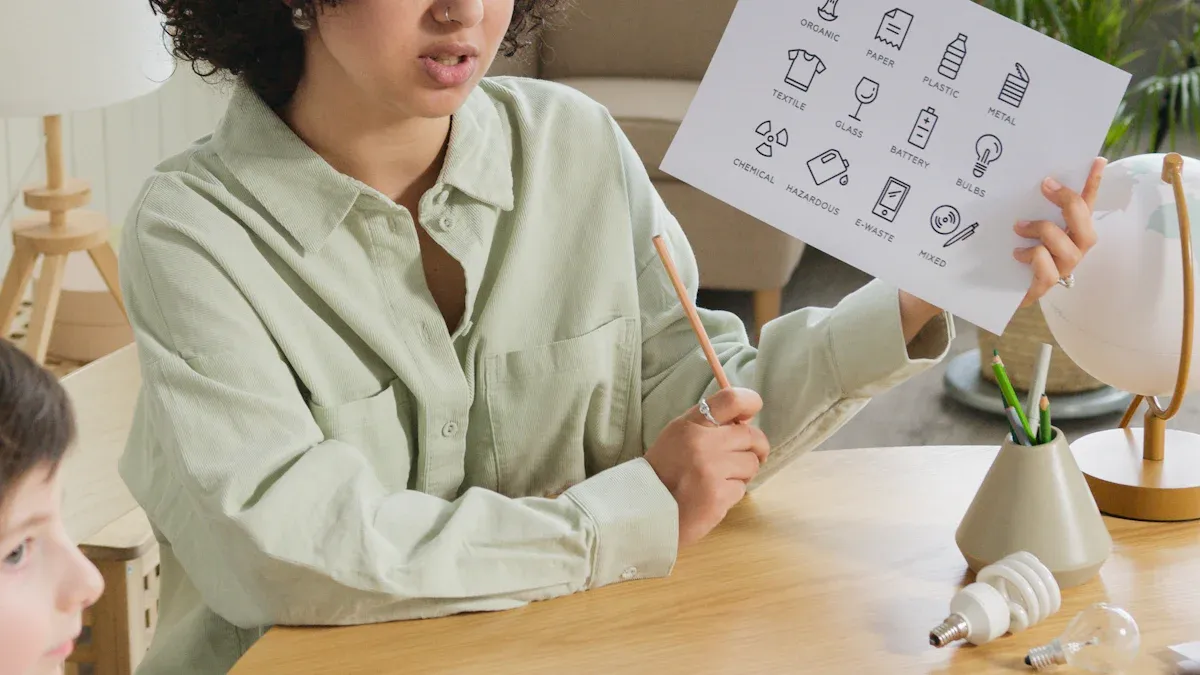
Frequent Errors
Some people think it is fine to throw old light bulbs in the trash. But this can cause big problems for people and nature. Many bulbs have dangerous things inside, like mercury. If you put these bulbs in the regular garbage, you can break the law in some states. You might forget to check if a bulb has mercury or other harmful stuff. If you do not wrap broken bulbs, you can get cut by sharp glass. Some people do not follow local rules and put bulbs in landfills. This is not allowed in many places. When you throw away fluorescent bulbs the wrong way, mercury can leak into the air and dirt. Remember, recycling is not just for electronics. It is also important for light bulbs.
If you do not follow the right steps, you can get hurt or harm the earth. Mercury from broken bulbs is very dangerous.
Common Mistake | Why It Is a Problem |
|---|---|
Throwing mercury bulbs in trash | Mercury can pollute air and water |
Not wrapping broken bulbs | Causes cuts and injuries |
Ignoring local regulations | May break the law |
Skipping recycling | Wastes valuable materials |
Prevention Tips
You can stop these mistakes by learning what to do. Always check your local rules before you throw away any bulb. Recycling centers and store take-back programs help you get rid of bulbs safely. You should sort bulbs by type and never mix them with normal trash. Use recycling places in your town for CFLs, LEDs, and fluorescent tubes. Wrap broken bulbs in newspaper or put them in a strong box. Ask your local waste team if you need help. Learn about the different kinds of bulbs and how to throw them away. Try to pick green choices when you can.
Check your local rules for how to throw away bulbs.
Use recycling programs near you.
Listen to your waste management team’s advice.
Take old bulbs to store take-back programs.
Learn about each bulb type and how to dispose of it.
Recycling keeps dangerous things out of landfills and helps keep you safe. When you throw away bulbs the right way, you protect your home and your town.
Finding Light Bulb Recycling Resources
Local Centers
You can find places near you to recycle old bulbs. Many cities have special centers for bulbs, batteries, and e-waste. Lighting Resources has a website to help you search for recycling spots. Just type in your zip code to see a list of centers. BulbCycle also tells you where to recycle fluorescent and LED bulbs. You can find out which centers and big stores take these bulbs. Some stores, like Home Depot and Lowe’s, have bins for recycling bulbs. Using these services helps the earth.
Tip: Call the center first to check if they take your bulb type.
Keep bulbs in a safe box before you go to recycle them. This stops glass from breaking and mercury from leaking. Recycling centers use special tools to handle bulbs safely. You keep your family and the planet safe when you recycle instead of using the trash.
Community Programs
Many towns and counties have programs for recycling bulbs. These programs make it easy to get rid of bulbs in a green way. Some places have special days to drop off bulbs, batteries, and electronics. Check your city’s website or call your waste department to learn about recycling days.
Here are some programs that help with recycling:
Program Name | Description | Link |
|---|---|---|
Household Hazardous Waste Collection | Local places may take small amounts of waste lamps for recycling. | |
Los Angeles County HHW/E-Waste Collection | Lets you get rid of hazardous items, like some light bulbs, for free. |
You can join these programs to keep your home safe and help your town. Recycling events often take many types of bulbs, so you do not have to sort them. You help a lot when you use community recycling programs.
Recycling is simple when you know where to go. You help keep your town clean and protect nature for everyone.
You can keep yourself and nature safe by picking the right way to throw away each light bulb. Recycling bulbs helps cut down on trash in landfills. It also helps the earth by saving resources. When you recycle, glass and copper get used again. This makes new bulbs cost less and keeps water clean. Many states have rules for throwing away dangerous bulbs. Always check your local laws before you recycle. Use green programs and follow the latest rules for every kind of light bulb.
State | Regulation Description |
|---|---|
California | Mercury bulbs cannot go in landfills |
Maine | CFLs and other dangerous bulbs must be recycled |
Massachusetts | You can get fined for throwing bulbs away wrong |
Vermont | Hazardous bulbs cannot go in landfills |
At least 10 states say you must recycle dangerous bulbs.
Local recycling programs help make things safer and easier for everyone.
FAQ
What should you do if a light bulb breaks at home?
Open a window. Pick up pieces with stiff paper. Place everything in a sealed bag. Do not use a vacuum. Wash your hands after cleaning. Take the bag to a recycling center if the bulb contains mercury.
Can you recycle LED bulbs with regular glass or metal?
No, you cannot recycle LED bulbs with regular glass or metal. LED bulbs have electronic parts. You should take them to an e-waste recycling center or use a mail-back kit.
Where can you find local recycling programs for bulbs?
Check your city’s website. Call your local waste management office. Visit stores like Home Depot or Lowe’s. Use online tools such as Earth911 to find drop-off locations near you.
Why is it important to wrap broken bulbs before disposal?
Wrapping broken bulbs protects you from cuts. It also keeps garbage workers safe. Sharp glass can cause injuries. Always use newspaper or a strong container for broken bulbs.
Do all light bulbs need special disposal?
No, not all bulbs need special disposal. Incandescent and halogen bulbs can go in regular trash. CFLs, fluorescent tubes, and LEDs need recycling because they contain hazardous materials.
See Also
Everything You Need to Know About Street Light Bulbs
Understanding LED Light Bulbs: Advantages and Choosing Tips
Comparing LED Streetlights and Traditional Lights: Cost and Efficiency