Street Light Bulbs Explained: Types, Technologies, and Uses

You can find many kinds of street light bulbs in cities and neighborhoods. Some bulbs use old technology. Others use new ways that save energy. The most common type in the world is LED lights. LED lights have 79.7% of the market. People like LED lighting because it saves energy. It also lasts longer than other bulbs. Other types, like high-pressure sodium lamps, are not used as much. These older lights are being replaced. In the last ten years, more places use LED and solar street lights. These changes help save money. They also help protect the environment. If you pick a Product for your Home or want to know more About Us, learning these facts helps you make good choices.
LED lights: 79.7% market share
Other types: high-pressure sodium, metal halide, and mercury vapor
Key Takeaways
LED street lights are used the most. They make up almost 80% of all street lights. LEDs save energy. They last longer than other bulbs.
Solar street lights use sunlight for power. This makes them good for the environment. They also save money over time.
High-pressure sodium bulbs work well. But they do not show colors clearly. Many cities are switching to LEDs instead.
Picking the right light distribution type is very important. It helps keep roads and paths safe and easy to see.
Smart lighting systems can be controlled from far away. They let cities watch and fix problems fast. These systems help save energy too.
Main Types of Street Light Bulbs
You see many kinds of Street Light Bulbs in cities and towns. Each type works in its own way. Each bulb gives off a different kind of light. The table below helps you compare their main features. You can see what is good and bad about each bulb.
Type of Bulb | Characteristics | Advantages | Disadvantages |
|---|---|---|---|
LED | High efficacy, great color, instant brightness, long life | Saves energy, lasts long, no mercury, can dim, better control | Costs more at first, does not like very hot weather |
High-Pressure Sodium (HPS) | Amber glow, very efficient, lasts long | Good light for the power used, works in fog and rain | Only one color, colors look strange, flickers when old |
Low-Pressure Sodium (LPS) | Yellow light, saves most energy | Very good at saving energy | Bad color quality, not common now |
Metal Halide | Bright white light, better color, okay efficiency | Colors look clear in public places | Does not last as long, slow to get bright |
Mercury Vapor | Blue-green light, okay efficiency, bad color quality | Used a lot in the late 1900s | Has dangerous mercury, slow to warm up, being replaced |
Incandescent/Halogen | Warm white light, great color, not efficient | Colors look good | Very short life, uses lots of power |
Solar Street Lights | Uses solar panels and batteries, works off-grid | No need for wires, easy to install, works during outages, smart control | Costs more at first, needs good spot and design |
LED Street Light Bulbs
LED Street Light Bulbs are in most new cities. These bulbs use solid-state technology to make light. LEDs turn on fast and have many color choices. The light from LEDs does not flicker. LEDs last a long time, often over 50,000 hours. You save energy and money with LEDs. LEDs do not have mercury, so they help the environment. Many roads, parks, and smart city projects use LEDs. Some LED systems let people control and check lights from far away. These things make LEDs the best choice for new street lights.
Tip: LED Street Light Bulbs work well for main roads and homes. They are good for places that need bright and steady light.
High Pressure Sodium (HPS) Bulbs
High Pressure Sodium bulbs are in older street lights. These bulbs make a warm yellow or amber light. HPS bulbs work well in fog and rain because their light goes through mist. HPS bulbs are very efficient and last a long time, often over 20,000 hours. They use discharge lamp technology. HPS bulbs are common on highways and in places with low light. The color is not good, so things look strange under HPS light. Many cities are changing HPS bulbs to LEDs to save energy.
Low Pressure Sodium (LPS) Bulbs
Low Pressure Sodium bulbs are in some old street lights. These bulbs make a pure yellow light. LPS bulbs save the most energy, but colors look bad. You cannot see colors well with LPS bulbs. These bulbs are rare now because people want better color. You may still see LPS bulbs in tunnels or factories where color does not matter.
Metal Halide Bulbs
Metal Halide bulbs are in sports fields, parking lots, and some streets. These bulbs make bright white light and better color than HPS or LPS bulbs. Metal Halide bulbs use discharge lamp technology. Colors look clear, so people see signs and things easily. Metal Halide bulbs do not last as long as HPS bulbs. They last between 6,000 and 20,000 hours. Metal Halide bulbs take time to get fully bright after you turn them on.
Mercury Vapor Bulbs
Mercury Vapor bulbs are in old street lights. These bulbs make blue-green light. Mercury Vapor bulbs are okay at saving energy but have bad color. They were used a lot in the late 1900s. Mercury Vapor bulbs take time to warm up and have dangerous mercury inside. Many cities are stopping the use of Mercury Vapor bulbs for safety and the environment.
Incandescent Street Lights
Incandescent bulbs are in some traffic lights and very old street lights. These bulbs make warm white light and great color. Incandescent bulbs use a filament to make light. They do not last long, only about 2,000 hours, and use a lot of power. Incandescent bulbs get very hot and are not good at saving energy. Most cities now use LEDs or other new bulbs instead.
Solar Street Lights
Solar Street Lights are in parks, paths, and new city areas. These lights use solar panels to get energy from the sun. The system stores energy in batteries and uses it at night. Solar Street Lights do not need wires to work. You can install them without digging for cables. Solar Street Lights work even if the power goes out. Some have smart features like remote monitoring and control. Solar Street Lights need to be put in the right place and designed well. They cost more at first, but you save money and energy later.
Note: Solar Street Lights are becoming more popular. Many cities and energy companies use solar systems to save energy and help the planet.
Street Light Bulbs have changed a lot over time. Cities now use more LEDs and solar lights because they save energy and last longer. New technology and more people living in cities make this change happen. You help the planet and save money when you pick modern bulbs for street lights.
How Street Light Bulb Technologies Work
When you know how street light bulbs work, you can pick the best one for your area. Each kind of bulb makes light in its own way. Science and engineering help street lights shine at night.
Discharge Lamp Technology
Discharge lamps use gas and electricity to make light. You see this in high-pressure sodium, low-pressure sodium, metal halide, and mercury vapor bulbs. Here is how these lamps work:
Heat generation: Electrons move and hit gas atoms. This makes the lamp hot and uses some electricity as heat.
Gas atom excitation: Fast electrons hit gas atoms. This makes the atoms excited and they give off light you can see.
Gas atom ionization: Some hits knock electrons off gas atoms. This keeps the electricity moving so the lamp stays on.
Discharge lamps need time to get bright. They have special colors and may flicker when they get old.
Solid-State (LED) Technology
LEDs use solid-state technology to make light. Light comes from LEDs when electrons move through a semiconductor. This turns electricity right into light. Here are some important things about LED technology:
LEDs do not use gas or filaments. They use electrons moving in a solid.
The color of LED light depends on the semiconductor.
LEDs turn on right away and do not flicker like old lamps.
LEDs let you control brightness and color better. Most new street lights use LEDs because they save energy and last longer.
Solar Lighting Principles
Solar street lights use sunlight to power the bulbs. These systems have many parts. The table below shows the main parts and what they do:
Component | Function |
|---|---|
Solar Cells | Change sunlight into electricity. |
Batteries | Hold energy made during the day for night use. |
Controllers | Control how electricity moves between solar cells, batteries, and lights. |
Light Sources | Give light at night using stored energy. |
Light Poles | Hold up the whole solar street light. |
Brackets | Keep the solar panels in place. |
Solar cells take in sunlight during the day. The controller sends power to the batteries to store it. At night, the controller lets the battery run the light. You see solar street lights in parks, paths, and places without easy power.
Comparing Street Light Bulbs
Energy Efficiency
You want street lights that use less energy and save money. LED bulbs use the least energy. Solar street lights use sunlight, so they do not need electricity from the grid. High-pressure sodium bulbs also save energy, but not as much as LEDs or solar lights. Metal halide and mercury vapor bulbs use more power. If you choose energy-efficient bulbs, you help the planet and lower your bills.
Lifespan and Maintenance
Long-lasting bulbs mean fewer replacements and less work for you. The table below shows how long each type lasts:
Light Source | Average Lifespan (Hours) |
|---|---|
LED Street Lights | 50,000 – 100,000 |
HPS Lamps | 10,000 – 24,000 |
Mercury Vapor Lamps | 12,000 – 20,000 |
Metal Halide Lamps | 6,000 – 15,000 |
LEDs last the longest. You change them less often. Metal halide bulbs need more frequent replacement. HPS and mercury vapor bulbs fall in the middle. Solar street lights use LED bulbs, so they also last a long time.
Light Quality and Color Rendering
You want street lights that show colors clearly. The Color Rendering Index (CRI) helps you know how well a bulb shows colors. CRI goes up to 100. Sunlight and incandescent bulbs have the best CRI. LED bulbs have high CRI and show colors well. HPS and LPS bulbs have low CRI, so colors look strange. Metal halide bulbs have better color than HPS, but not as good as LEDs.
TM-30 gives a full picture of color quality. It uses Fidelity Index, Gamut Index, and Color Vector Graphic.
LEDs score high on TM-30, so they show colors better than older bulbs.
CRI is important for seeing signs and people at night.
Cost and Value
You want bulbs that save money over time. The table below compares costs:
Light Type | Initial Cost (USD) | Annual Energy Cost (USD) | Maintenance Cost per Year (USD) | Expected Lifespan (years) |
|---|---|---|---|---|
LED | 100 – 300 | 140.16 | 50 – 120 | 20 – 25 |
High-Pressure Sodium | 80 – 250 | 350.40 | 50 – 120 | 10 – 15 |
Metal Halide | 90 – 270 | 300 | 50 – 120 | 7 – 15 |
Solar | 900 – 1200 | 0 | 50 – 120 | 20 – 30 |
LED and solar street lights cost more at first, but you save money on energy and maintenance. HPS and metal halide bulbs cost less to buy, but you pay more for energy each year. Solar lights have no energy cost, so they work well in places without power lines.
Tip: When you compare Street Light Bulbs, look at energy use, lifespan, color quality, and total cost. This helps you pick the best bulb for your needs.
Applications and Light Distribution Patterns
Roadways and Highways
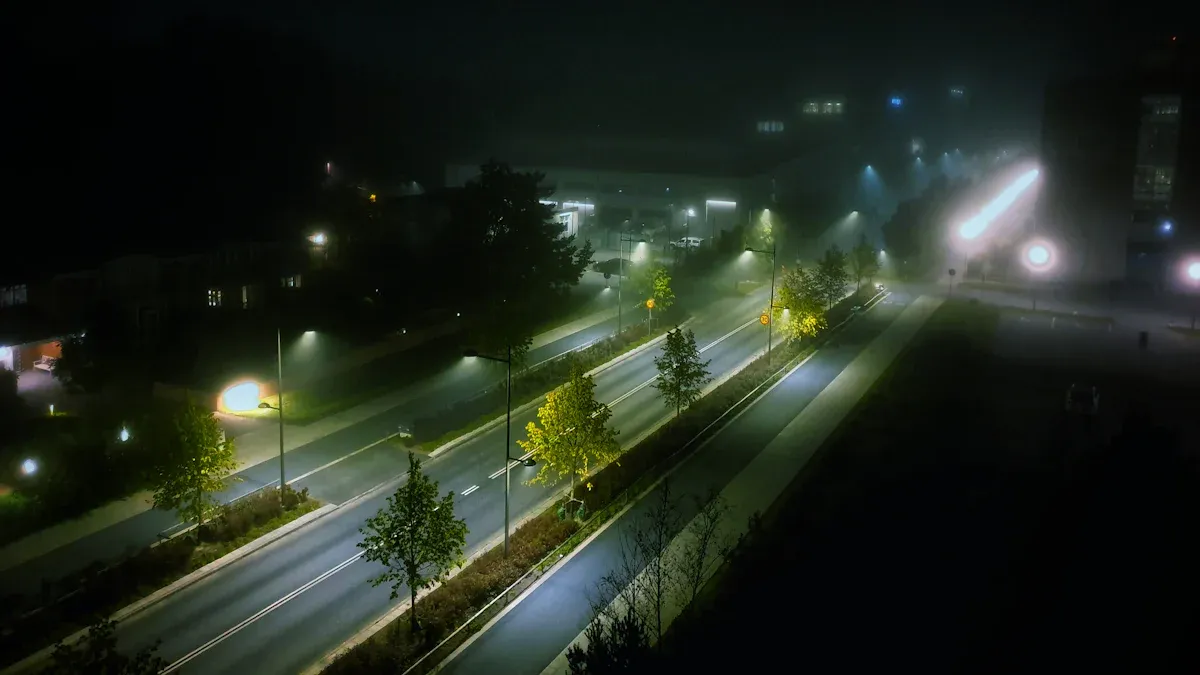
Street Light Bulbs are found on roads and highways. These lights help people see at night. Drivers and walkers stay safe because of them. Rural roads and city streets need strong light. Intersections also use these bulbs for safety. Old highways and parking lots use older bulbs. New projects use LED bulbs instead. LEDs save energy and last longer. They turn on fast and shine light where needed. This lowers light pollution and makes roads safer.
Setting | Common Applications |
|---|---|
Roadways | Rural roads, city streets, intersections, tribal and federal lands, climate-resilient projects |
Highways | Older highways, parking areas, legacy roadway systems |
Residential and Commercial Areas
Neighborhoods and business areas need good lighting. People want to feel safe and see well. Sports fields and factories use bulbs that show colors clearly. Some old businesses use high-pressure sodium or metal halide bulbs. Many new homes and stores pick LEDs. LEDs last a long time and need little care. You can change how bright LEDs are. This helps save energy.
Setting | Common Applications |
|---|---|
Residential | Sports complexes, industrial zones, older commercial developments |
Commercial | Industrial parks, outdated infrastructure, some legacy municipal systems |
Decorative and Specialty Uses
Decorative lights make parks and walkways look nice. Special lamp posts are used in these places. Some parks use solar lights to save energy. Historic areas keep old bulbs for their classic look. Decorative bulbs are not very bright. They make the area feel pleasant.
Setting | Common Applications |
|---|---|
Decorative | Historic preservation areas, decorative lamp posts, some parks or walkways |
Light Distribution Types (II, III, IV, V)
You need the right light pattern for each place. The pattern shows how light spreads on the ground. Type II lights work for narrow roads and paths. Type III lights fit streets and parking lots. Type IV lights cover wide areas like parking lot edges. Type V lights give even light in big open spaces.
Light Distribution Type | Description | Recommended Applications |
|---|---|---|
Type II | Oval shape, extends twice as far along the street as across it. | Narrow roadways, bike paths, walkways |
Type III | Forward-throwing, asymmetrical shape. | Roadway and street lighting, parking lots |
Type IV | Wide, asymmetrical pattern. | Perimeter lighting, large areas like parking lots |
Type V | Circular or square symmetry. | Larger areas requiring uniform lighting, such as open spaces |
Tip: LEDs give light in one direction. You can pick the pattern you need. This saves energy and keeps people safe.
Trends and Considerations in Street Lighting
The Shift to LED and Smart Lighting
Cities are changing how they light streets. Many places now use LED bulbs and smart systems. These new lights save energy and cost less to run. LED chips make brighter light but use less power. Smart street lights have sensors and remote controls. You can change how bright the lights are. This depends on traffic or weather. Some cities use solar-powered LED lights in faraway areas. Smart systems let people check lights from other places. They can fix problems fast. Here are some things you see in new street lighting:
Advanced LED chips and optics give more light.
Solar-powered LED lights work where there is no electricity.
IoT lets people manage lights and get data in real time.
Adaptive lighting changes brightness when needed.
Sensors collect data and help save energy.
Environmental Impact and Sustainability
Eco-friendly lighting helps the planet. New systems use less energy and make fewer emissions. Smart lights lower energy use by changing brightness. They use motion sensors to turn on only when needed. These lights also cut down on light pollution. This helps protect animals. Some designs use warm colors or filters. This keeps wildlife safe. Eco-friendly streetlights use materials that last and use solar power. Cities use these lights to meet green goals. The table below shows how smart lighting is better than old systems:
Aspect | Traditional Systems | Smart Street Lighting |
|---|---|---|
Energy Consumption | High | 50-70% less power with LEDs |
Maintenance Costs | Higher | Lower with predictive tools |
Environmental Impact | More carbon emissions | Lower carbon footprint |
Cities want to use less energy and help the planet. Solar-powered lights use less grid power and make remote places safer.
Regulations and Safety Standards
Street lighting must follow rules to keep people safe. Different places have their own standards. These rules protect people and the environment. In North America, you see UL, CSA, and FCC standards. Europe uses CE Marking and EN standards. Asia-Pacific countries use GB, CCC, and other rules. The table below lists some important regulations:
Region | Key Regulations and Standards |
|---|---|
North America | UL, CSA, FCC |
Europe | CE Marking, EN standards, Voltage Harmonization at 230V |
Asia-Pacific | GB Standards, CCC Certification, PSE Mark, AS/NZS Regulations |
You need to meet safety and environmental rules. Engineers check local laws before installing lights. Some rules limit glare and light pollution. Governments give grants and rebates to help cities get better lights. There can be problems, like high costs or people not liking changes. Education and funding help cities switch to new lighting.
Tip: Always look at local rules before picking Street Light Bulbs for your project.
You have lots of options for Street Light Bulbs. Each kind has its own good points for saving energy, cost, and safety. The table below shows important things to think about:
Key Factor | Description |
|---|---|
Energy Efficiency | LEDs use up to 70% less energy. |
Initial Investment | You pay more at first, but save on bills and repairs. |
Lifecycle Costing | New bulbs help you save money over time. |
Smart lighting and solar power are getting more popular. They help cities become safer and greener.
There are reports and articles that show how lighting helps people see and stay safe.
Keep learning about new ideas so you can pick the best lights for your project.
FAQ
What is the best street light bulb for saving energy?
You get the most energy savings with LED street light bulbs. LEDs use less electricity than other types. They last longer and need less maintenance. Many cities choose LEDs for new projects.
How do solar street lights work at night?
Solar street lights store energy from the sun during the day. At night, batteries power the lights. You do not need wires or grid electricity. Solar lights work well in parks and remote areas.
Why do some street lights look yellow or orange?
High-pressure sodium (HPS) and low-pressure sodium (LPS) bulbs make yellow or orange light. You see these bulbs on older roads. They save energy but do not show colors well.
Can you control street lights from far away?
Many new LED and solar street lights have smart controls. You can adjust brightness or check for problems using remote systems. This helps cities save energy and fix issues quickly.
What does “light distribution type” mean?
Light distribution type shows how a street light spreads light on the ground. You pick the right type for roads, parking lots, or walkways. Type II, III, IV, and V are common patterns.
See Also
Understanding Street Light Bulbs: Varieties, Innovations, and Uses
Exploring LED Light Bulbs: Features, Advantages, and Choosing Advice
A Comprehensive Overview of Electric Lamps: Varieties and Uses