Track Lighting: Types, Installation, and Design Applications

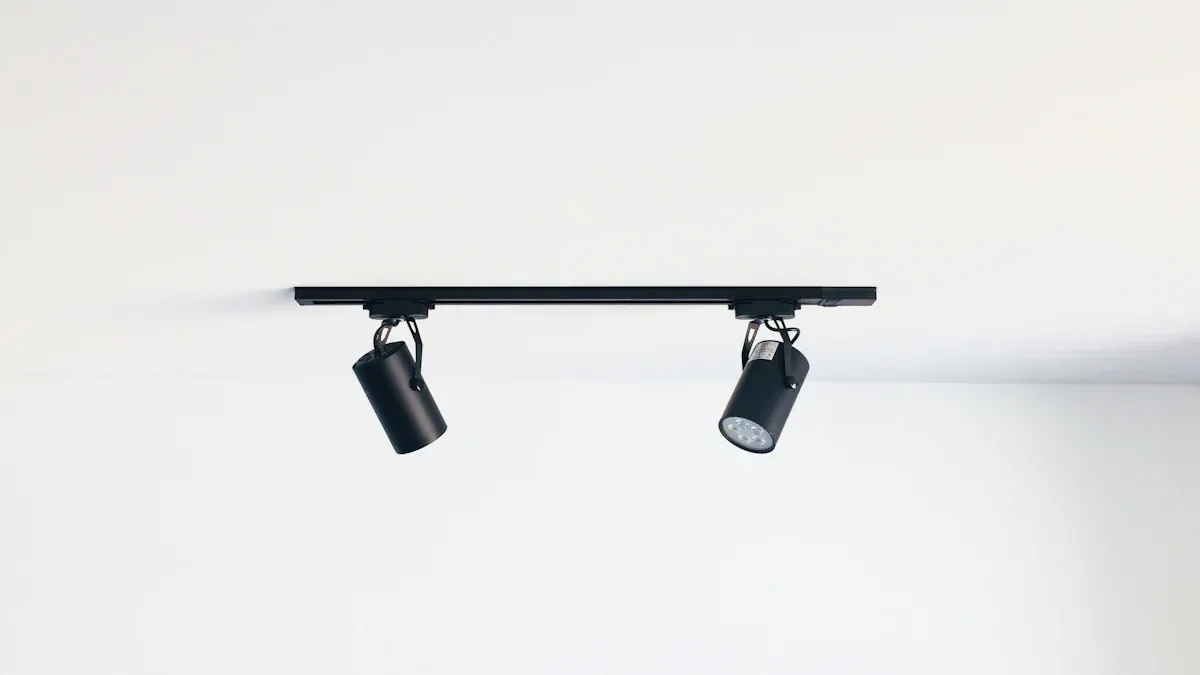
Track lighting helps you light up your room with style. It is flexible and works in many places. You can use it at home, in an office, or in a store. Many people pick track lighting because it saves space. It fits well in small rooms. The lights look smooth and can be moved to shine on art, product displays, or cool building parts. Most new track lighting uses LED bulbs. These bulbs last a long time and use less power. It is easy to install track lighting. You only need one junction box. This makes it good for DIY projects. You can point the lights where you want. You can also pick colors or shades that match your room. Many About Us pages talk about track lighting. They say it helps make rooms look better and feel nice.
Track lighting is good for:
Showing off displays and artwork
Saving space in small rooms
Giving modern looks and finishes
Easy setup and saving energy
Key Takeaways
Track lighting is flexible and looks nice. It works well in homes, offices, and stores.
Pick LED bulbs to save energy. They last longer and help lower your electric bill.
Installing track lighting is easy. You need a junction box and some simple tools.
There are different track systems like H, J, and L. Each has special parts. Make sure your fixtures match the system you pick.
Check your track lighting often. This helps stop problems and keeps it working well.
What Is Track Lighting?
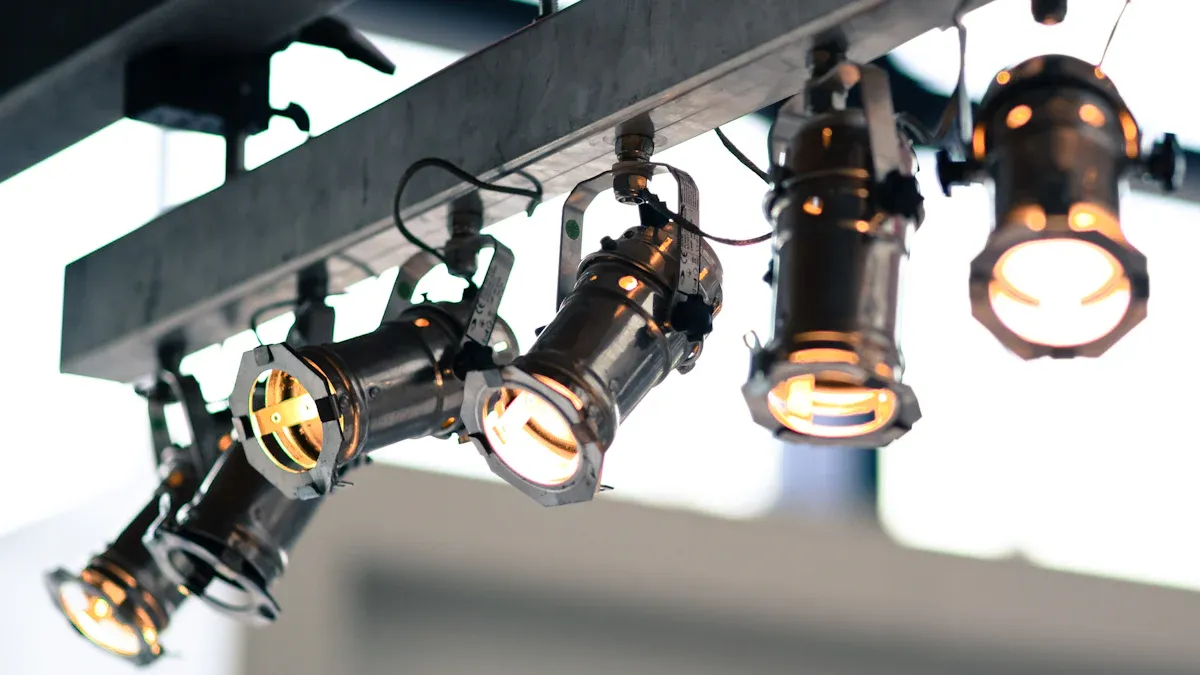
Track lighting gives you a way to light up your space with flexibility and style. You can use it to highlight artwork, create a cozy reading area, or add a modern touch to your room. This lighting system lets you move and adjust each light fixture along a track. You can change the direction and focus of the lights to match your needs. Many people choose track lighting because it fits well with different design styles, from sleek and modern to industrial and creative.
Basic Components
You need to know the main components of a track lighting system before you start planning your project. Each part plays a key role in how the system works and looks. Here is a simple table to help you understand the components of a track lighting system:
Component | Description |
|---|---|
Power Supply Units | These units provide electricity to the track lighting system. You can choose low voltage or 3-phase. |
Tracks and Connectors | The track holds the fixtures and lets you move them. Connectors help you join tracks for longer runs. |
These are the lights you attach to the track. You can pick different styles and functions. |
You can mix and match these components to create a custom design for your room. The right combination helps you get the look and lighting effect you want.
Key Benefits
Track lighting offers several important benefits. You can use it to solve many lighting challenges in your home or business. Here is a table that shows the top three benefits:
Benefit | Description |
|---|---|
Customizable Illumination | You can move track heads to change the lighting as needed. |
Sleek & Modern Design | Track lighting adds a clean, stylish look to any space. |
LED track lights last longer and help you save on energy. |
You can use track lighting to create a unique design that fits your style. You can also save energy and enjoy easy adjustments. This system works well in living rooms, kitchens, galleries, and offices. You get both function and style with track lighting.
Track Light Types and Systems
You can find many track light types for your home or business. Each type has its own features, voltage needs, and best uses. Learning about these different types of track lighting helps you pick the right system for your space. Let’s look at the main track lighting systems you might use.
Line Voltage Track Lighting
Line voltage track lighting uses the standard power in your region. In North America, this means 120 volts. In Europe, it is usually 220-240 volts. You do not need a transformer for these systems. You can connect the track directly to your home’s wiring. This makes installation simple for many people.
Line voltage track light types work well in large rooms and commercial spaces. You can use them for general lighting or to highlight displays. These systems often support a wide range of fixtures and bulbs. You can find linear track lighting in many offices and stores. Track lighting kits for line voltage are easy to find at most hardware stores.
Region | Standard Voltage | Low Voltage Systems |
|---|---|---|
North America | 120V | 48V/24V |
Europe | 220-240V | Often include converters |
You should always check your local voltage before buying a track lighting system. This helps you avoid problems with compatibility.
Low Voltage Track Lighting
Low voltage track lighting uses a transformer to lower the voltage, often to 12, 24, or 48 volts. You can use these systems when you want more energy efficiency and longer bulb life. Low voltage track light types often use smaller, brighter bulbs. These bulbs can give you more focused light with less energy.
You can save money with low voltage track lighting if you design the system well. A transformer lets you run several fixtures on the same power that would normally run just one. Low voltage bulbs often last longer than line voltage bulbs. This means you spend less on replacements and labor.
You might think low voltage always saves energy, but you need to set up the transformer correctly. If you do, you can use fewer fixtures and still get bright light. This makes low voltage track lighting a smart choice for art galleries, kitchens, and places where you want to highlight special areas.
Magnetic Track Lighting
Magnetic track lighting is a newer option. You use a magnetic system to attach and move the lights. This makes it easy to change your lighting layout. You do not need tools to move the fixtures. You can install these track light types on walls or ceilings. You can even use them in places without a ceiling.
Here is a table showing what makes magnetic track lighting special:
Feature | Description |
|---|---|
Modular Design | Lets you create many layouts and use different light types. |
Flexible Installation | Works on walls and ceilings in many ways. |
Easy Repositioning | Move lights without tools for quick changes. |
You can use magnetic track lighting in homes or businesses. You get a quick installation, a simple look, and the ability to add or remove lights as needed. These systems are low voltage and safe to touch. You can mix different lamp types and adjust the angles easily. Maintenance is simple, even if you do not have a ceiling.
Two-Wire and Surface-Mounted Tracks
Two-wire and surface-mounted track lighting systems give you more choices for installation. You can mount these tracks on almost any surface. This makes them good for spaces where you cannot use recessed lighting. You can use these track light types in both new and old buildings.
You may face some challenges with these systems:
The installation can be complex. You need to mount transformers and standoffs carefully.
Small parts can get lost during setup.
Standoffs must be anchored in drywall or plaster, not just framing.
You should plan your installation and keep track of all parts. This helps you avoid problems and makes your track lighting system work well.
H, J, and L Track Systems
When you choose track lighting, you will see h-track, j-track, and l-track systems. These names come from the shape of the contacts inside the track. Each system has its own parts and fixtures. You cannot mix h-track lighting with j-track or l-track pieces.
Here are the main points to remember:
h-track parts only work with other h-track pieces.
j-track parts fit together but do not work with h-track or l-track.
l-track pieces are not interchangeable with h-track or j-track.
The contact points in each system are different. This keeps your track lighting safe and working right. You should always check which system you have before buying new fixtures or connectors. Many track lighting kits will say if they are for h-track lighting, j-track, or l-track systems.
Tip: Always match your fixtures and connectors to your track system. Mixing h-track lighting with j-track or l-track can cause problems and may not be safe.
You can find linear track lighting in all three systems. Each one gives you a modern look and flexible lighting. When you pick the right track light types, you get a system that fits your needs and style.
Track Lighting Installation
Installing track lighting in your space gives you control over how you light up each area. You can follow clear installation steps to make sure your system works well and looks great. This section covers the tools and materials you need, the best installation techniques, safety tips, and how to keep your track lighting working for years.
Tools and Materials
You need the right tools and materials before you start your installation. Having everything ready makes the process smoother and safer. Here is a list to help you prepare:
Tools:
Electrical tester
Wire strippers
Drill
Tape measure
Stud finder
Ladder
Materials:
Track light kit
Wire connectors
Electrical cable
Electrical tape
Junction box
You can find most of these items at a hardware store. Make sure your track light kit matches the type of track lighting system you want to install.
Step-by-Step Installation
You can install track lighting on your ceiling or wall. Ceiling-mounted installation works well in living rooms, kitchens, and offices. Some people choose recessed installation for a cleaner look, but surface mounting is easier for most DIY projects. Follow these installation steps to set up your track lighting:
Turn Off Power
Go to your circuit breaker and turn off the power for the area where you will work. Use an electrical tester to make sure the power is off.Plan Your Layout
Use a tape measure to mark where you want the track. Make sure the track is straight and in a spot where you can move track light heads easily.Find Studs or Joists
Use a stud finder to locate solid spots in the ceiling or wall. This helps you anchor the track securely.Install the Junction Box
Attach the junction box where you want the power to connect. Run electrical cable from the box to the track location.Mount the Track
Drill holes and use screws to attach the track to the ceiling or wall. Connect tracks with connectors if you need a longer run.Wire the Track
Strip the wires and use wire connectors to join the track wires to the power supply. Wrap connections with electrical tape for safety.Attach Track Light Heads
Snap or twist track light heads onto the track. Make sure each head is secure and can move along the track.Install Bulbs and Test
Put bulbs into each fixture. Turn the power back on and test your track lighting system.
Tip: If you use low voltage track lighting, you need a transformer. The transformer lowers the voltage to keep your system safe and efficient.
Here is a table with transformer specifications for low voltage track lighting:
Specification | Details |
|---|---|
Voltage Input | Typically 120V or 240V |
Output Voltage | Usually 12V or 24V for safety and compatibility |
Power Rating | Must match the wattage capacity of the lighting fixtures |
Safety Features | Overload, short-circuit, and thermal protection included |
Dimming Capability | Choose a transformer labeled as dimmable if dimming is desired |
Manufacturer Reliability | Consider the reputation and reliability of the manufacturer |
Installation Ease | Look for transformers that are easy to install |
Safety Tips
You must follow safety rules during installation. This keeps you safe and helps your track lighting work well.
Always turn off the power at the circuit breaker before working with wires.
Use a flashlight or headlamp if the area is dark.
Make sure all wiring follows local electrical codes.
Wear safety goggles and gloves to protect your eyes and hands.
Check the total amperage of your lights and appliances. Do not exceed the circuit’s capacity.
Do not overload the track with too many track light heads.
If you feel unsure about electrical work, ask a licensed electrician for help.
Check local construction codes before starting your installation.
Note: Poor wiring and electrical connections can cause hazards or fires. Always double-check your work.
Maintenance and Troubleshooting
Track lighting needs regular checks to keep it working well. You can fix most problems with simple steps.
Check the power supply if your lights do not turn on. Make sure the circuit breaker and wall switch work.
Examine the track for damage or loose connections.
Move track light heads along the track to see if one fixture is faulty.
Listen for buzzing or humming sounds. This can mean you have an incompatible dimmer switch or a faulty transformer.
Make sure your dimmer switch matches your LED lights.
Look for overheating. Good ventilation helps LED track lighting last longer.
Inspect and tighten all connections on the track and connectors.
If you cannot fix the problem, call a licensed electrician.
Here is a list of common issues and how to solve them:
Power supply issues: Check the circuit breaker and wall switch.
Loose track heads: Reattach track light heads securely.
Faulty transformer: Test or replace the transformer.
Dimming problems: Use compatible dimmer switches with LED lights.
Buzzing or humming: Replace incompatible dimmer switches.
Overheating: Improve ventilation around your track lighting.
Loose connections: Tighten all connectors and track parts.
Inconsistent light output: Check for wiring problems or electrical load issues.
Tip: Do not add lights to existing poles without planning. This can cause uneven lighting and reduce effectiveness.
You can keep your track lighting system working well by following these maintenance steps. Regular checks help you avoid bigger problems and keep your space bright and safe.
Track Lighting Applications
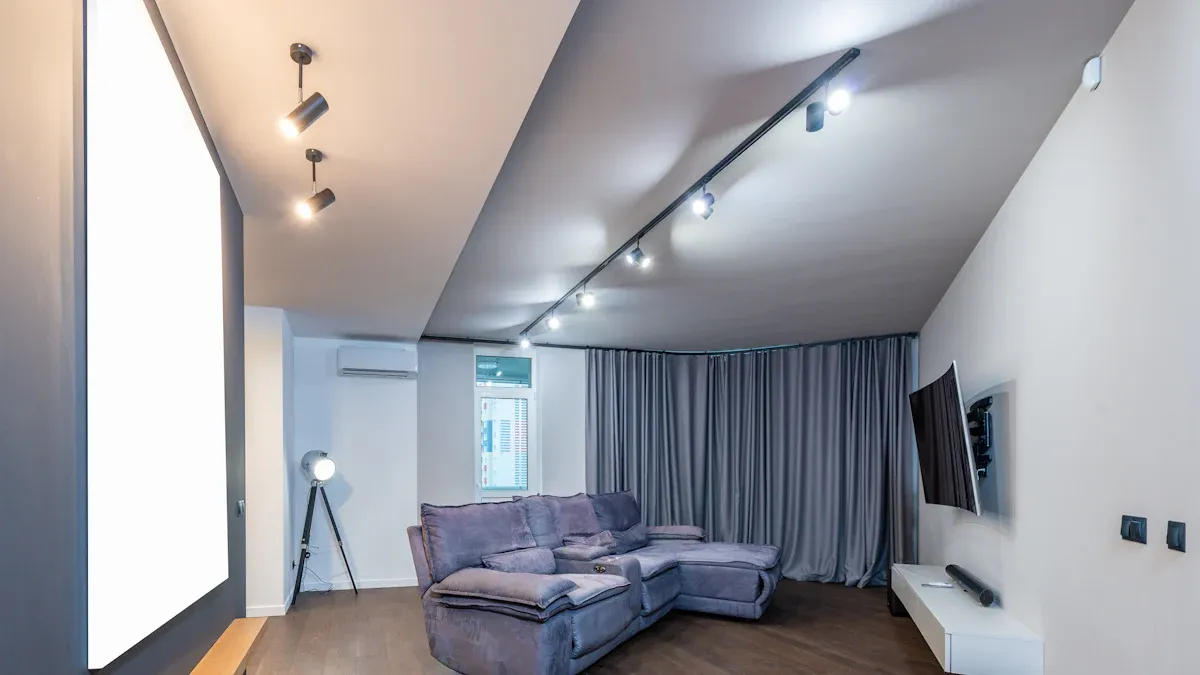
Residential Uses
Track lighting works in many rooms at home. You can use it in kitchens, living rooms, bedrooms, and bathrooms. It gives style and helps you see better. In kitchens, track lighting shines on counters and sinks. It helps you see while cooking. In living rooms, you can use it for reading corners. In bedrooms, track lighting gives a soft glow. It can also light up bedside tables. Bathrooms get bright light for grooming and stylish looks.
Area | Application Description |
|---|---|
Kitchen | Lights up counters, sinks, and cooking spots for tasks. |
Living Room | Highlights cool features and gives light for reading. |
Bedroom | Makes a soft glow or lights bedside tables. |
Bathroom | Gives bright light for grooming and adds style with fixtures. |
Track lighting lets you change fixtures to fit your needs. You can match your style in every room.
Commercial Uses
Track lighting is great for businesses. You see it in offices, stores, galleries, restaurants, and hotels. Stores use track lighting to show off products. Galleries use it to light up art. Offices use track lighting for a professional look. Restaurants and cafés use it to make spaces feel cozy. Hotels use track lighting in guest rooms and dining areas. Salons and studios use it for good lighting.
Make offices look bright and professional.
Show products in shops to get attention.
Light up art in galleries for better viewing.
Create cozy spaces in restaurants and cafés.
Make hotel rooms and dining areas look nice.
Give salons and studios the light they need.
Track lighting helps you change layouts and fixtures. You can fit your business needs and style.
Layout and Fixture Selection
You need to think about layout when planning track lighting. Room size and shape matter. Big rooms may need more track lights. Small rooms work well with fewer lights. Pick fixtures that match your room’s style. Lighting can be for tasks, accents, or general use. Ceiling height is important. Tall ceilings may need adjustable fixtures. Short ceilings work best with flush mounts.
Factor | Description |
|---|---|
Room Size and Layout | Big rooms need more tracks, small rooms need fewer. |
Style | Fixtures should match your room’s color and design. |
Lighting Needs | Decide if you need task, accent, or general lighting. |
Ceiling Height | Tall ceilings need adjustable fixtures, short ones need flush mounts. |
Tip: Think about the lighting effect you want. Pick fixtures that match your room’s look. Make sure you can change the lights for different needs.
Plan where to put fixtures and pick the right system. This helps you get the best track lighting for your space.
Creative Ideas
Track lighting gives you lots of creative choices. Use thin fixtures for a simple look. Play with shapes and angles for cool patterns. Track pendants add color and style. Use many track lights for special effects. Mix fixture types for a modern feel. Try different colors for more interest. Change lighting to set the mood. Put track lighting near furniture to highlight it. Place fixtures at the right height for even light.
Use thin fixtures for a simple style.
Play with shapes and angles for fun patterns.
Add track pendants for color and style.
Use many track lights for cool effects.
Mix fixture types for a modern look.
Try different colors for more interest.
Change lighting to set the mood.
Put track lighting near furniture.
Place fixtures at the right height for even light.
Track lighting lets you create layers of light. You can show off features and set the perfect mood in any space.
Choosing Track Lighting
Compatibility and Controls
You need to make sure your track lighting matches your space. Track lighting comes in J, H, and L types. Parts from the same type work together. You cannot mix parts from different types. Most systems use 120 volts, so check the voltage before buying. You also need to know if your system is single-circuit. This changes how you control the lights.
Compatibility Aspect | Details |
|---|---|
Intra-Category Compatibility | Fixtures within the same track category are interchangeable. |
Inter-Category Limitations | Fixtures from different categories cannot be mixed. |
Voltage Compatibility | Most systems operate at 120 volts. |
Circuit Type | Most setups are single-circuit. |
Track lighting controls are important for your setup. Regular dimmer switches work best with incandescent bulbs. If you use LED track lighting, you need special dimmers. Using the wrong dimmer can make the lights flicker or not work well. Always check if your controls and dimmers match your lights before installing.
Tip: Each track system has its own setup. If you add or change parts, make sure everything fits and works together.
Energy Efficiency
Energy efficiency helps you save money and helps the planet. When picking track lighting, look for LED bulbs. LED track lighting uses less power than old bulbs. For example, a 10-watt LED can replace a 50-watt halogen bulb. LEDs last a long time, up to 25,000 hours. You will not need to change them as often.
Track lighting with LEDs lowers your energy bills.
You get bright light with less heat.
Long-lasting bulbs mean fewer changes and less waste.
Think about energy use and how often you need to change bulbs. Pick products with good ratings and strong warranties. Set a budget and choose track lighting that fits your needs.
Track Lighting vs. Other Options
You have many ways to light your space. Track lighting is special because you can move the lights. Recessed lighting looks neat but cannot be moved. Recessed lights stay in one spot, so you lose flexibility. Installing recessed lighting is harder and may need cutting the ceiling.
Pendant lighting looks nice but does not give as much control. Track lighting lets you shine light on art or displays. You can change the layout to fit your style.
When picking track lighting, think about these things:
How much light each area needs
Warranty length for support
Budget and how long products last
Any limits on installation or timing
Where you will use the lighting
What you want to get out of your lighting
Track lighting gives you flexibility, saves energy, and looks modern. You can make a design that fits your space and style.
Track lighting gives you versatility, easy installation, and energy savings. You can adjust fixtures to highlight features and match your style. When you choose a system, measure your space and pick bulbs that fit your needs. Follow these steps for best results:
Mark and level the track.
Drill pilot holes.
Secure and wire the track.
Attach fixtures and test.
Review your room’s size, style, and lighting needs before installing track lighting.
Factor | Description |
|---|---|
Room Size and Layout | Pick a system that fits your space. |
Style Compatibility | Match fixtures to your decor. |
Lighting Preferences | Choose bright or soft light for each area. |
You can find more guides and articles to help you plan and install track lighting.
FAQ
How do you choose the right track lighting system?
You should check your ceiling height, room size, and style. Match the track type (H, J, or L) with your fixtures. Pick LED bulbs for energy savings. Ask for help at the store if you feel unsure.
Can you install track lighting by yourself?
You can install track lighting if you follow safety steps. Turn off the power first. Use a drill, wire strippers, and a tester. If you feel unsure about wiring, call a licensed electrician for help.
What is the difference between line voltage and low voltage track lighting?
Line voltage uses your home’s standard power. Low voltage needs a transformer and uses less energy. You get more focused light with low voltage. Line voltage works well for big rooms and general lighting.
How do you fix flickering track lights?
Check the bulbs and dimmer switches. Make sure you use compatible parts. Tighten loose connections. If the problem continues, replace the dimmer or call an electrician.
Can you move track light heads after installation?
You can slide and turn track light heads along the track. This lets you change the lighting direction. You do not need tools for most systems. Move the heads to highlight art, furniture, or displays.
See Also
Exploring LED Track Lighting: Design, Setup, and Uses
Understanding Recessed Lighting: Varieties, Setup, and Design Tips
High Bay Lighting Essentials: Applications, Varieties, and Installation Tips
Advantages of LED Outdoor Lighting: Types and Installation Tips
LED Area Lighting Overview: Types, Uses, and Installation Guidelines