Warm Fluorescent Light Bulbs Without Ballasts: Options, Benefits and Installation Tips

You may wonder if Warm Fluorescent Light Bulbs without ballasts are available for your home. Yes, these bulbs do exist, and many people choose LED replacements because they are more energy-efficient. These products are simple to install and enhance the ambiance of your lights. For more information, check out our About Us page for helpful tips and answers to your questions.
Key Takeaways
Think about using LED bulbs instead of warm fluorescent bulbs. LED bulbs use less energy and are simple to put in.
You can pick plug-and-play or ballast bypass bulbs. Plug-and-play bulbs are fast to set up. Ballast bypass bulbs help you save more energy over time.
Pick bulbs with a color temperature between 2700K and 3000K. This range makes your home feel warm and welcoming.
LED bulbs without ballasts last longer than regular fluorescent bulbs. They also need less care, so you save time and money.
Safety is very important when you install bulbs. Always turn off the power first. Follow the instructions from the manufacturer to stay safe.
Warm Fluorescent Light Bulbs: Options
LED Replacements (Warm Color, Ballast-Free)
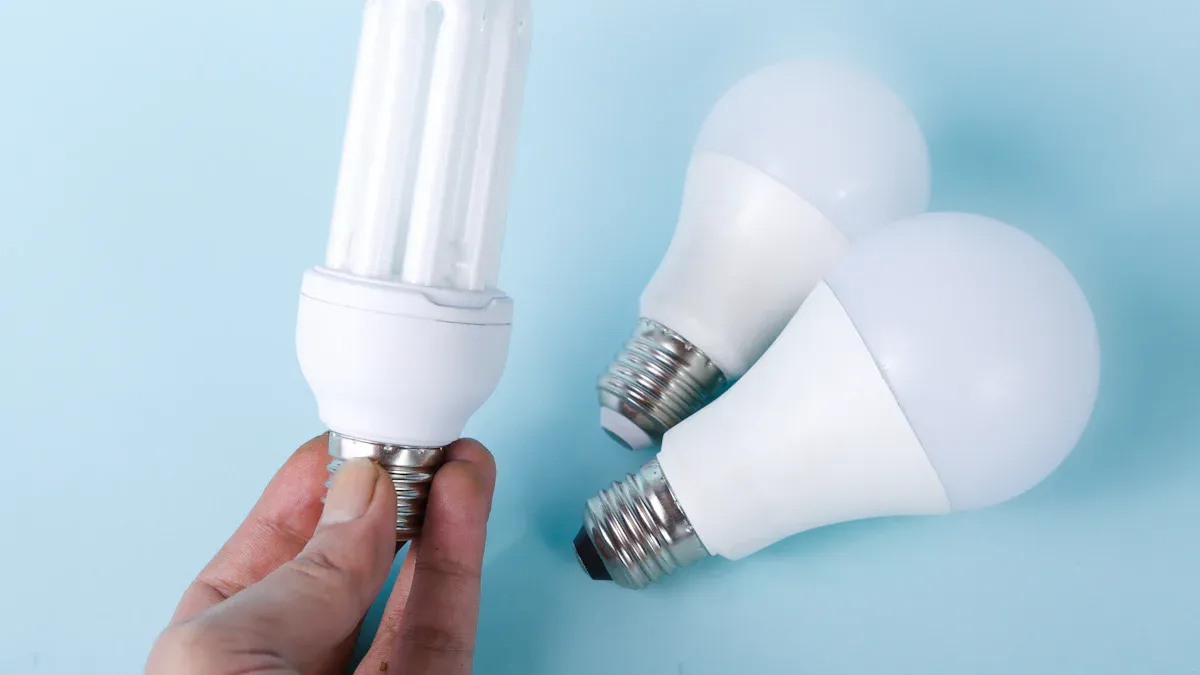
You have different ways to upgrade your lights. Warm Fluorescent Light Bulbs are sold, but most need a ballast. You can pick LED replacements to avoid using a ballast. These bulbs fit into your current fixtures. You do not need extra parts. The installation is easy. Your lights will look and feel better.
Here are some reasons why LED replacements are a good choice:
LEDs use less energy than regular fluorescent bulbs.
LEDs last longer, so you change bulbs less often.
LEDs give steady light that does not flicker.
LEDs do not have dangerous stuff like mercury, so they are safer to throw away.
See how LED replacements are different from old fluorescent bulbs:
Specification/Characteristic | Details |
|---|---|
Energy Efficiency | Uses up to 50% less power than regular fluorescent tubes |
Lifespan | Works for up to 25,000 hours or more |
Quality of Light | Gives steady light and different color choices |
Heat Emission | Makes little heat and stays cool |
Environmental Impact | Has no dangerous stuff like mercury, so it is easier to recycle |
Plug-and-Play vs. Ballast Bypass
When you shop for Warm Fluorescent Light Bulbs, you will see two main LED types: plug-and-play and ballast bypass. Each type has good and bad points.
Plug-and-Play LED Tubes
You use these bulbs with your current ballast.
You do not need to change any wires.
You pay less at first.
Some ballasts may not work with these bulbs.
The ballast still uses power, so you save less energy.
Ballast Bypass LED Tubes
You take out the ballast and change the wires.
You save more energy and money over time.
You pay more at first and spend more time installing.
You will not have problems with ballasts later.
Tip: Plug-and-play bulbs are best for quick upgrades. Ballast bypass bulbs save more money and need fewer repairs.
Color Temperature for Warm Lighting
You want your room to feel warm and cozy. Warm Fluorescent Light Bulbs with color temperature between 2700K and 3000K make this happen. This range gives soft, warm white light that feels nice and relaxing.
Warm lighting helps you relax after a busy day.
It makes your home feel friendly for visitors.
You get a nice place for reading, watching TV, or being with family.
If you want your bedroom or living room to feel peaceful, choose bulbs in the 2700K-3000K range. You will see your space feels better right away.
Benefits of Ballast-Free Bulbs
Energy Efficiency
You want to save energy and lower your bills. Ballast-free bulbs help you do that. When you switch from traditional fluorescent bulbs to ballast-free LED bulbs, you can cut your energy use by 50-60%. That means you spend less money and help the planet at the same time. You also get bright light without losing quality.
Feature | Traditional Fluorescent | Ballast-Free LED |
|---|---|---|
Energy Use Reduction | 0% | 50-60% reduction |
Ballast Power Consumption | Yes | No |
Overall Efficiency | Lower | Higher |
Easy Installation
You might think changing your lights is hard. Ballast-free bulbs make it simple. You do not need to worry about ballasts or extra parts. You just put the new bulb in and enjoy better light. If you choose plug-and-play bulbs, you can upgrade your lights in minutes. Ballast bypass bulbs take a little more time, but you get bigger savings.
Tip: Always check your fixture before you start. Make sure the new bulb fits your socket type.
Lighting Quality and Comfort
You want your home to look and feel good. Ballast-free bulbs give you better color and less flicker. LED bulbs have a higher Color Rendering Index (CRI), usually between 70 and 95+. That means colors look true and natural. Old fluorescent bulbs can make things look dull or give off a strange tint. With ballast-free bulbs, your space feels warmer and more inviting.
LED CRI: 70-95+
Fluorescent CRI: 60-90
Higher CRI means better color accuracy
Maintenance and Lifespan
You do not want to change bulbs all the time. Ballast-free bulbs last much longer than traditional ones. LED bulbs can work for 25,000 to 50,000 hours. Fluorescent bulbs only last 7,000 to 15,000 hours. You also skip the hassle of fixing or replacing ballasts.
Bulb Type | Average Lifespan |
|---|---|
LED | 25,000–50,000 hours |
T8 Fluorescent | 7,000–15,000 hours |
You save time and money because there are fewer parts to break. That means fewer interruptions and less stress. Warm Fluorescent Light Bulbs with LED technology make your life easier.
Installation Tips
Safety Precautions
Before you start, safety comes first. You want to avoid shocks and keep your home safe. Always turn off the power at the breaker and double-check with a voltage tester. Never skip this step! Here are some important safety tips:
Safety Precaution | Description |
|---|---|
Follow Electrical Codes | Make sure all wiring matches the manufacturer's instructions. |
Use Circuit Protection | Use circuit breakers or fuses to prevent overloads and short circuits. |
Confirm Power is Off | Always test with a voltage tester before you touch any wires or sockets. |
Be careful with ballast-bypass bulbs, especially single-ended tubes. These can be risky if not installed right.
Double-ended tubes are safer because they only get power when both ends are connected.
Keep a voltage tester handy to check that the power is really off.
Tip: Only use bulbs with trusted safety certifications. Look for UL, FCC, Energy Star, DLC, or ETL marks on the packaging.
Certification | What It Means |
|---|---|
UL | Product meets safety and building code standards. |
FCC | Device is safe for health and does not interfere with other electronics. |
Energy Star | Bulb is energy efficient and meets strict performance rules. |
DLC Approved | High quality and energy efficiency, recognized by many utilities. |
ETL | Product passes electrical and fire safety tests. |
Step-by-Step Installation
You can install plug-and-play bulbs quickly. Just remove the old bulb and snap in the new one. For ballast bypass bulbs, you need to rewire the fixture. Here’s a simple guide:
Turn off the power at the breaker.
Remove the old bulb and the ballast (for bypass bulbs).
Connect the wires as shown in the bulb’s instructions.
Install the new bulb.
Turn the power back on and test the light.
If your new bulb does not work, try these steps:
Check if the power supply matches the bulb’s needs.
Test the bulb in another fixture.
Look for damage or corrosion in the fixture.
Use a multimeter to check wiring and voltage.
Compatibility Checks
You want to make sure your new bulb fits your fixture. Here’s what to check:
Type A LED lamps work with your current ballast. Always check the manufacturer’s compatibility list.
Type B LED lamps need you to remove the ballast and wire the bulb straight to the power.
Follow the instructions closely, especially for Type B bulbs, to avoid hazards.
When to Call a Professional
Sometimes, it’s best to let an expert handle the job. Call a licensed electrician if:
You feel unsure about any step.
You do not have experience with electrical work.
You want to make sure everything meets local codes.
When in doubt, always ask a professional. This keeps you safe and protects your home.
You have many good options to change your lights. Ballast-free LED bulbs turn on right away. They last a long time and need little care. Here is how they compare:
Aspect | LED Lighting | Fluorescent Lighting |
|---|---|---|
Lifespan | 25,000 hours or more | 7,000–15,000 hours |
Maintenance | Minimal | Frequent |
Eye Comfort | Reduces eye strain | Can cause fatigue |
Keep these safety tips in mind:
Put on safety glasses and gloves.
Use a strong ladder for reaching high places.
Read and follow the maker’s instructions.
You get brighter light and save money too. Try ballast-free warm lighting to make your home feel nice and cozy.
FAQ
Can you use warm LED tubes in any fluorescent fixture?
You can use warm LED tubes in most fluorescent fixtures. Always check the bulb’s packaging for compatibility. Some fixtures need rewiring for ballast bypass bulbs. Plug-and-play LEDs work with many ballasts, but not all.
How do you know if your fixture needs a ballast bypass?
Look at your fixture’s label or manual. If it says “ballast required,” you need a bypass for ballast-free bulbs. You can also ask an electrician or check the bulb’s instructions for guidance.
Do ballast-free bulbs flicker like old fluorescent lights?
No, ballast-free LED bulbs give steady light. You will not see flickering. This helps your eyes feel comfortable and makes your room look better.
What color temperature should you choose for a cozy space?
Pick bulbs labeled 2700K or 3000K. These numbers mean warm white light. Your living room or bedroom will feel relaxing and inviting.
See Also
Understanding LED Bulbs: Features, Advantages, and Choosing Tips
Exploring GE LED Bulbs: Key Features and Benefits
Types of LED Replacement Lights: Advantages and Setup Guide
Outdoor LED Lighting: Types, Advantages, and Installation Tips