What is a LED Lamp?


A led lamp gives you bright, clear lighting using a small device called a light-emitting diode. You often see a led lamp in your Home, office, or even in streetlights. This type of lighting uses much less energy than older lamps. People choose a led lamp because it lasts longer and stays cool to the touch. The led lamp market grows quickly, with experts expecting a 14% yearly increase. When you want better lighting for any Product, a led lamp stands out. About Us pages for lighting brands often highlight the many uses of a led lamp.
Key Takeaways
LED lamps need less energy than regular bulbs. This helps you save money on your electric bill.
They work for a much longer time. They can last from 25,000 to 50,000 hours. You do not have to change them often.
LED lighting is better for the environment. It does not have dangerous stuff like mercury.
Picking the right LED lamp means you look at how bright it is in lumens. You also check the color temperature to get the mood you want.
LED lamps turn on bright right away. You can dim them easily. This makes them good for many places.
How LED Lamps Work
LED Lamp Technology
Led lamps are everywhere because they use special technology. The main part inside is a light emitting diode. This small device turns electricity into light. Led lamps do not use gases or filaments like old bulbs. They use solid materials called semiconductors. These help the lamp work safely and last longer.
Here is how led lamps make light:
LEDs are semiconductor devices that glow when electricity flows.
When electricity goes through an LED, electrons meet holes and make light.
This is called electroluminescence, where energy turns into photons.
Led lamps use different semiconductors. Each one makes a different color of light. The table below shows some materials and the colors they make:
Material Name | Chemical Composition | Color Range Produced |
|---|---|---|
Gallium Arsenide | GaAs | Infrared (not visible) |
Gallium Arsenide Phosphide | GaAsP | Red to Yellow |
Gallium Phosphide | GaP | Red, Green |
Indium Gallium Aluminum Phosphide | InGaAlP | Many colors and wavelengths |
Gallium Nitride | GaN | Blue, Green |
Silicon Carbide | SiC | Many (used in LEDs) |
Electroluminescence Explained
Electroluminescence makes led lamps shine bright. When you turn on a lamp, electricity moves through the diode. Inside, electrons travel from one side to the other. They meet holes, which are tiny spaces missing an electron. When electrons and holes join, they give off energy as light.
Tip: The color of the light depends on the material inside the led. Some materials make red light, while others make blue or green.
You can see the process step by step:
The diode gets forward biased, so electrons move from p-type to n-type.
Holes move from n-type to p-type.
At the junction, these join and release energy as photons.
Led lamps use this to give you bright light without heat or wasted energy.
Solid-State Lighting Features
Led lamps are part of solid-state lighting. This means they use solid materials to make light, not gases or filaments. You get many good things from this design.
Feature | Solid-State Lighting (LED) | Traditional Lighting (Incandescent) |
|---|---|---|
Energy Efficiency | Uses less power | Uses more power |
Lifespan | Up to 25,000 hours | About 1,000 hours |
Environmental Impact | Lower carbon footprint | Has hazardous materials |
Design Flexibility | More design choices | Fewer design options |
Led lamps shine in a 180-degree angle, so you do not need extra reflectors. You can dim them easily, and they turn on right away. You also help the environment when you use led lamps. These lamps do not have mercury or other harmful stuff. You do not need special care when you throw them away.
Note: Led lamps use solid-state technology, so they last longer and save energy compared to older bulbs.
Led lamps give you safe, efficient, and flexible lighting for your home, school, or office.
Benefits of LED Lighting
Energy Efficiency of LED Lamps
You can save a lot of energy when you choose led lamps for your home or office. Led lighting uses much less electricity than older types of bulbs. When you use a led lamp, you get the same amount of light as an incandescent bulb but with far less power. For example, a typical led uses only 10 watts, while an incandescent bulb uses 60 watts for the same brightness. This means you use at least 75% less energy.
Type of Bulb | Average Wattage | Energy Savings |
|---|---|---|
LED | 10 watts | Uses at least 75% less energy than incandescent bulbs |
Incandescent | 60 watts |
You can see even more savings with different sizes of bulbs. Some led lamps use as little as 2 watts and can cut your energy use by up to 90%. This helps lower your electricity bill and reduces the amount of energy your home needs.
Type of Bulb | Average Wattage | Energy Savings |
|---|---|---|
LED | 2-18 watts | Can reduce energy consumption by up to 90% |
Incandescent | 25-100 watts |
If you replace just one 60-watt incandescent bulb with a 10-watt led and use it for 3 hours each day, you save 50 watts every hour. Over a year, this adds up to about 54.75 kilowatt-hours. At the average electricity rate, you save almost $10 each year for every bulb you switch. Imagine the savings when you change all the lighting in your house to led lamps!
Tip: Led lighting not only saves you money but also helps the planet by using less energy.
Longevity and Durability
Led lamps last much longer than other types of bulbs. You do not have to change them as often, which saves you time and money. The average lifespan of a led is between 25,000 and 50,000 hours. In comparison, an incandescent bulb lasts about 1,000 hours, and a CFL bulb lasts up to 10,000 hours.
Bulb Type | Lifespan (Hours) |
|---|---|
Incandescent | 1,000 - 1,200 |
CFL | 8,000 - 10,000 |
LED | 25,000 - 50,000 |
You can see that led lamps outlast other bulbs by many years. If you use a led lamp for three hours each day, it can last over 20 years. This long lifespan means you buy fewer bulbs and throw away less waste.
Led lighting is also very tough. You can switch led lamps on and off many times without hurting their lifespan or brightness. They do not break easily because they have strong parts inside. You can use them in places where there is a lot of movement or shaking, like in garages or outdoor areas.
Led lamps have strong parts that resist shock and vibration.
You can turn them on and off often without losing brightness or lifespan.
They work well in tough places where other bulbs might break.
Environmental Impact
When you use led lighting, you help protect the environment. Led lamps do not have dangerous materials like mercury, which you find in some fluorescent bulbs. This makes them safer to use and easier to throw away.
Led lamps do not contain mercury or other hazardous materials.
Both led and fluorescent bulbs have metals, so you should recycle them when possible.
Incandescent bulbs do not have as many harmful materials, but they use more energy and do not last as long.
Led lighting also helps lower carbon emissions. Because led lamps use much less electricity, power plants burn less fuel to make that energy. This means less pollution goes into the air. Led lamps can last over 25,000 hours, so you need fewer replacements. This reduces waste and saves resources.
Led lamps use only 4–10 watts, much less than other bulbs.
The long lifespan means fewer bulbs end up in landfills.
Led lighting gives you more light for less energy, which helps fight climate change.
Note: When you choose led lamps, you make a smart choice for your wallet and the world.
LED Lamps vs. Traditional Light Bulbs
LED Light Bulbs vs. Incandescent
When you compare led light bulbs to incandescent bulbs, you see big differences in efficiency and safety. Led lamps use solid-state technology, which means they do not have gases or filaments inside. You get more light for less energy. Incandescent bulbs waste most of their energy as heat. Led lamps turn almost all their energy into light.
Type | Efficiency |
|---|---|
Incandescent | 10-20% |
LED | 80-90% |
Led light bulbs operate at 80-90% efficiency. Incandescent bulbs only reach 10-20%. You save money and energy when you switch to led lamps. Led lighting also stays cool, so you do not risk burns. Incandescent bulbs get hot and can cause accidents.
Tip: Led lamps last much longer than incandescent bulbs. You change bulbs less often and reduce waste.
LED Lamps vs. CFLs
Led lamps offer many advantages over CFL bulbs. You do not find mercury in led lamps, so you avoid hazardous materials. CFLs contain about four milligrams of mercury. If a CFL breaks, it can release harmful vapor. Led lamps do not have this risk.
Feature | LED Bulbs | CFL Bulbs |
|---|---|---|
Presence of Toxic Materials | No | Yes (Contains Mercury) |
Heat Emission | Very Low | Higher |
Breakage risks | Lower | Higher |
Led light bulbs do not contain mercury.
You get less heat from led lamps, so your lighting stays safe.
Led lamps break less often than CFLs.
Led lighting uses less energy than CFLs. You get instant light with led lamps, while CFLs may flicker or need time to warm up. Led light bulbs also let you adjust brightness easily.
Cost and Performance
You save money over time when you choose led lamps. Led light bulbs cost more at first, but you buy fewer replacements. Led lamps last up to 25,000 hours. Incandescent bulbs last only about 1,000 hours. CFLs last longer than incandescent bulbs but still fall short of led lamps.
Led lighting gives you better light quality. You see colors clearly and enjoy instant brightness. Led lamps work well in many places, from homes to offices. You do not need to wait for your lamp to reach full brightness.
Note: Led lamps use solid-state technology, so you get safe, efficient, and long-lasting lighting without gases or hazardous materials.
Types of LED Lamps
LED Bulb Shapes and Sizes
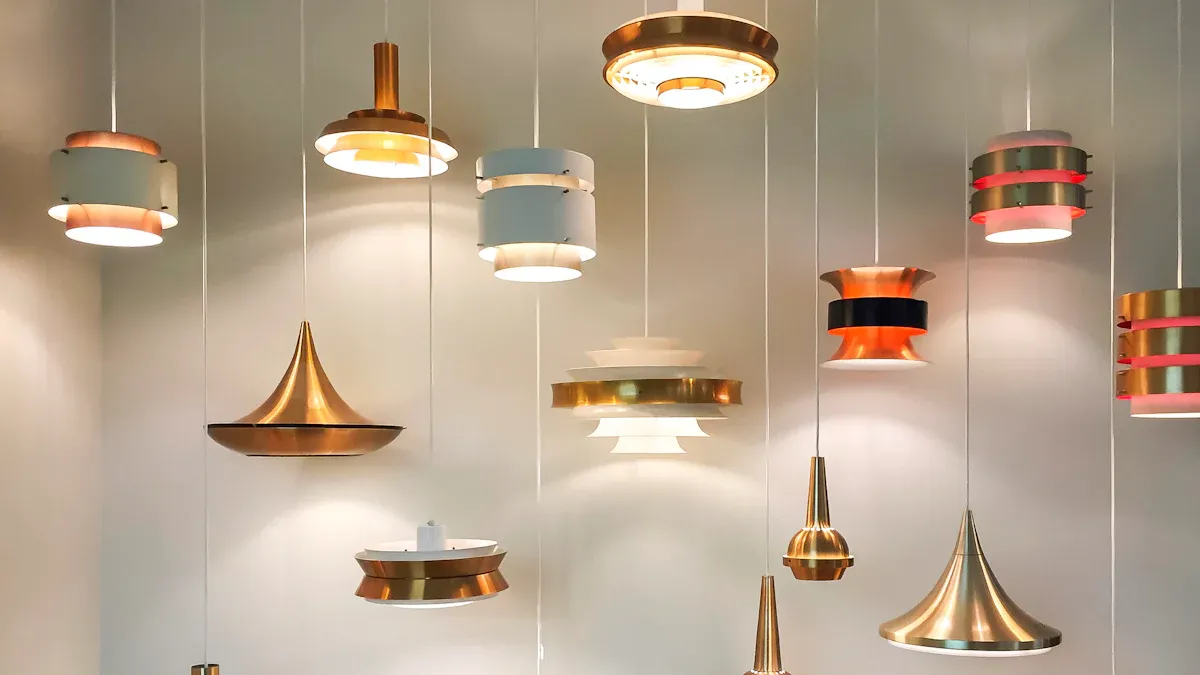
You can buy led lamps in many shapes and sizes. Each shape fits a certain fixture. This helps you get the right light for your room. Here are some common choices:
A19: This bulb is good for general home lighting. You see it in table lamps and ceiling lights.
BR30: You use this bulb in recessed or track lights. It gives a wide beam and covers more space.
PAR38: This bulb works well outdoors or in big places. It shines strong light over large areas.
The shape of your led lamp changes how light spreads. You can look at the table below to see how each pattern works:
Type | Description |
|---|---|
Type I | Long, skinny pattern lights left and right, not much front or back. |
Type II | Diagonal pattern makes an oval shape, gives some front and back light. |
Type III | Oval shape pushes light forward, good for certain spots. |
Type IV | Like Type III but gives more front light, less side light. |
Type V | Circle pattern shines down, covers all around. |
Tip: Pick the right led lamp shape for your needs. This helps you get the best light in every room.
Common Uses for LED Lamps
Led lamps work in lots of places. You can use them for general, accent, or task lighting. The table below shows how people use led lamps at home or work:
Application Type | Description |
|---|---|
General Illumination | Used in ceiling lights, wall lights, or table lamps for bright, even light. |
Accent Lighting | Highlights special things like art or plants, makes rooms look nice. |
Task Lighting | Lights up work areas like kitchens or offices with focused light. |
You can use led lamps in bedrooms, kitchens, offices, and outside. Led lighting helps you see better and makes your home look nice.
Specialty LED Lighting
Some led lamps are made for outdoor or tough jobs. Companies like ams OSRAM make led lights that keep places safe and bright. Their products save energy and give even light, which is good for factories and warehouses. You also see special lights on buildings to make them look cool.
Other brands sell outdoor led lamps for safety, parking lots, and sports fields. You can use wall lights or landscape lights for office parks. These special led lamps help keep places safe and well-lit.
Security lights for warehouses
Outdoor wall lights
Parking lot lights
Landscape lights for office parks
Sports field and court lights
Note: Special led lamps give strong, steady light for hard jobs and outdoor spaces.
Choosing the Right LED Lamp
Brightness and Lumens
When you shop for led lamps, you need to know how bright you want your space to be. Brightness is measured in lumens. Lumens tell you how much visible light a lamp gives off. You can follow these steps to find the right amount of light for your room:
Measure your room’s length and width. Multiply these numbers to get the square footage.
Decide how you use the room. Living rooms need less light than kitchens or workspaces.
Find the footcandle requirement for your room type. Footcandles show how much light you need per square foot.
Multiply your room’s square footage by the footcandle number. This gives you the total lumens needed.
Tip: Always check the lumen rating on led lamps instead of just looking at wattage. More lumens mean a brighter lamp.
You should also think about other factors when picking brightness. The table below helps you compare:
Factor | Description |
|---|---|
Lumens | Higher lumens give more light. Good for dining rooms and large spaces. |
Color Temperature | Changes how the light looks. Warm white fits bedrooms. Daylight works for work areas. |
Dimmability | Lets you adjust brightness for movies or relaxing. |
Beam Angle | Wide angles light up big rooms. Narrow angles focus light. |
Color Temperature Options
Led lamps come in different color temperatures. Color temperature changes how the light feels in your room. You see this measured in Kelvin (K). The table below shows common choices:
Color Temperature (K) | Description | Impact on Productivity and Comfort |
|---|---|---|
2700K - 3000K | Warm light | Makes rooms cozy. Good for relaxing, not for work. |
3500K - 4100K | Neutral light | Balances warmth and coolness. Fits most spaces. |
5000K - 6500K | Cool light | Boosts alertness and focus. Best for offices. |
Exposure to cool, bright light can help you stay focused and improve your mood. Led lamps with adjustable color temperature let you match the light to your needs. You can use warmer light in the evening and cooler light during the day.
Safety and Compatibility
You want led lamps that are safe and work well with your fixtures. Look for safety certifications like UL, ETL, FCC, VDE, BS, and ErP. These marks show that the lamp meets strict safety and energy rules.
Before you buy, check that the lamp fits your socket and matches the wattage and voltage of your fixture. Some fixtures need changes, like a new socket or ballast, to work with led lamps. If you use dimmer switches, make sure your led lamps are dimmable. This prevents flickering or damage.
Note: Always review your current lighting setup. Make sure your new led lamps match your fixtures for the best results.
You get lots of good things when you pick LED lamps for lights.
LED lamps turn most energy into light, so you save power and money.
You do not need to change bulbs often because LEDs last much longer than old bulbs.
LED lamps are better for the earth because they lower pollution and use less harmful stuff.
Switching to LED lamps gives you better lighting and helps keep the planet clean. You make a smart choice for your house and for later.
FAQ
What makes LED lamps different from other bulbs?
You get light from a solid piece inside an LED lamp. Other bulbs use filaments or gases. LED lamps use less energy and last longer. You do not need to worry about heat or broken glass as much.
Can you use LED lamps in any light fixture?
You can use most LED lamps in regular fixtures. Always check the size and shape before you buy. Some older dimmer switches may not work well with LED lamps. Look for lamps marked as dimmable if you want that feature.
How do you choose the right brightness for an LED lamp?
You should look at lumens, not watts. Lumens tell you how bright the lamp will be. For reading or working, pick a lamp with more lumens. For relaxing, choose a lamp with fewer lumens.
Are LED lamps safe for the environment?
You help the planet when you use LED lamps. These lamps do not have mercury or other harmful materials. They use less power, so you lower pollution. You also throw away fewer bulbs because they last longer.
Where can you find answers to common LED lamp questions?
You can find answers to common led lamp questions on lighting company websites, product guides, or in this FAQ. Many stores and online shops also share helpful tips for choosing and using LED lamps.
See Also
Your Ultimate Resource for Understanding LED Lighting Options
Comparing LED Light Fixtures with Conventional Illumination
Exploring GE LED Bulbs: Advantages and Buying Advice